Frontier Institute for Biomolecular Engineering Research (FIBER), Konan University, 7-1-20 Minatojima-Minamimachi, Chuo-ku, Kobe 650-0047, Japan.
Institute of Chemical Biology and Fundamental Medicine, Siberian Branch of the Russian Academy of Sciences, 8 Lavrentiev Ave., 630090 Novosibirsk, Russia.
Molecules. 2018 Dec 6;23(12):3228. doi: 10.3390/molecules23123228.
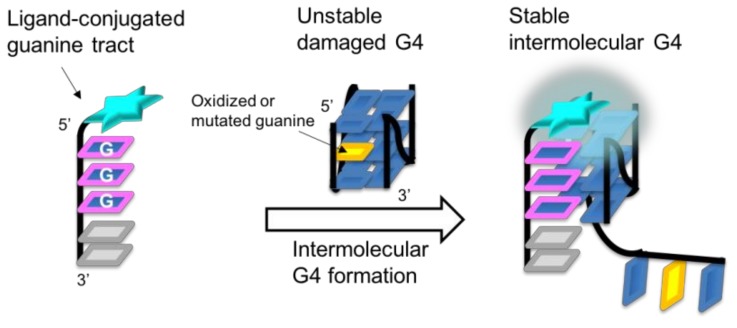
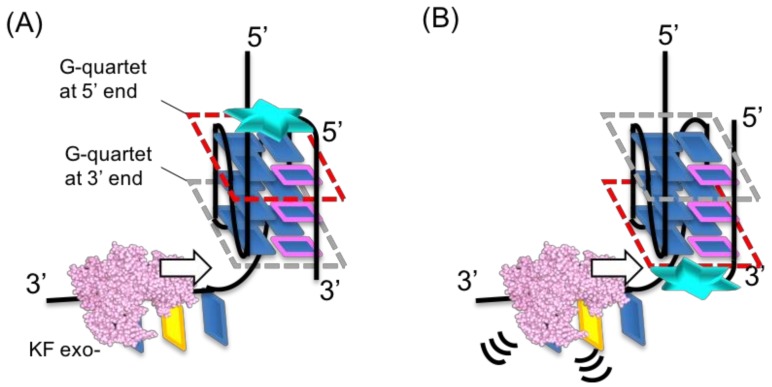
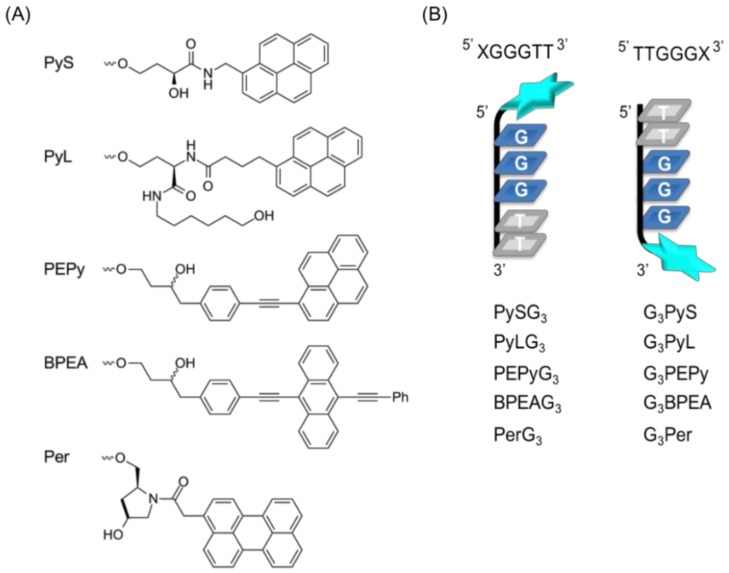
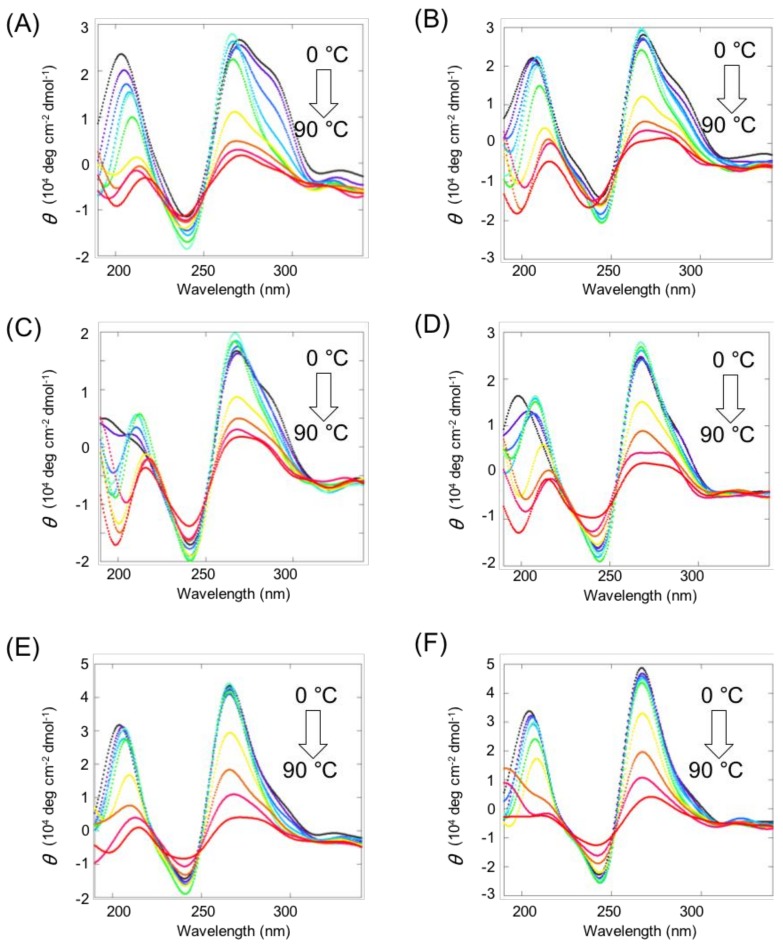
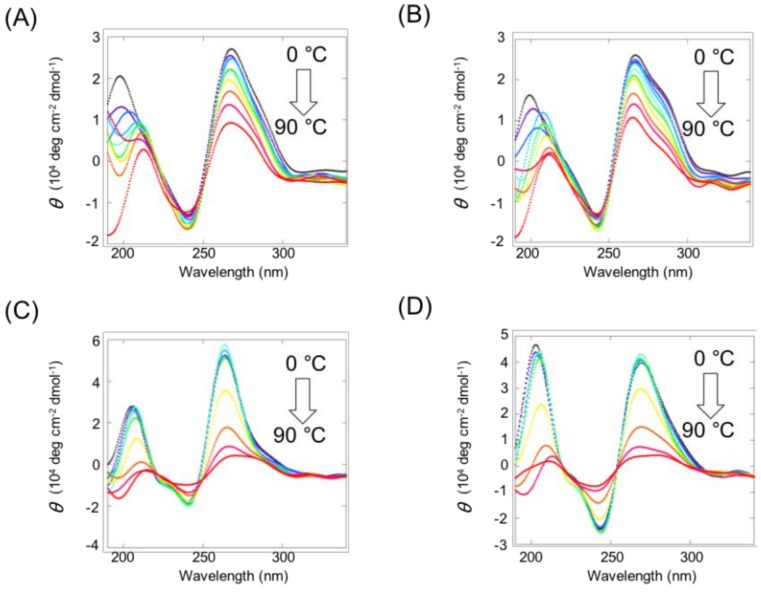
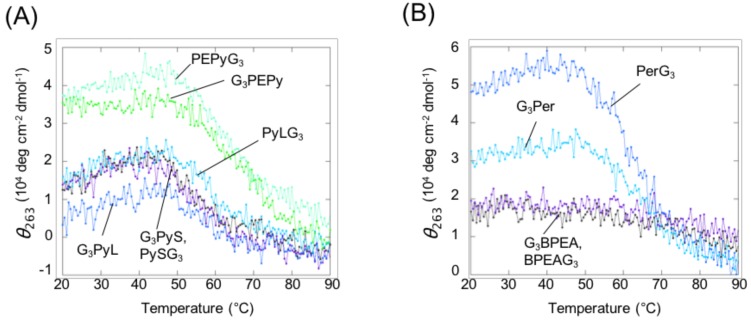
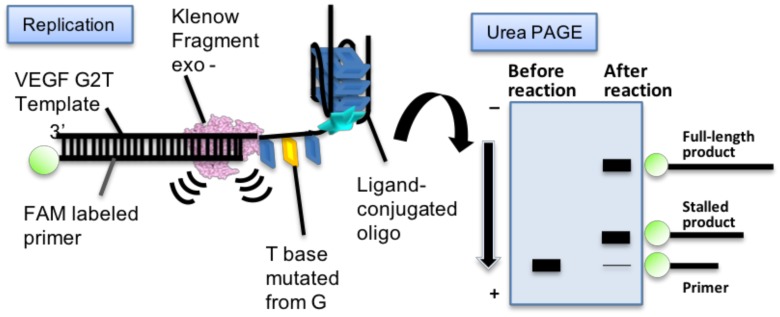
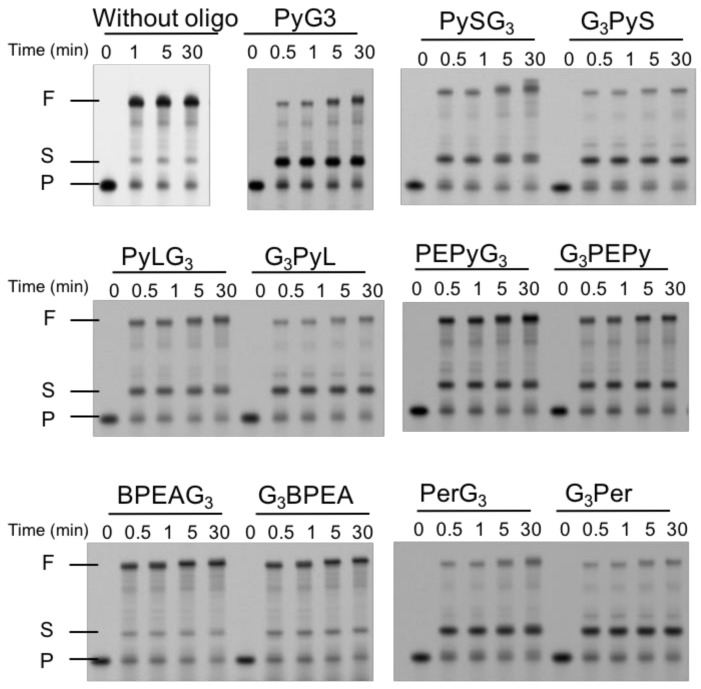
The formation of a guanine quadruplex DNA structure (G4) is known to repress the expression of certain cancer-related genes. Consequently, a mutated G4 sequence can affect quadruplex formation and induce cancer progression. In this study, we developed an oligonucleotide derivative consisting of a ligand-containing guanine tract that replaces the mutated G4 guanine tract at the promoter of the vascular endothelial growth factor (VEGF) gene. A ligand moiety consisting of three types of polyaromatic hydrocarbons, pyrene, anthracene, and perylene, was attached to either the 3' or 5' end of the guanine tract. Each of the ligand-conjugated guanine tracts, with the exception of anthracene derivatives, combined with other intact guanine tracts to form an intermolecular G4 on the mutated VEGF promoter. This intermolecular G4, exhibiting parallel topology and high thermal stability, enabled VEGF G4 formation to be recovered from the mutated sequence. Stability of the intramolecular G4 increased with the size of the conjugated ligand. However, suppression of intermolecular G4 replication was uniquely dependent on whether the ligand was attached to the 3' or 5' end of the guanine tract. These results indicate that binding to either the top or bottom guanine quartet affects unfolding kinetics due to polarization in DNA polymerase processivity. Our findings provide a novel strategy for recovering G4 formation in case of damage, and fine-tuning processes such as replication and transcription.
已知鸟嘌呤四链体 DNA 结构 (G4) 的形成会抑制某些与癌症相关基因的表达。因此,突变的 G4 序列会影响四链体的形成并诱导癌症的进展。在这项研究中,我们开发了一种寡核苷酸衍生物,它由一个含有配体的鸟嘌呤链组成,该链取代了血管内皮生长因子 (VEGF) 基因启动子中突变的 G4 鸟嘌呤链。配体部分由三种类型的多环芳烃、芘、蒽和并五苯组成,连接在鸟嘌呤链的 3' 或 5' 端。除蒽衍生物外,每个连接配体的鸟嘌呤链与其他完整的鸟嘌呤链结合,在突变的 VEGF 启动子上形成分子间 G4。这种具有平行拓扑结构和高热稳定性的分子间 G4 使 VEGF G4 能够从突变序列中恢复。随着共轭配体的增大,分子内 G4 的稳定性增加。然而,分子间 G4 复制的抑制作用仅取决于配体是否连接到鸟嘌呤链的 3' 或 5' 端。这些结果表明,结合到鸟嘌呤四联体的顶部或底部都会由于 DNA 聚合酶进程性中的极化而影响解折叠动力学。我们的研究结果为在损伤情况下恢复 G4 形成以及微调复制和转录等过程提供了一种新的策略。