Centro per le Malattie Tropicali, IRCCS Istituto di Ricovero e Cura a Carattere Scientifico, Ospedale Sacro Cuore - Don Calabria, Via Don Sempreboni 5, 37024, Verona, Negrar, Italy.
SOD Malattie Infettive emergenti e degli immunodepressi, Azienda Ospedaliero Universitaria, Ospedali Riuniti di Ancona, Via Conca Torrette, Ancona, Italy.
BMC Infect Dis. 2018 Dec 18;18(1):673. doi: 10.1186/s12879-018-3476-z.
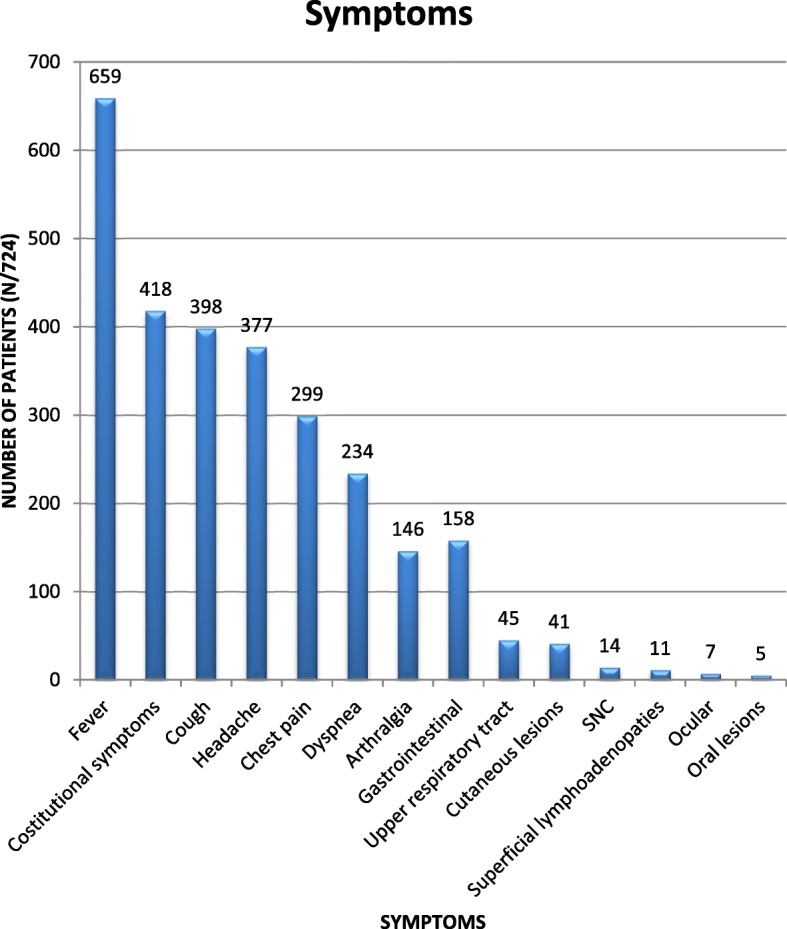
Histoplasmosis is a fungal infection highly endemic in the American continent. The disease can be severe in immunocompromised subjects. In immunocompetent subjects the clinical manifestations are variable. Aim of this work was to review the cases of acute histoplasmosis in immunocompetent travelers reported in literature.
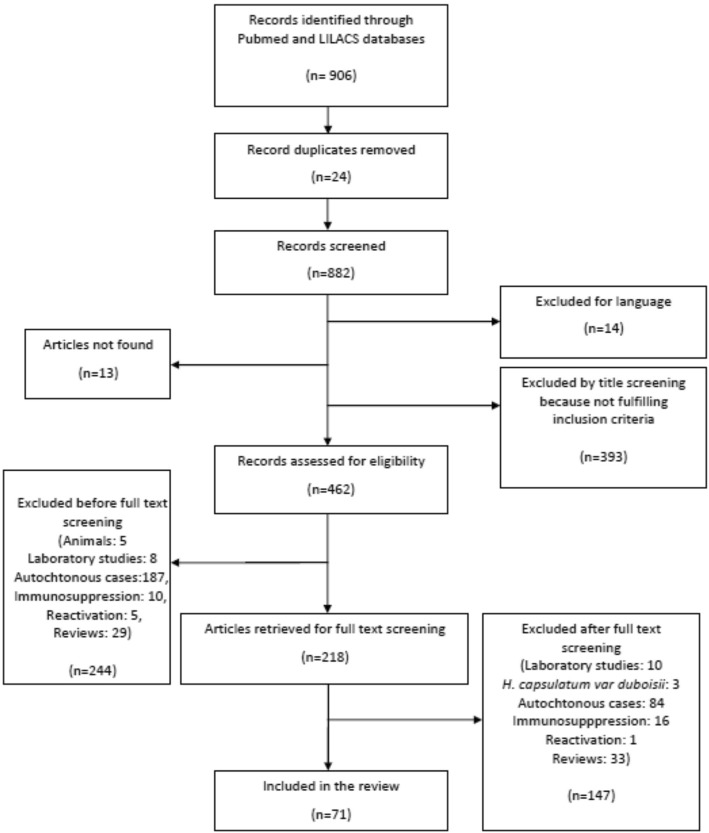
A systematic review of literature was conducted. Electronic search was performed in Pubmed and LILACS. Two reviewers independently extracted data on demographic, clinical and radiological features, and treatment. Cases were classified according to Wheat's definitions.
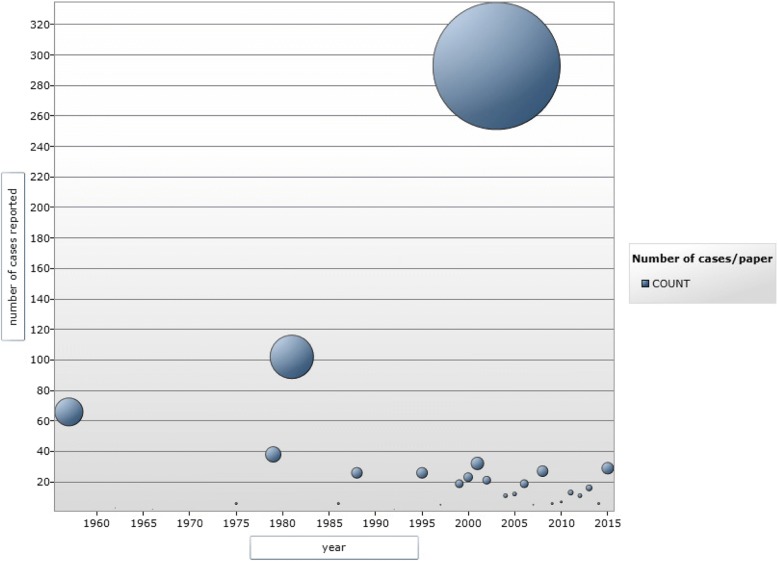
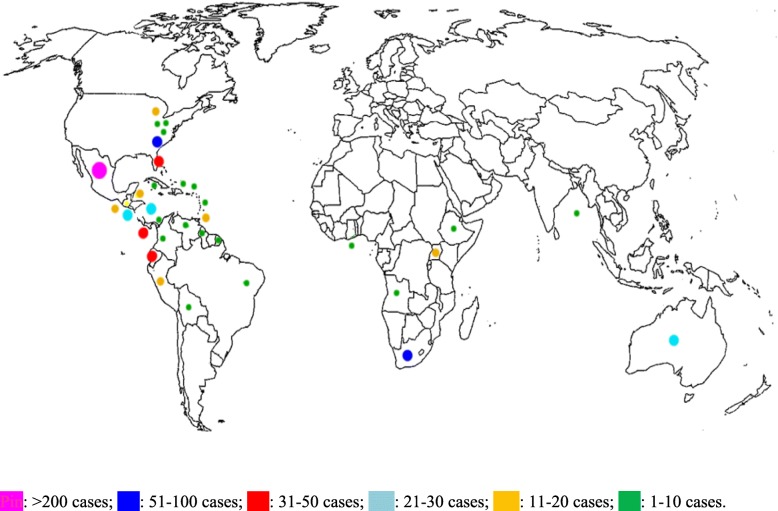
Seventy-one studies were included in the analysis, comprising a total of 814 patients. Twenty-one patients diagnosed at the Centre of Tropical Diseases, Negrar (VR), Italy were also included. The most common travel destination was Central America (168 people, 29.8%); the most common way of exposure to histoplasma was the exploration of caves and/or contact with bat guano (349 people, 60.9%). The multivariate logistic regression model showed association between the development of disseminated histoplasmosis (DH) and activities that involved the exploration of caves and/or the contact with bats' guano (adjusted OR: 34.20 95% CI: 5.29 to 220.93) or other outdoor activities (adjusted OR: 4.61 95% CI: 1.09 to 19.56). No significant difference in the attack rate between countries of destination was observed (p-value: 0.8906, Kruskal-Wallis test).
Histoplasmosis often causes no or mild symptoms in immunocompetent individuals, although a severe syndrome may occur. The infection can mimic other diseases, and the epidemiological risk of exposure is an important clue to raise the index of suspicion.
组织胞浆菌病是一种真菌病,高度流行于美洲大陆。该疾病在免疫功能低下的患者中可能较为严重。在免疫功能正常的患者中,临床表现则多种多样。本研究旨在回顾文献中报道的免疫功能正常旅行者中的急性组织胞浆菌病病例。
进行了文献系统回顾。在 Pubmed 和 LILACS 上进行了电子检索。两名评审员独立提取人口统计学、临床和影像学特征以及治疗数据。根据 Wheat 的定义对病例进行分类。
共纳入 71 项研究,共计 814 例患者。还纳入了意大利维罗纳热带病中心(Centro di Malattie Tropicali, Negrar)诊断的 21 例患者。最常见的旅行目的地是中美洲(168 人,29.8%);最常见的暴露于组织胞浆菌的方式是洞穴探索和/或接触蝙蝠粪便(349 人,60.9%)。多变量逻辑回归模型显示,弥散性组织胞浆菌病(DH)的发生与洞穴探索和/或接触蝙蝠粪便(调整后的 OR:34.20,95%CI:5.29 至 220.93)或其他户外活动(调整后的 OR:4.61,95%CI:1.09 至 19.56)有关。未观察到目的地国家之间的发病率有显著差异(p 值:0.8906,Kruskal-Wallis 检验)。
组织胞浆菌病在免疫功能正常的个体中常无症状或症状较轻,但也可能出现严重综合征。该感染可能与其他疾病类似,暴露的流行病学风险是提高警惕指数的重要线索。