McCrum Christopher, Karamanidis Kiros, Willems Paul, Zijlstra Wiebren, Meijer Kenneth
1Department of Nutrition and Movement Sciences, NUTRIM School of Nutrition and Translational Research in Metabolism, Maastricht University Medical Centre+, P.O. Box 616, Maastricht, 6200 MD The Netherlands.
2Institute of Movement and Sport Gerontology, German Sport University Cologne, Am Sportpark Müngersdorf 6, Cologne, 50933 Germany.
Commun Biol. 2018 Dec 14;1:230. doi: 10.1038/s42003-018-0238-9. eCollection 2018.
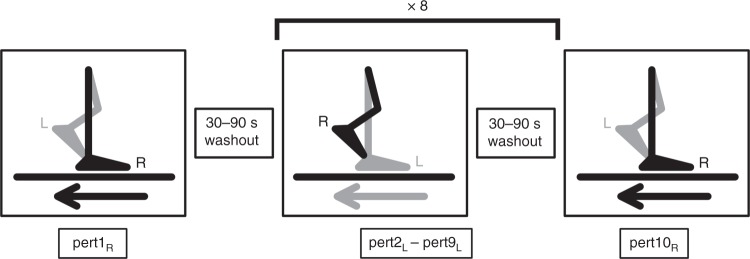
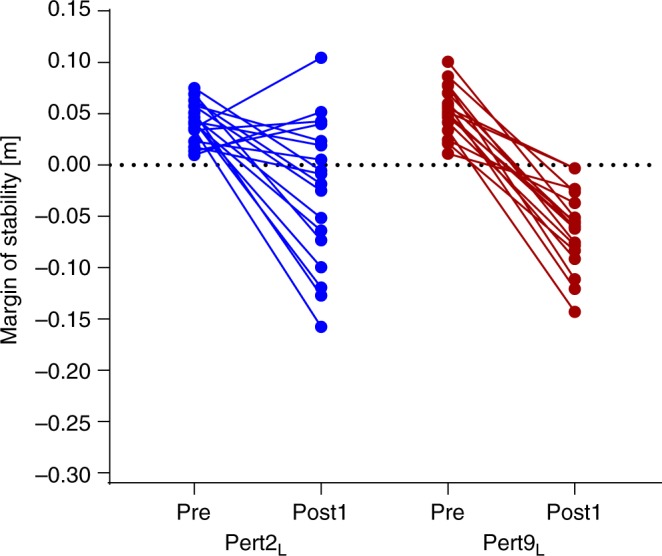
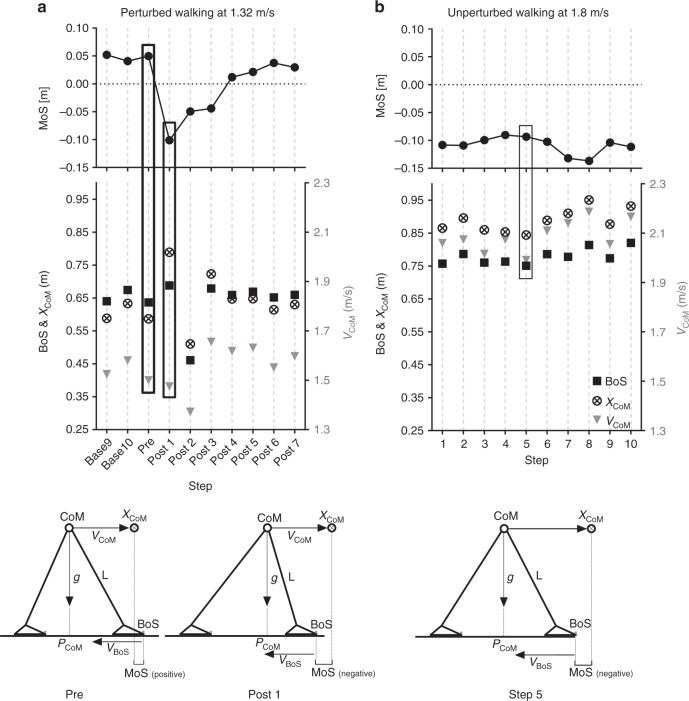
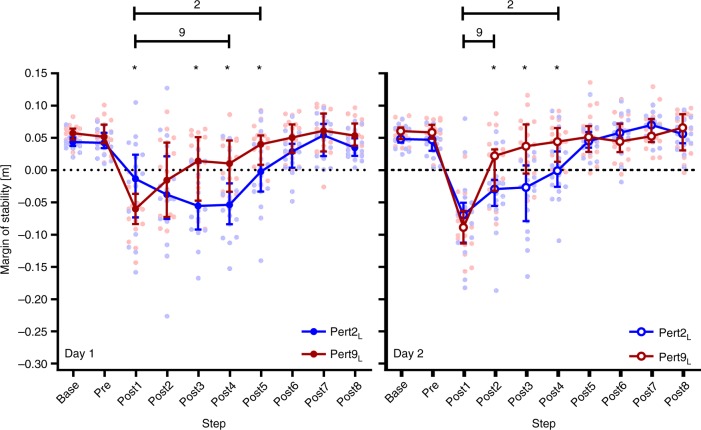
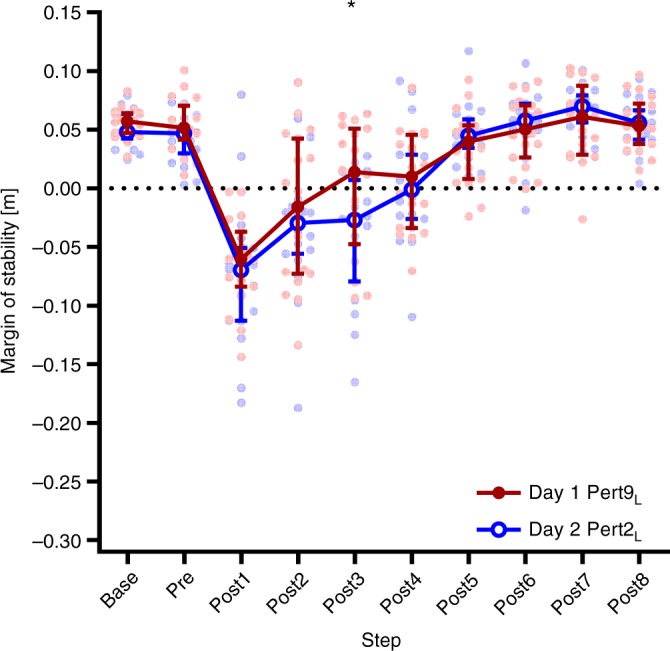
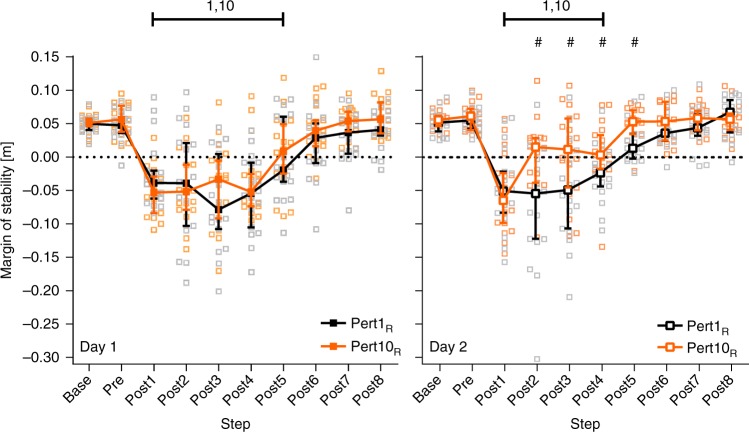
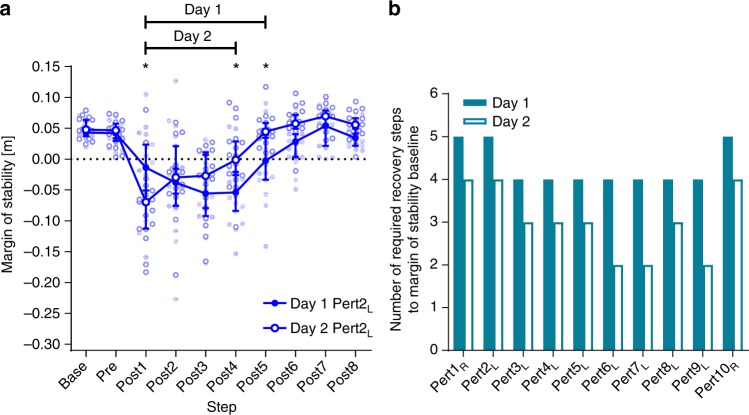
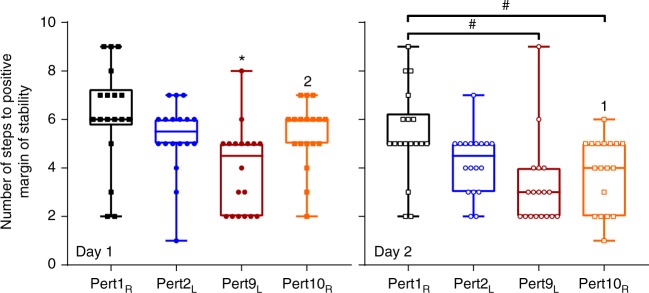
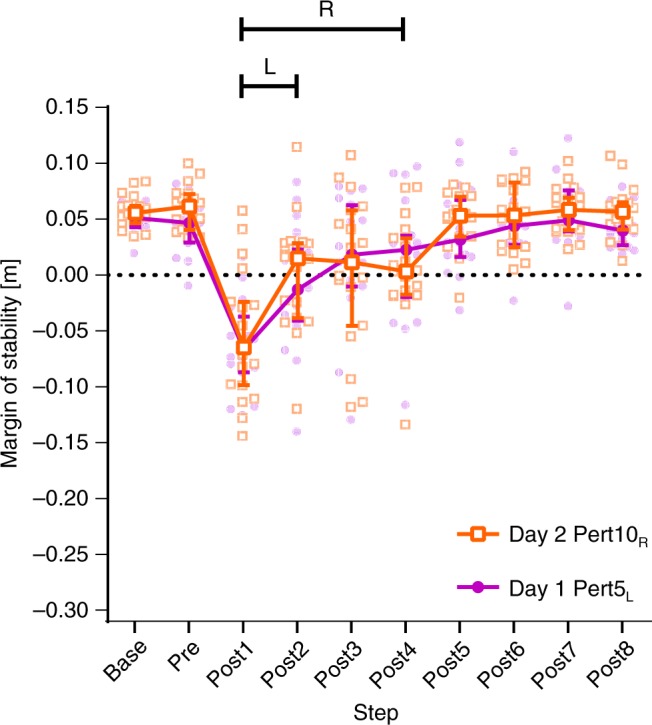
Reactive locomotor adaptations are crucial for safe mobility, but remain relatively unexplored. Here we assess reactive gait adaptations, and their retention, savings and interlimb transfer. Using new methods to normalise walking speed and perturbation magnitude, we expose eighteen healthy adults to ten unexpected treadmill belt accelerations during walking (the first and last perturbing the right leg, the others perturbing the left leg) on two days, one month apart. Analysis of the margins of stability using kinematic data reveals that humans reactively adapt gait, improving stability and taking fewer recovery steps, and fully retain these adaptations over time. On re-exposure, retention and savings lead to further improvements in stability. Currently, the role of interlimb transfer is unclear. Our findings show that humans utilise retention and savings in reactive gait adaptations to benefit stability, but that interlimb transfer may not be exclusively responsible for improvements following perturbations to the untrained limb.
反应性运动适应对于安全移动至关重要,但仍相对未被充分探索。在此,我们评估反应性步态适应及其保留、节省和肢体间转移情况。我们采用新方法对步行速度和扰动幅度进行标准化,在相隔一个月的两天里,让18名健康成年人在行走过程中经历10次意外的跑步机皮带加速(第一次和最后一次扰动右腿,其他的扰动左腿)。利用运动学数据对稳定性边界进行分析发现,人类会对步态进行反应性适应,提高稳定性并减少恢复步数,且随着时间推移能完全保留这些适应性变化。再次暴露时,保留和节省会进一步提高稳定性。目前,肢体间转移的作用尚不清楚。我们的研究结果表明,人类在反应性步态适应中利用保留和节省来提升稳定性,但肢体间转移可能并非是未训练肢体受到扰动后稳定性改善的唯一原因。