Laboratory of Pathology, National Cancer Institute, Bethesda, MD.
Pediatric Oncology Branch, National Cancer Institute, Bethesda, MD.
Int J Cancer. 2019 Jun 1;144(11):2707-2717. doi: 10.1002/ijc.32006. Epub 2019 Jan 15.
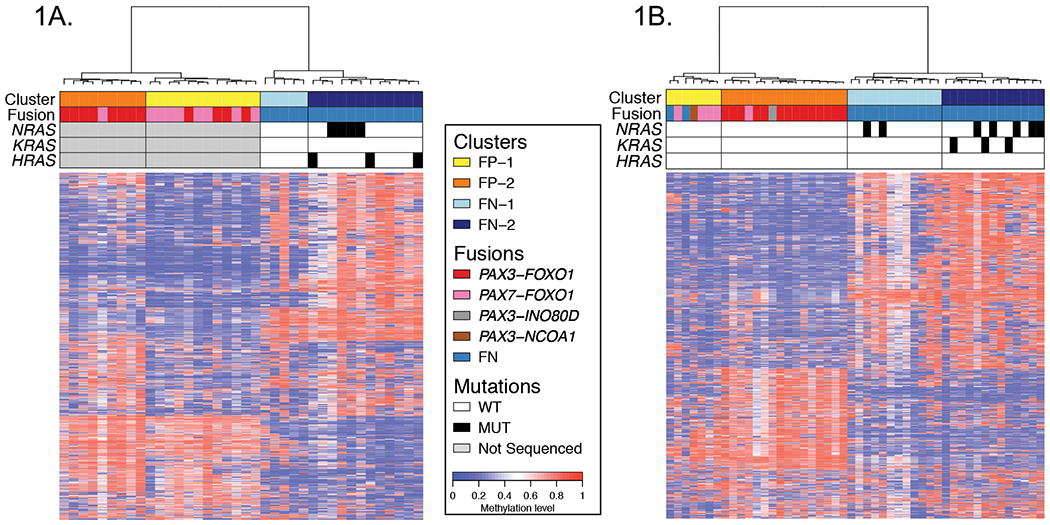
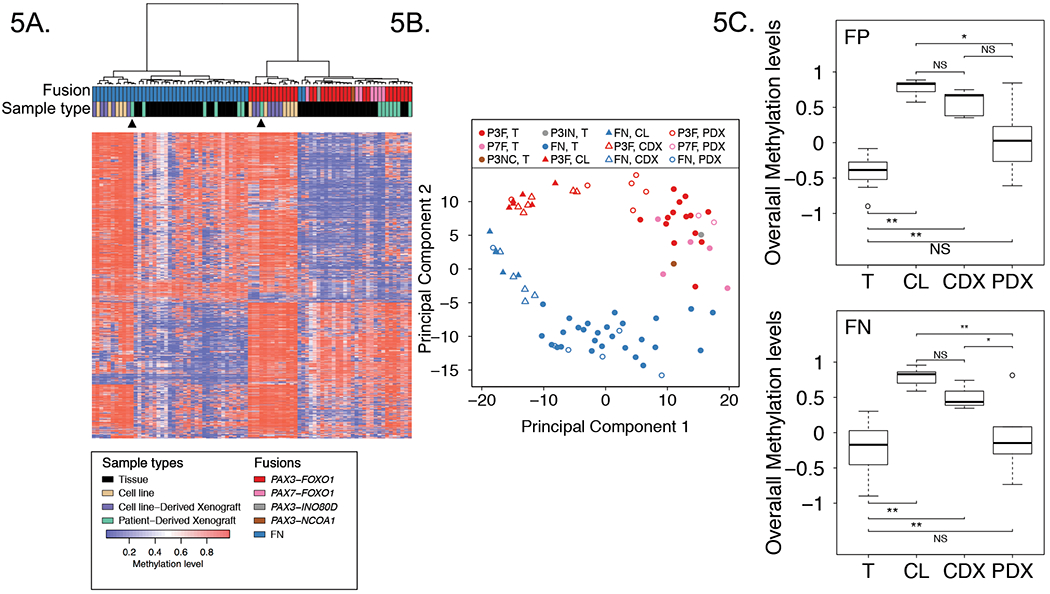
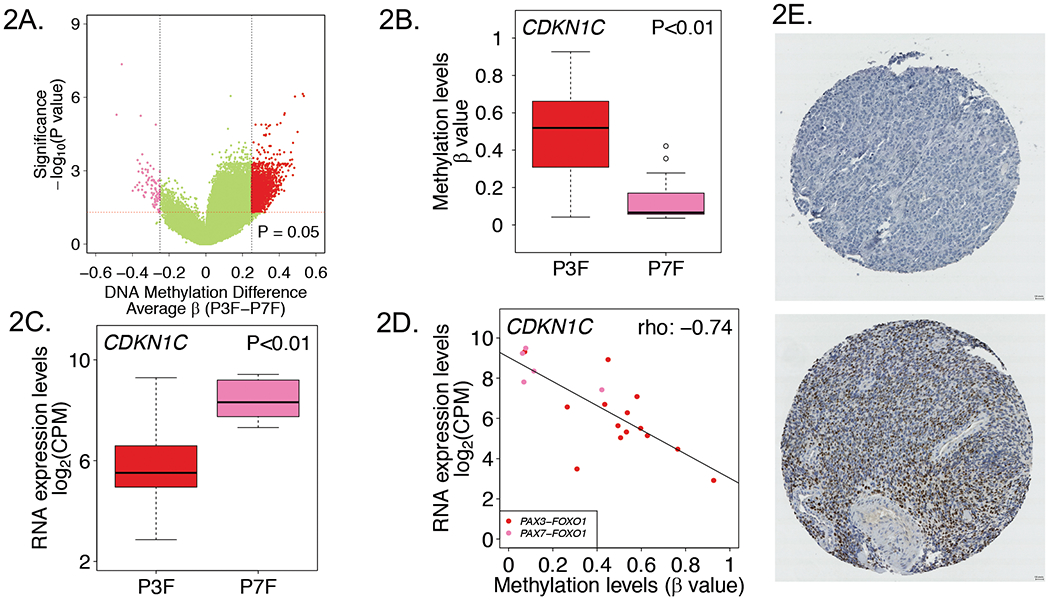
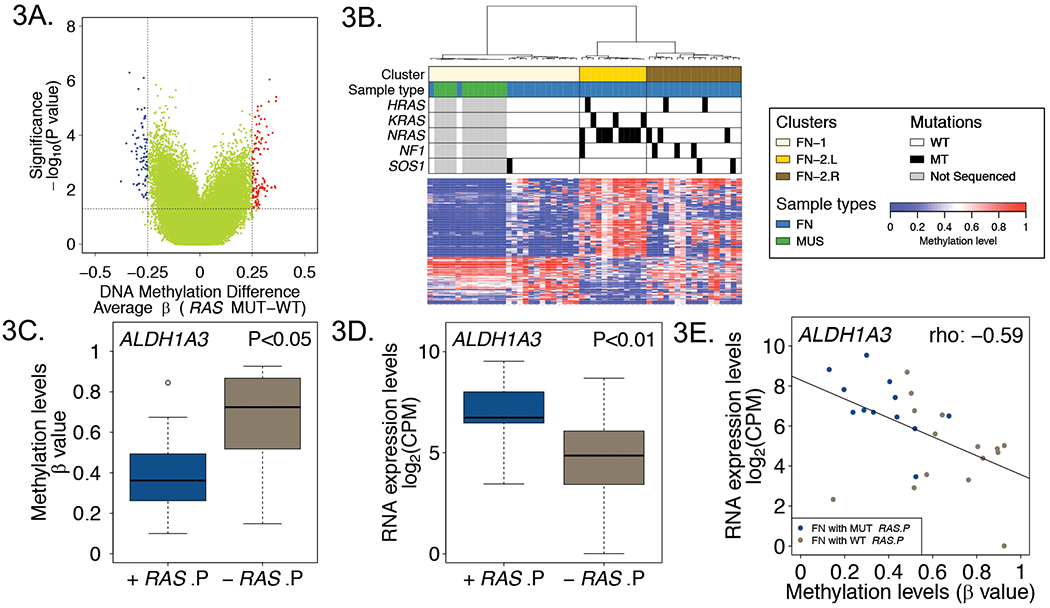
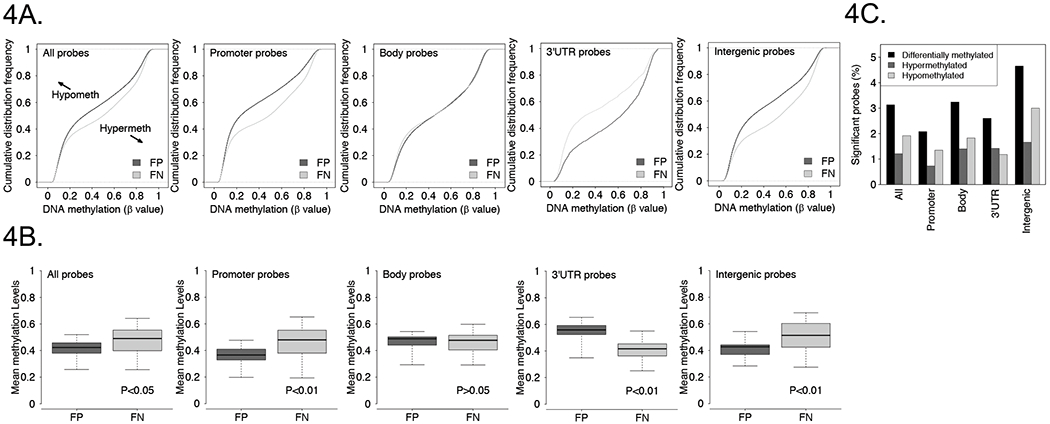
Our previous study of DNA methylation in the pediatric soft tissue tumor rhabdomyosarcoma (RMS) demonstrated that fusion-positive (FP) and fusion-negative (FN) RMS tumors exhibit distinct DNA methylation patterns. To further examine the significance of DNA methylation differences in RMS, we investigated genome-wide DNA methylation profiles in discovery and validation cohorts. Unsupervised analysis of DNA methylation data identified novel distinct subsets associated with the specific fusion subtype in FP RMS and with RAS mutation status in FN RMS. Furthermore, the methylation pattern in normal muscle is most similar to the FN subset with wild-type RAS mutation status. Several biologically relevant genes were identified with methylation and expression differences between the two fusion subtypes of FP RMS or between the RAS wild-type and mutant subsets of FN RMS. Genomic localization studies showed that promoter and intergenic regions were hypomethylated and the 3' untranslated regions were hypermethylated in FP compared to FN tumors. There was also a significant difference in the distribution of PAX3-FOXO1 binding sites between genes with and without differential methylation. Moreover, genes with PAX3-FOXO1 binding sites and promoter hypomethylation exhibited the highest frequency of overexpression in FP tumors. Finally, a comparison of RMS model systems revealed that patient-derived xenografts most closely recapitulate the DNA methylation patterns found in human RMS tumors compared to cell lines and cell line-derived xenografts. In conclusion, these findings highlight the interaction of epigenetic changes with mutational alterations and transcriptional organization in RMS tumors, and contribute to improved molecular categorization of these tumors.
我们之前对小儿软组织肿瘤横纹肌肉瘤(RMS)中的 DNA 甲基化的研究表明,融合阳性(FP)和融合阴性(FN)RMS 肿瘤表现出明显不同的 DNA 甲基化模式。为了进一步研究 RMS 中 DNA 甲基化差异的意义,我们在发现和验证队列中研究了全基因组 DNA 甲基化谱。对 DNA 甲基化数据的无监督分析确定了与 FP RMS 中特定融合亚型以及 FN RMS 中 RAS 突变状态相关的新的独特亚群。此外,正常肌肉的甲基化模式与具有野生型 RAS 突变状态的 FN 亚群最相似。在 FP RMS 的两种融合亚型之间或 FN RMS 的 RAS 野生型和突变亚群之间,发现了几个具有甲基化和表达差异的生物学相关基因。基因组定位研究表明,与 FN 肿瘤相比,FP 肿瘤中启动子和基因间区域呈低甲基化,3'非翻译区呈高甲基化。在具有和不具有差异甲基化的基因之间,PAX3-FOXO1 结合位点的分布也存在显著差异。此外,具有 PAX3-FOXO1 结合位点和启动子低甲基化的基因在 FP 肿瘤中表达过度的频率最高。最后,对 RMS 模型系统的比较表明,与细胞系和细胞系衍生的异种移植相比,患者来源的异种移植最能重现人类 RMS 肿瘤中发现的 DNA 甲基化模式。总之,这些发现强调了 RMS 肿瘤中表观遗传变化与突变改变和转录组织之间的相互作用,并有助于这些肿瘤的分子分类得到改善。