Romeo Tameka, Otgaar Henry, Smeets Tom, Landstrom Sara, Boerboom Didi
Faculty of Psychology and Neuroscience, Forensic Psychology Section, Maastricht University, Maastricht, the Netherlands.
Department of Psychology, Gothenburg University, Gothenburg, Sweden.
Mem Cognit. 2019 Apr;47(3):485-495. doi: 10.3758/s13421-018-0885-6.
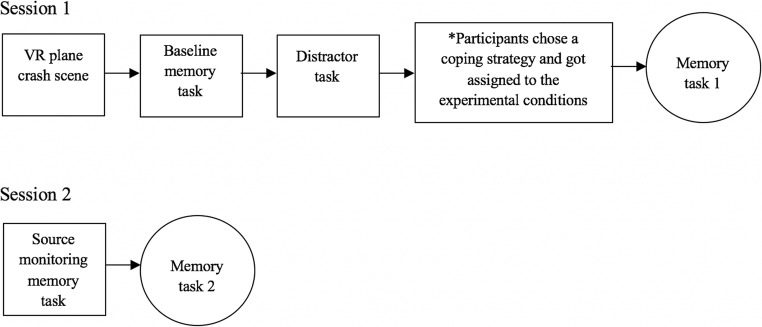
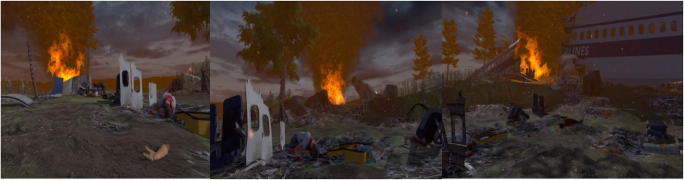
The goal of the present experiment was to examine the effect of certain (deceptive) strategies (e.g., false denial) on memory. Specifically, participants were shown a traumatic virtual reality (VR) video of an airplane crash. Following this, participants (N= 94) received questions concerning details from the VR scene in a baseline memory task. Then, participants could choose from 3 options how to cope in response to having experienced the VR scene: tell the truth, falsely deny, or fabricate. The majority opted to tell the truth (n = 81). A subsample of truth tellers were instructed to falsely deny having seen certain details. One week later, all participants received a source monitoring task in which they were asked (1) whether they remembered talking about these details during an interview, and (2) whether they remembered seeing certain details during the VR experience the week before. Participants had to tell the truth during this task. Participants who were instructed to falsely deny showed impaired memory for presented details that had previously been discussed (i.e., denial-induced forgetting) and seen in the VR scene. Also, the presentation of certain details in the baseline memory task seemed to inoculate participants who were instructed to falsely deny from experiencing memory impairment. The current experiment suggests that false denials can have adverse ramifications for memory for what is discussed and seen.
本实验的目的是研究某些(欺骗性)策略(如虚假否认)对记忆的影响。具体而言,研究人员向参与者展示了一段飞机坠毁的创伤性虚拟现实(VR)视频。在此之后,参与者(N = 94)在一项基线记忆任务中被问及有关VR场景细节的问题。然后,参与者可以从三种选择中选择如何应对所经历的VR场景:说实话、虚假否认或编造。大多数人选择说实话(n = 81)。一部分说实话的参与者被指示虚假否认看到过某些细节。一周后,所有参与者都接受了一项源监测任务,在该任务中,他们被问及:(1)是否记得在访谈中谈论过这些细节,以及(2)是否记得在前一周的VR体验中看到过某些细节。参与者在这项任务中必须说实话。被指示虚假否认的参与者对之前讨论过(即否认导致的遗忘)并在VR场景中看到的呈现细节的记忆受损。此外,基线记忆任务中某些细节的呈现似乎使被指示虚假否认的参与者免受记忆损害。当前的实验表明,虚假否认可能会对所讨论和看到内容的记忆产生不利影响。