Department of Pathology, University of Washington, Seattle, WA, 98104, USA.
Lab Invest. 2019 Jul;99(7):1056-1067. doi: 10.1038/s41374-018-0165-x. Epub 2018 Dec 20.
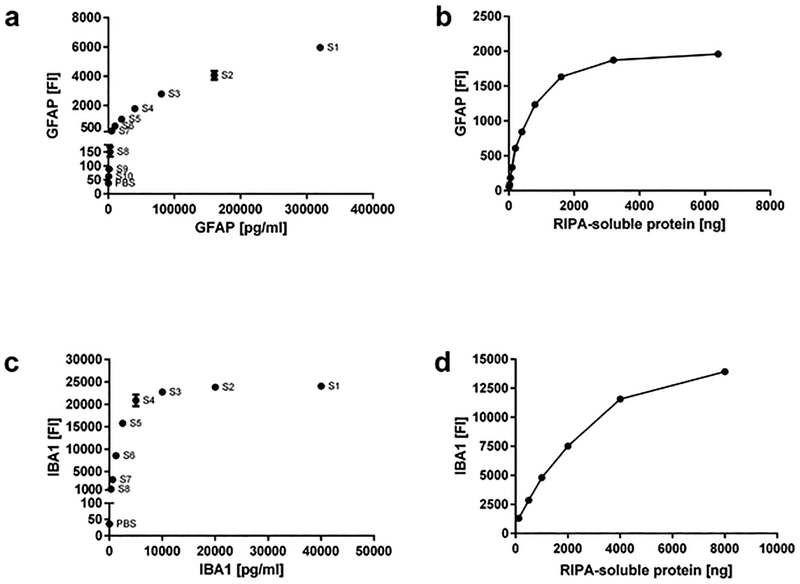
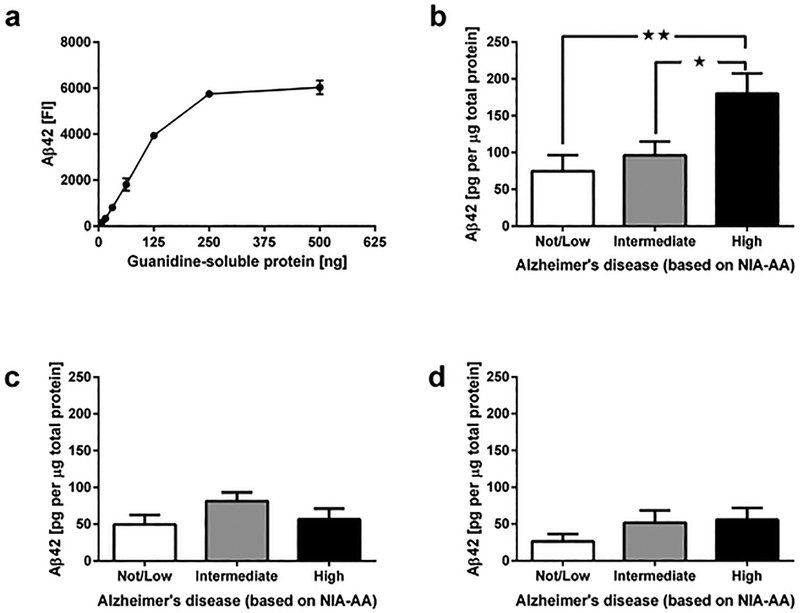
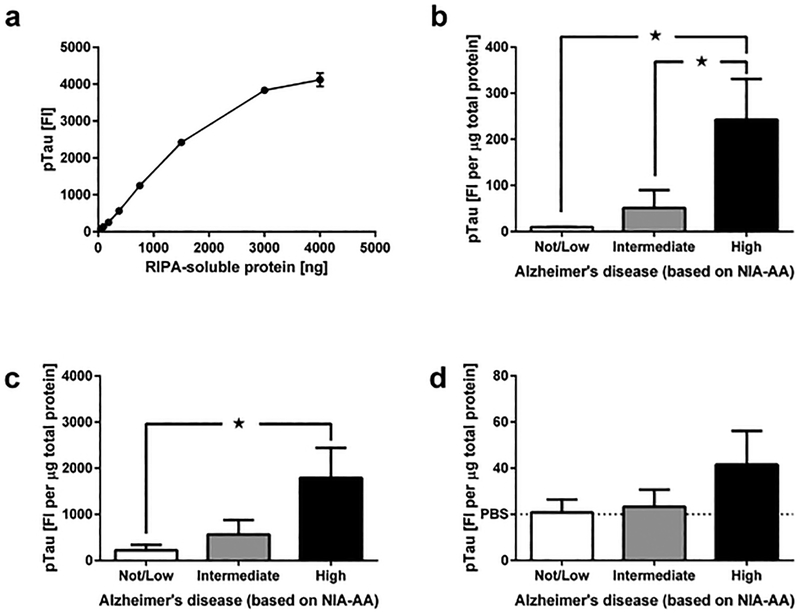
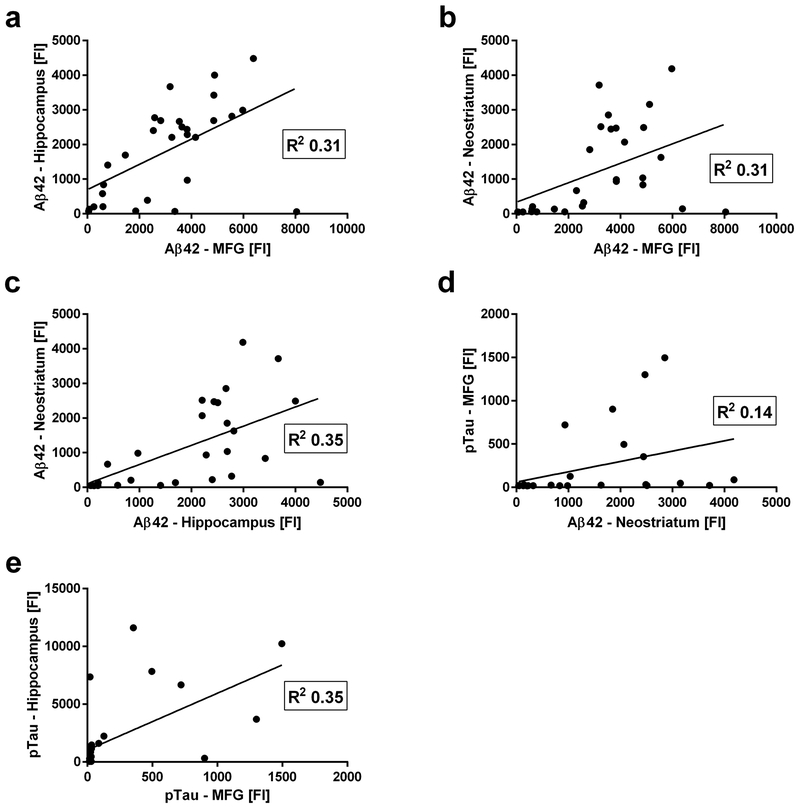
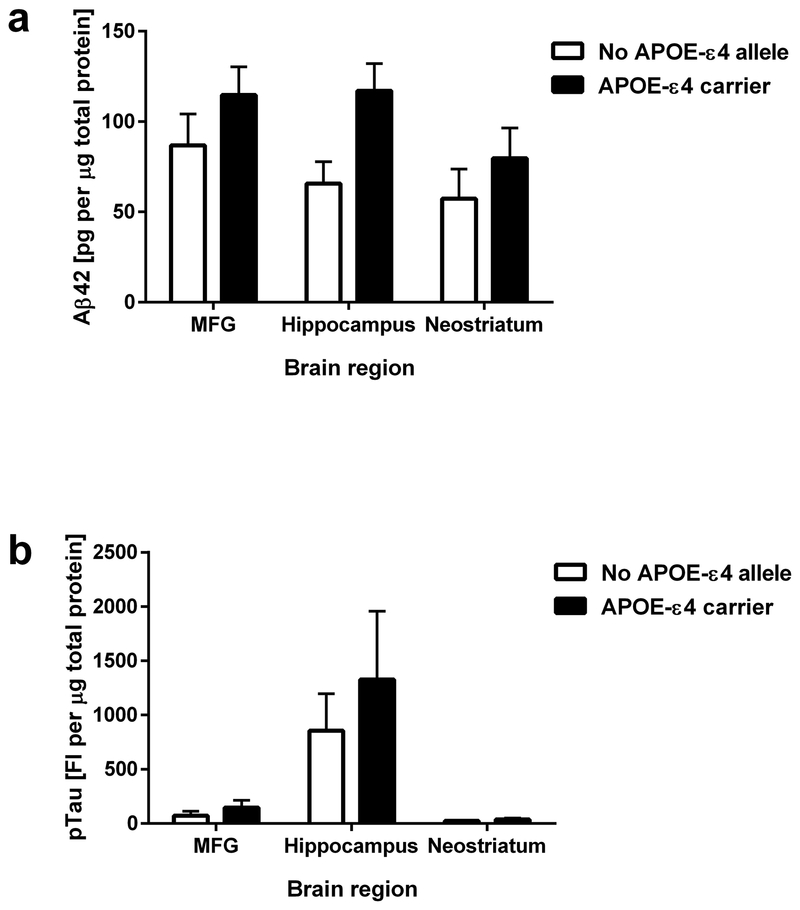
The vast majority of archived research and clinical pathological specimens are stored in the form of formalin fixed, paraffin-embedded (FFPE) tissues, but, unlike fresh frozen tissue samples, highly quantitative measures in FFPE tissues are limited to immunohistochemical and immunofluorescence thresholding image analysis studies, cell counting, and ordinal ranking systems. This poses a significant obstacle for clinical investigations that aim to correlate diagnostic markers of neurodegenerative diseases like Alzheimer's disease (AD) with parameters like age, gender, drug exposures, genotype, disease stage, co-morbidities, or environmental factors. To overcome this limitation, we have developed Luminex-based techniques and protocols for the quantification of amyloid β and hyperphosphorylated Tau in FFPE brain sections. We validated the Luminex assay in FFPE sections from prefrontal cortex, hippocampus, and neostriatum from 30 cases that underwent prior neuropathological diagnostic assessment of AD following the current NIA-AA recommendations for AD: 10 cases diagnosed as not or low, 10 cases as intermediate, and 10 cases as high AD neuropathologic change. Consistent with the neuropathologic assessment, Luminex assay detected high amounts of amyloid beta in the frontal cortex and striatum, and high amounts of hyperphosphorylated Tau in the frontal cortex and hippocampus, of cases with high AD neuropathologic change. This assay can be expanded to detect diverse antigenic targets of interest, as we show here with IBA1 and GFAP. This novel approach supports multiplexed highly quantitative, molecularly specific neuropathology measures to further explore mechanisms of neurodegeneration in AD.
绝大多数存档的研究和临床病理标本都是以福尔马林固定、石蜡包埋(FFPE)组织的形式保存的,但与新鲜冷冻组织样本不同,FFPE 组织中高度定量的测量方法仅限于免疫组织化学和免疫荧光阈值图像分析研究、细胞计数和有序排名系统。这对旨在将阿尔茨海默病(AD)等神经退行性疾病的诊断标志物与年龄、性别、药物暴露、基因型、疾病阶段、合并症或环境因素等参数相关联的临床研究构成了重大障碍。为了克服这一限制,我们开发了基于 Luminex 的技术和协议,用于定量分析 FFPE 脑切片中的淀粉样β和磷酸化 Tau。我们在根据当前 NIA-AA 对 AD 的建议进行了 AD 神经病理学诊断评估的 30 例病例的前额叶皮层、海马体和新纹状体的 FFPE 切片中验证了 Luminex 检测方法:10 例诊断为不或低度 AD,10 例为中度 AD,10 例为高度 AD 神经病理学改变。与神经病理学评估一致,Luminex 检测法在高 AD 神经病理学改变病例的额叶皮层和纹状体中检测到大量的淀粉样β,在额叶皮层和海马体中检测到大量的磷酸化 Tau。如我们在此处所示,该检测方法可以扩展到检测各种感兴趣的抗原性靶标。这种新方法支持高度定量、分子特异性神经病理学的多重测量,以进一步探索 AD 中神经退行性变的机制。