Petővári Gábor, Hujber Zoltán, Krencz Ildikó, Dankó Titanilla, Nagy Noémi, Tóth Fanni, Raffay Regina, Mészáros Katalin, Rajnai Hajnalka, Vetlényi Enikő, Takács-Vellai Krisztina, Jeney András, Sebestyén Anna
11st Department of Pathology and Experimental Cancer Research, Semmelweis University, Üllői út 26, Budapest, 1085 Hungary.
2Hungarian Academy of Sciences-Momentum Hereditary Endocrine Tumours Research Group, Semmelweis University-National Bionics Program Budapest, Üllői út 26, Budapest, 1085 Hungary.
Cancer Cell Int. 2018 Dec 19;18:211. doi: 10.1186/s12935-018-0710-0. eCollection 2018.
Glioma is the most common highly aggressive, primary adult brain tumour. Clinical data show that therapeutic approaches cannot reach the expectations in patients, thus gliomas are mainly incurable diseases. Tumour cells can adapt rapidly to alterations during therapeutic treatments related to their metabolic rewiring and profound heterogeneity in tissue environment. Renewed interests aim to develop effective treatments targeting angiogenesis, kinase activity and/or cellular metabolism. mTOR (mammalian target of rapamycin), whose hyper-activation is characteristic for many tumours, promotes metabolic alterations, macromolecule biosynthesis, cellular growth and survival. Unfortunately, mTOR inhibitors with their lower toxicity have not resulted in appreciable survival benefit. Analysing mTOR inhibitor sensitivity, other metabolism targeting treatments and their combinations could help to find potential agents and biomarkers for therapeutic development in glioma patients.
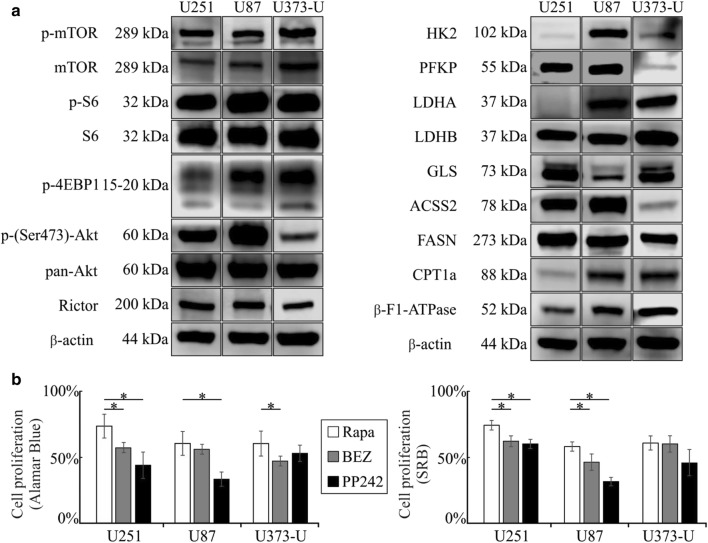
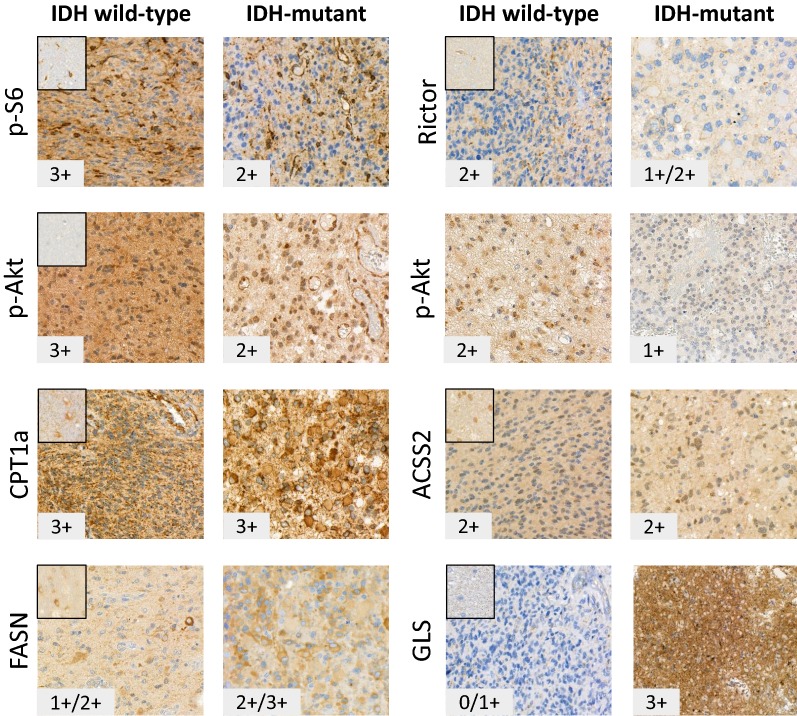
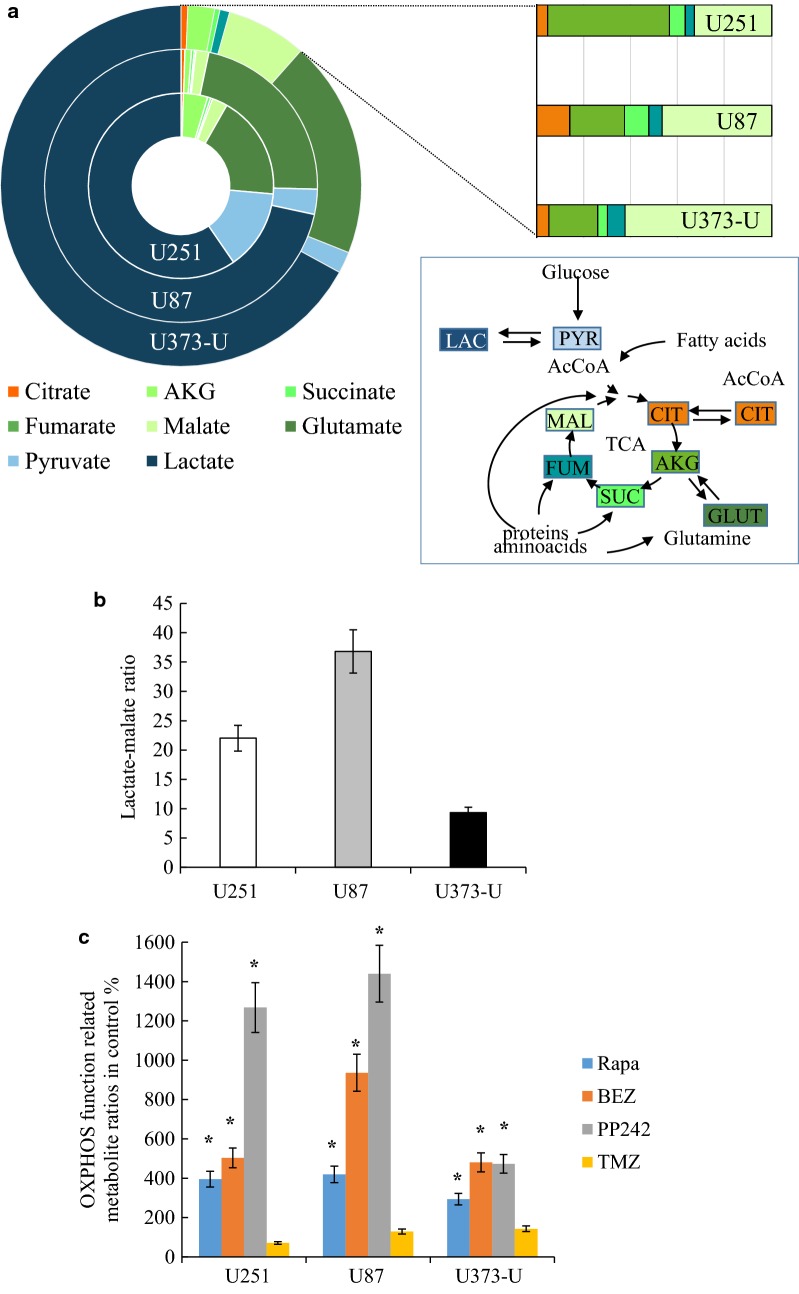
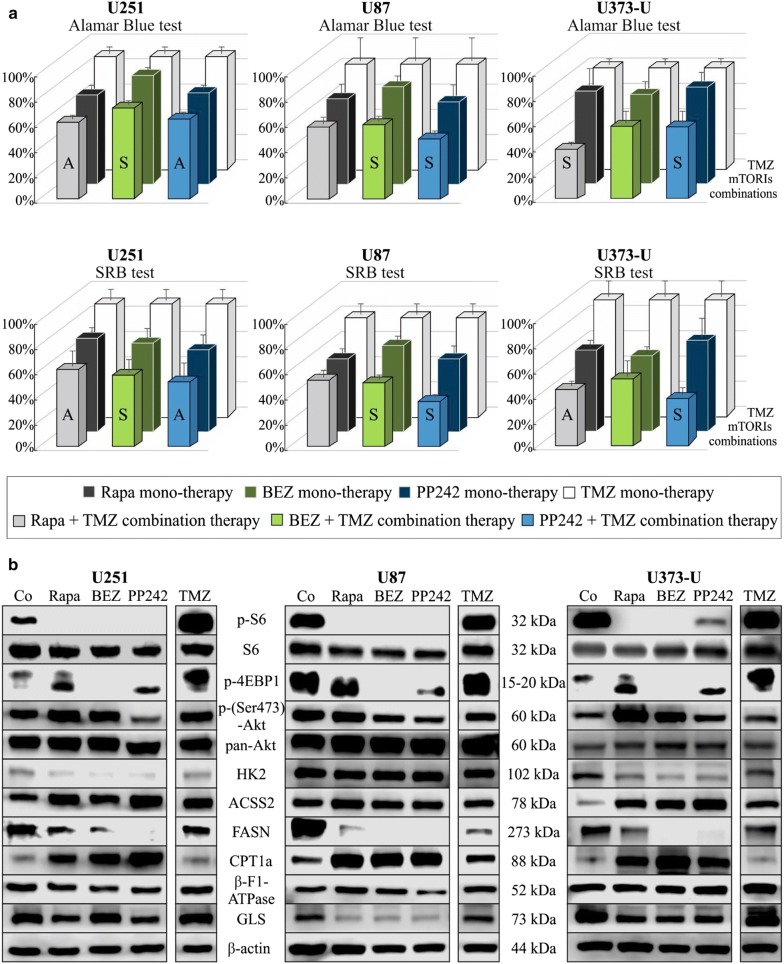
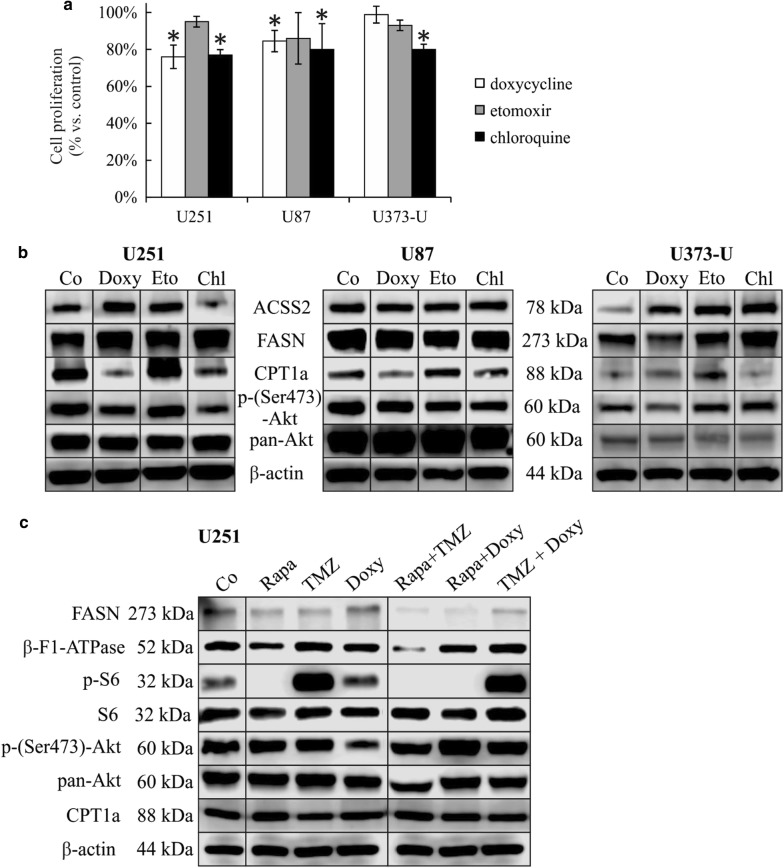
In vitro proliferation assays, protein expression and metabolite concentration analyses were used to study the effects of mTOR inhibitors, other metabolic treatments and their combinations in glioma cell lines. Furthermore, mTOR activity and cellular metabolism related protein expression patterns were also investigated by immunohistochemistry in human biopsies. Temozolomide and/or rapamycin treatments altered the expressions of enzymes related to lipid synthesis, glycolysis and mitochondrial functions as consequences of metabolic adaptation; therefore, other anti-metabolic drugs (chloroquine, etomoxir, doxycycline) were combined in vitro.
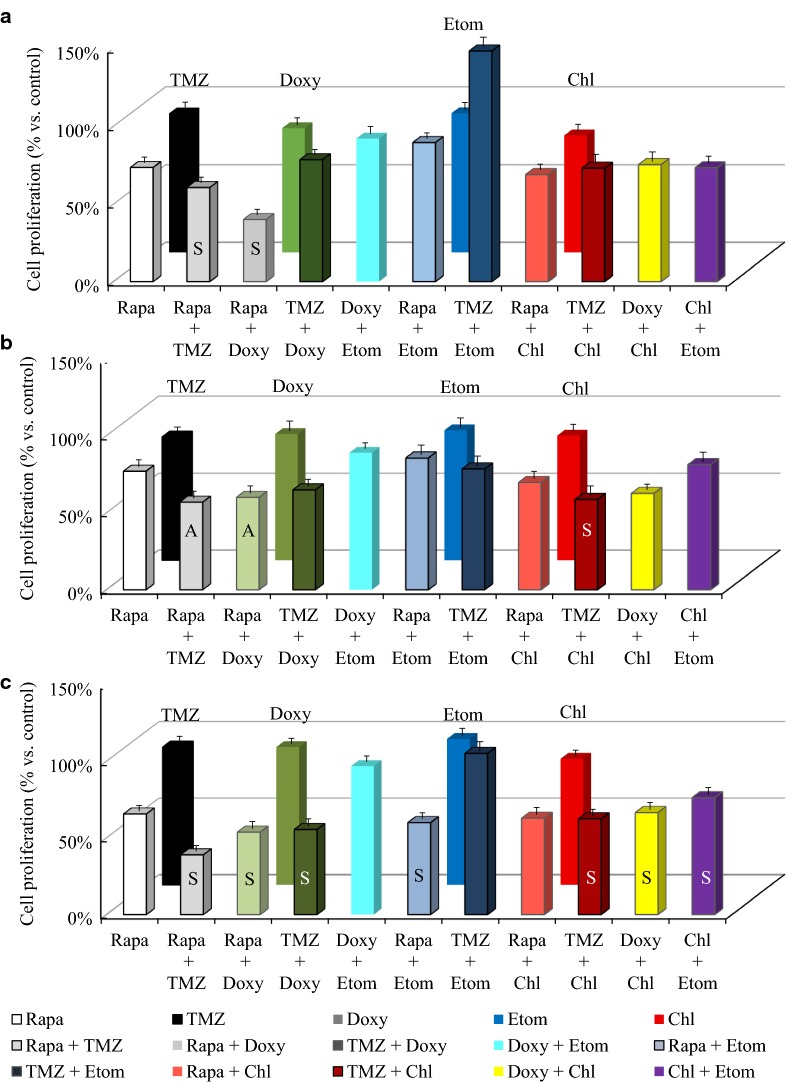
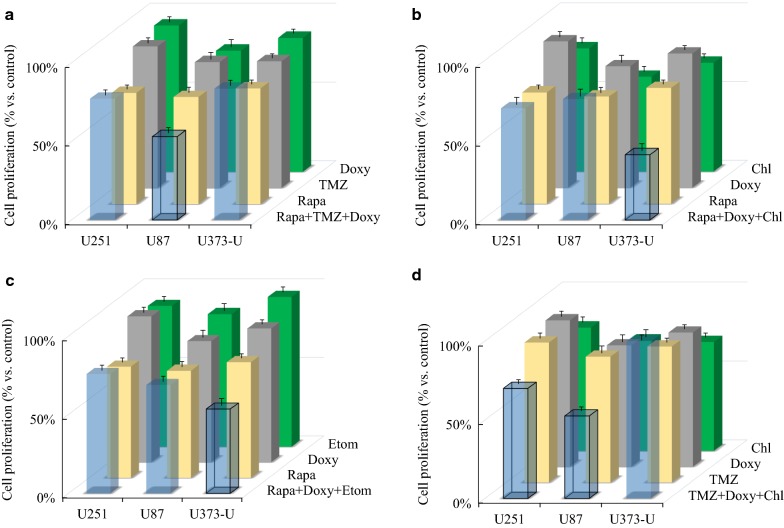
Our results suggest that co-targeting metabolic pathways had tumour cell dependent additive/synergistic effects related to mTOR and metabolic protein expression patterns cell line dependently. Drug combinations, especially rapamycin + doxycycline may have promising anti-tumour effect in gliomas. Additionally, our immunohistochemistry results suggest that metabolic and mTOR activity alterations are not related to the recent glioma classification, and these protein expression profiles show individual differences in patients' materials.
Based on these, combinations of different new/old drugs targeting cellular metabolism could be promising to inhibit high adaptation capacity of tumour cells depending on their metabolic shifts. Relating to this, such a development of current therapy needs to find special biomarkers to characterise metabolic heterogeneity of gliomas.
胶质瘤是最常见的具有高度侵袭性的原发性成人脑肿瘤。临床数据表明,治疗方法未能达到患者的预期效果,因此胶质瘤主要是无法治愈的疾病。肿瘤细胞能够在治疗过程中通过代谢重编程和组织环境中的显著异质性迅速适应变化。人们重新燃起兴趣,旨在开发针对血管生成、激酶活性和/或细胞代谢的有效治疗方法。雷帕霉素的哺乳动物靶点(mTOR)在许多肿瘤中表现为过度激活,它促进代谢改变、大分子生物合成、细胞生长和存活。不幸的是,毒性较低的mTOR抑制剂并未带来显著的生存益处。分析mTOR抑制剂敏感性、其他靶向代谢的治疗方法及其组合,可能有助于找到胶质瘤患者治疗开发的潜在药物和生物标志物。
采用体外增殖试验、蛋白质表达和代谢物浓度分析,研究mTOR抑制剂、其他代谢治疗方法及其组合对胶质瘤细胞系的影响。此外,还通过免疫组织化学在人体活检组织中研究了mTOR活性和细胞代谢相关蛋白质表达模式。替莫唑胺和/或雷帕霉素治疗作为代谢适应的结果,改变了与脂质合成、糖酵解和线粒体功能相关的酶的表达;因此,在体外将其他抗代谢药物(氯喹、依托莫西、强力霉素)联合使用。
我们的结果表明,共同靶向代谢途径对肿瘤细胞具有与mTOR和代谢蛋白表达模式相关的、细胞系依赖性的相加/协同作用。药物组合,尤其是雷帕霉素+强力霉素,可能对胶质瘤具有有前景的抗肿瘤作用。此外,我们的免疫组织化学结果表明,代谢和mTOR活性改变与最近的胶质瘤分类无关,并且这些蛋白质表达谱在患者材料中显示出个体差异。
基于这些,针对细胞代谢的不同新/旧药物组合有望抑制肿瘤细胞因其代谢转变而产生的高适应能力。与此相关的是,当前治疗方法的这种发展需要找到特殊的生物标志物来表征胶质瘤的代谢异质性。