Integrated Group of Biotechnology, Laboratory of Adipose Tissue Biology, University of Mogi das Cruzes, São Paulo, Brazil.
Program in Molecular Medicine, University of Massachusetts Medical School, Worcester, Massachusetts, USA.
Sci Rep. 2018 Dec 21;8(1):18024. doi: 10.1038/s41598-018-36626-3.
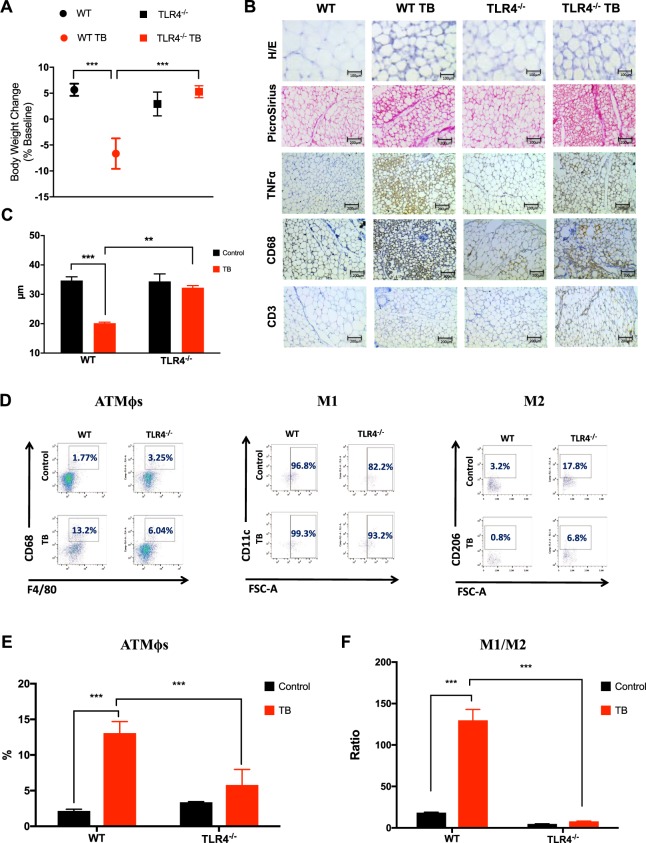
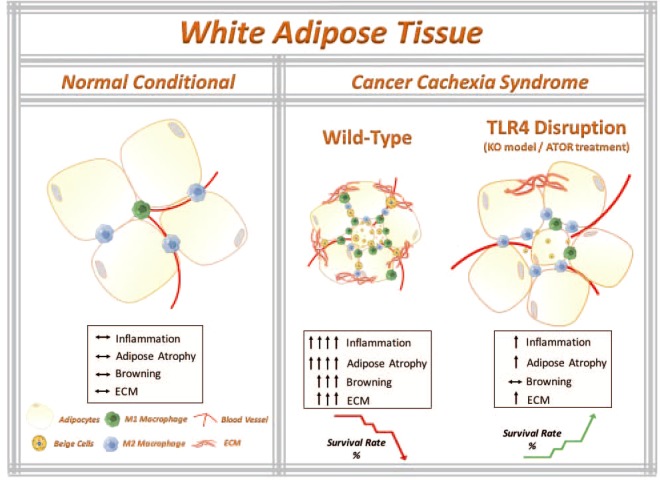
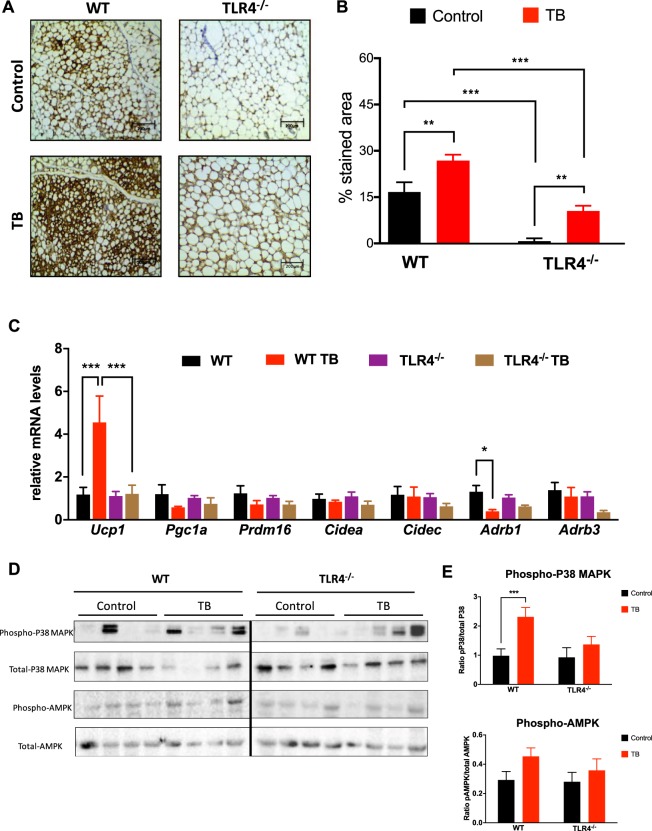
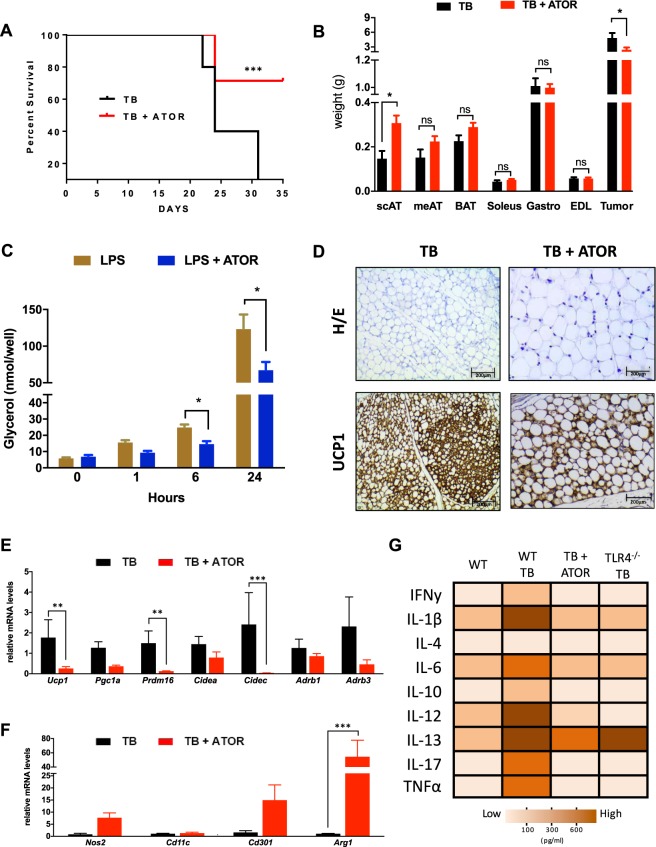
Cancer-induced cachexia, characterized by systemic inflammation, body weight loss, adipose tissue (AT) remodeling and muscle wasting, is a malignant metabolic syndrome with undefined etiology. Here, we show that both genetic ablation and pharmacological inhibition of TLR4 were able to attenuate the main clinical markers of cachexia in mice bearing Lewis lung carcinoma (LLC). AT remodelling was not found in LLC tumor-bearing (TB) TLR4 mice due to reduced macrophage infiltration and adipocyte atrophy. TLR4 mice were also resistant to cold-induced browning of subcutaneous AT (scAT). Importantly, pharmacological inhibition of TLR4 (Atorvastatin) reproduced the main protective effect against AT remodeling found in TLR4 TB mice. Moreover, the treatment was effective in prolonging survival and attenuating tumor mass growth when compared to non-treated-TB animals. Furthermore, tumor-induced elevation of circulating pro-inflammatory cytokines was similarly abolished in both genetic ablation and pharmacological inhibition of TLR4. These data suggest that TLR4 is a critical mediator and a promising target for novel anti-cachexia therapies.
癌症恶病质的特征是全身炎症、体重减轻、脂肪组织(AT)重塑和肌肉消耗,是一种病因不明的恶性代谢综合征。在这里,我们表明,TLR4 的基因缺失和药理学抑制都能够减弱携带 Lewis 肺癌(LLC)的小鼠的恶病质的主要临床标志物。由于巨噬细胞浸润减少和脂肪细胞萎缩,TLR4 缺失的 LLC 肿瘤负荷(TB)小鼠中不存在 AT 重塑。TLR4 小鼠也对冷诱导的皮下 AT(scAT)褐变具有抗性。重要的是,TLR4 的药理学抑制(阿托伐他汀)复制了在 TLR4 TB 小鼠中发现的对 AT 重塑的主要保护作用。此外,与未经治疗的 TB 动物相比,该治疗在延长存活和减轻肿瘤质量生长方面也是有效的。此外,TLR4 的基因缺失和药理学抑制都能同样消除肿瘤诱导的循环促炎细胞因子的升高。这些数据表明,TLR4 是一种关键的介质,也是一种有前途的新型抗恶病质治疗靶点。