O'Sullivan Mary E, Perez Adela, Lin Randy, Sajjadi Autefeh, Ricci Anthony J, Cheng Alan G
Department of Otolaryngology-Head and Neck Surgery, Stanford University School of Medicine, Stanford, CA, United States.
Department of Molecular and Cellular Physiology, Stanford University School of Medicine, Stanford, CA, United States.
Front Cell Neurosci. 2017 Oct 18;11:325. doi: 10.3389/fncel.2017.00325. eCollection 2017.
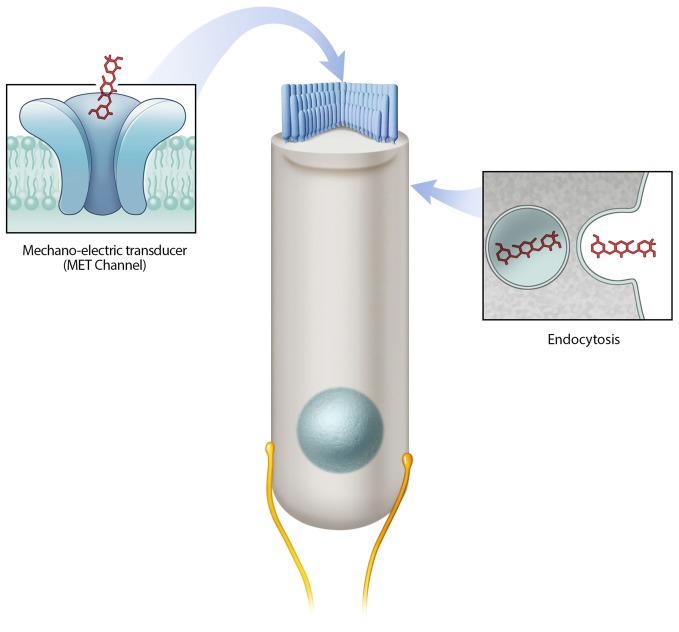
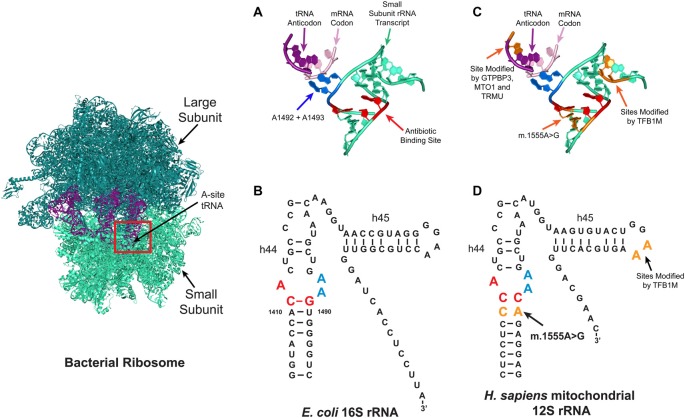
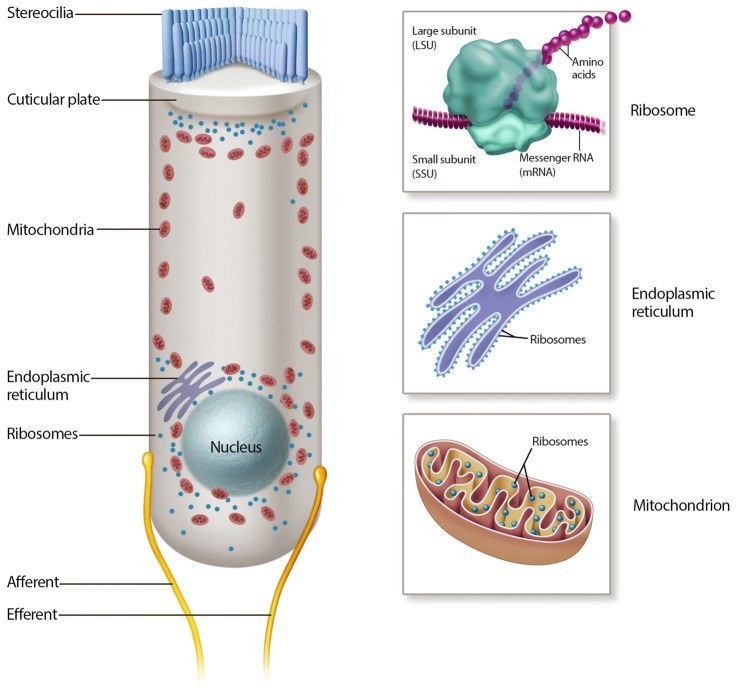
Aminoglycosides are potent antibiotics deployed worldwide despite their known side-effect of sensorineural hearing loss. The main etiology of this sensory deficit is death of inner ear sensory hair cells selectively triggered by aminoglycosides. For decades, research has sought to unravel the molecular events mediating sensory cell demise, emphasizing the roles of reactive oxygen species and their potentials as therapeutic targets. Studies in recent years have revealed candidate transport pathways including the mechanotransducer channel for drug entry into sensory cells. Once inside sensory cells, intracellular targets of aminoglycosides, such as the mitochondrial ribosomes, are beginning to be elucidated. Based on these results, less ototoxic aminoglycoside analogs are being generated and may serve as alternate antimicrobial agents. In this article, we review the latest findings on mechanisms of aminoglycoside entry into hair cells, their intracellular actions and potential therapeutic targets for preventing aminoglycoside ototoxicity.
尽管已知氨基糖苷类药物有导致感音神经性听力损失的副作用,但它们仍是全球广泛使用的强效抗生素。这种感觉缺陷的主要病因是内耳感觉毛细胞的死亡,这是由氨基糖苷类药物选择性触发的。几十年来,研究一直试图揭示介导感觉细胞死亡的分子事件,强调活性氧的作用及其作为治疗靶点的潜力。近年来的研究揭示了候选转运途径,包括药物进入感觉细胞的机械转导通道。一旦进入感觉细胞,氨基糖苷类药物的细胞内靶点,如线粒体核糖体,正开始被阐明。基于这些结果,正在研发耳毒性较小的氨基糖苷类类似物,并可能用作替代抗菌剂。在本文中,我们综述了关于氨基糖苷类药物进入毛细胞的机制、其细胞内作用以及预防氨基糖苷类药物耳毒性的潜在治疗靶点的最新研究结果。