Grupo de Investigaciones Microbiológicas-UR (GIMUR), Programa de Biología, Facultad de Ciencias Naturales y Matemáticas, Universidad del Rosario, Bogotá, Colombia.
Grupo de Parasitología, Instituto Nacional de Salud, Bogotá, Colombia.
PLoS Negl Trop Dis. 2018 Dec 26;12(12):e0007063. doi: 10.1371/journal.pntd.0007063. eCollection 2018 Dec.
The recent development of novel Polymerase Chain Reaction (PCR) technologies that confer theoretical advantages over quantitative PCR has considerable potential in the diagnosis of low load infections, such as Trypanosoma cruzi in the chronic phase of Chagas disease. We evaluated the utility of the digital droplet (dd)PCR platform in the detection of T. cruzi infection.
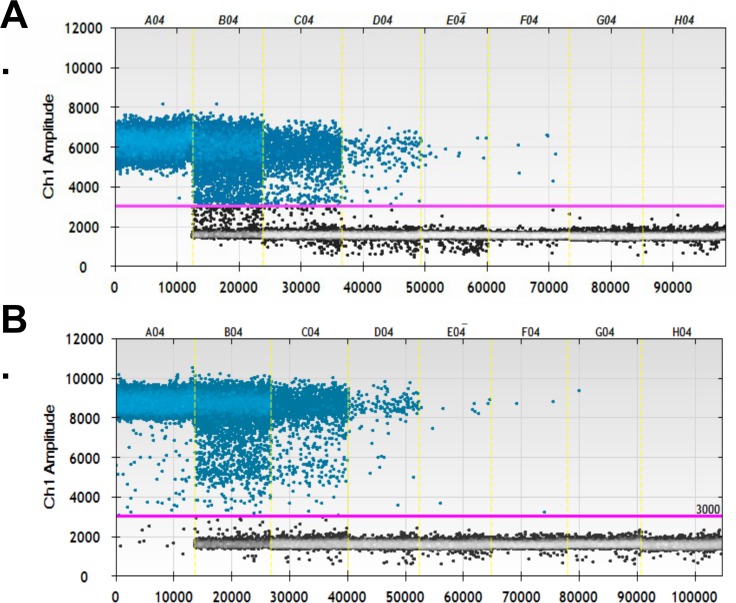
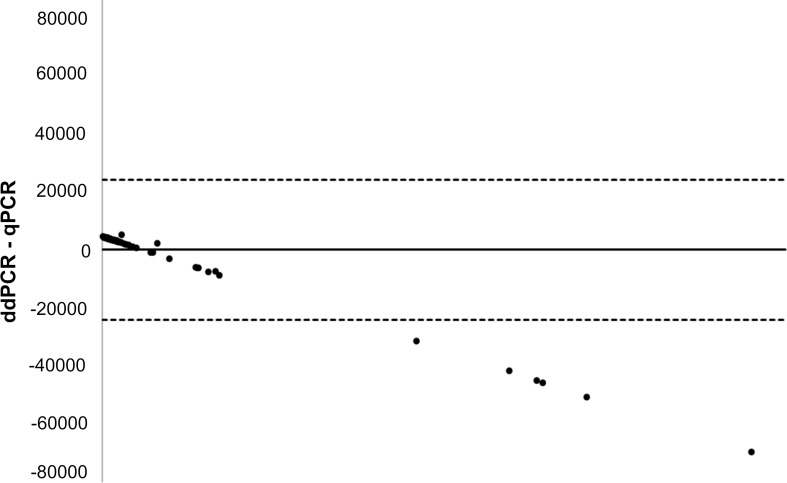
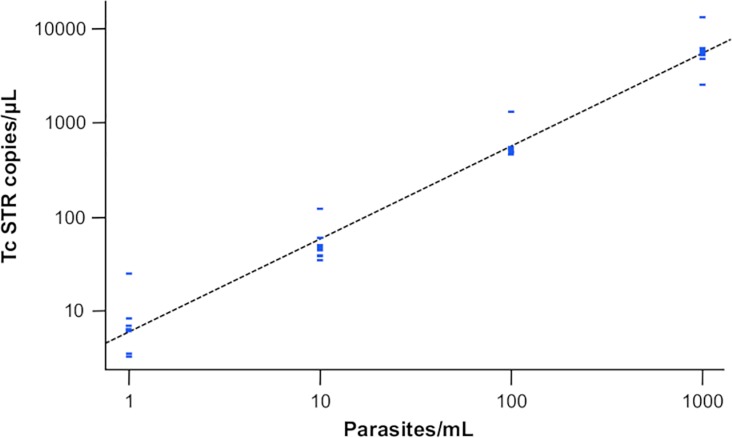
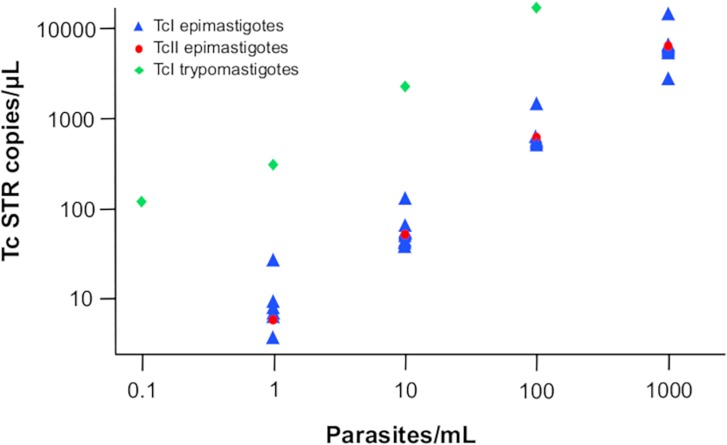
METHODOLOGY/PRINCIPAL FINDINGS: We imported a validated qPCR assay targeting the T. cruzi satellite tandem repeat (TcSTR) region to the ddPCR platform. Following optimization, we tested and repeated a standard curve of TcI epimastigotes to characterise the analytical performance of the assay on the ddPCR platform. We compared this to published qPCR performance data, and the performance of the qPCR assay in our own testing. We subsequently tested a panel of 192 previously characterized DNA specimens, extracted from the blood of individuals with and without T. cruzi infection. The assay performed well on the ddPCR platform, showing a limit of detection of 5 copies/μL or 1 parasite/mL. This was higher than the published limit of detection for qPCR, which was 0.46 parasites/mL. The ddPCR platform was not significantly more accurate than qPCR at any concentration tested. However, the clinical sensitivity and specificity of the assay were both 100% with perfect agreement between qPCR and ddPCR positive and negative result calling in clinical specimens. An average of 9,286 copies of TcSTR were detected per parasite.
CONCLUSIONS/SIGNIFICANCE: The use of the ddPCR platform to run this assay was comparable, but not superior in terms of performance, to the qPCR platform.
新型聚合酶链反应(PCR)技术的最新发展在定量 PCR 方面具有理论优势,在诊断低负荷感染方面具有相当大的潜力,例如恰加斯病慢性期的克氏锥虫。我们评估了数字液滴(dd)PCR 平台在检测克氏锥虫感染中的效用。
方法/主要发现:我们将针对克氏锥虫卫星串联重复(TcSTR)区域的经过验证的 qPCR 检测方法导入 ddPCR 平台。在优化后,我们测试并重复了 TcI 前鞭毛体的标准曲线,以表征该检测方法在 ddPCR 平台上的分析性能。我们将其与已发表的 qPCR 性能数据以及我们自己测试中的 qPCR 检测方法的性能进行了比较。随后,我们测试了一组 192 个先前经过特征描述的 DNA 标本,这些标本取自感染和未感染克氏锥虫的个体的血液。该检测方法在 ddPCR 平台上表现良好,检测限为 5 个拷贝/μL 或 1 个寄生虫/毫升。这高于已发表的 qPCR 检测限,为 0.46 个寄生虫/毫升。在测试的任何浓度下,ddPCR 平台都没有比 qPCR 更准确。然而,该检测方法在临床标本中的敏感性和特异性均为 100%,qPCR 和 ddPCR 阳性和阴性结果的判断完全一致。每个寄生虫平均检测到 9286 个 TcSTR 拷贝。
结论/意义:使用 ddPCR 平台运行该检测方法在性能方面与 qPCR 平台相当,但并不优越。