Li Ling, Lu Shun, Liang Xinhua, Cao Bangrong, Wang Shaoxin, Jiang Jian, Luo Huaichao, He Shuya, Lang Jinyi, Zhu Guiquan
Department of Head and Neck Surgery, Sichuan Cancer Hospital & Institute, Sichuan Cancer Center, School of Medicine, University of Electronic Science and Technology of China, Chengdu, Sichuan 610041, P.R. China.
Department of Radiation Oncology, Sichuan Cancer Hospital & Institute, Sichuan Cancer Center, School of Medicine, University of Electronic Science and Technology of China, Chengdu, Sichuan 610041, P.R. China.
Mol Ther Nucleic Acids. 2019 Mar 1;14:101-113. doi: 10.1016/j.omtn.2018.11.009. Epub 2018 Nov 24.
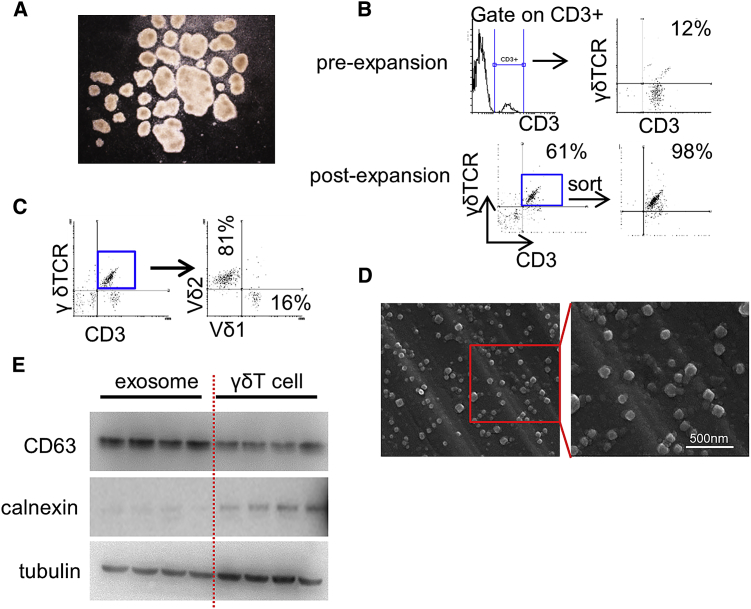
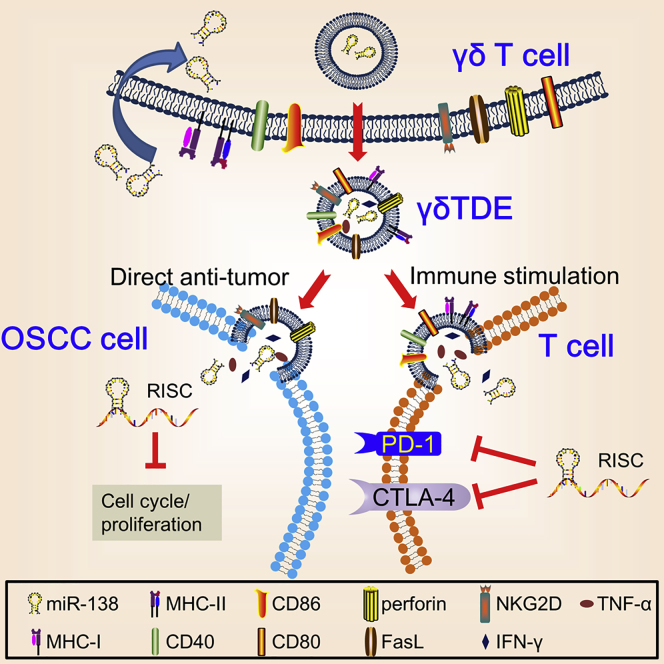
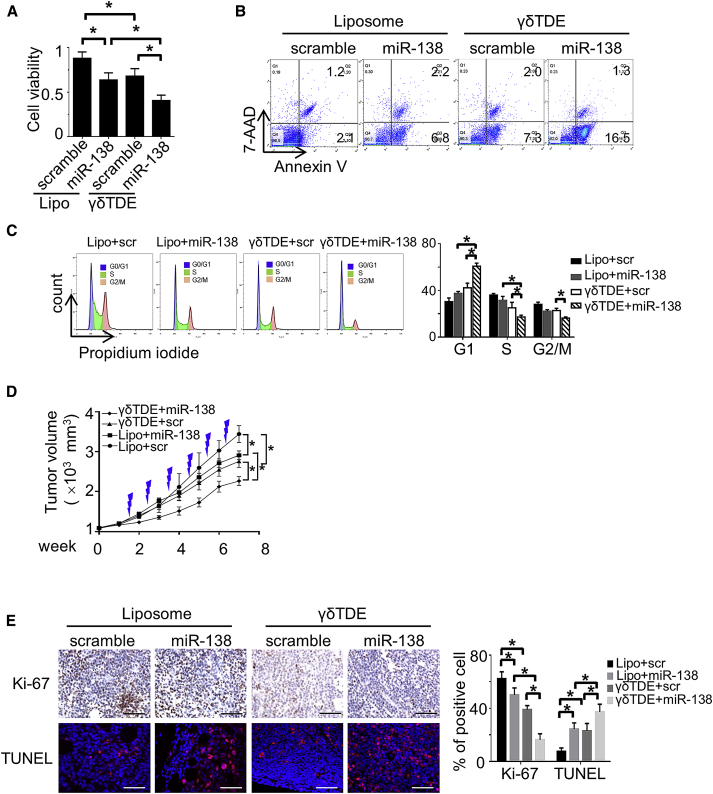
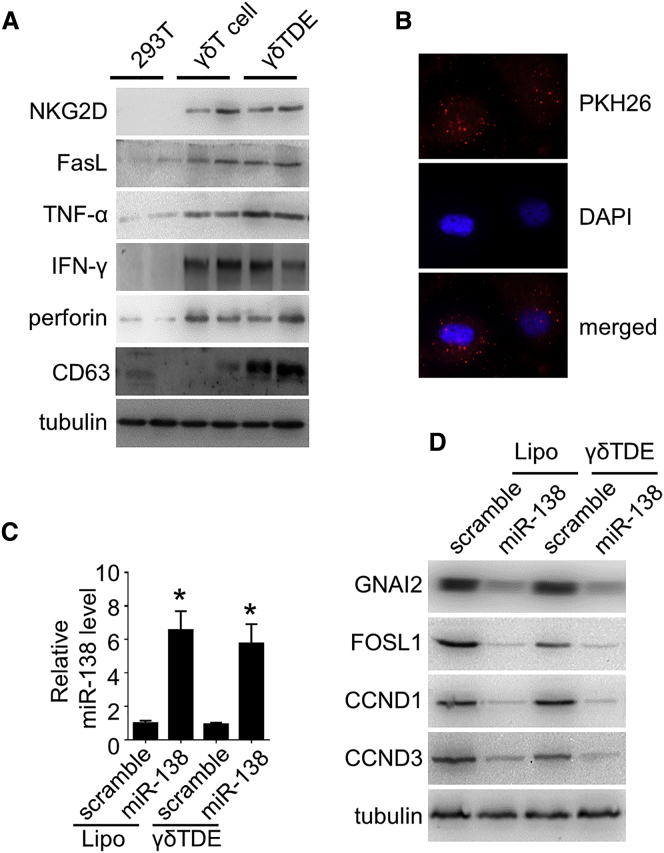
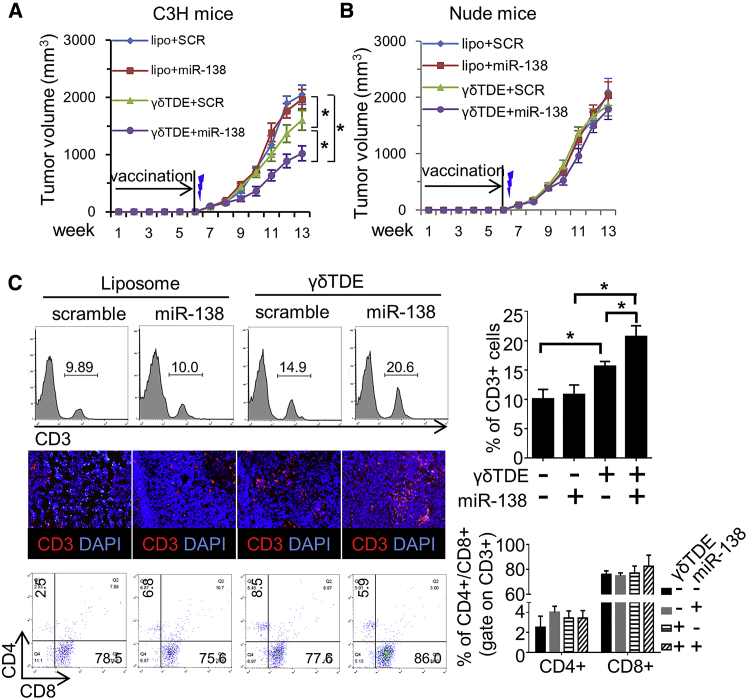
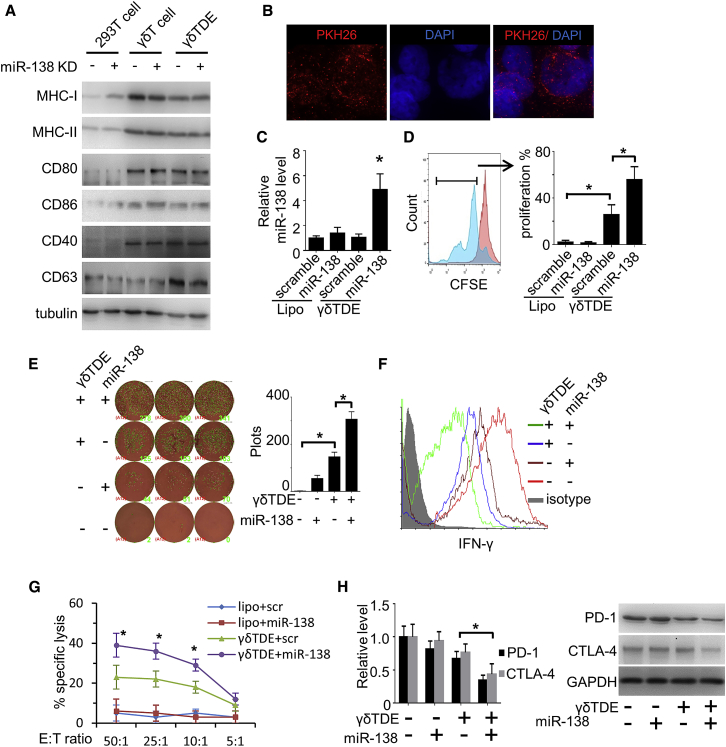
In this study, we sought to investigate the potential application of γδ T cell-derived extracellular vesicles (γδTDEs) as drug delivery system (DDS) for miR-138 in the treatment of oral squamous cell carcinoma (OSCC). Our data showed that overexpression of miR-138 in γδ T cells obtained miR-138-rich γδTDEs accompanying increased expansion and cytotoxicity of γδ T cells. γδTDEs inherited the cytotoxic profile of γδ T cells and could efficiently deliver miR-138 to OSCC cells, resulting in synergetic inhibition on OSCC both in vitro and in vivo. The pre-immunization by miR-138-rich γδTDEs inhibited the growth of OSCC tumors in immunocompetent C3H mice, but not in nude mice, suggesting an immunomodulatory role by miR-13-rich γδTDEs. γδTDEs and miR-138 additively increased the proliferation, interferon-γ (IFN-γ) production, and cytotoxicity of CD8 T cells against OSCC cells. Only delivered by γδTDEs can miR-138 efficiently target programmed cell death 1 (PD-1) and CTLA-4 in CD8 T cells. We conclude that γδTDEs delivering miR-138 could achieve synergetic therapeutic effects on OSCC, which is benefited from the individual direct anti-tumoral effects on OSCC and immunostimulatory effects on T cells by both γδTDEs and miR-138; γδTDEs could serve as an efficient DDS for microRNAs (miRNAs) in the treatment of cancer.
在本研究中,我们试图探究γδT细胞衍生的细胞外囊泡(γδTDEs)作为微小RNA-138(miR-138)的药物递送系统(DDS)在口腔鳞状细胞癌(OSCC)治疗中的潜在应用。我们的数据表明,γδT细胞中miR-138的过表达产生了富含miR-138的γδTDEs,同时γδT细胞的扩增和细胞毒性增加。γδTDEs继承了γδT细胞的细胞毒性特征,能够有效地将miR-138递送至OSCC细胞,在体外和体内对OSCC产生协同抑制作用。富含miR-138的γδTDEs预先免疫可抑制免疫健全的C3H小鼠体内OSCC肿瘤的生长,但对裸鼠无效,这表明富含miR-13的γδTDEs具有免疫调节作用。γδTDEs和miR-138可累加地增加CD8 T细胞对OSCC细胞的增殖、干扰素-γ(IFN-γ)产生及细胞毒性。只有通过γδTDEs递送,miR-138才能有效地靶向CD8 T细胞中的程序性细胞死亡蛋白1(PD-1)和细胞毒性T淋巴细胞相关蛋白4(CTLA-4)。我们得出结论,递送miR-138的γδTDEs可对OSCC产生协同治疗效果,这得益于γδTDEs和miR-138对OSCC的直接抗肿瘤作用以及对T细胞的免疫刺激作用;γδTDEs可作为治疗癌症的微小RNA(miRNAs)的有效DDS。