Department of Geography and Geographic Information Science, Natural History Building, 1301 W Green Street, University of Illinois at Urbana-Champaign, Urbana, IL 61801, USA.
Int J Environ Res Public Health. 2018 Dec 30;16(1):89. doi: 10.3390/ijerph16010089.
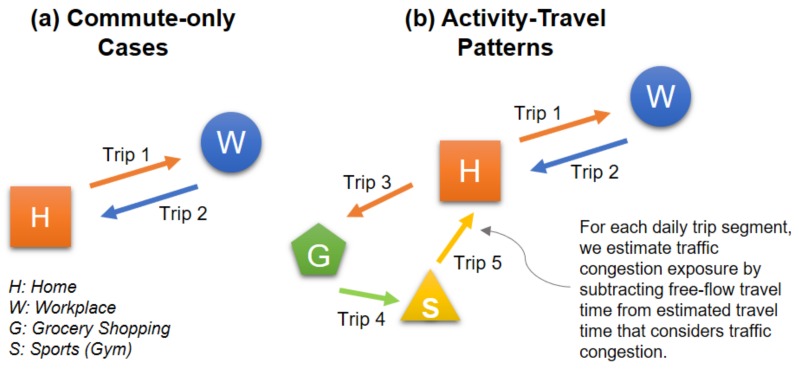
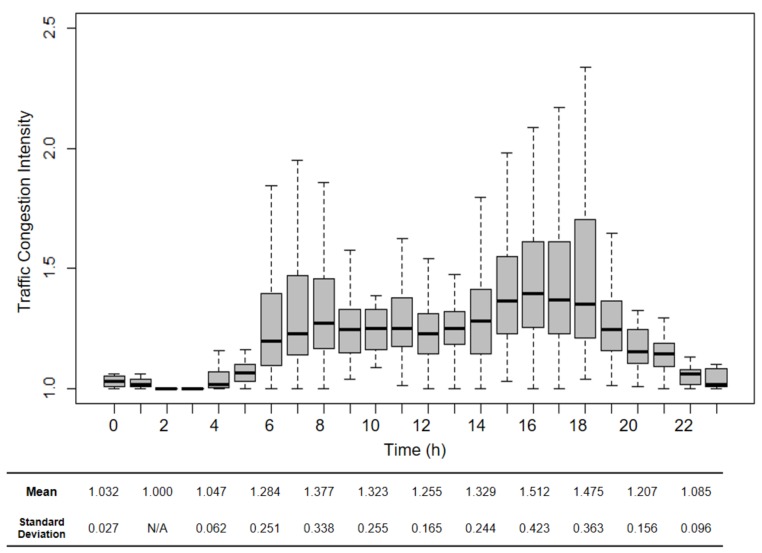
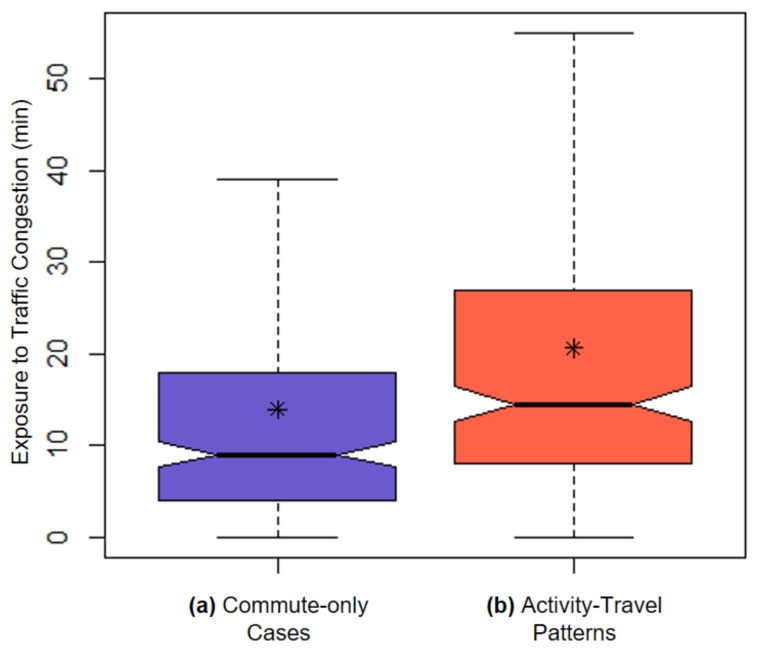
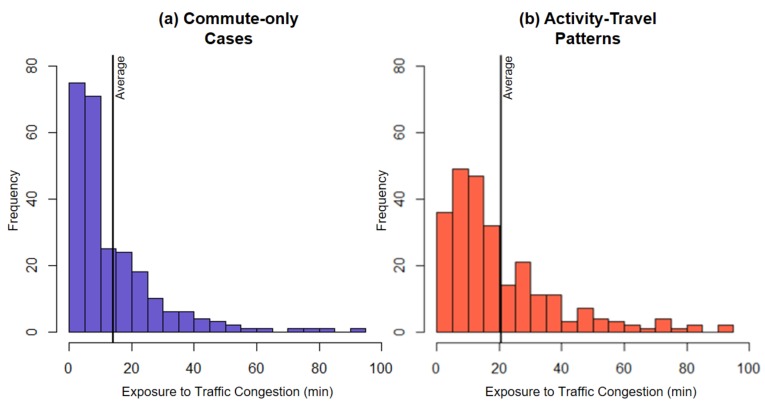
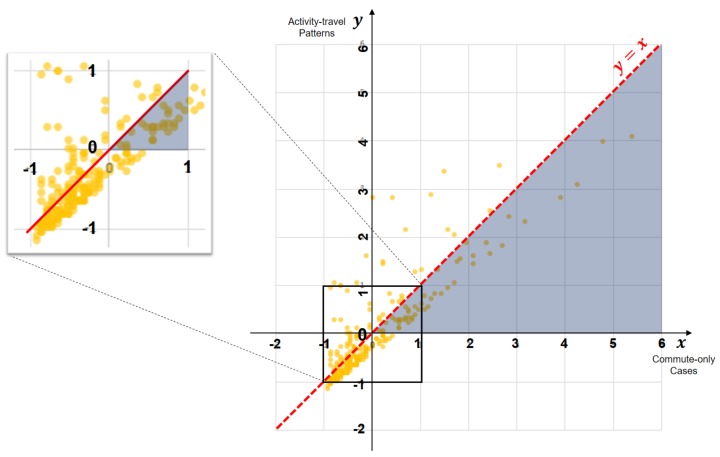
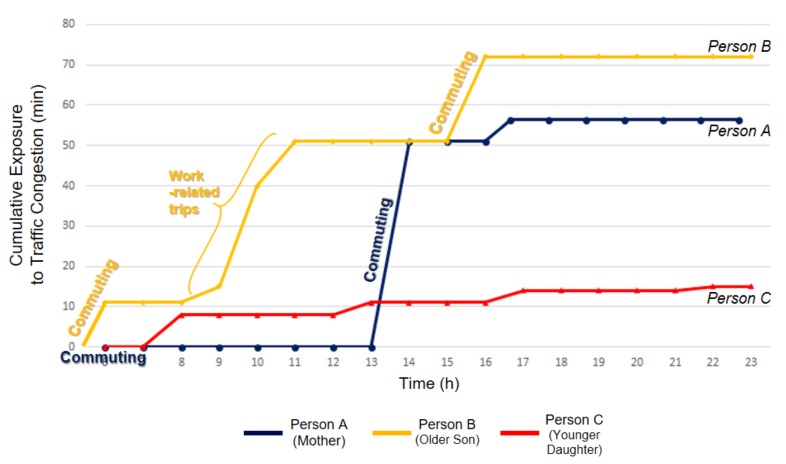
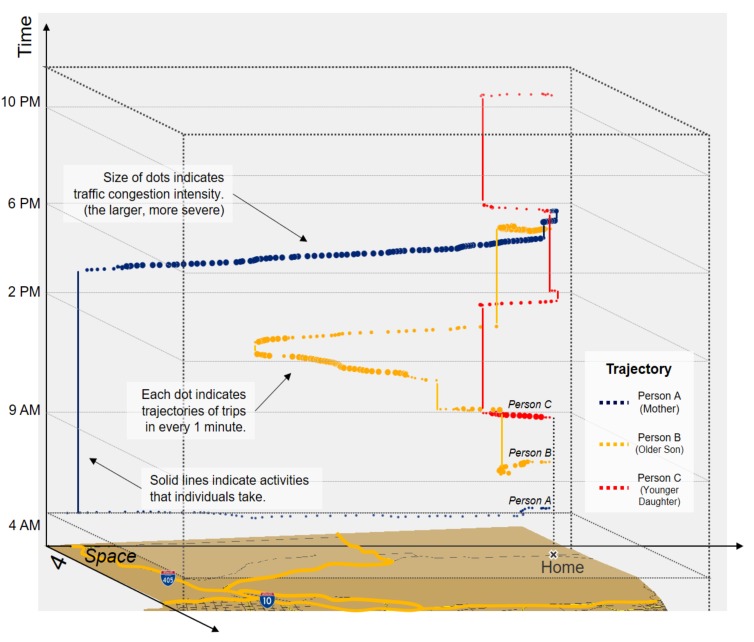
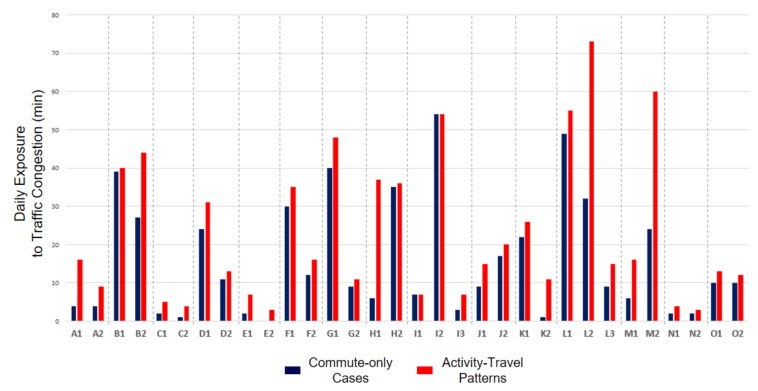
This research examines whether individual exposures to traffic congestion are significantly different between assessments obtained with and without considering individuals' activity-travel patterns in addition to commuting trips. We used crowdsourced real-time traffic congestion data and the activity-travel data of 250 individuals in Los Angeles to compare these two assessments of individual exposures to traffic congestion. The results revealed that individual exposures to traffic congestion are significantly underestimated when their activity-travel patterns are ignored, which has been postulated as a manifestation of the uncertain geographic context problem (UGCoP). The results also highlighted that the probability distribution function of exposures is heavily skewed but tends to converge to its average when individuals' activity-travel patterns are considered when compared to one obtained when those patterns are not considered, which indicates the existence of the neighborhood effect averaging problem (NEAP). Lastly, space-time visualizations of individual exposures illustrated that people's exposures to traffic congestion vary significantly even if they live at the same residential location due to their idiosyncratic activity-travel patterns. The results corroborate the claims in previous studies that using data aggregated over areas (e.g., census tracts) or focusing only on commuting trips (and thus ignoring individuals' activity-travel patterns) may lead to erroneous assessments of individual exposures to traffic congestion or other environmental influences.
本研究考察了在考虑和不考虑个体出行-活动模式的情况下,个体对交通拥堵的暴露评估是否存在显著差异。我们使用众包实时交通拥堵数据和 250 名洛杉矶个体的出行-活动数据来比较这两种个体交通拥堵暴露评估方法。结果表明,忽略个体出行-活动模式时,个体对交通拥堵的暴露会被严重低估,这被认为是不确定地理背景问题(UGCoP)的表现。结果还表明,与不考虑这些模式时相比,当考虑个体的出行-活动模式时,暴露的概率分布函数会严重偏斜,但趋于收敛到平均值,这表明存在邻里效应平均问题(NEAP)。最后,个体暴露的时空可视化表明,即使人们居住在同一住宅地点,由于其特殊的出行-活动模式,他们对交通拥堵的暴露也会有很大差异。这些结果证实了之前研究的观点,即使用区域(例如,人口普查区)汇总的数据或仅关注通勤出行(因此忽略个体的出行-活动模式)可能会导致对个体交通拥堵或其他环境影响的暴露评估错误。