Department of Health Behavior and Health Education, University of Michigan School of Public Health, Ann Arbor, Michigan.
Center for Bioethics & Social Sciences in Medicine, University of Michigan Medical School, Ann Arbor, Michigan.
Cancer Med. 2019 Jan;8(1):227-237. doi: 10.1002/cam4.1947. Epub 2019 Jan 1.
Implementation of precision oncology interventions poses several challenges to informed consent and patient education. This study assessed cancer patients' understanding, expectations, and outcomes regarding participation in research examining the impact of matched tumor and germline sequencing on their clinical care.
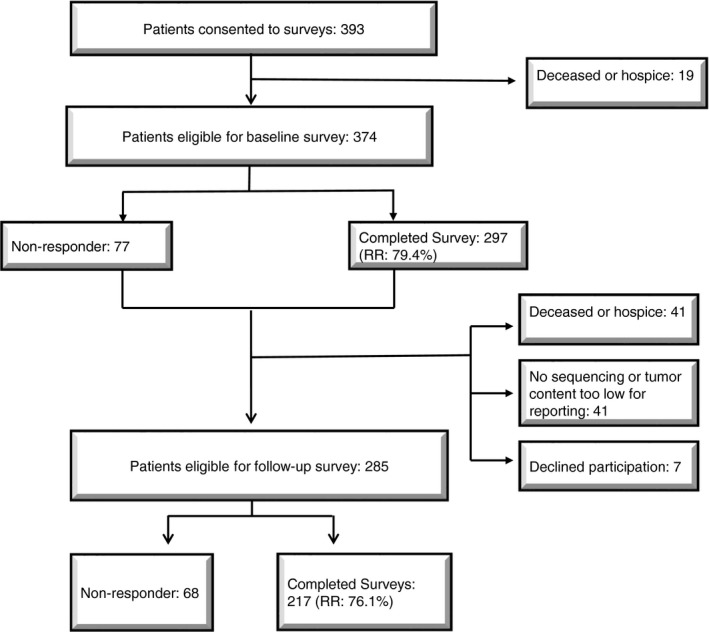
A total of 297 patients (mean age: 59 years; 50% female; 96% white) with refractory, metastatic cancer were surveyed, including 217 who completed surveys both before and after undergoing integrated whole exome and transcriptome sequencing as part of a larger clinical research study.
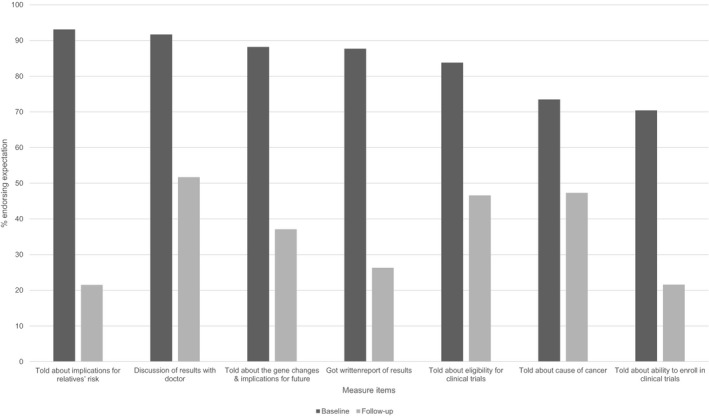
At baseline, the vast majority of patients expected to receive several potential direct benefits from study participation, including written reports of sequencing findings (88%), greater understanding of the causes of their cancer (74%), and participation in clinical trials for which sequencing results would make them eligible (84%). In most cases, these benefits were not realized by study completion. Despite explanations from study personnel to the contrary, most participants (67%-76%) presumed that incidental germline sequencing findings relevant to noncancerous health conditions (eg, diabetes) would automatically be disclosed to them. Patients reported low levels of concern about study risks at baseline and low levels of regret about study participation at follow-up.
Findings suggest that cancer patients participating in precision oncology intervention research have largely unfulfilled expectations of direct benefits related to their study participation. Increased focus on patient education to supplement the informed consent process may help manage patients' expectations regarding the extent and likelihood of benefits received as a result of undergoing genomic sequencing.
实施精准肿瘤干预措施对知情同意和患者教育提出了若干挑战。本研究评估了癌症患者对参与研究的理解、期望和结果,该研究旨在检查匹配的肿瘤和种系测序对其临床护理的影响。
共调查了 297 名(平均年龄:59 岁;50%为女性;96%为白人)难治性转移性癌症患者,其中 217 名患者在接受整合的全外显子组和转录组测序后完成了研究前后的调查,作为更大规模临床研究的一部分。
在基线时,绝大多数患者期望从研究参与中获得几种潜在的直接收益,包括测序结果的书面报告(88%)、对其癌症病因的更深入了解(74%)以及参与临床试验,因为测序结果将使他们有资格参加(84%)。在大多数情况下,这些收益并未在研究完成时实现。尽管研究人员做出了相反的解释,但大多数参与者(67%-76%)推测与非癌症健康状况(如糖尿病)相关的偶然种系测序结果将自动向他们披露。患者在基线时报告对研究风险的担忧程度较低,在随访时对研究参与的后悔程度也较低。
研究结果表明,参与精准肿瘤干预研究的癌症患者对与研究参与相关的直接收益的期望大多未得到满足。增加对患者教育的关注,以补充知情同意过程,可能有助于管理患者对接受基因组测序所获得的收益的程度和可能性的期望。