Department of Medical Microbiology, Radboud University Nijmegen Medical Centre, Nijmegen, The Netherlands.
Department of Immunology and Infection, London School of Hygiene and Tropical Medicine, London, United Kingdom.
Am J Trop Med Hyg. 2019 Mar;100(3):572-577. doi: 10.4269/ajtmh.18-0773.
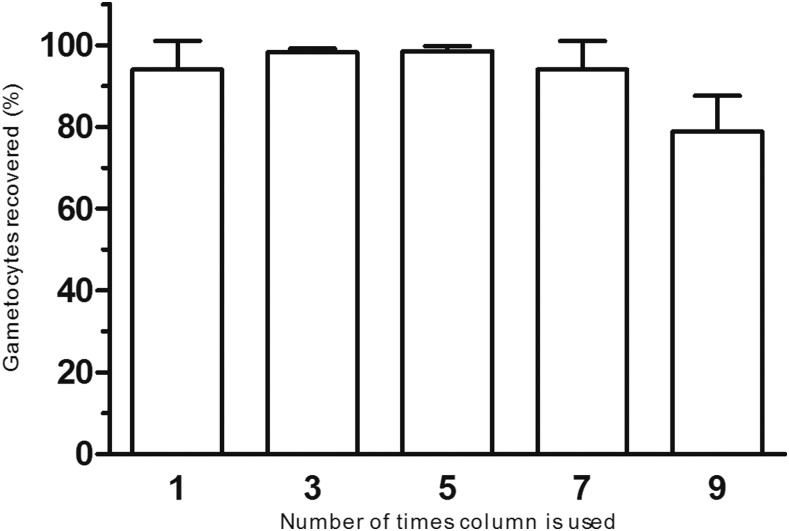
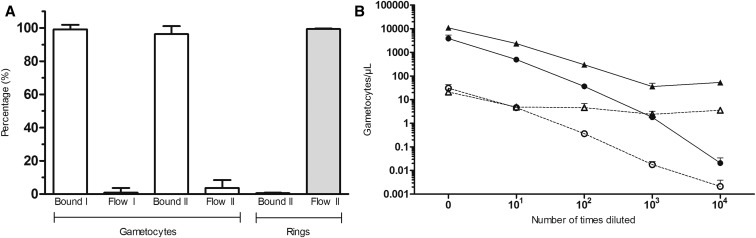
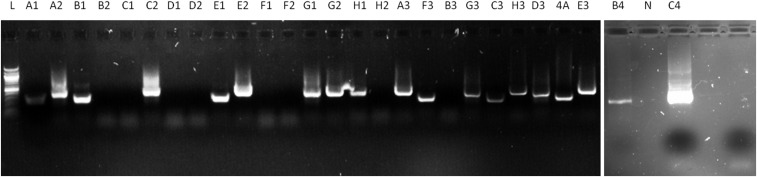
Gametocytes are sexual stage malaria parasites responsible for transmission to mosquitoes. Multiple gametocyte-producing clones may be present in natural infections, but the molecular characterization of gametocytes is challenging. Because of their magnetic properties, gametocyte enrichment can be achieved by magnetic fractionation. This increases detection sensitivity and allows specific genotyping of clones that contribute to malaria transmission. Here, we determined the percentage of gametocytes successfully bound to magnetic activated cell sorting (MACS) LS columns during magnetic fractionation and assessed whether columns can be reused without risking contamination or affecting column binding efficiency. Bound column fractions were quantified using multiplex quantitative reverse transcription polymerase chain reaction (qRT-PCR) for male (pfMGET) and female (CCp4) gametocytes and ring-stage asexual parasites (SBP1). To investigate cross contamination between columns, parasite strain identity was determined by merozoite surface protein 2 genotyping followed by capillary electrophoresis fragment sizing. A reproducible high percentage of gametocytes was bound to MACS LS columns with < 5% gametocytes appearing in the flow-through and < 0.6% asexual ring-stage parasites appearing in the gametocyte fraction. A high yield (> 94%) of gametocyte enrichment was achieved when columns were used up to five times with lower binding success after eight times (79%). We observed no evidence for cross contamination between columns.
配子体是负责传播给蚊子的疟疾寄生虫的有性阶段。在自然感染中可能存在多个产生配子体的克隆,但配子体的分子特征分析具有挑战性。由于其磁性,配子体可以通过磁分离进行富集。这提高了检测灵敏度,并允许对有助于疟疾传播的克隆进行特定的基因分型。在这里,我们确定了在磁分离过程中成功结合到磁性激活细胞分选(MACS)LS 柱上的配子体的百分比,并评估了在不冒污染风险或影响柱结合效率的情况下是否可以重复使用柱子。使用针对雄性(pfMGET)和雌性(CCp4)配子体以及环状无性期寄生虫(SBP1)的多重定量逆转录聚合酶链反应(qRT-PCR)对结合的柱部分进行定量。为了研究柱子之间的交叉污染,通过微孢子虫表面蛋白 2 基因分型和毛细管电泳片段大小分析来确定寄生虫株的身份。大量的配子体可与 MACS LS 柱结合,有<5%的配子体出现在滤液中,<0.6%的无性环期寄生虫出现在配子体部分中。当柱子使用多达五次时,可实现高的配子体富集产量(>94%),而使用八次后结合成功率较低(79%)。我们没有观察到柱子之间存在交叉污染的证据。