Morlais Isabelle, Nsango Sandrine E, Toussile Wilson, Abate Luc, Annan Zeinab, Tchioffo Majoline T, Cohuet Anna, Awono-Ambene Parfait H, Fontenille Didier, Rousset François, Berry Antoine
Organisation de Coordination pour la lutte contre les Endémies en Afrique Centrale, Yaoundé, Cameroon; Institut de Recherche pour le Développement, Montpellier, France.
Organisation de Coordination pour la lutte contre les Endémies en Afrique Centrale, Yaoundé, Cameroon; Institut de Recherche pour le Développement, Montpellier, France; Faculté de Médecine et des Sciences Pharmaceutiques, Douala, Cameroon.
PLoS One. 2015 Apr 14;10(4):e0123777. doi: 10.1371/journal.pone.0123777. eCollection 2015.
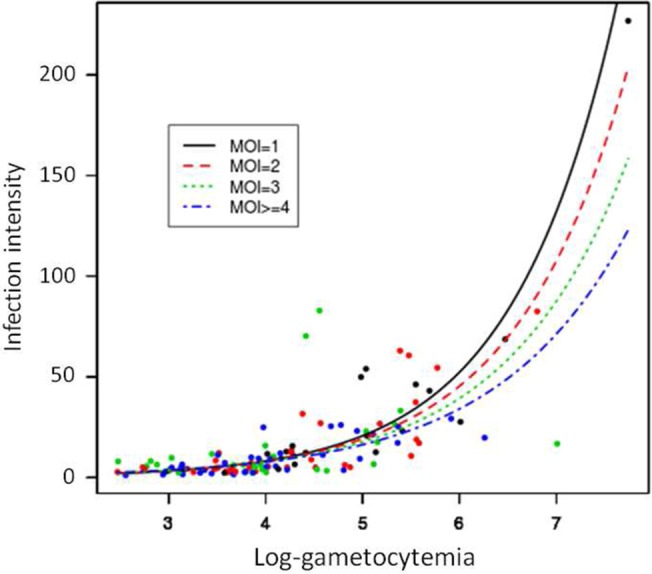
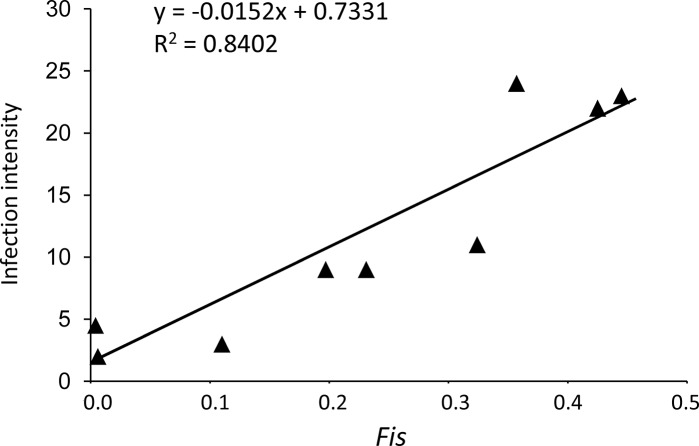
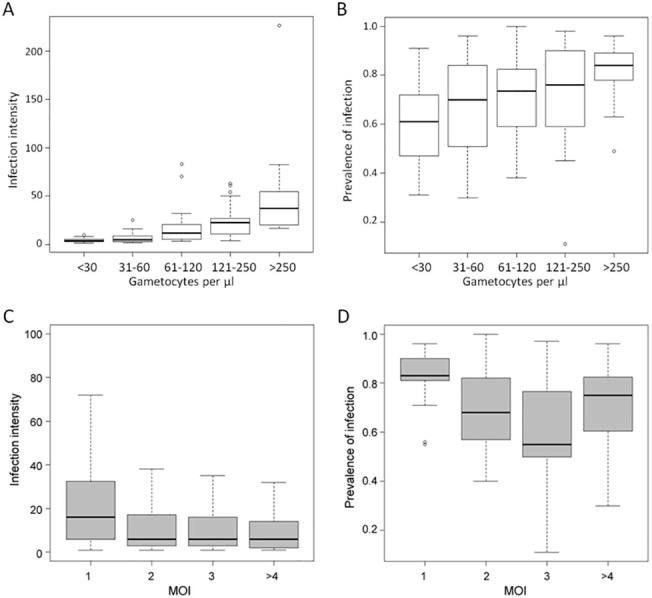
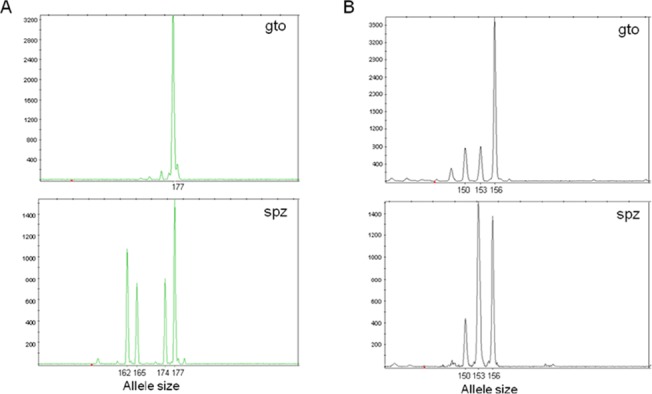
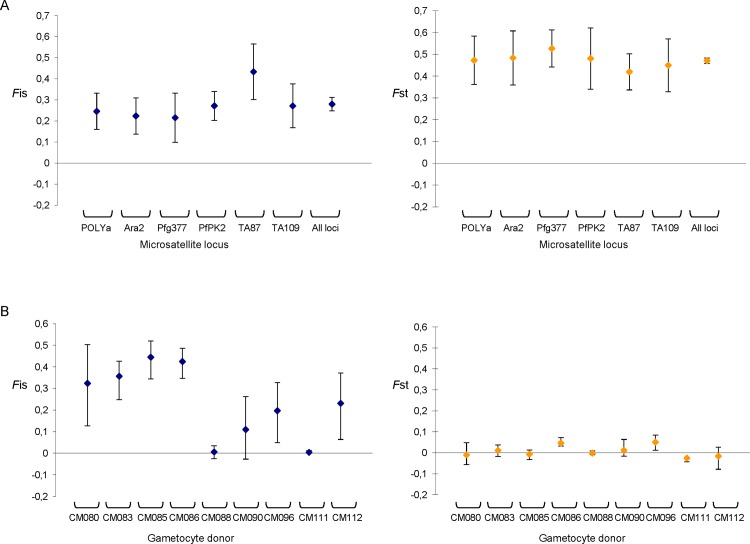
Plasmodium falciparum infections in malaria endemic areas often harbor multiple clones of parasites. However, the transmission success of the different genotypes within the mosquito vector has remained elusive so far. The genetic diversity of malaria parasites was measured by using microsatellite markers in gametocyte isolates from 125 asymptomatic carriers. For a subset of 49 carriers, the dynamics of co-infecting genotypes was followed until their development within salivary glands. Also, individual oocysts from midguts infected with blood from 9 donors were genotyped to assess mating patterns. Multiplicity of infection (MOI) was high both in gametocyte isolates and sporozoite populations, reaching up to 10 genotypes. Gametocyte isolates with multiple genotypes gave rise to lower infection prevalence and intensity. Fluctuations of genotype number occurred during the development within the mosquito and sub-patent genotypes, not detected in gametocyte isolates, were identified in the vector salivary glands. The inbreeding coefficient Fis was positively correlated to the oocyst loads, suggesting that P. falciparum parasites use different reproductive strategies according to the genotypes present in the gametocyte isolate. The number of parasite clones within an infection affects the transmission success and the mosquito has an important role in maintaining P. falciparum genetic diversity. Our results emphasize the crucial importance of discriminating between the different genotypes within an infection when studying the A. gambiae natural resistance to P. falciparum, and the need to monitor parasite diversity in areas where malaria control interventions are implemented.
疟疾流行地区的恶性疟原虫感染通常含有多个寄生虫克隆。然而,到目前为止,不同基因型在蚊媒中的传播成功率仍不清楚。通过使用微卫星标记对125名无症状携带者的配子体分离物进行检测,来测定疟原虫的遗传多样性。对于49名携带者的一个子集,追踪共感染基因型的动态变化,直至它们在唾液腺内发育。此外,对来自9名供体血液感染的中肠中的单个卵囊进行基因分型,以评估交配模式。配子体分离物和子孢子群体中的感染复数(MOI)都很高,多达10种基因型。具有多种基因型的配子体分离物导致较低的感染率和感染强度。在蚊子体内发育过程中,基因型数量会发生波动,并且在蚊媒唾液腺中发现了在配子体分离物中未检测到的亚显性基因型。近交系数Fis与卵囊负荷呈正相关,这表明恶性疟原虫寄生虫根据配子体分离物中存在的基因型采用不同的繁殖策略。感染内寄生虫克隆的数量影响传播成功率,并且蚊子在维持恶性疟原虫遗传多样性方面具有重要作用。我们的结果强调了在研究冈比亚按蚊对恶性疟原虫的天然抗性时区分感染内不同基因型的至关重要性,以及在实施疟疾控制干预措施的地区监测寄生虫多样性的必要性。