West Coast Metabolomics Center , University of California, Davis , Davis , California 95616 , United States.
School of Food Science, State Key Laboratory of Food Science and Technology , Jiangnan University , Wuxi , Jiangsu 330047 , China.
Anal Chem. 2019 Feb 5;91(3):2155-2162. doi: 10.1021/acs.analchem.8b04698. Epub 2019 Jan 16.
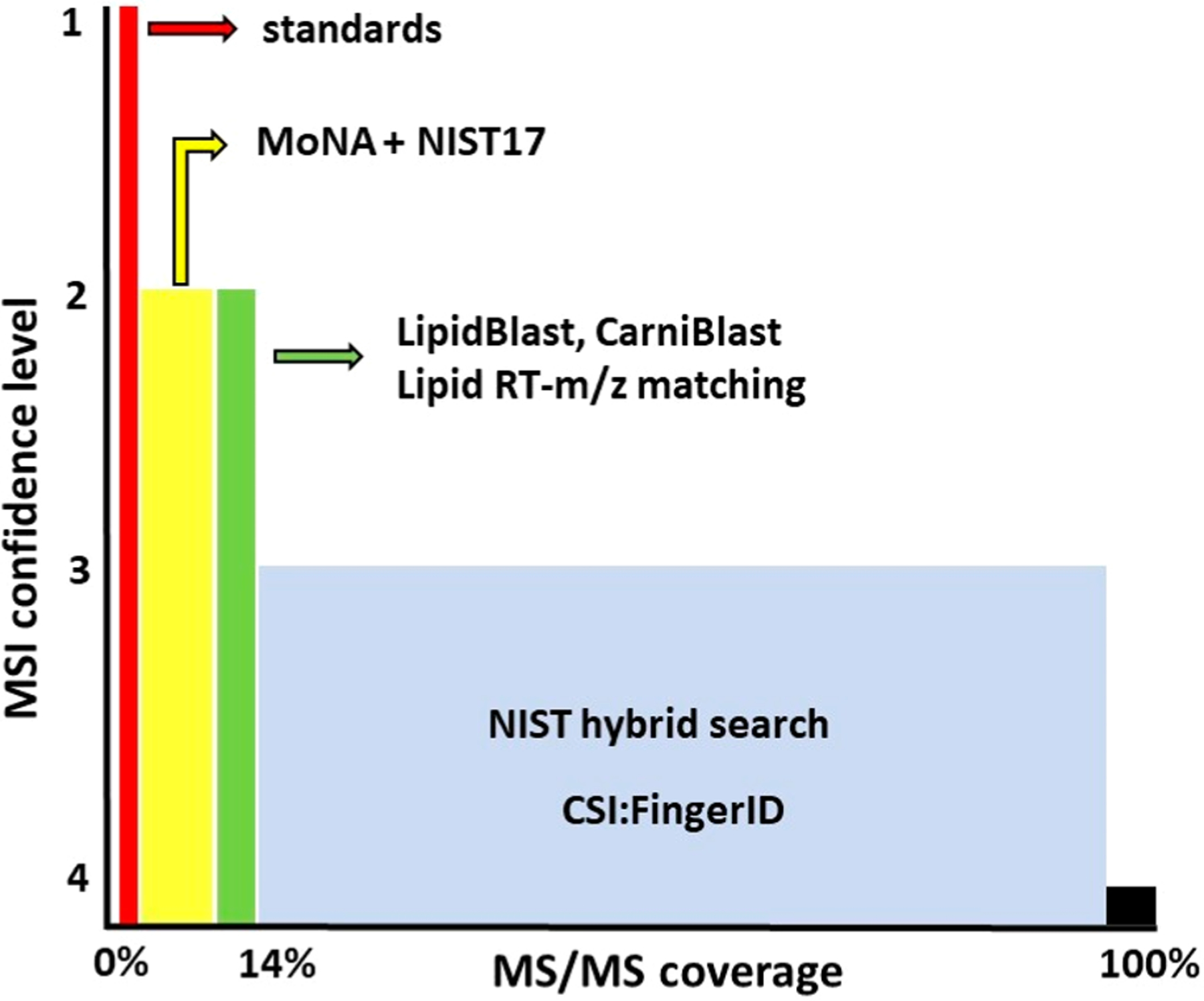
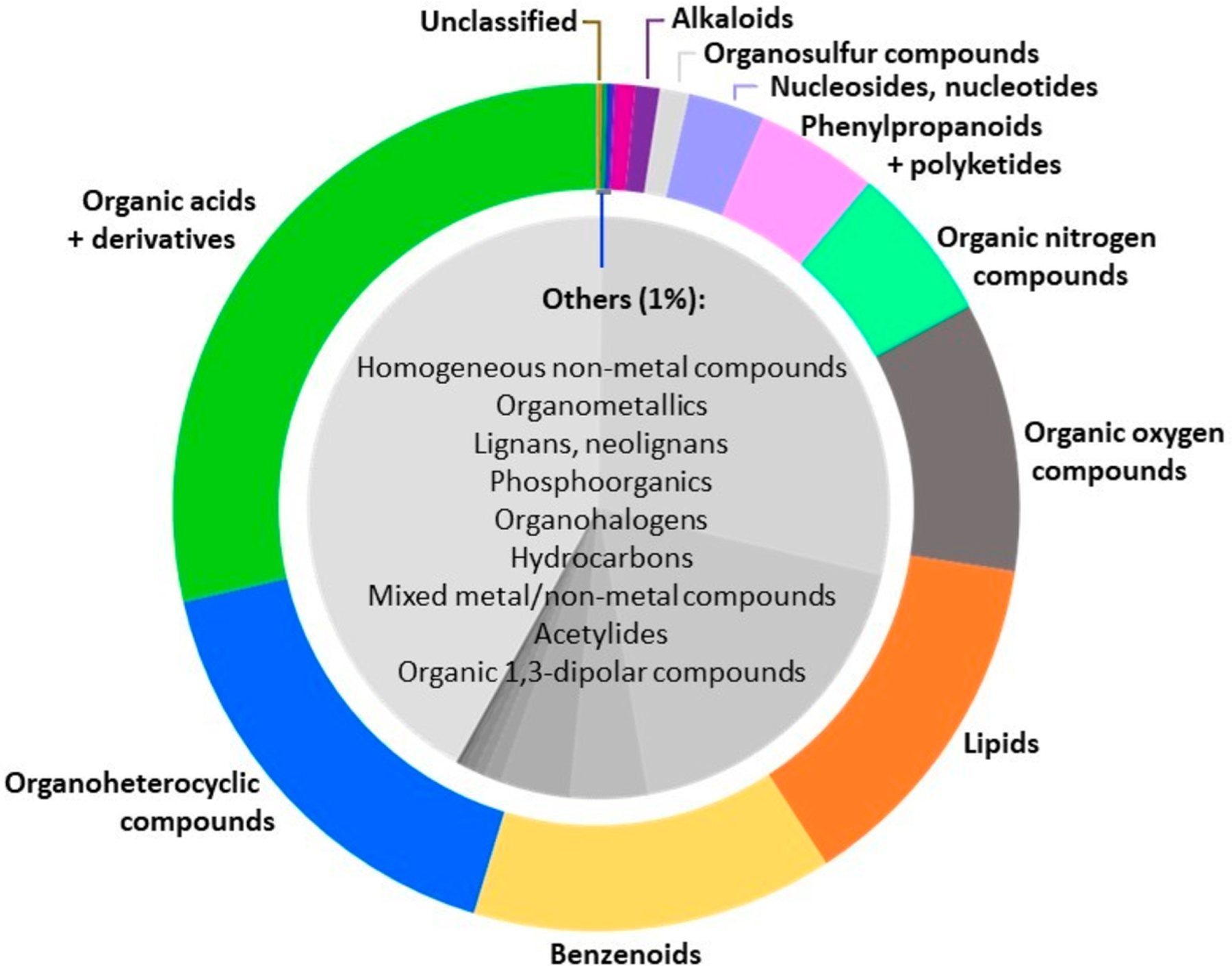
Urine metabolites are used in many clinical and biomedical studies but usually only for a few classic compounds. Metabolomics detects vastly more metabolic signals that may be used to precisely define the health status of individuals. However, many compounds remain unidentified, hampering biochemical conclusions. Here, we annotate all metabolites detected by two untargeted metabolomic assays, hydrophilic interaction chromatography (HILIC)-Q Exactive HF mass spectrometry and charged surface hybrid (CSH)-Q Exactive HF mass spectrometry. Over 9,000 unique metabolite signals were detected, of which 42% triggered MS/MS fragmentations in data-dependent mode. On the highest Metabolomics Standards Initiative (MSI) confidence level 1, we identified 175 compounds using authentic standards with precursor mass, retention time, and MS/MS matching. An additional 578 compounds were annotated by precursor accurate mass and MS/MS matching alone, MSI level 2, including a novel library specifically geared at acylcarnitines (CarniBlast). The rest of the metabolome is usually left unannotated. To fill this gap, we used the in silico fragmentation tool CSI:FingerID and the new NIST hybrid search to annotate all further compounds (MSI level 3). Testing the top-ranked metabolites in CSI:Finger ID annotations yielded 40% accuracy when applied to the MSI level 1 identified compounds. We classified all MSI level 3 annotations by the NIST hybrid search using the ClassyFire ontology into 21 superclasses that were further distinguished into 184 chemical classes. ClassyFire annotations showed that the previously unannotated urine metabolome consists of 28% derivatives of organic acids, 16% heterocyclics, and 16% lipids as major classes.
尿液代谢物被广泛应用于许多临床和生物医学研究中,但通常仅针对少数几种经典化合物。代谢组学可以检测到更多的代谢信号,这些信号可以用于精确地定义个体的健康状况。然而,许多化合物仍然无法识别,这阻碍了生化结论的得出。在这里,我们注释了两种非靶向代谢组学分析方法(亲水相互作用色谱(HILIC)-Q Exactive HF 质谱和带电表面杂化(CSH)-Q Exactive HF 质谱)检测到的所有代谢物。共检测到超过 9000 个独特的代谢物信号,其中 42%在数据依赖模式下触发了 MS/MS 碎裂。在最高的代谢组学标准倡议(MSI)置信度 1 级,我们使用具有前体质量、保留时间和 MS/MS 匹配的真实标准品鉴定了 175 种化合物。另外,通过前体精确质量和 MS/MS 匹配(MSI 水平 2)注释了 578 种化合物,包括专门针对酰基辅酶 A(CarniBlast)的新型库。其余的代谢组通常未被注释。为了填补这一空白,我们使用了基于计算机的碎片化工具 CSI:FingerID 和新的 NIST 混合搜索来注释所有进一步的化合物(MSI 水平 3)。将 CSI:FingerID 注释中的顶级代谢物应用于 MSI 水平 1 鉴定的化合物时,其准确率为 40%。我们使用 ClassyFire 本体论对 NIST 混合搜索分类的所有 MSI 水平 3 注释,将其分为 21 个超类,进一步细分为 184 个化学类。ClassyFire 注释表明,以前未被注释的尿液代谢组主要由有机酸的 28%衍生物、16%杂环化合物和 16%脂质组成。