Institute of Neuropathology, University Medical Center Hamburg-Eppendorf, Hamburg, Germany.
Department of Neurology, Experimental Research in Stroke and Inflammation (ERSI), University Medical Center Hamburg-Eppendorf, Hamburg, Germany.
PLoS Pathog. 2019 Jan 4;15(1):e1007520. doi: 10.1371/journal.ppat.1007520. eCollection 2019 Jan.
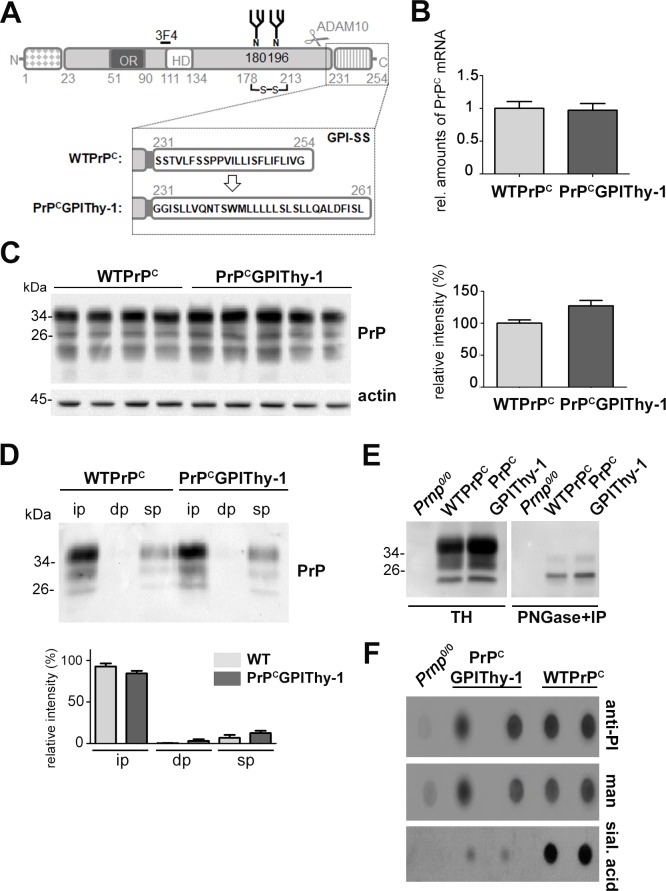
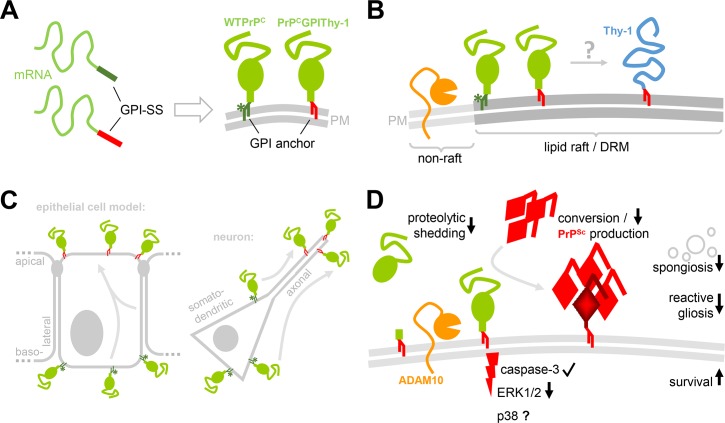
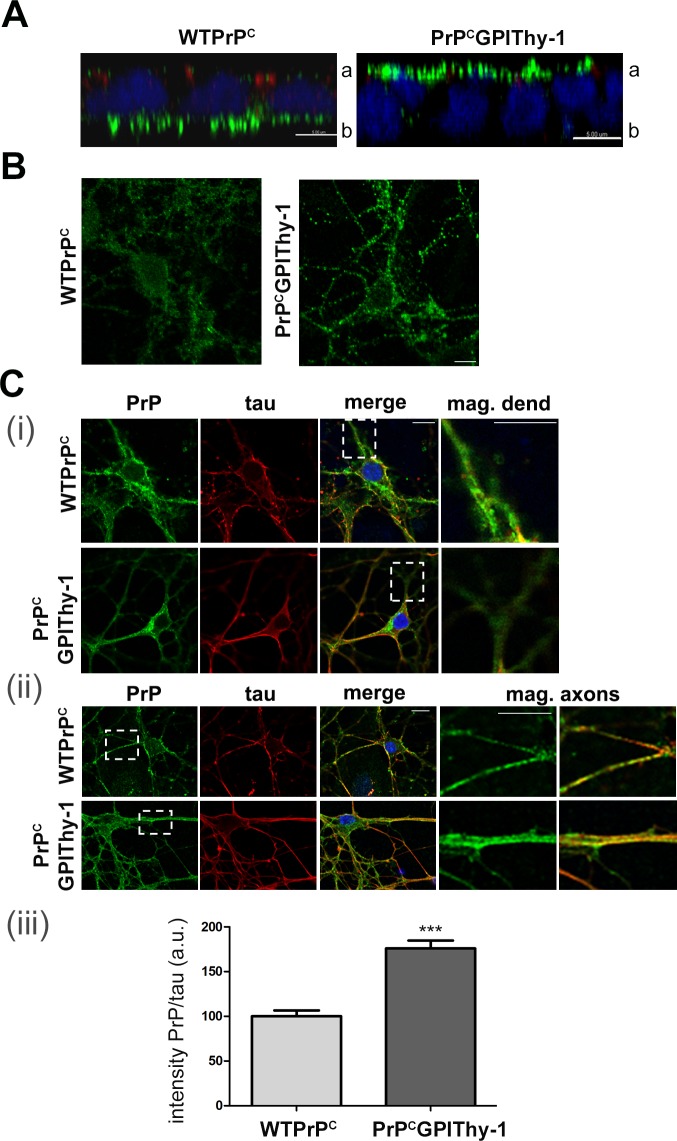
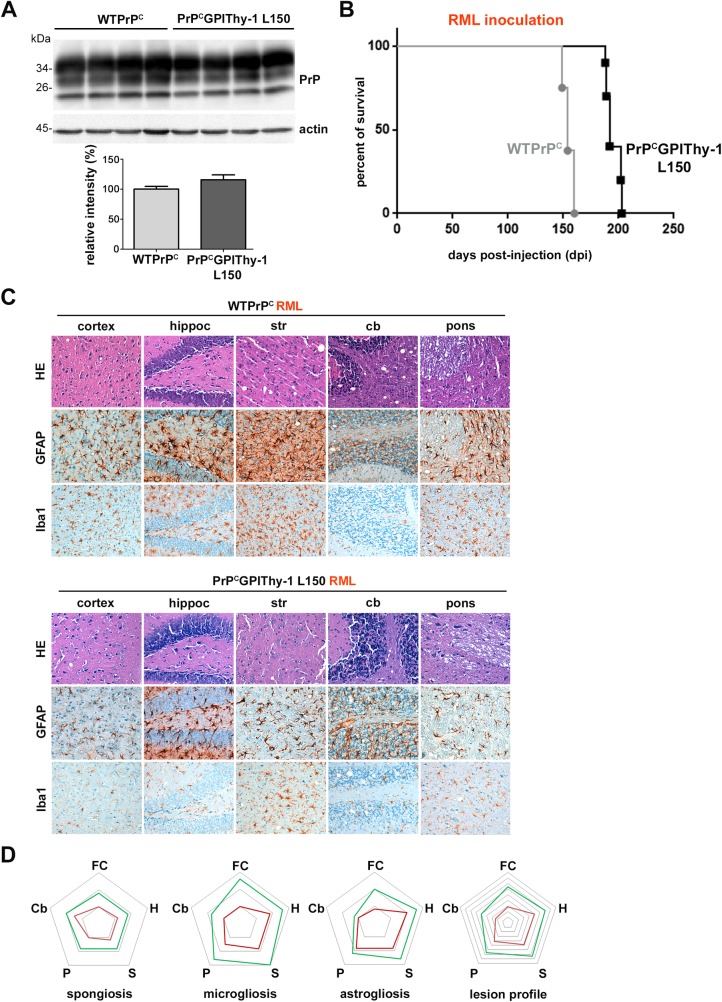
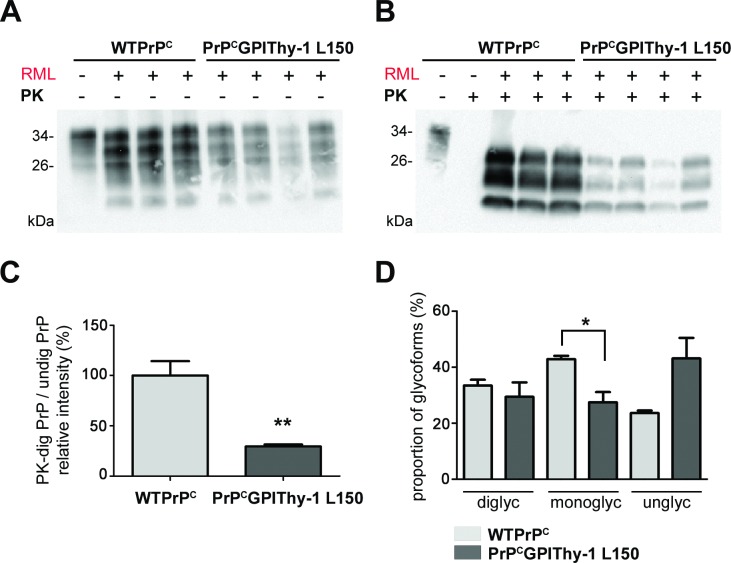
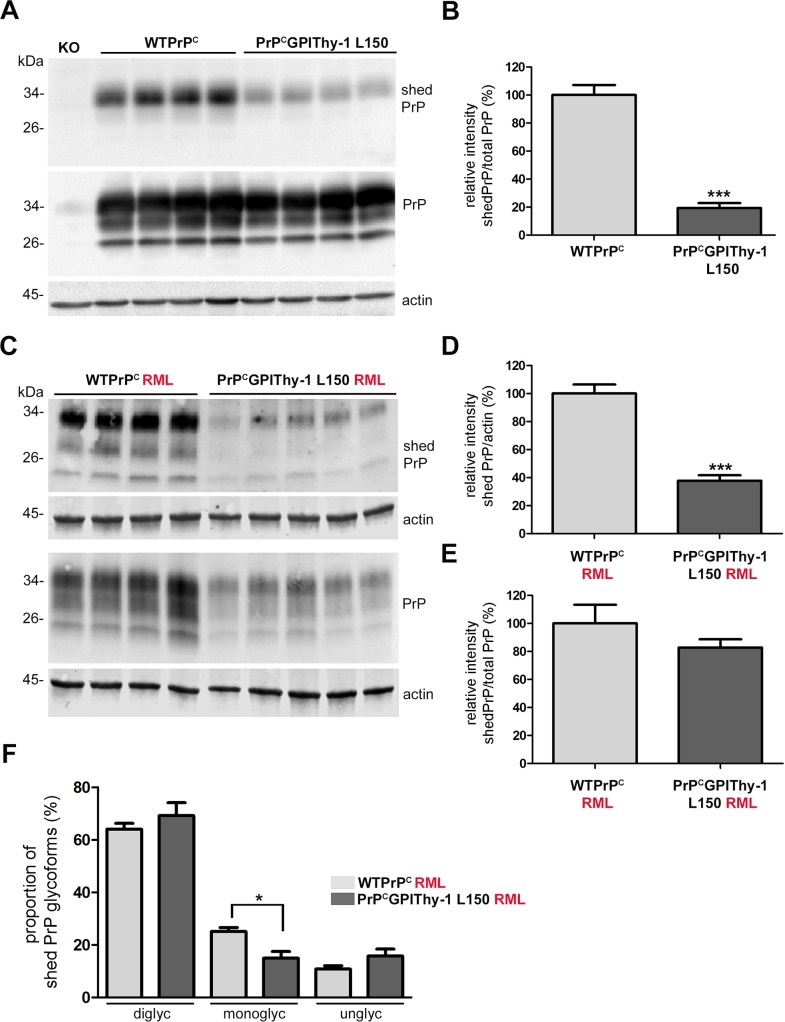
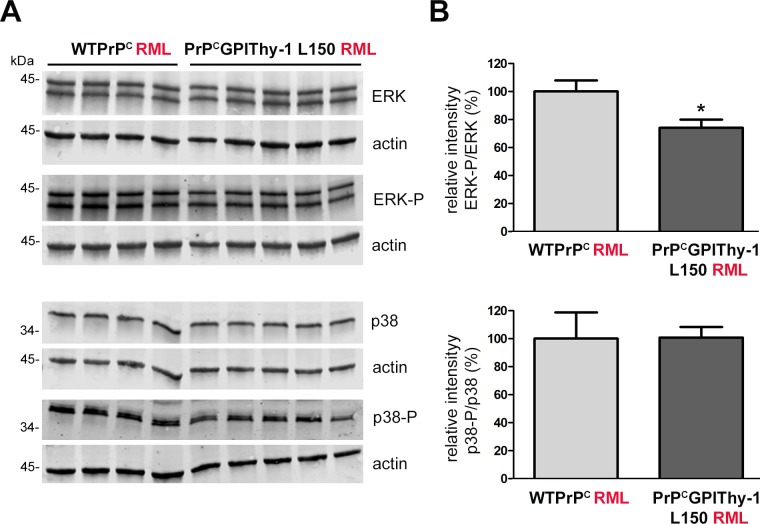
The cellular prion protein (PrPC) is a cell surface glycoprotein attached to the membrane by a glycosylphosphatidylinositol (GPI)-anchor and plays a critical role in transmissible, neurodegenerative and fatal prion diseases. Alterations in membrane attachment influence PrPC-associated signaling, and the development of prion disease, yet our knowledge of the role of the GPI-anchor in localization, processing, and function of PrPC in vivo is limited We exchanged the PrPC GPI-anchor signal sequence of for that of Thy-1 (PrPCGPIThy-1) in cells and mice. We show that this modifies the GPI-anchor composition, which then lacks sialic acid, and that PrPCGPIThy-1 is preferentially localized in axons and is less prone to proteolytic shedding when compared to PrPC. Interestingly, after prion infection, mice expressing PrPCGPIThy-1 show a significant delay to terminal disease, a decrease of microglia/astrocyte activation, and altered MAPK signaling when compared to wild-type mice. Our results are the first to demonstrate in vivo, that the GPI-anchor signal sequence plays a fundamental role in the GPI-anchor composition, dictating the subcellular localization of a given protein and, in the case of PrPC, influencing the development of prion disease.
细胞朊病毒蛋白 (PrPC) 是一种通过糖基磷脂酰肌醇 (GPI) 锚定附着在膜上的细胞表面糖蛋白,在可传播的、神经退行性的和致命的朊病毒疾病中发挥关键作用。膜附着的改变影响 PrPC 相关信号转导和朊病毒病的发展,但我们对 GPI 锚在 PrPC 体内定位、加工和功能中的作用的了解有限。我们在细胞和小鼠中交换了 PrPC 的 GPI-锚信号序列为 Thy-1(PrPCGPIThy-1)的信号序列。我们表明,这改变了 GPI-锚的组成,从而缺乏唾液酸,并且与 PrPC 相比,PrPCGPIThy-1 优先定位于轴突,并且更不易发生蛋白水解脱落。有趣的是,在朊病毒感染后,与野生型小鼠相比,表达 PrPCGPIThy-1 的小鼠表现出明显的疾病终末期延迟、小胶质细胞/星形胶质细胞激活减少和 MAPK 信号改变。我们的结果首次在体内证明,GPI-锚信号序列在 GPI-锚组成中起着根本作用,决定了给定蛋白质的亚细胞定位,并且在 PrPC 的情况下,影响朊病毒病的发展。