MRC Mitochondrial Biology Unit, University of Cambridge, Cambridge Biomedical Campus, Cambridge CB2 0XY, UK.
MRC Mitochondrial Biology Unit, University of Cambridge, Cambridge Biomedical Campus, Cambridge CB2 0XY, UK.
Cell. 2019 Jan 24;176(3):435-447.e15. doi: 10.1016/j.cell.2018.11.025. Epub 2019 Jan 2.
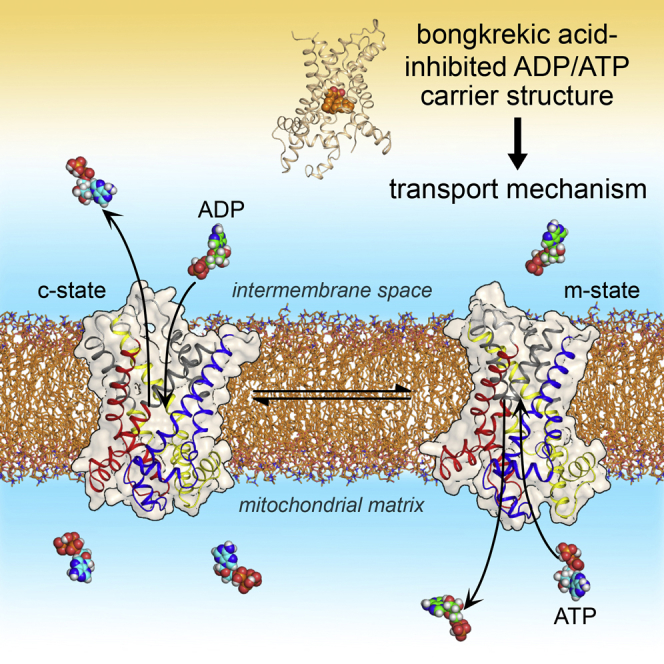
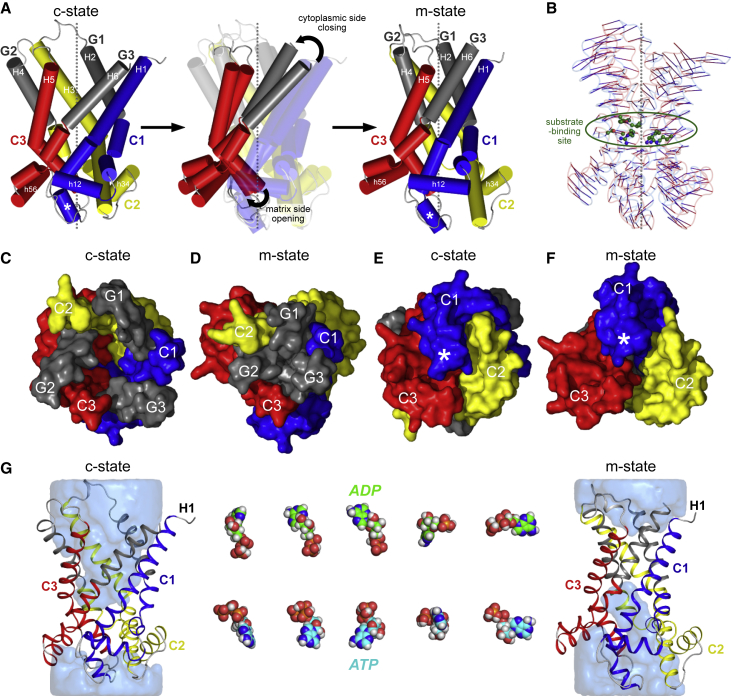
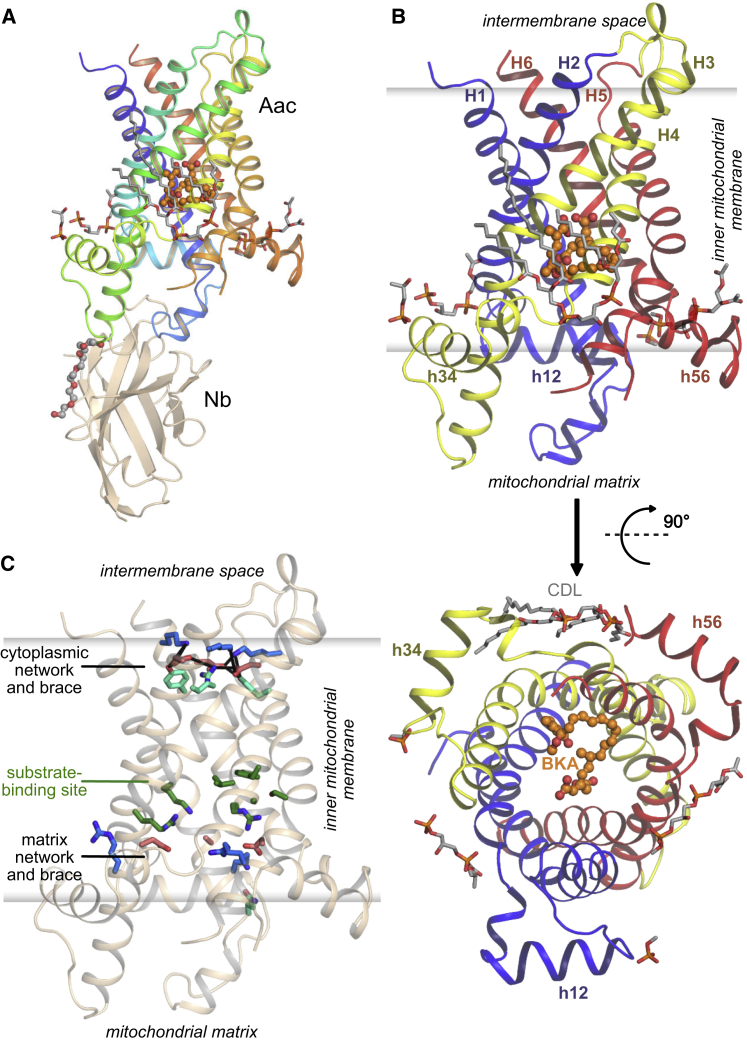
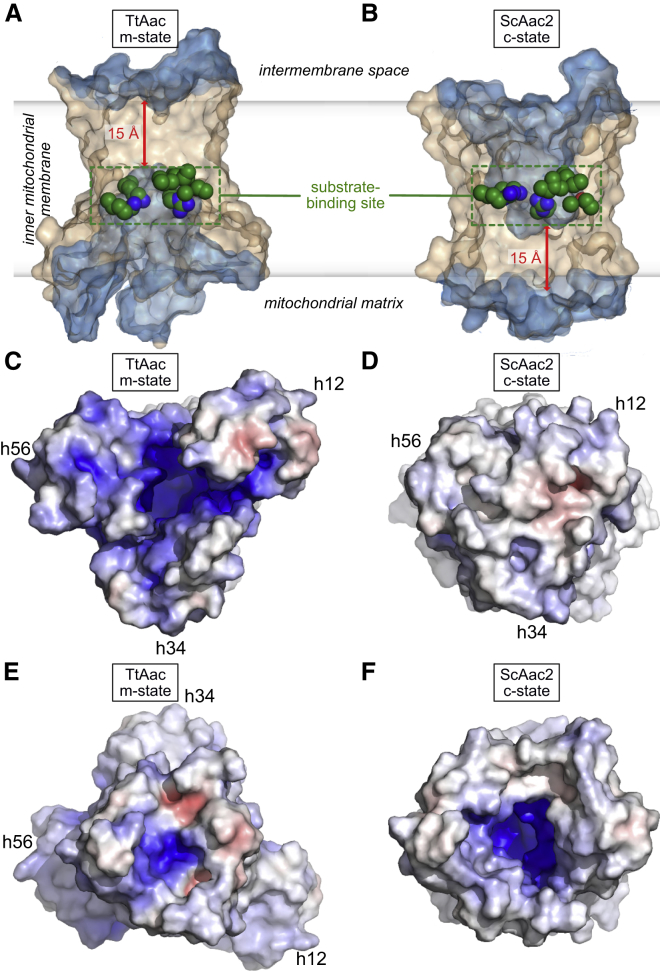
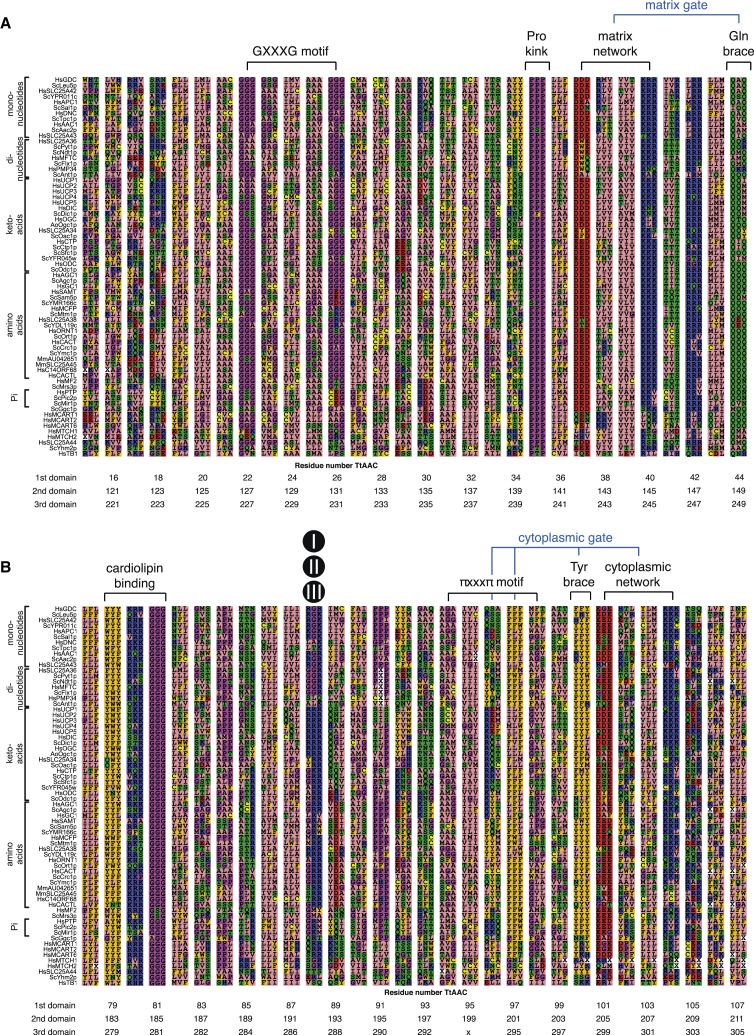
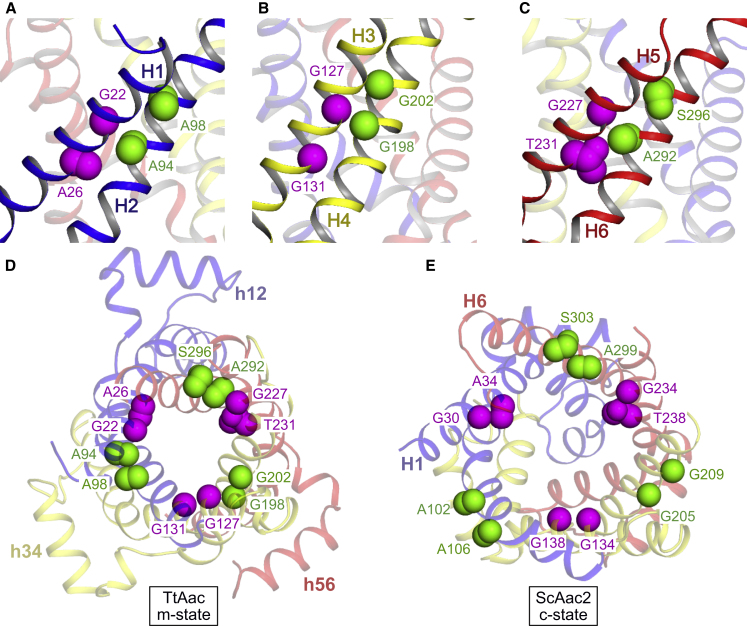
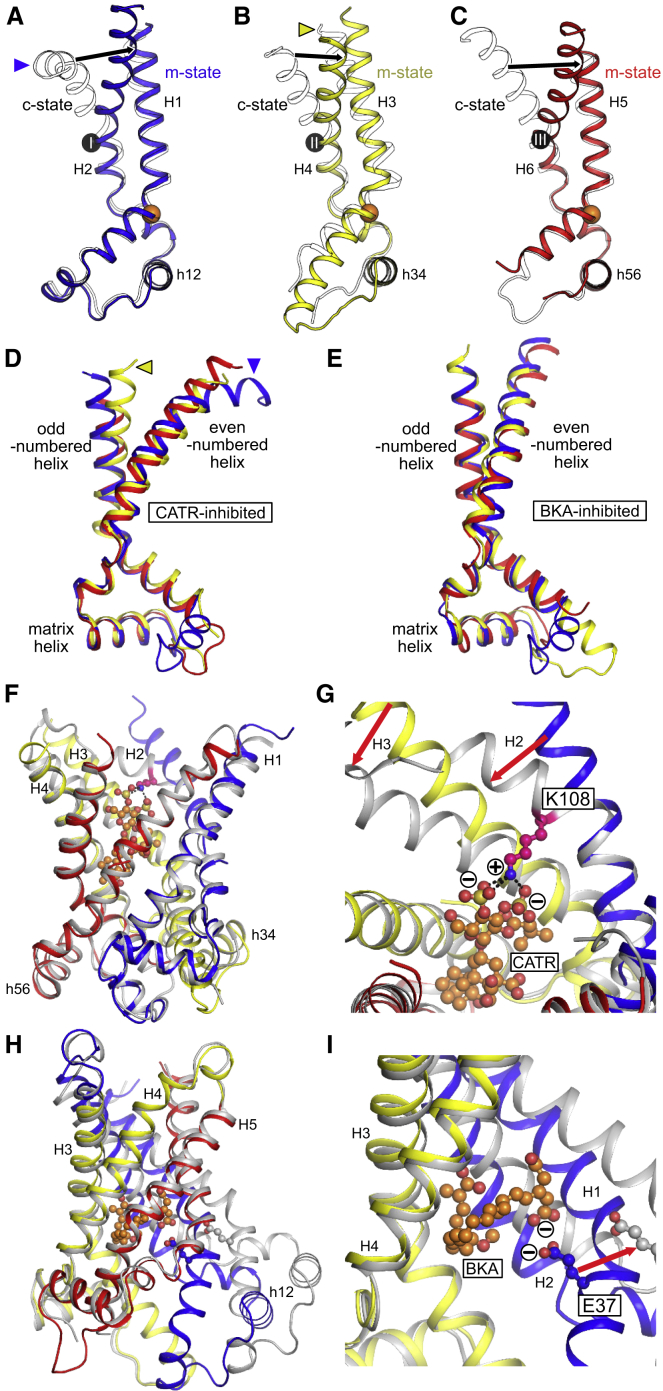
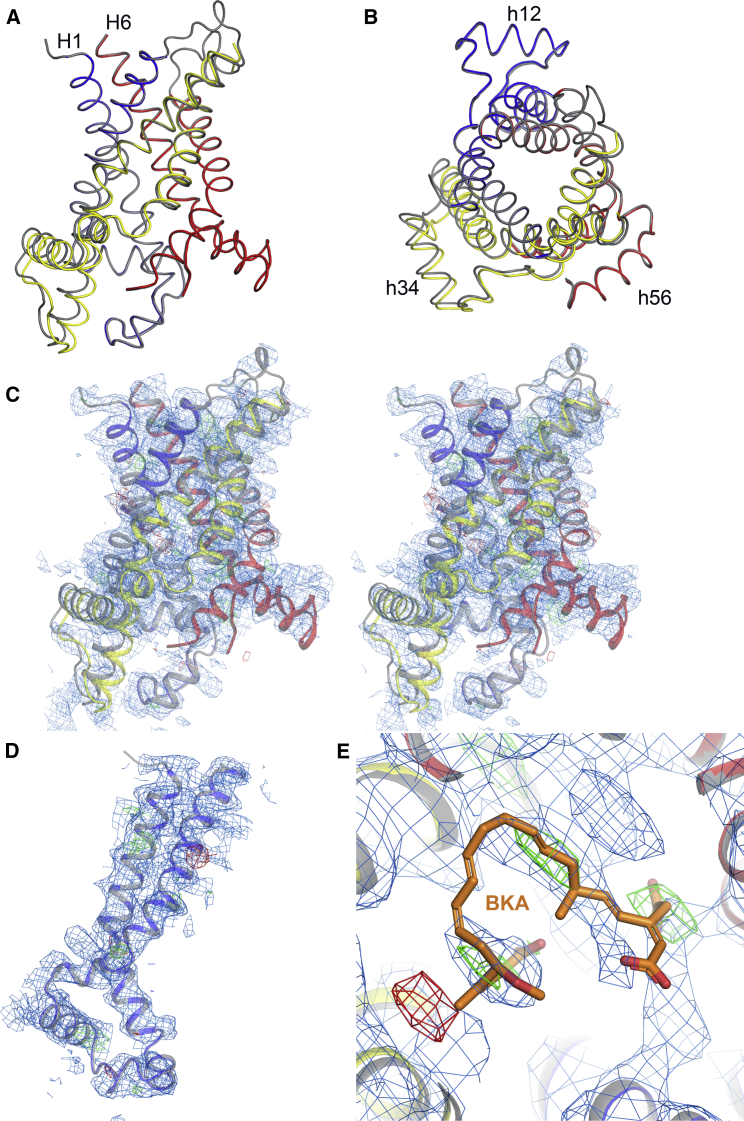
Mitochondrial ADP/ATP carriers transport ADP into the mitochondrial matrix for ATP synthesis, and ATP out to fuel the cell, by cycling between cytoplasmic-open and matrix-open states. The structure of the cytoplasmic-open state is known, but it has proved difficult to understand the transport mechanism in the absence of a structure in the matrix-open state. Here, we describe the structure of the matrix-open state locked by bongkrekic acid bound in the ADP/ATP-binding site at the bottom of the central cavity. The cytoplasmic side of the carrier is closed by conserved hydrophobic residues, and a salt bridge network, braced by tyrosines. Glycine and small amino acid residues allow close-packing of helices on the matrix side. Uniquely, the carrier switches between states by rotation of its three domains about a fulcrum provided by the substrate-binding site. Because these features are highly conserved, this mechanism is likely to apply to the whole mitochondrial carrier family. VIDEO ABSTRACT.
线粒体 ADP/ATP 载体通过在细胞质开放和基质开放状态之间循环,将 ADP 转运到线粒体基质中用于 ATP 合成,并将 ATP 转运到细胞中以提供能量。细胞质开放状态的结构是已知的,但由于缺乏基质开放状态的结构,证明难以理解其运输机制。在这里,我们描述了由结合在中央腔底部 ADP/ATP 结合位点的邦克克雷酸锁定的基质开放状态的结构。载体的细胞质侧由保守的疏水性残基和由酪氨酸支撑的盐桥网络封闭。甘氨酸和小氨基酸残基允许基质侧的螺旋紧密堆积。独特的是,载体通过其三个结构域围绕底物结合位点提供的支点旋转在状态之间切换。由于这些特征高度保守,因此该机制可能适用于整个线粒体载体家族。视频摘要。