Department of Orthopaedics, The Second Affiliated Hospital and Yuying Children's Hospital of Wenzhou Medical University, Wenzhou 325000, Zhejiang Province, China; Zhejiang Provincial Key Laboratory of Orthpaedics, Wenzhou 325000, Zhejiang Province, China.
Department of Chemoradiation Oncology, The First Affiliated Hospital of Wenzhou Medical University, Wenzhou 325000, Zhejiang Province, China.
EBioMedicine. 2019 Feb;40:643-654. doi: 10.1016/j.ebiom.2018.12.059. Epub 2019 Jan 3.
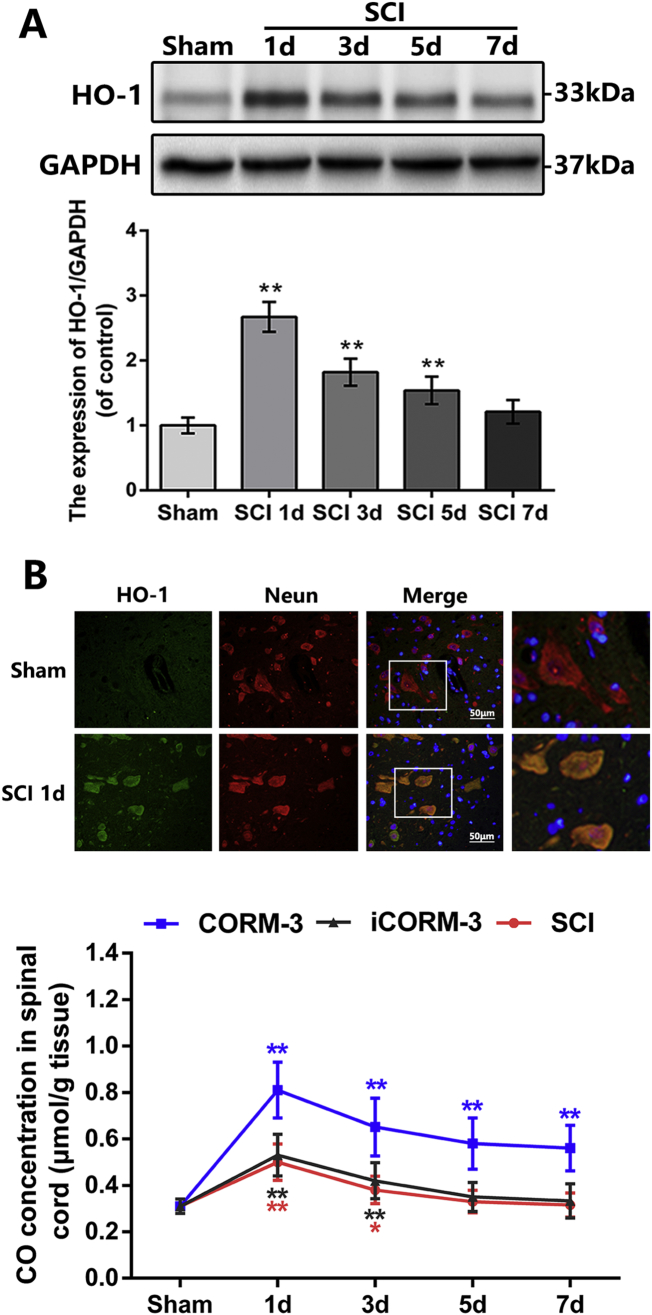
Genetic overexpression or pharmacological activation of heme oxygenase (HO) are identified as potential therapeutic target for spinal cord injury (SCI); however, the role of carbon monoxide (CO), which is a major product of haem degenerated by HO, in SCI remains unknown. Applying hemin or chemicals which may regulate HO expression or activity to increase CO production are inadequate to elaborate the direct role of CO. Here, we assessed the effect of CO releasing molecule-3 (CORM-3), the classical donor of CO, in SCI and explained its possible protective mechanism.
Rat SCI model was performed with a vascular clip (30 g) compressing at T9 vertebral level for 1 min and CO was delivered immediately after SCI by CORM-3. The neurological deficits and neuron survival were assessed. Inflammasome and inositol-requiring enzyme 1 (IRE1) pathway were measured by western blot and immunofluorescence. For in vitro study, oxygen glucose deprivation (OGD) simulated the SCI-inflammasome change in cultured the primary neurons.
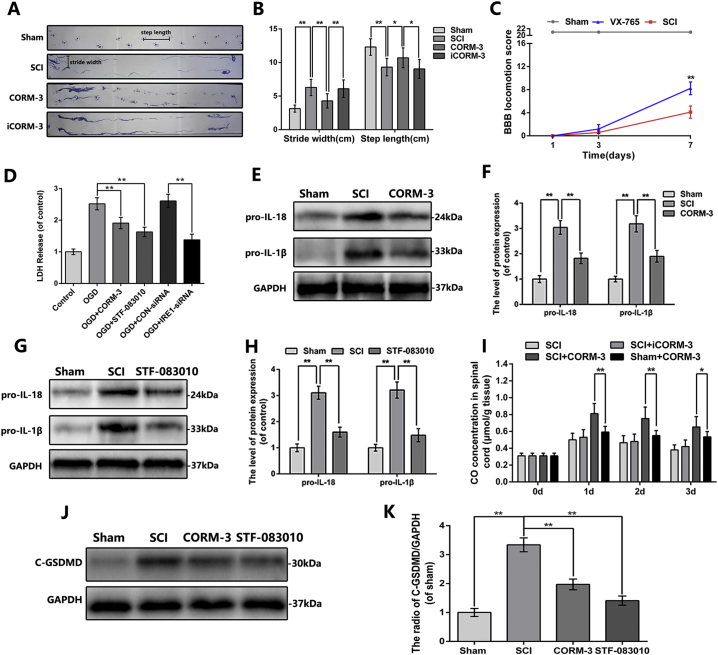
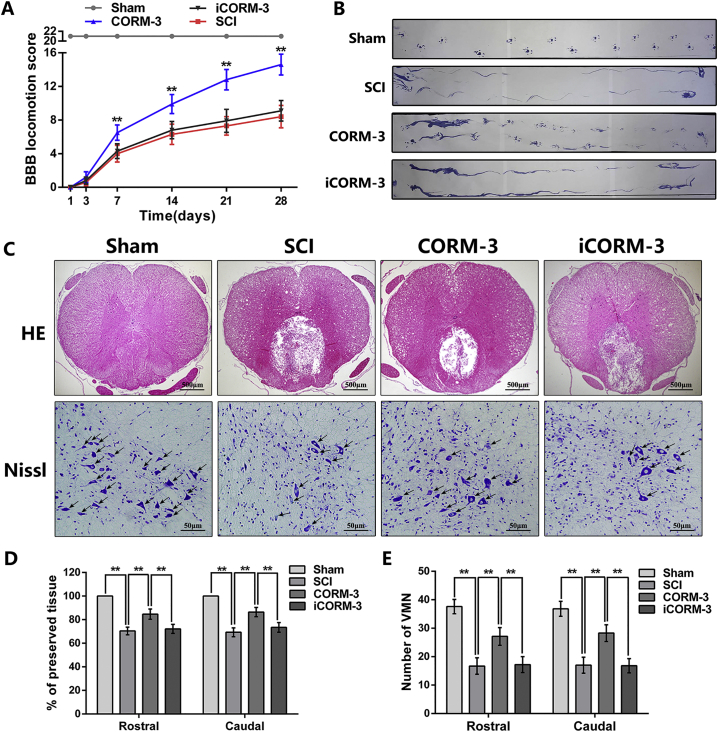
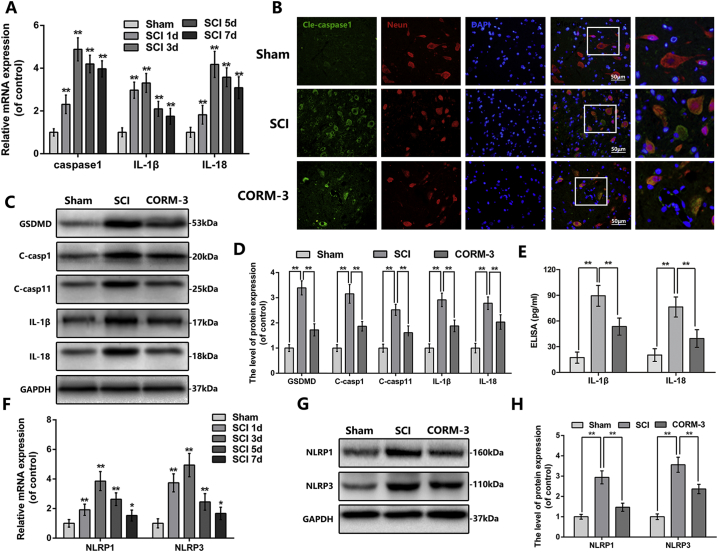
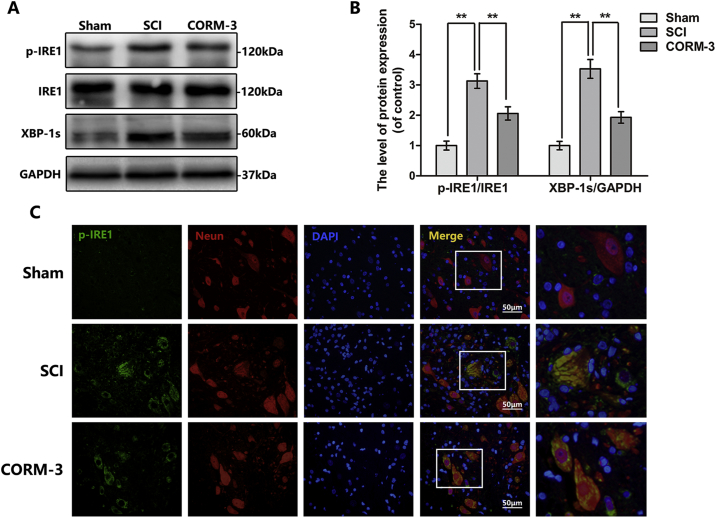
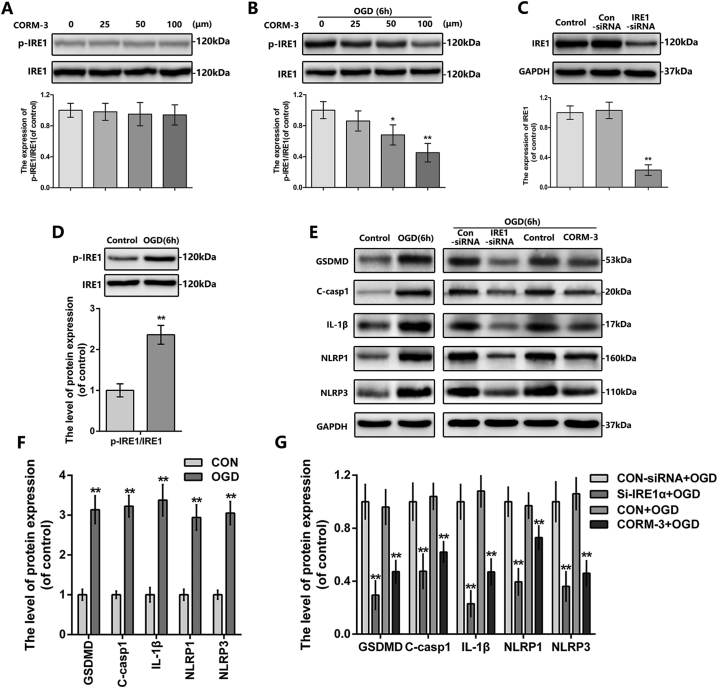
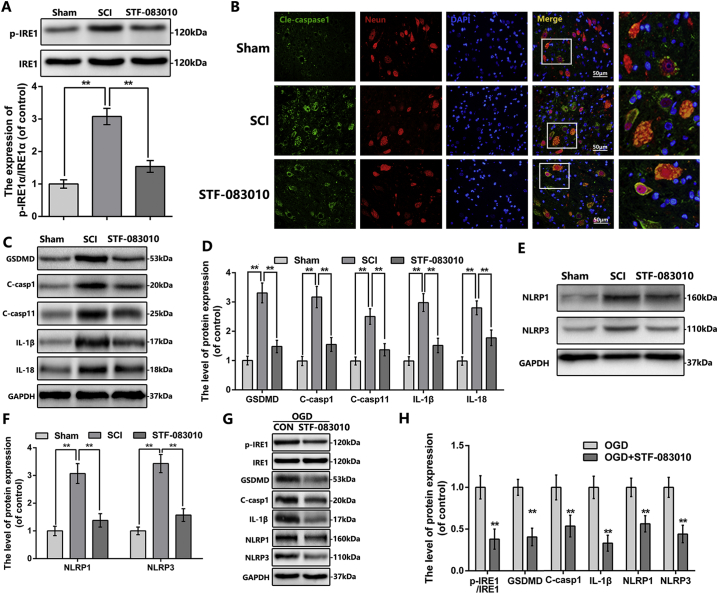
CORM-3 suppressed inflammasome signaling and pyroptosis occurrence, which consequently alleviated neuron death and improved motor functional recovery following SCI. As a pivotal sensor involving in endoplasmic reticulum stress-medicated inflammasome signaling, IRE1 and its downstream X-box binding protein 1 (XBP1) were activated in SCI tissues as well as in OGD neurons; while inhibition of IRE1 by STF-083010 in SCI rats or by si-RNA in OGD neurons suppressed inflammasome signaling and pyroptosis. Interestingly, the SCI/OGD-stimulated IRE1 activation was attenuated by CORM-3 treatment.
CO may alleviate neuron death and improve motor functional recovery in SCI through IRE1 regulation, and administration of CO could be a promising therapeutic strategy for SCI.
血红素加氧酶(HO)的基因过表达或药理学激活被认为是脊髓损伤(SCI)的潜在治疗靶点;然而,HO 降解血红素产生的主要产物一氧化碳(CO)在 SCI 中的作用尚不清楚。应用血红素或可能调节 HO 表达或活性的化学物质来增加 CO 产生不足以详细说明 CO 的直接作用。在这里,我们评估了一氧化碳释放分子-3(CORM-3),一种 CO 的经典供体,在 SCI 中的作用,并解释了其可能的保护机制。
采用血管夹(30g)压迫 T9 椎体 1 分钟制作大鼠 SCI 模型,SCI 后立即用 CORM-3 给予 CO。评估神经功能缺损和神经元存活情况。采用 Western blot 和免疫荧光法检测炎症小体和肌醇需求酶 1(IRE1)通路。在体外研究中,氧葡萄糖剥夺(OGD)模拟了培养的原代神经元中的 SCI 炎症小体变化。
CORM-3 抑制了炎症小体信号和细胞焦亡的发生,从而减轻了 SCI 后神经元死亡和运动功能的恢复。IRE1 作为一种参与内质网应激介导的炎症小体信号的关键传感器,在 SCI 组织和 OGD 神经元中均被激活;而在 SCI 大鼠中用 STF-083010 抑制 IRE1 或在 OGD 神经元中用 si-RNA 抑制 IRE1 可抑制炎症小体信号和细胞焦亡。有趣的是,CORM-3 处理可减轻 SCI/OGD 刺激的 IRE1 激活。
CO 可能通过 IRE1 调节减轻 SCI 中的神经元死亡并改善运动功能恢复,CO 的给药可能是 SCI 的一种有前途的治疗策略。