Department of Bioengineering, Imperial College London, London, United Kingdom.
Joint Department of Biomedical Engineering, University of North Carolina, Chapel Hill, and North Carolina State University, Raleigh, North Carolina, USA.
Ultrasound Med Biol. 2019 Mar;45(3):795-810. doi: 10.1016/j.ultrasmedbio.2018.10.031. Epub 2019 Jan 4.
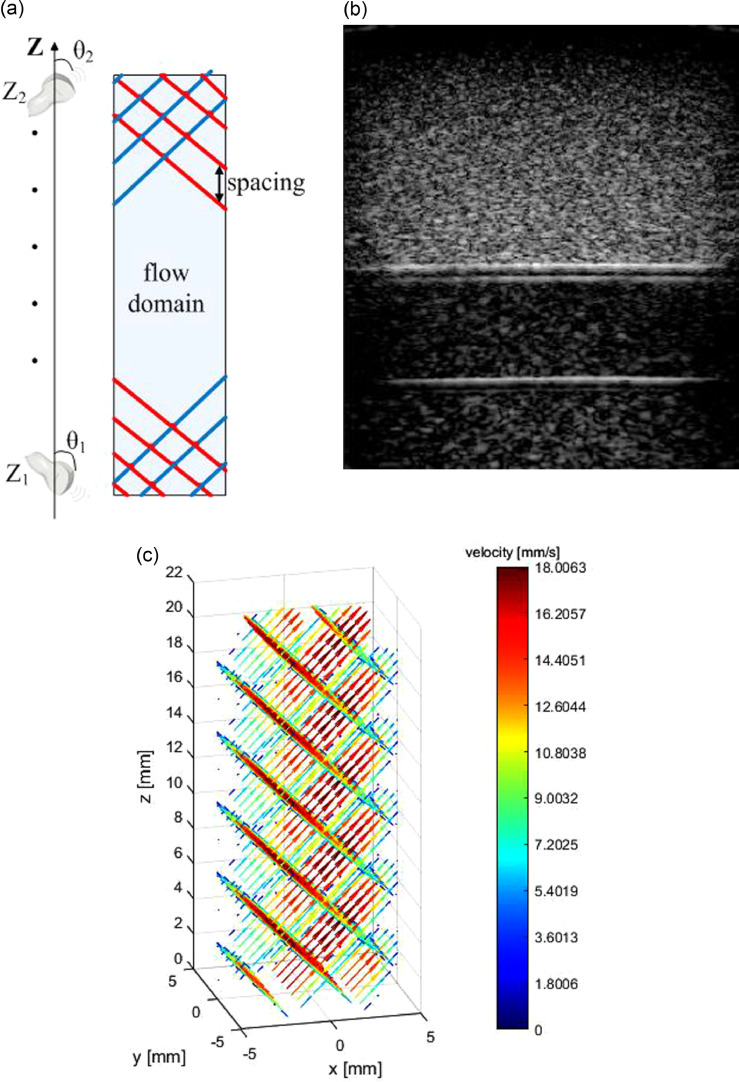
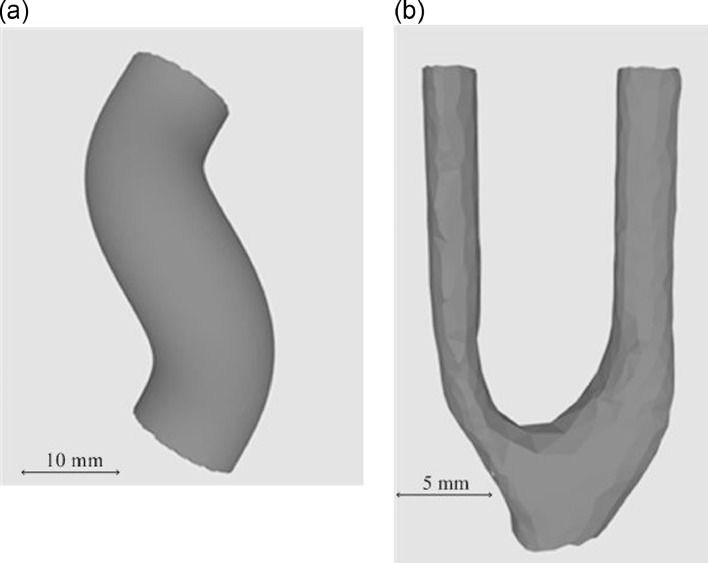
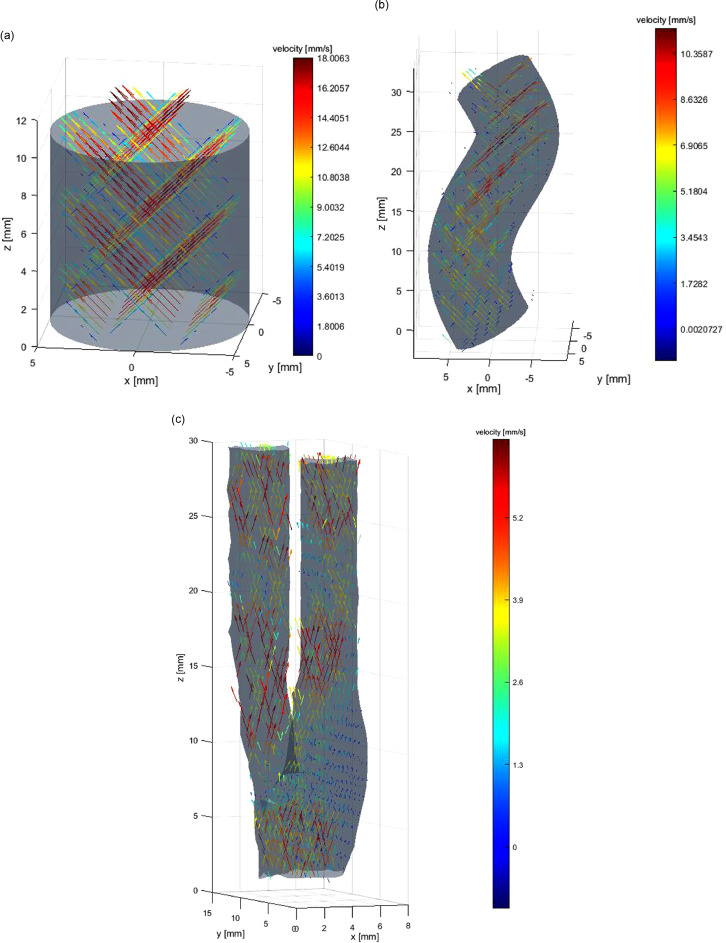
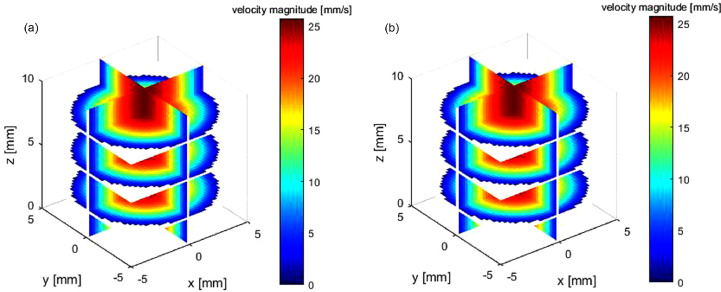
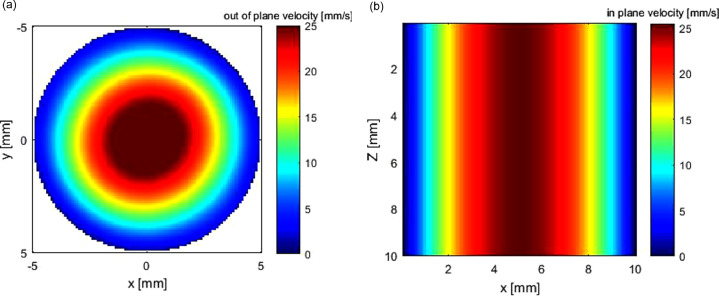
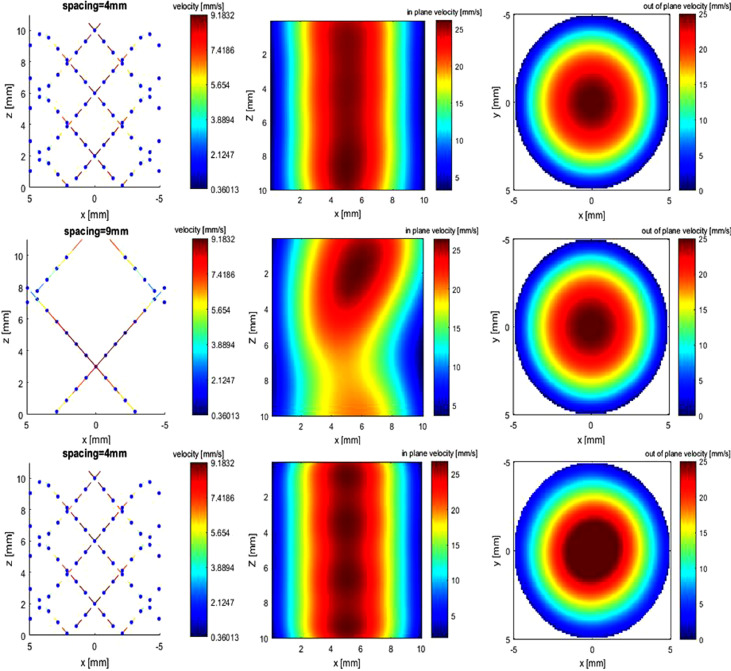
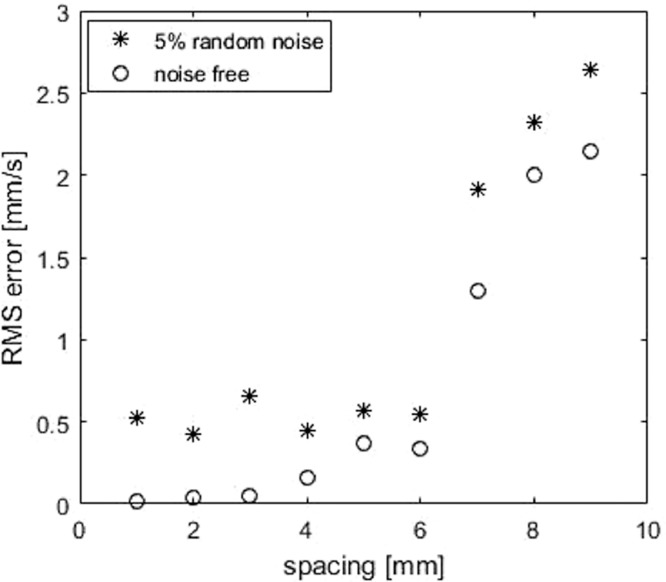
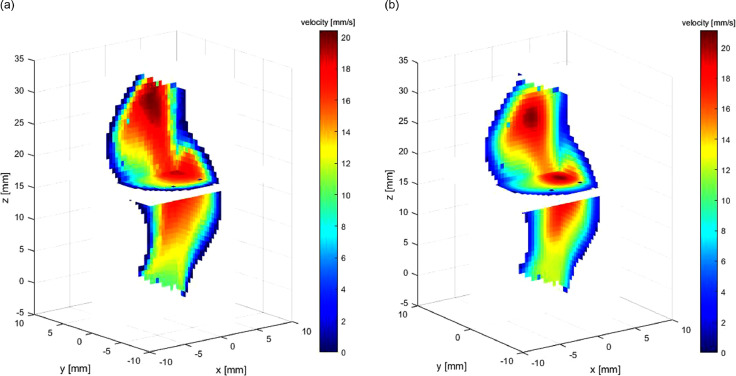
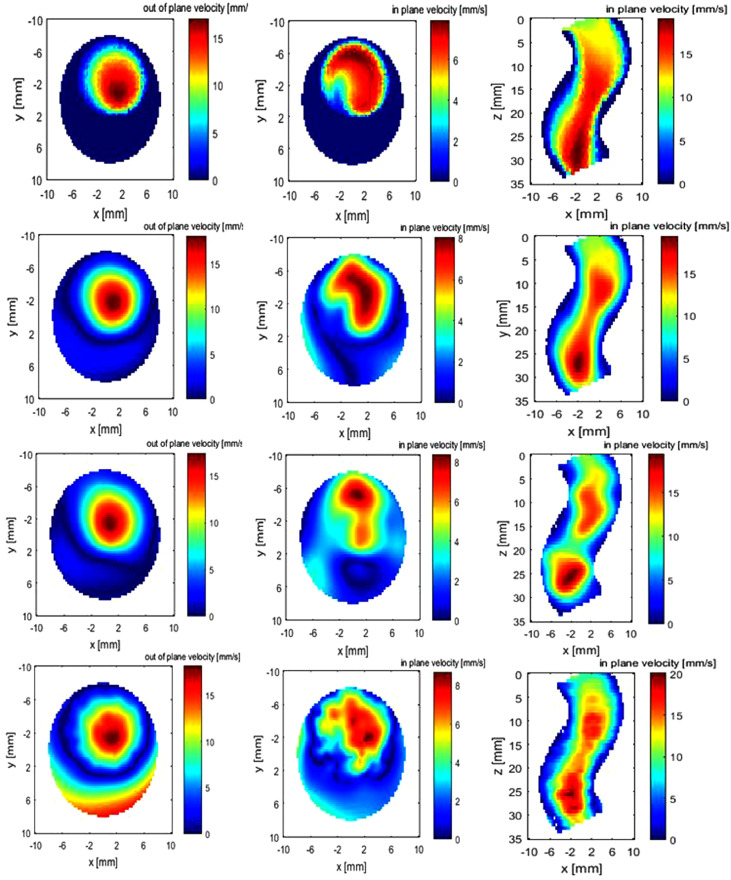
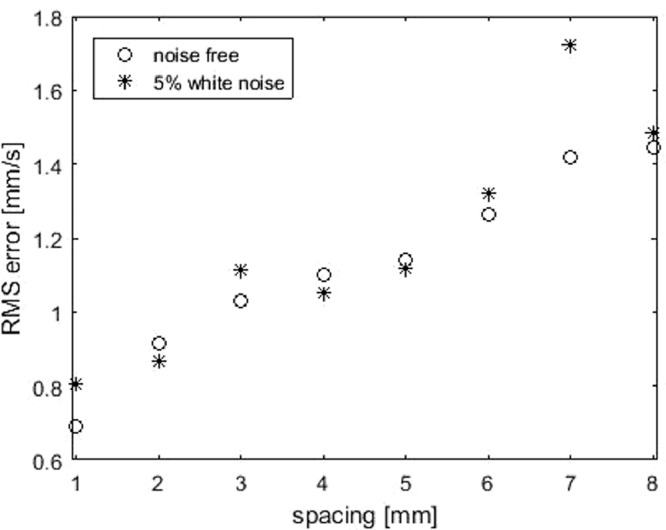
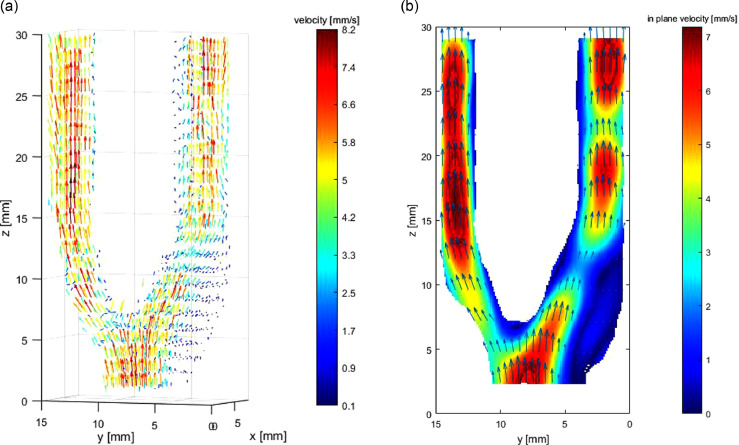
Quantification of 3-D intravascular flow is valuable for studying arterial wall diseases but currently there is a lack of effective clinical tools for this purpose. Divergence-free interpolation (DFI) using radial basis function (RBF) is an emerging approach for full-field flow reconstruction using experimental sparse flow field samples. Previous DFI reconstructs full-field flow from scattered 3-D velocity input obtained using phase-contrast magnetic resonance imaging with low temporal resolution. In this study, a new DFI algorithm is proposed to reconstruct full-field flow from scattered 2-D in-plane velocity vectors obtained using ultrafast contrast-enhanced ultrasound (>1000 fps) and particle imaging velocimetry. The full 3-D flow field is represented by a sum of weighted divergence-free RBFs in space. Because the acquired velocity vectors are only in 2-D and hence the problem is ill-conditioned, a regularized solution of the RBF weighting is achieved through singular value decomposition (SVD) and the L-curve method. The effectiveness of the algorithm is determined via numerical experiments for Poiseuille flow and helical flow with added noise, and it is found that an accuracy as high as 95.6% can be achieved for Poiseuille flow (with 5% input noise). Experimental feasibility is also determined by reconstructing full-field 3-D flow from experimental 2-D ultrasound image velocimetry measurements in a carotid bifurcation phantom. The method is typically faster for a range of problems compared with computational fluid dynamics, and has been found to be effective for the three flow cases.
三维血管内血流的定量分析对于研究动脉壁疾病具有重要价值,但目前缺乏有效的临床工具来实现这一目标。使用径向基函数(RBF)的无散插值(DFI)是一种使用实验稀疏流场样本进行全场流重建的新兴方法。以前的 DFI 从使用相衬磁共振成像获得的分散 3D 速度输入中重建全场流,其时间分辨率较低。在这项研究中,提出了一种新的 DFI 算法,用于从使用超快速对比增强超声(>1000 fps)和粒子图像测速法获得的分散二维平面速度向量中重建全场流。通过空间中的加权无散 RBF 之和来表示完整的 3D 流场。由于所获取的速度向量仅在 2D 中,因此问题是病态的,因此通过奇异值分解(SVD)和 L 曲线法实现了 RBF 加权的正则化解。通过对泊肃叶流和带有噪声的螺旋流的数值实验确定了算法的有效性,发现泊肃叶流(输入噪声为 5%)的准确性可高达 95.6%。通过对颈动脉分叉体模中的实验二维超声图像速度测量进行全场 3D 流重建也确定了实验的可行性。与计算流体动力学相比,该方法在一系列问题中通常更快,并且已经发现对于三种流动情况都是有效的。