Leliveld Mandala S, Polinder Suzanne, Panneman Martien J M, Verhofstad Michael H J, Van Lieshout Esther M M
Trauma Research Unit Department of Surgery, Erasmus MC, University Medical Center Rotterdam, P.O. Box 2040, 3000 CA, Rotterdam, The Netherlands.
Department of Public Health, Erasmus MC, P.O. Box 2040, 3000 CA, Rotterdam, The Netherlands.
Eur J Trauma Emerg Surg. 2020 Oct;46(5):1115-1122. doi: 10.1007/s00068-018-01072-3. Epub 2019 Jan 7.
Population-based knowledge on the occurrence of specific injuries is essential for the allocation of health care services, optimization of preventive measures, and research purposes. Therefore, the aim of this study was to examine long-term nation-based trends in the incidence rate, trauma mechanism, hospital length of stay (HLOS), treatment, and outcome of hospital-admitted patients with an isolated tibia shaft fracture between 1991 and 2012 in The Netherlands.
All hospital-admitted patients in The Netherlands between 1991 and 2012 with an isolated tibia shaft fracture were included. Age and gender-standardized incidence rates were calculated for each year. Data were extracted from the National Medical Registration.
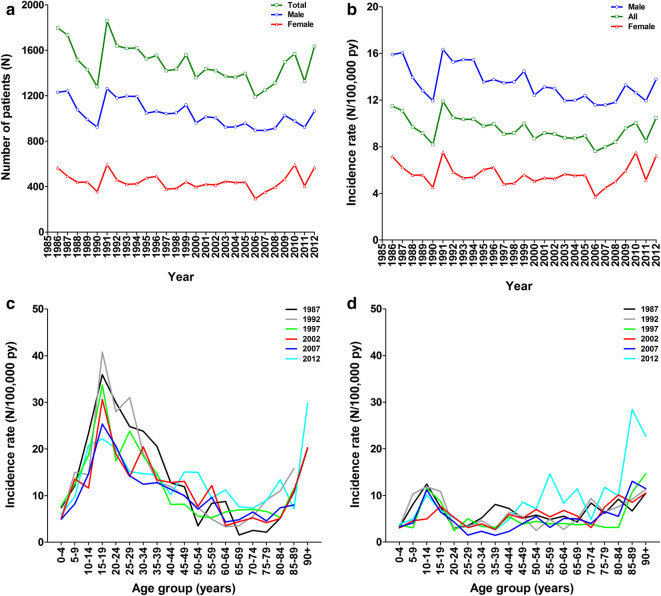
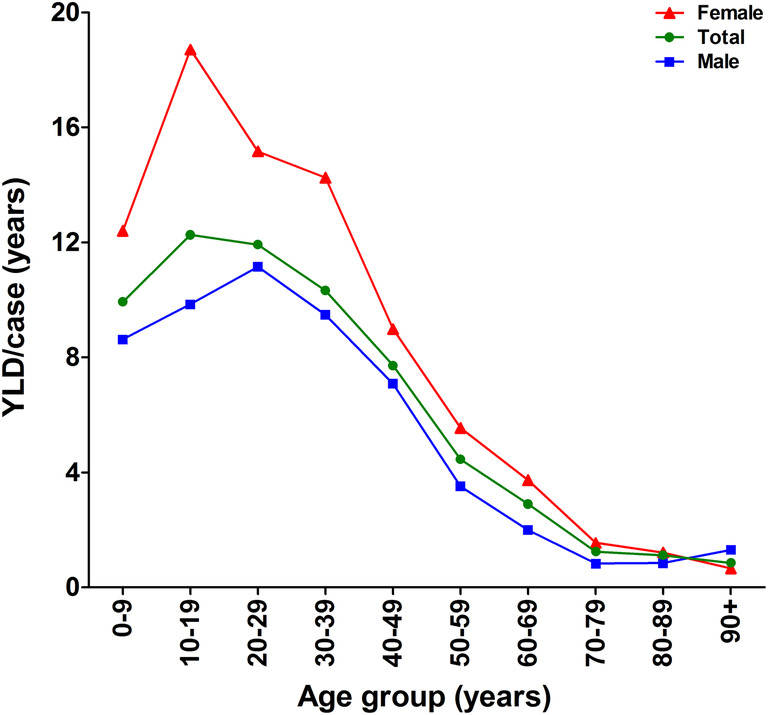
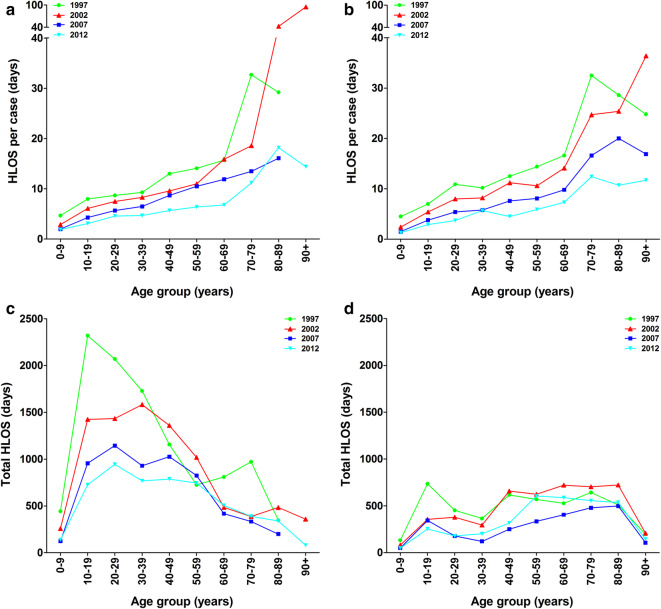
The incidence rate for men decreased to 13.8/100,000 person years (py). For women the incidence rate remained stable with 7.2/100,000 py. Incidence showed a peak for adolescent men (15-19 years), and increased in both genders from 65 years onwards. Since 1993 the mean HLOS for isolated tibia fractures reduced from 10.8 to 5.4 days. Mean HLOS increased with age. Mean years lived with disability (YLD) was 4.5 years, declined linearly with age, and showed no gender effect.
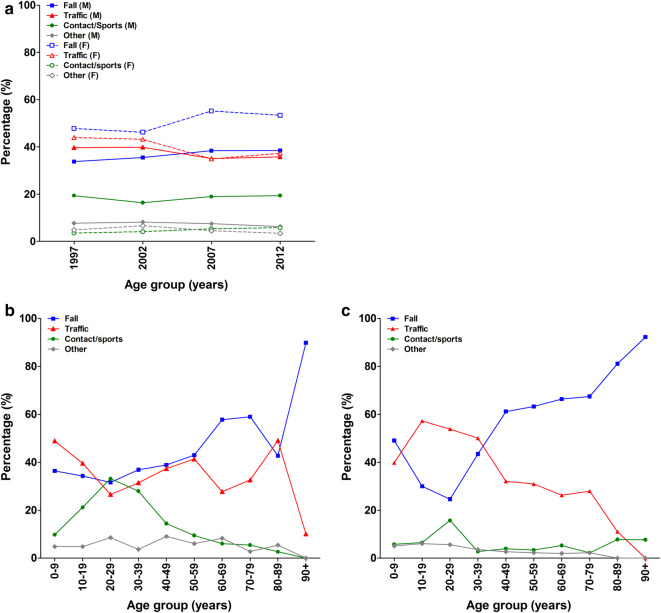
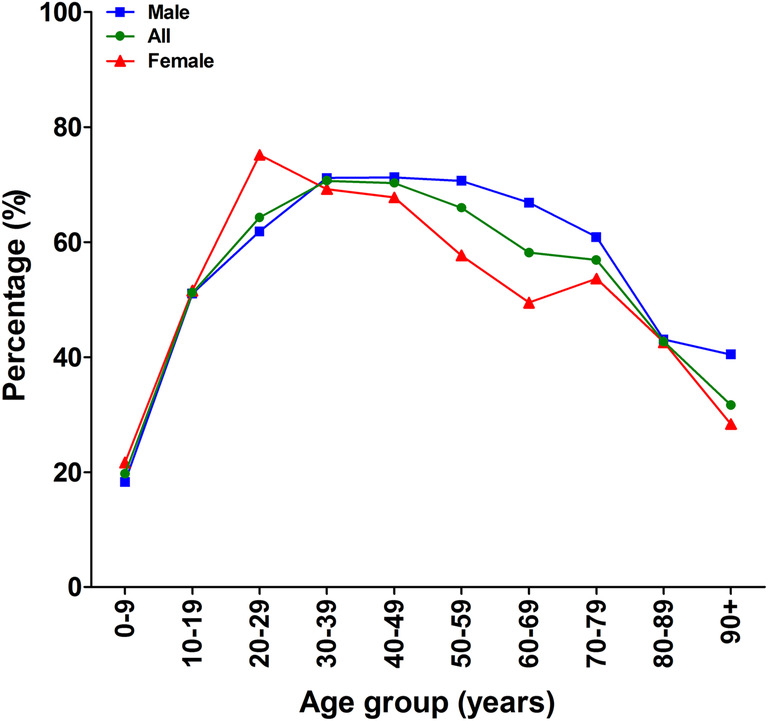
In 22 years, the incidence rate of hospital admitted patients with an isolated tibia shaft fracture in The Netherlands dropped with 12%, which was mainly attributable to a 15% decline among men. Incidence rate, trauma mechanism, and HLOS were age and gender related. HLOS also reduced over time. Operation rate and YLD were only age related.
基于人群的特定损伤发生率知识对于医疗服务分配、预防措施优化及研究目的而言至关重要。因此,本研究旨在调查1991年至2012年期间荷兰因单纯胫骨干骨折入院患者的发病率、创伤机制、住院时间(HLOS)、治疗及结局的长期全国性趋势。
纳入1991年至2012年期间荷兰所有因单纯胫骨干骨折入院的患者。计算每年的年龄和性别标准化发病率。数据取自国家医疗登记处。
男性发病率降至13.8/100,000人年(py)。女性发病率保持稳定,为7.2/100,000 py。发病率在青少年男性(15 - 19岁)中达到峰值,且65岁以后两性发病率均有所上升。自1993年以来,单纯胫骨干骨折的平均住院时间从10.8天降至5.4天。平均住院时间随年龄增长而增加。平均伤残生存年数(YLD)为4.5年,随年龄呈线性下降,且无性别差异。
22年间,荷兰因单纯胫骨干骨折入院患者的发病率下降了12%,这主要归因于男性发病率下降了15%。发病率、创伤机制和住院时间与年龄和性别相关。住院时间也随时间减少。手术率和伤残生存年数仅与年龄相关。