Watanave Masashi, Matsuzaki Yasunori, Nakajima Yasuyo, Ozawa Atsushi, Yamada Masanobu, Hirai Hirokazu
Department of Neurophysiology and Neural Repair, Gunma University Graduate School of Medicine, Maebashi, Japan.
Department of Medicine and Molecular Science, Gunma University Graduate School of Medicine, Maebashi, Japan.
Front Cell Neurosci. 2018 Dec 12;12:490. doi: 10.3389/fncel.2018.00490. eCollection 2018.
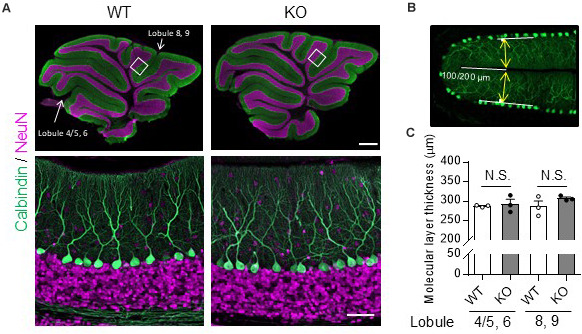
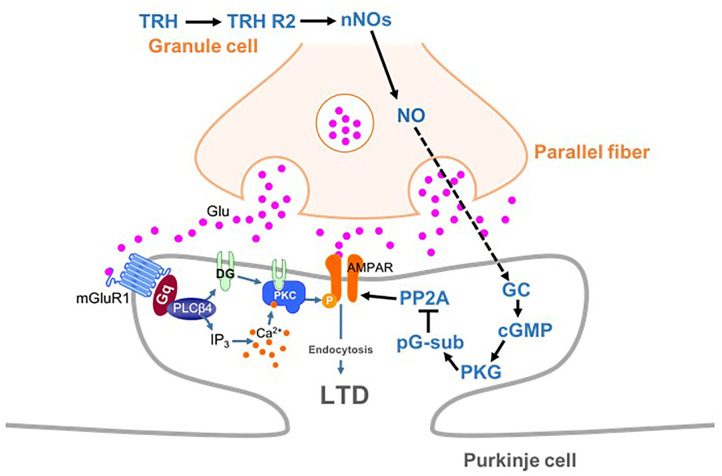
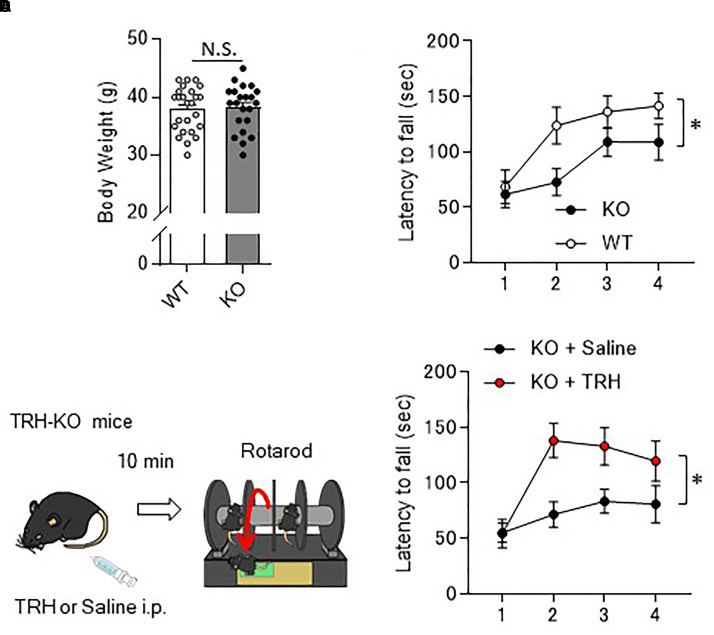
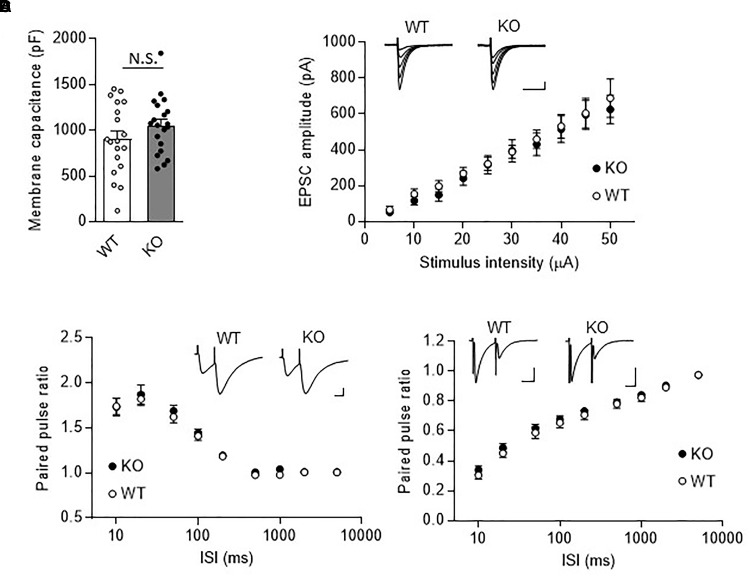
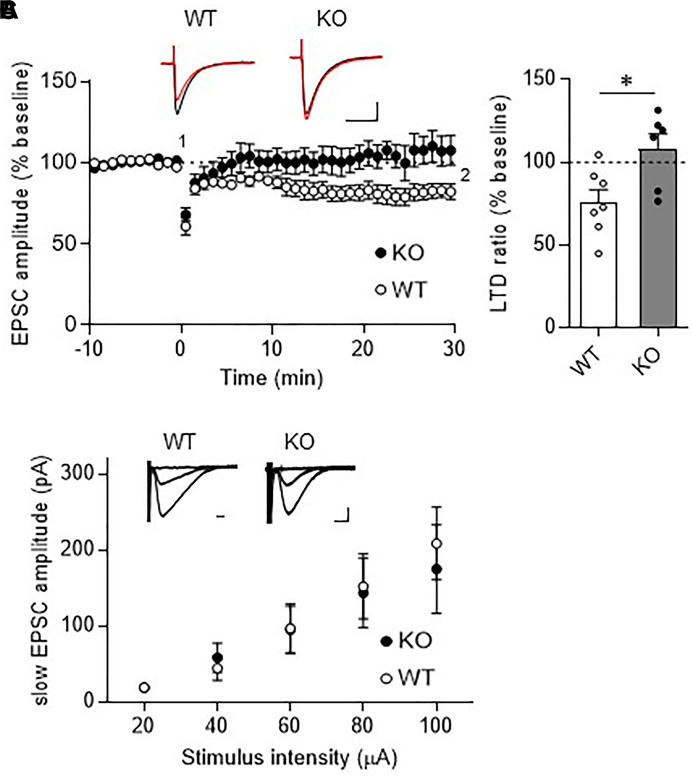
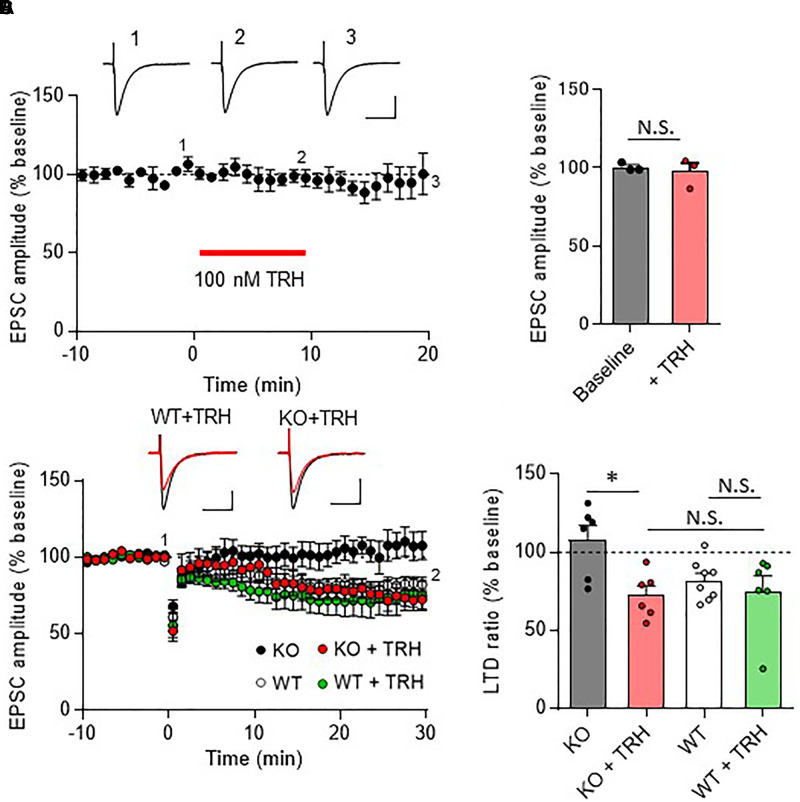
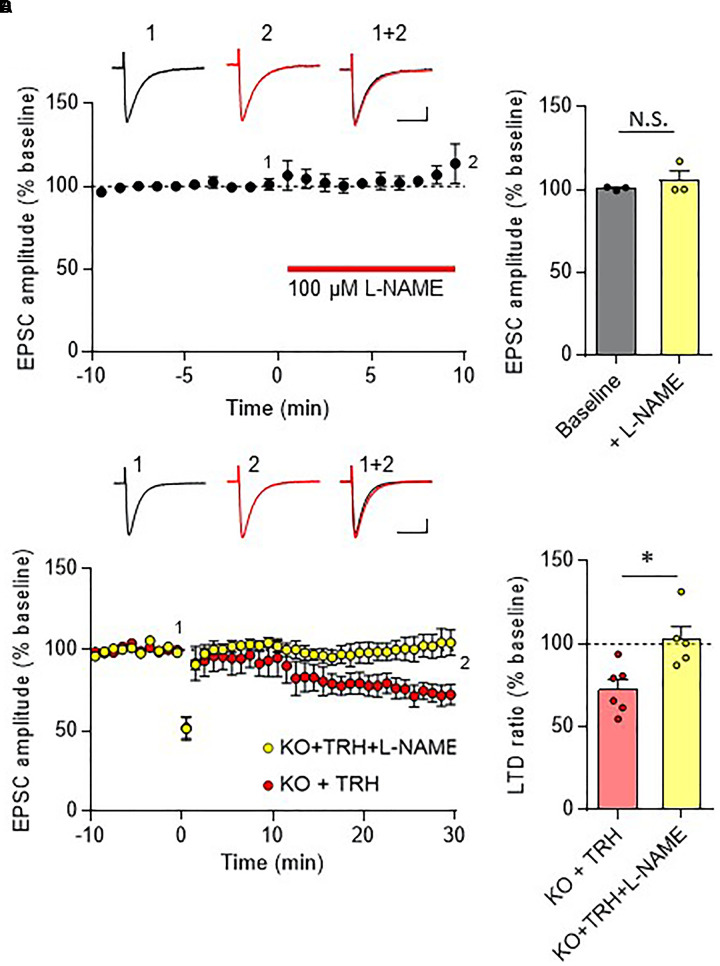
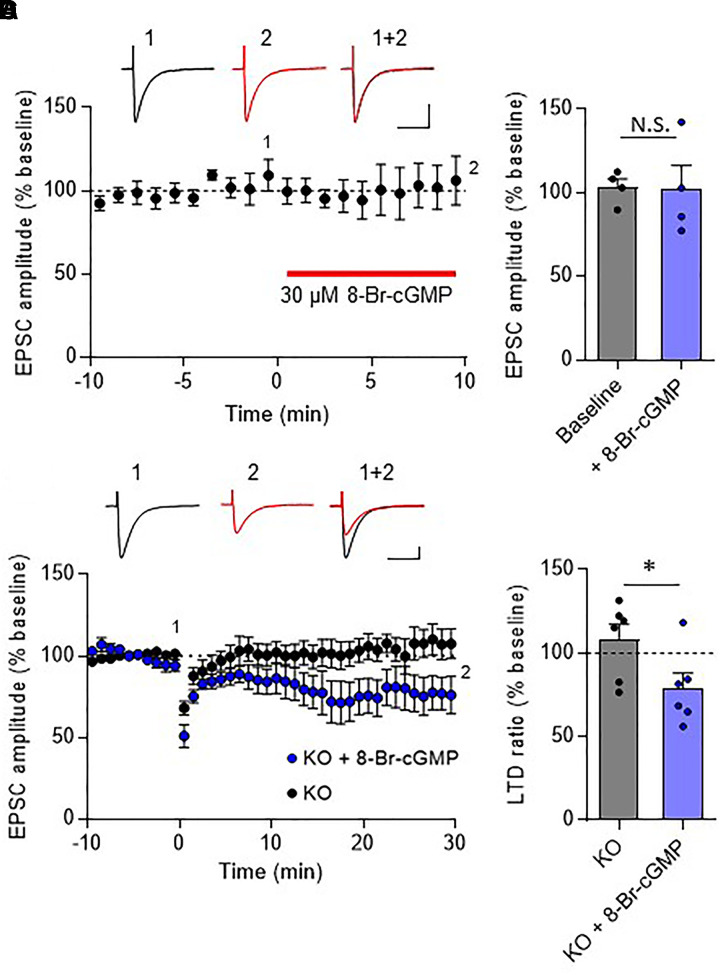
Thyrotropin-releasing hormone (TRH) regulates various physiological activities through activation of receptors expressed in a broad range of cells in the central nervous system. The cerebellum expresses TRH receptors in granule cells and molecular layer interneurons. However, the function of TRH in the cerebellum remains to be clarified. Here, using TRH knockout (KO) mice we studied the role of TRH in the cerebellum. Immunohistochemistry showed no gross morphological differences between KO mice and wild-type (WT) littermates in the cerebellum. In the rotarod test, the initial performance of KO mice was comparable to that of WT littermates, but the learning speed of KO mice was significantly lower than that of WT littermates, suggesting impaired motor learning. The motor learning deficit in KO mice was rescued by intraperitoneal injection of TRH. Electrophysiology revealed absence of long-term depression (LTD) at parallel fiber-Purkinje cell synapses in KO mice, which was rescued by bath-application of TRH. TRH was shown to increase cyclic guanosine monophosphate (cGMP) content in the cerebellum. Since nitric oxide (NO) stimulates cGMP synthesis in the cerebellum, we examined whether NO-cGMP pathway was involved in TRH-mediated LTD rescue in KO mice. Pharmacological blockade of NO synthase and subsequent cGMP production prevented TRH-induced LTD expression in KO mice, whereas increase in cGMP signal in Purkinje cells by 8-bromoguanosine cyclic 3',5'-monophosphate, a membrane-permeable cGMP analog, restored LTD without TRH application. These results suggest that TRH is involved in cerebellar LTD presumably by upregulating the basal cGMP level in Purkinje cells, and, consequently, in motor learning.
促甲状腺激素释放激素(TRH)通过激活中枢神经系统中广泛细胞表达的受体来调节各种生理活动。小脑在颗粒细胞和分子层中间神经元中表达TRH受体。然而,TRH在小脑中的功能仍有待阐明。在此,我们使用TRH基因敲除(KO)小鼠研究了TRH在小脑中的作用。免疫组织化学显示,KO小鼠和野生型(WT)同窝小鼠的小脑在大体形态上没有差异。在转棒试验中,KO小鼠的初始表现与WT同窝小鼠相当,但KO小鼠的学习速度明显低于WT同窝小鼠,提示运动学习受损。腹腔注射TRH可挽救KO小鼠的运动学习缺陷。电生理学研究显示,KO小鼠的平行纤维-浦肯野细胞突触处不存在长时程抑制(LTD),而通过浴槽应用TRH可挽救该现象。研究表明,TRH可增加小脑中环磷酸鸟苷(cGMP)的含量。由于一氧化氮(NO)可刺激小脑中cGMP的合成,我们研究了NO-cGMP途径是否参与了TRH介导的KO小鼠LTD挽救过程。药理学阻断NO合酶及随后的cGMP生成可阻止TRH诱导的KO小鼠LTD表达,而通过膜通透性cGMP类似物8-溴环磷酸鸟苷增加浦肯野细胞中的cGMP信号,可在未应用TRH的情况下恢复LTD。这些结果表明,TRH可能通过上调浦肯野细胞中的基础cGMP水平参与小脑LTD,进而参与运动学习。