Moya-Alvarado Guillermo, Gonzalez Andres, Stuardo Nicolas, Bronfman Francisca C
Department of Physiology, Faculty of Biological Sciences, Center for Aging and Regeneration (CARE UC), Pontificia Universidad Católica de Chile, Santiago, Chile.
Front Cell Neurosci. 2018 Dec 17;12:493. doi: 10.3389/fncel.2018.00493. eCollection 2018.
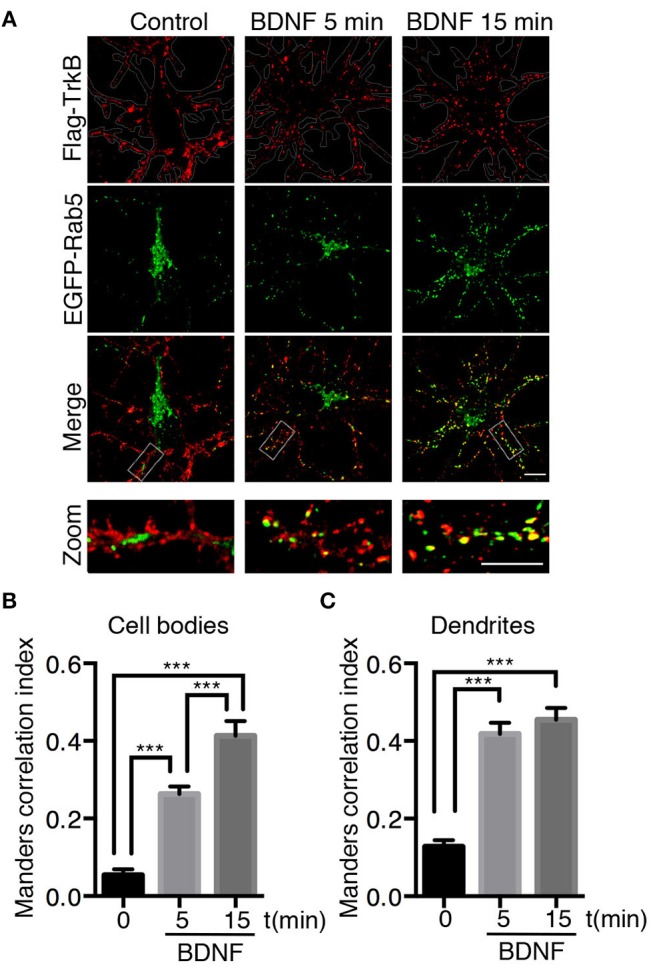
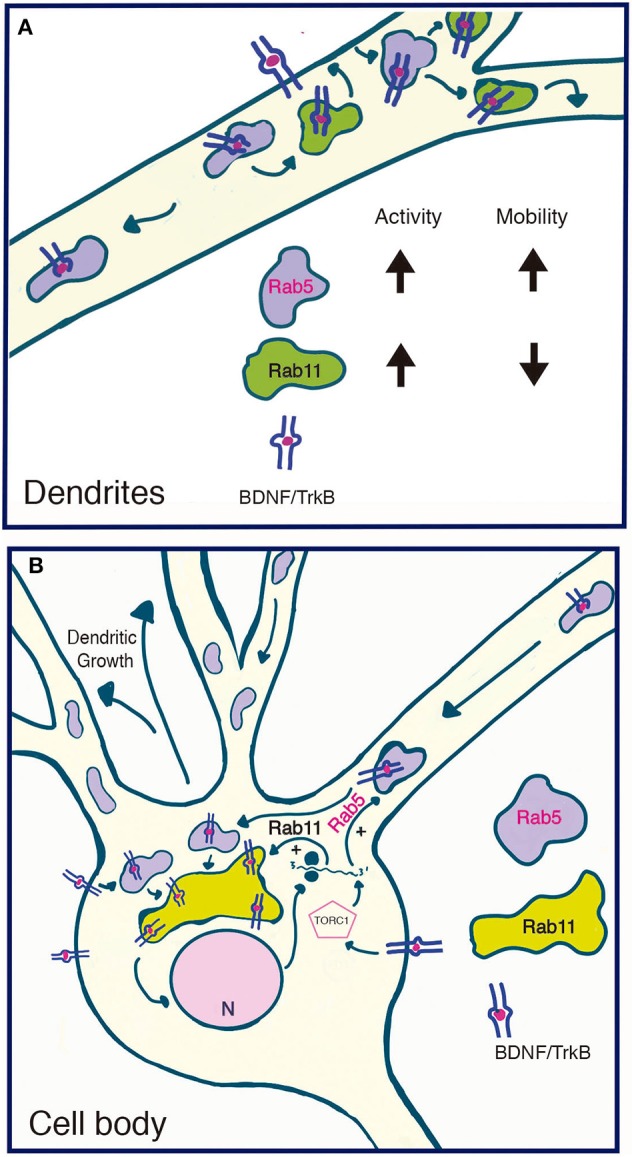
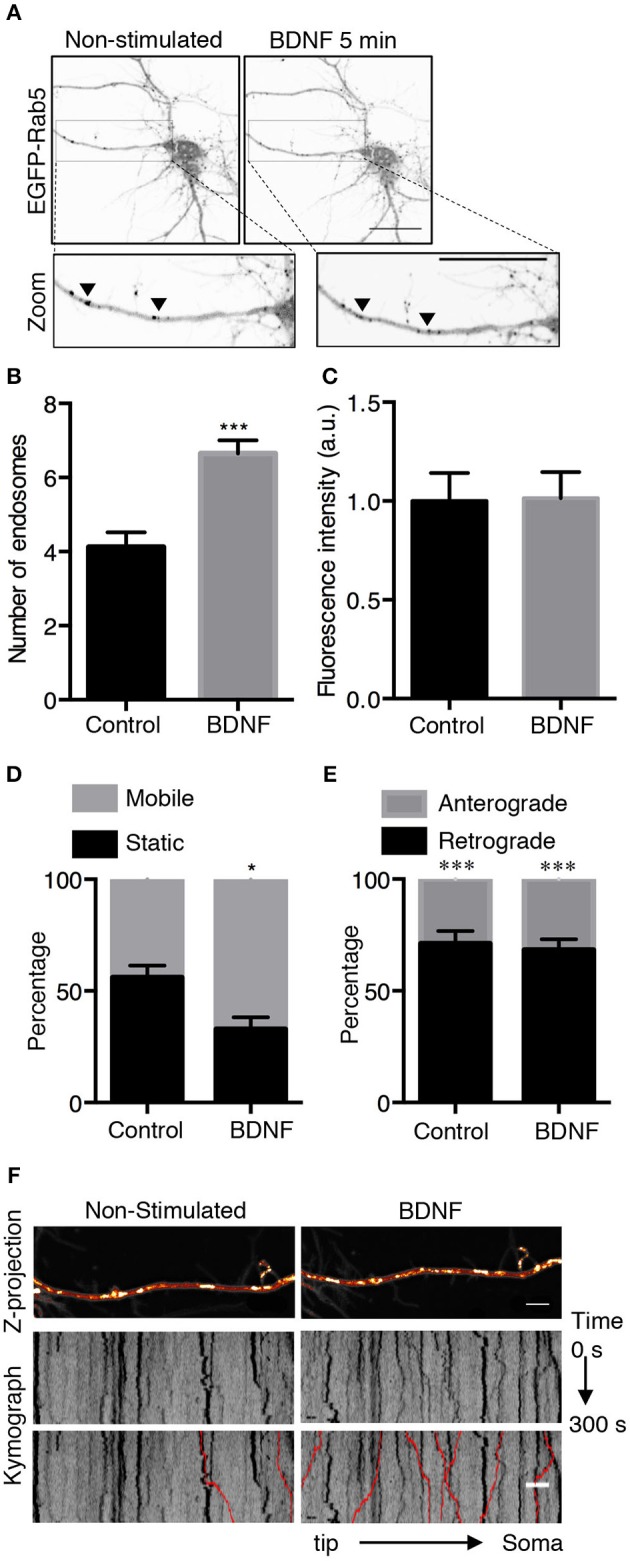
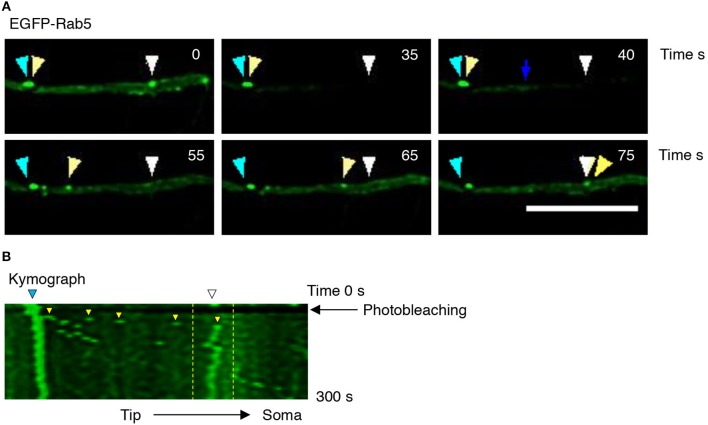
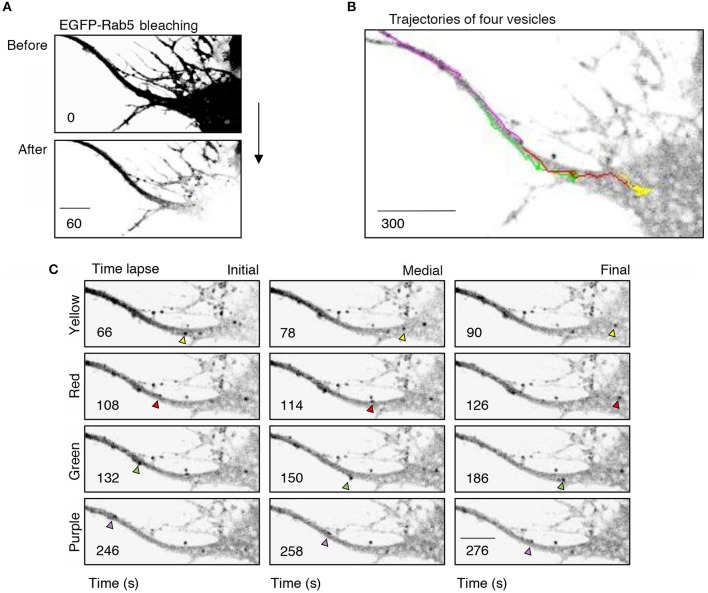
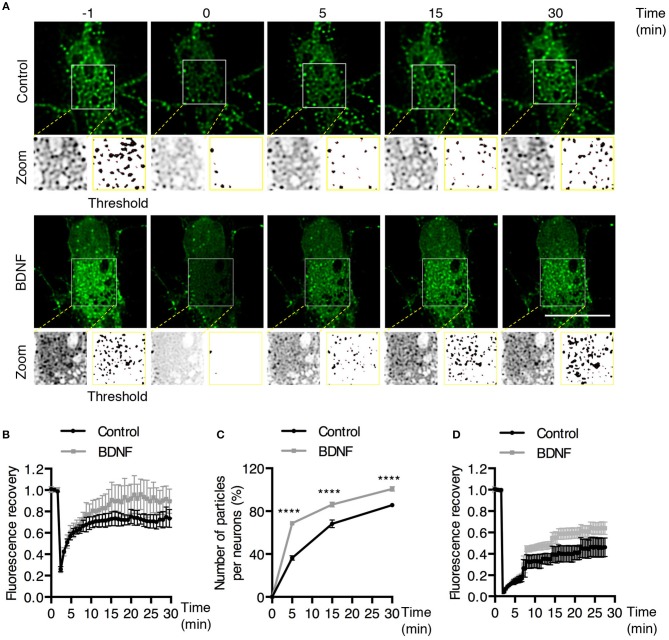
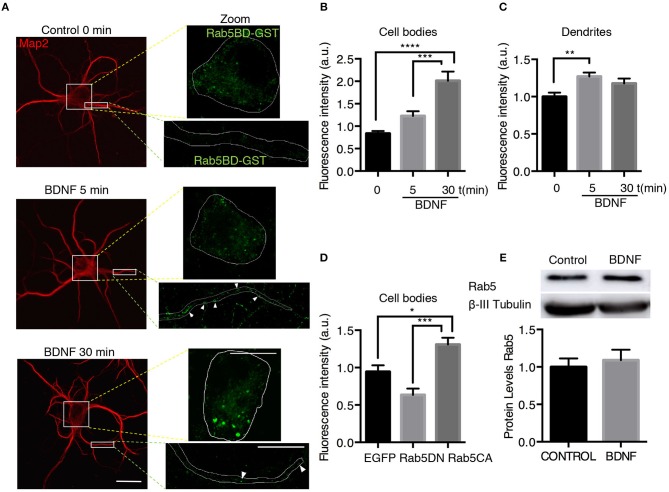
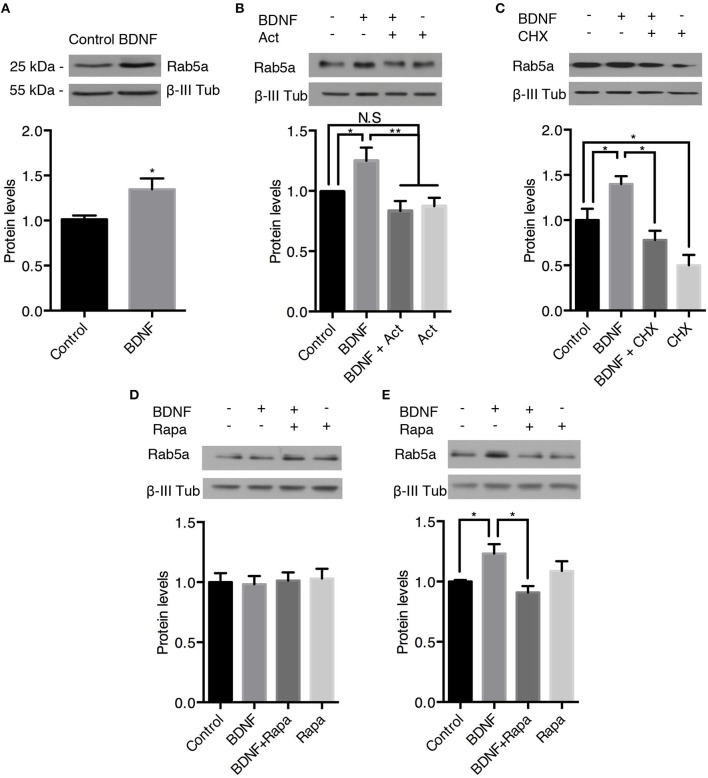
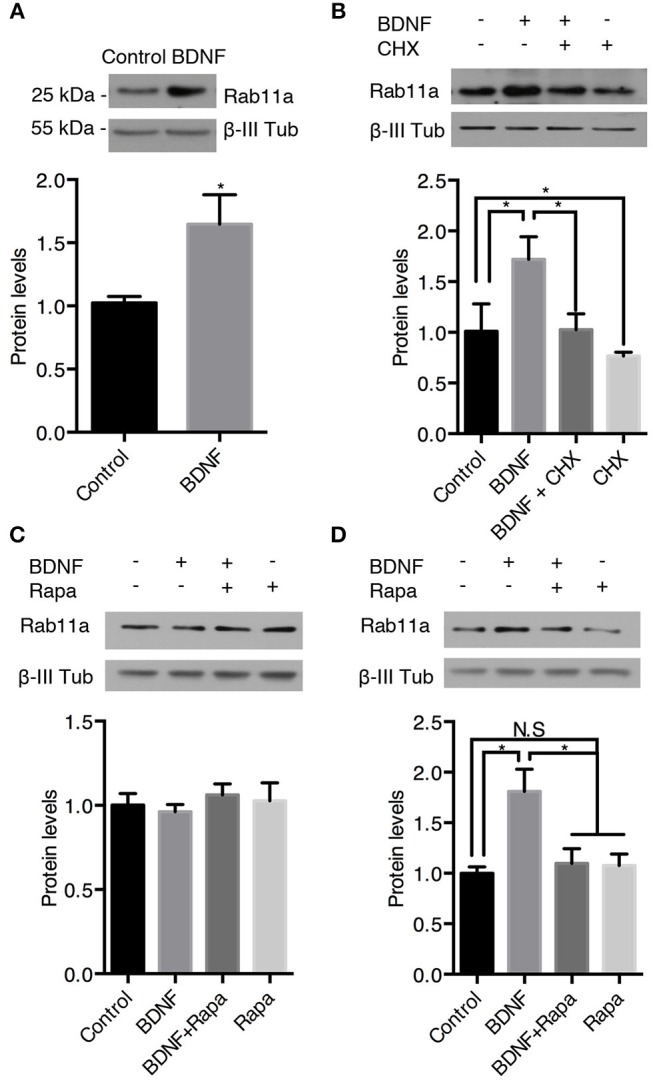
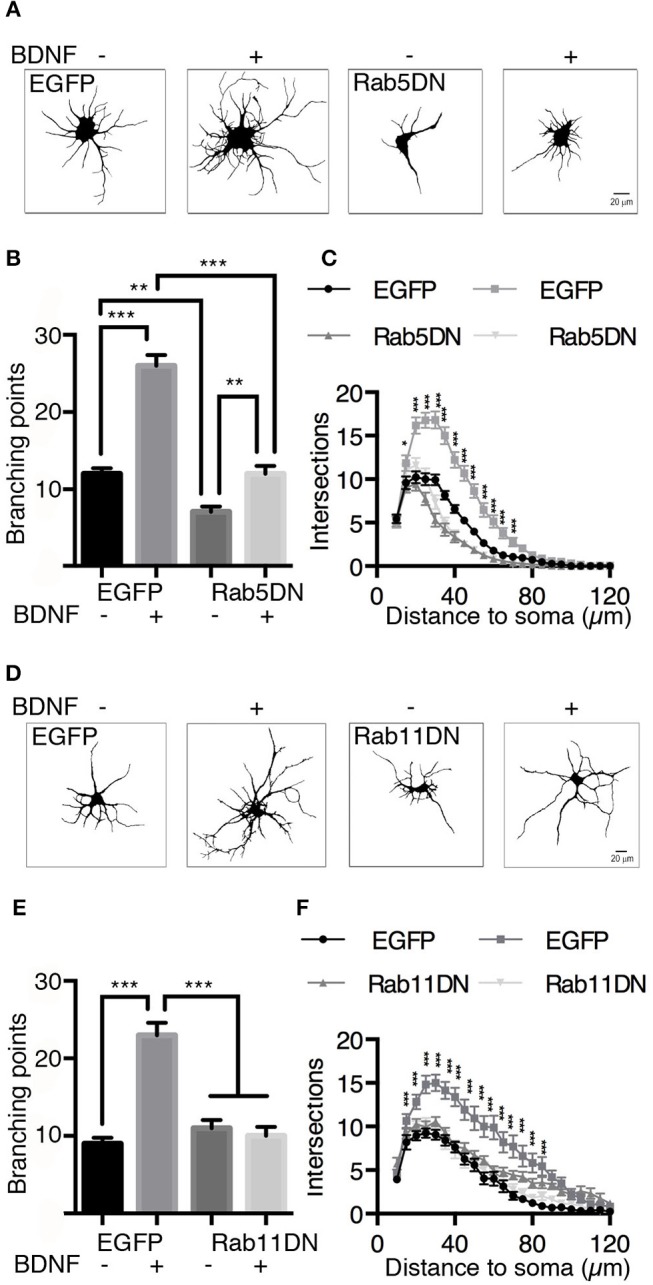
Neurotrophin receptors use endosomal pathways for signaling in neurons. However, how neurotrophins regulate the endosomal system for proper signaling is unknown. Rabs are monomeric GTPases that act as molecular switches to regulate membrane trafficking by binding a wide range of effectors. Among the Rab GTPases, Rab5 is the key GTPase regulating early endosomes and is the first sorting organelle of endocytosed receptors. The objective of our work was to study the regulation of Rab5-positive endosomes by BDNF at different levels, including dynamic, activity and protein levels in hippocampal neurons. Short-term treatment with BDNF increased the colocalization of TrkB in dendrites and cell bodies, increasing the vesiculation of Rab5-positive endosomes. Consistently, BDNF increased the number and mobility of Rab5 endosomes in dendrites. Cell body fluorescence recovery after photobleaching of Rab-EGFP-expressing neurons suggested increased movement of Rab5 endosomes from dendrites to cell bodies. These results correlated with the BDNF-induced activation of Rab5 in dendrites, followed by increased activation of Rab5 in cell bodies. Long-term treatment of hippocampal neurons with BDNF increased the protein levels of Rab5 and Rab11 in an mTOR-dependent manner. While BDNF regulation of Rab5a levels occurred at both the transcriptional and translational levels, Rab11a levels were regulated at the translational level at the time points analyzed. Finally, expression of a dominant-negative mutant of Rab5 reduced the basal arborization of nontreated neurons, and although BDNF was partially able to rescue the effect of Rab5DN at the level of primary dendrites, BDNF-induced dendritic branching was largely reduced. Our findings indicate that BDNF regulates the Rab5-Rab11 endosomal system at different levels and that these processes are likely required for BDNF-induced dendritic branching.
神经营养因子受体利用内体途径在神经元中进行信号传导。然而,神经营养因子如何调节内体系统以实现正常信号传导尚不清楚。Rabs是单体GTP酶,作为分子开关,通过结合多种效应器来调节膜运输。在Rab GTP酶中,Rab5是调节早期内体的关键GTP酶,也是内吞受体的第一个分选细胞器。我们工作的目的是研究脑源性神经营养因子(BDNF)在不同水平对Rab5阳性内体的调节,包括海马神经元中的动态、活性和蛋白质水平。BDNF短期处理增加了TrkB在树突和细胞体中的共定位,增加了Rab5阳性内体的囊泡化。一致地,BDNF增加了树突中Rab5内体的数量和移动性。表达Rab-EGFP的神经元光漂白后细胞体荧光恢复表明Rab5内体从树突向细胞体的移动增加。这些结果与BDNF诱导树突中Rab5的激活相关,随后细胞体中Rab5的激活增加。BDNF长期处理海马神经元以mTOR依赖的方式增加了Rab5和Rab11的蛋白质水平。虽然BDNF对Rab5a水平的调节发生在转录和翻译水平,但在分析的时间点,Rab11a水平在翻译水平受到调节。最后,Rab5显性负性突变体的表达降低了未处理神经元的基础分支,尽管BDNF在初级树突水平部分能够挽救Rab5DN的作用,但BDNF诱导的树突分支在很大程度上减少了。我们的研究结果表明,BDNF在不同水平调节Rab5-Rab11内体系统,并且这些过程可能是BDNF诱导树突分支所必需 的。