Zuo Jian, Wang Xin, Liu Yang, Ye Jing, Liu Qingfei, Li Yan, Li Shao
Yijishan Hospital of Wannan Medical College, Wuhu, China.
MOE Key Laboratory of Bioinformatics, Bioinformatics Division and Center for Synthetic and Systems Biology, Center for TCM-X, BNRist, Department of Automation, Tsinghua University, Beijing, China.
Front Pharmacol. 2018 Dec 18;9:1472. doi: 10.3389/fphar.2018.01472. eCollection 2018.
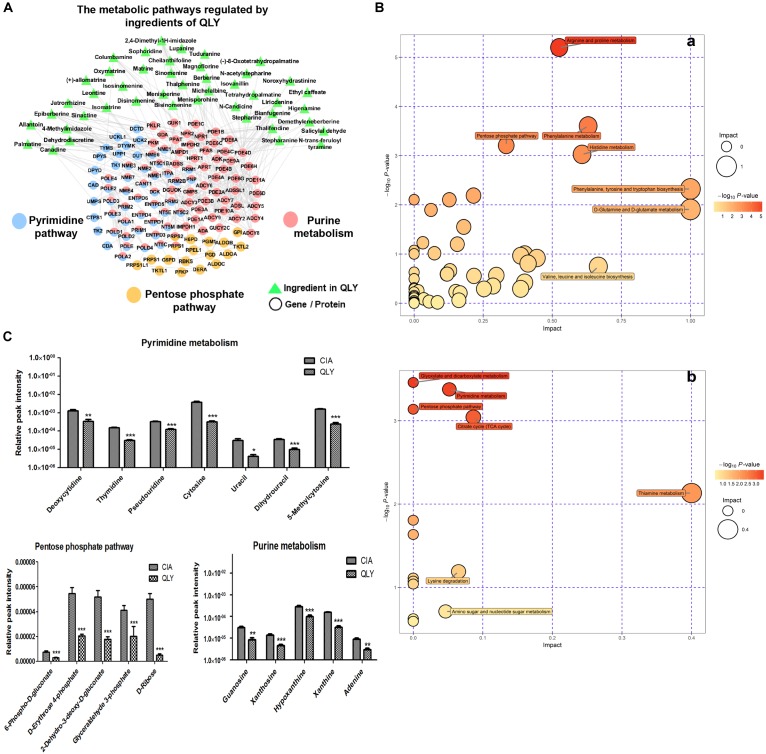
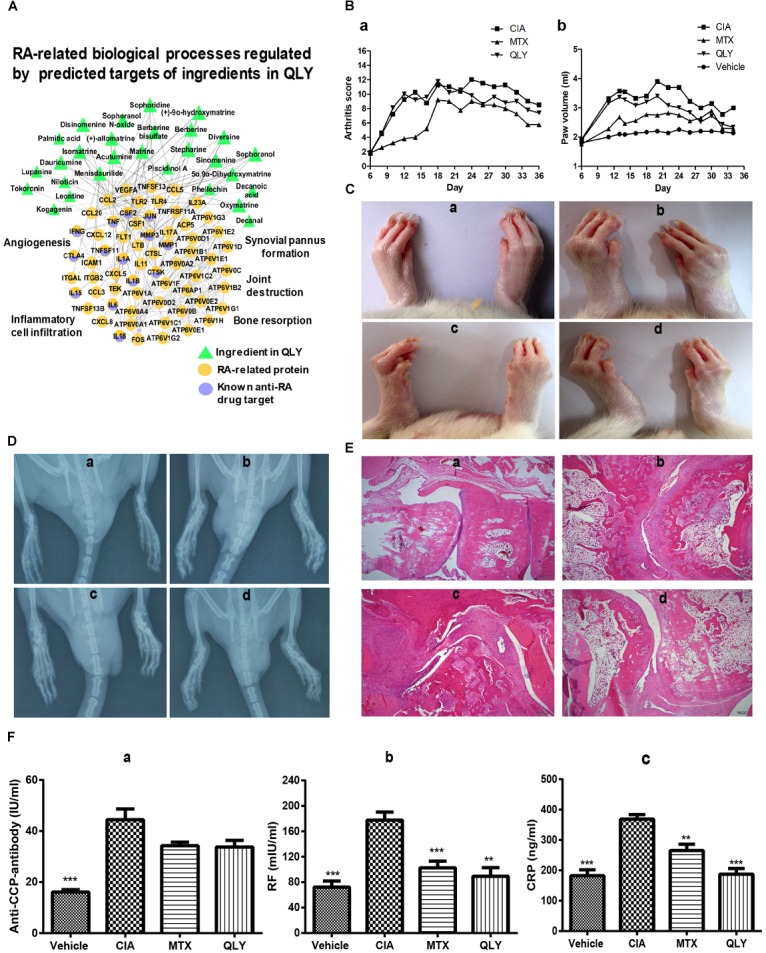
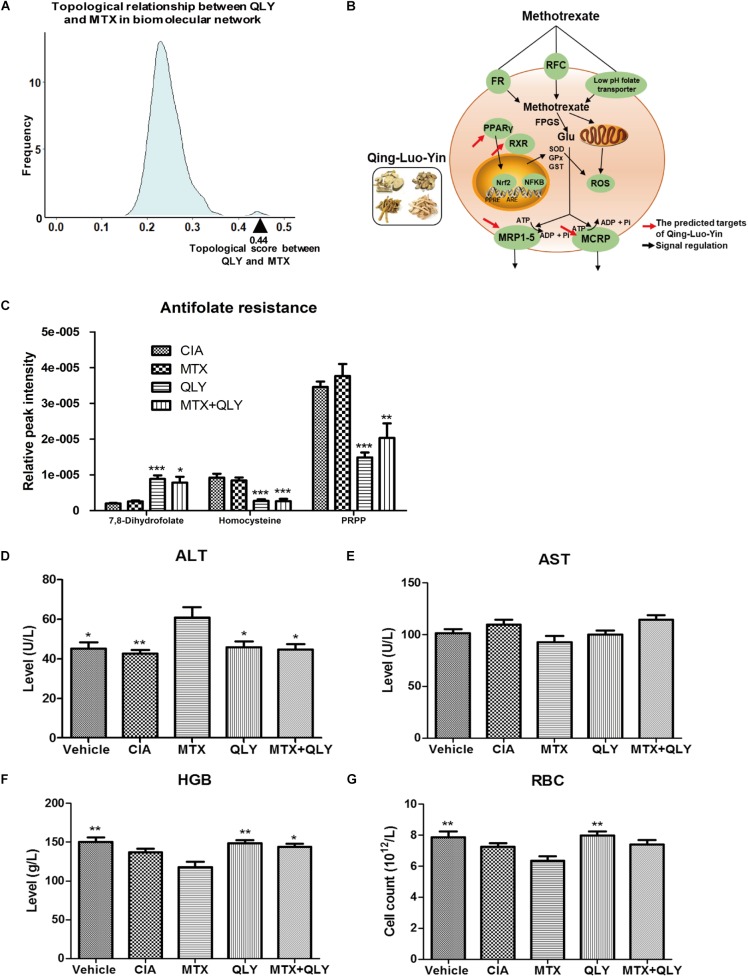
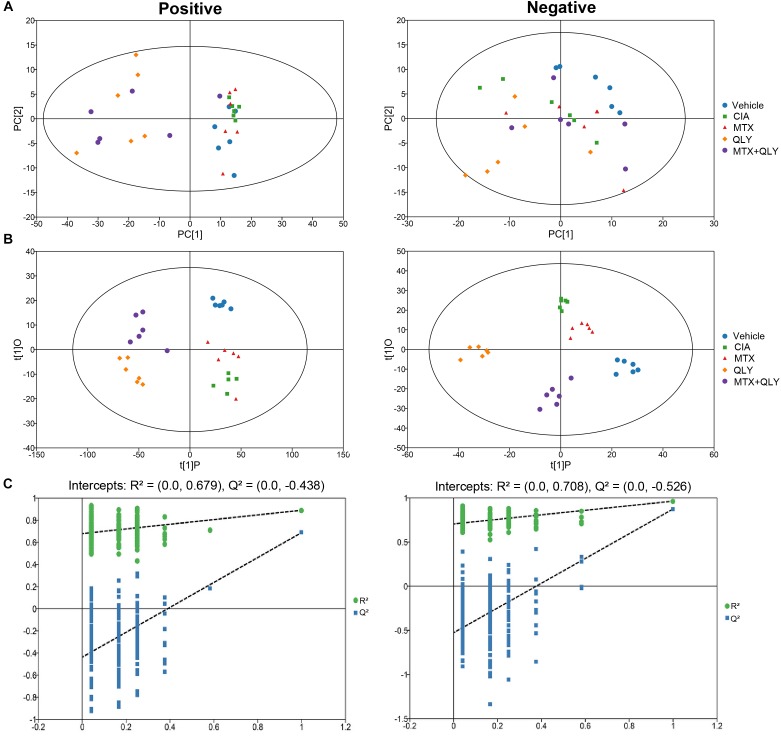
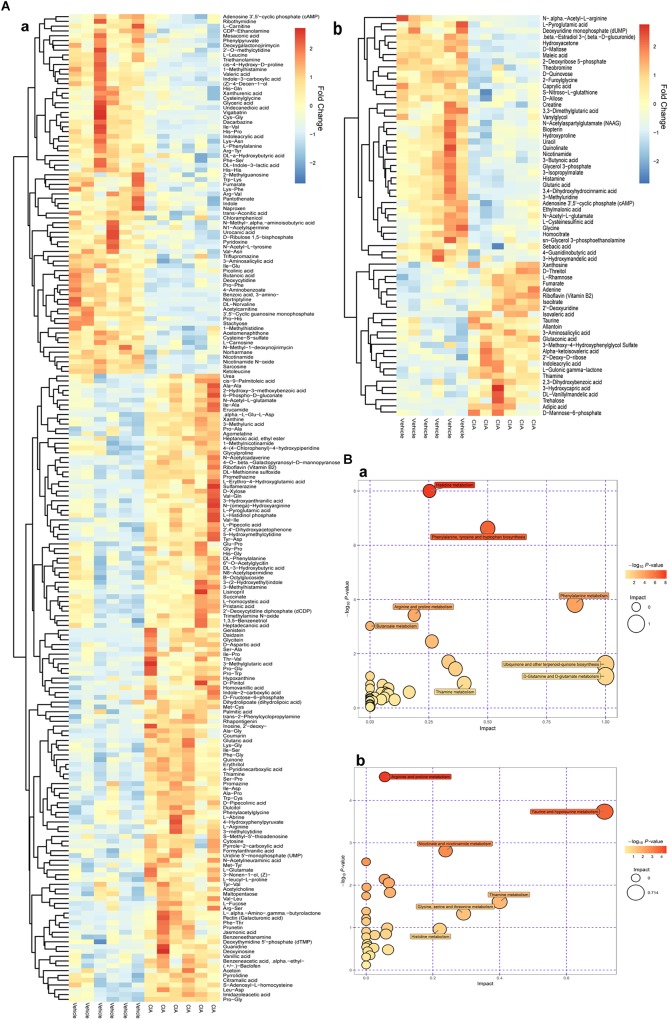
Qing-Luo-Yin (QLY) is a traditional Chinese medicine (TCM) formula used to treat Hot Syndrome-related rheumatoid arthritis (RA). Previously, we uncovered partial mechanisms involved in the therapeutic actions of QLY on RA. In this study, we further elucidated its anti-rheumatic mechanisms and investigated its possible interactions with methotrexate (MTX) using an integrating strategy coupled with network pharmacology and metabolomics techniques. Chemical composition of QLY was characterized by HPLC analysis. Collagen induced arthritis (CIA) was developed in male SD rats. The CIA rats were then assigned into different groups, and received QLY, MTX or QLY+MTX treatments according to the pre-arrangement. Therapeutic effects of QLY and its possible interactions with MTX were evaluated by clinical parameters, digital radiography assessment, histological/immunohistochemical examination, and serological biomarkers. Mechanisms underlying these actions were deciphered with network pharmacology methods, and further validated by metabolomics clues based on UPLC-Q-TOF/MS analysis of urines. Experimental evidences demonstrated that QLY notably alleviated the severity of CIA and protected joints from destruction. Re-balanced levels of hemoglobin and alanine transaminase in serum indicated reduced MTX-induced hepatic injury and myelosuppression under the co-treatment of QLY. Network-based target prediction found dozens of RA related proteins as potential targets of QLY. Upon the further biological function enrichment analysis, we found that a large amount of them were involved in nucleotide metabolism and immune functions. Metabolomics analysis showed that QLY restored amino acids, fatty acids, and energy metabolisms in CIA rats, which solidly supported its therapeutic effects on CIA. Consistently to findings from network pharmacology analysis, metabolomics study also found altered purine, pyrimidine, and pentose phosphate metabolisms in CIA rats receiving QLY treatment. All these clues suggested that inhibition on nucleic acid synthesis was essential to the immunosuppressive activity of QLY , and could contribute great importance to its therapeutic effects on CIA. Additionally, QLY induced significant antifolate resistance in rats, which would prevent folate from depletion during long-term MTX treatment, and should account for reduced side effects in combination regimen with MTX and QLY.
清络饮(QLY)是一种用于治疗热证相关类风湿关节炎(RA)的中药方剂。此前,我们揭示了QLY对RA治疗作用的部分机制。在本研究中,我们进一步阐明了其抗风湿机制,并使用网络药理学和代谢组学技术相结合的策略研究了其与甲氨蝶呤(MTX)可能的相互作用。通过高效液相色谱分析对QLY的化学成分进行了表征。在雄性SD大鼠中诱导建立胶原诱导性关节炎(CIA)。然后将CIA大鼠分为不同组,根据预先安排接受QLY、MTX或QLY+MTX治疗。通过临床参数、数字X线摄影评估、组织学/免疫组织化学检查和血清生物标志物评估QLY的治疗效果及其与MTX可能的相互作用。用网络药理学方法解读这些作用的潜在机制,并通过基于尿液的超高效液相色谱-四极杆飞行时间质谱(UPLC-Q-TOF/MS)分析的代谢组学线索进一步验证。实验证据表明,QLY显著减轻了CIA的严重程度,并保护关节免受破坏。血清中血红蛋白和谷丙转氨酶水平的重新平衡表明,在QLY联合治疗下,MTX诱导的肝损伤和骨髓抑制有所减轻。基于网络的靶点预测发现数十种与RA相关的蛋白质作为QLY的潜在靶点。在进一步的生物学功能富集分析中,我们发现其中大量蛋白质参与核苷酸代谢和免疫功能。代谢组学分析表明,QLY恢复了CIA大鼠的氨基酸、脂肪酸和能量代谢,这有力地支持了其对CIA的治疗作用。与网络药理学分析结果一致,代谢组学研究还发现接受QLY治疗的CIA大鼠嘌呤、嘧啶和磷酸戊糖代谢发生改变。所有这些线索表明,抑制核酸合成对QLY的免疫抑制活性至关重要,并且对其对CIA的治疗作用具有重要意义。此外,QLY在大鼠中诱导了显著的抗叶酸耐药性,这将防止长期MTX治疗期间叶酸耗竭,并且应该解释了MTX与QLY联合用药方案中副作用减少