Su Jiyan, Li Dan, Chen Qianjun, Li Muxia, Su Lu, Luo Ting, Liang Danling, Lai Guoxiao, Shuai Ou, Jiao Chunwei, Wu Qingping, Xie Yizhen, Zhou Xinxin
State Key Laboratory of Applied Microbiology Southern China, Guangdong Provincial Key Laboratory of Microbial Culture Collection and Application, Guangdong Institute of Microbiology, Guangzhou, China.
School of Pharmaceutical Science, Guangzhou University of Chinese Medicine, Guangzhou, China.
Front Microbiol. 2018 Dec 17;9:3099. doi: 10.3389/fmicb.2018.03099. eCollection 2018.
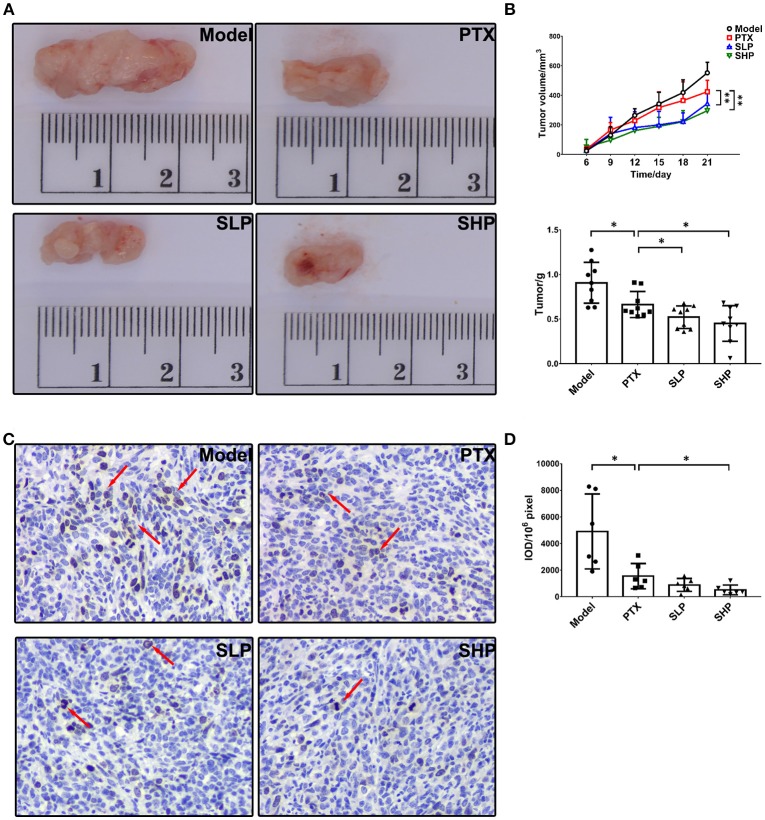
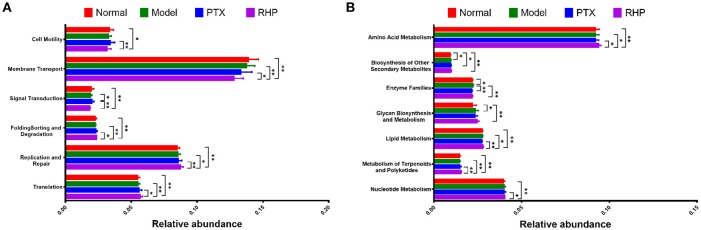
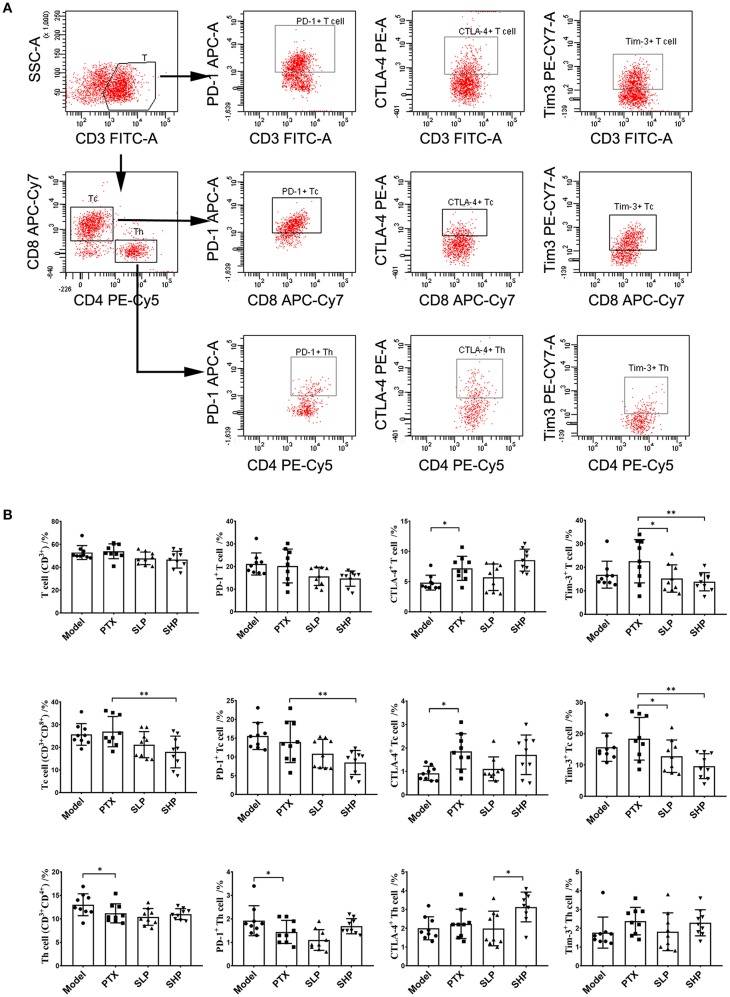
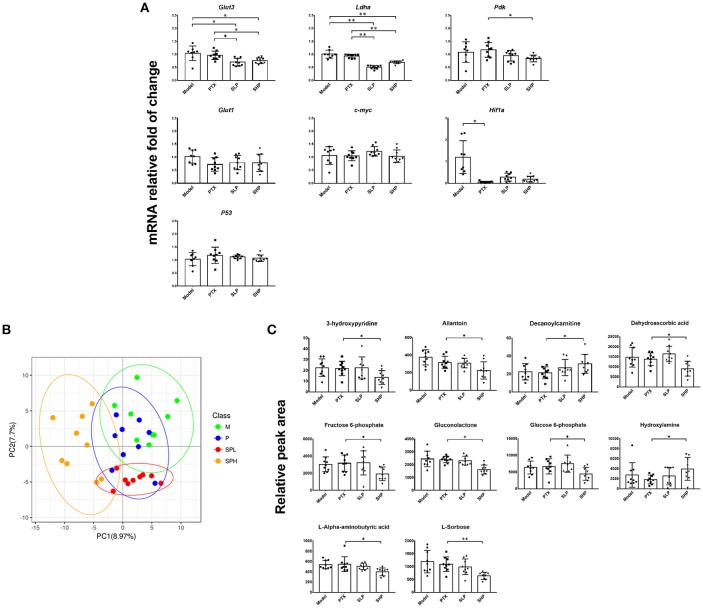
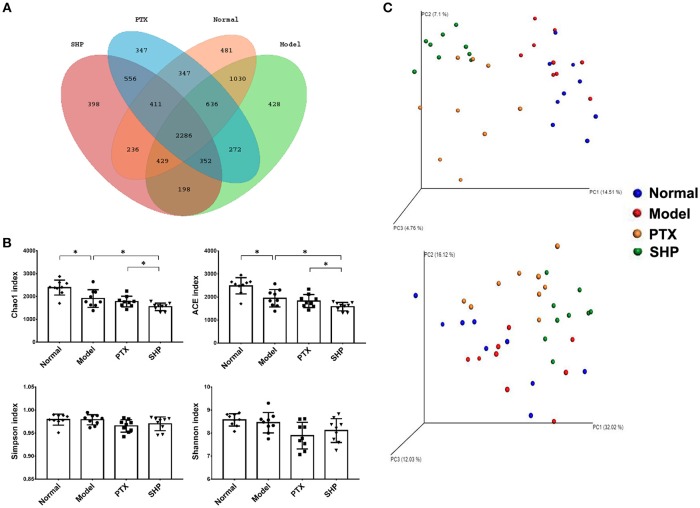
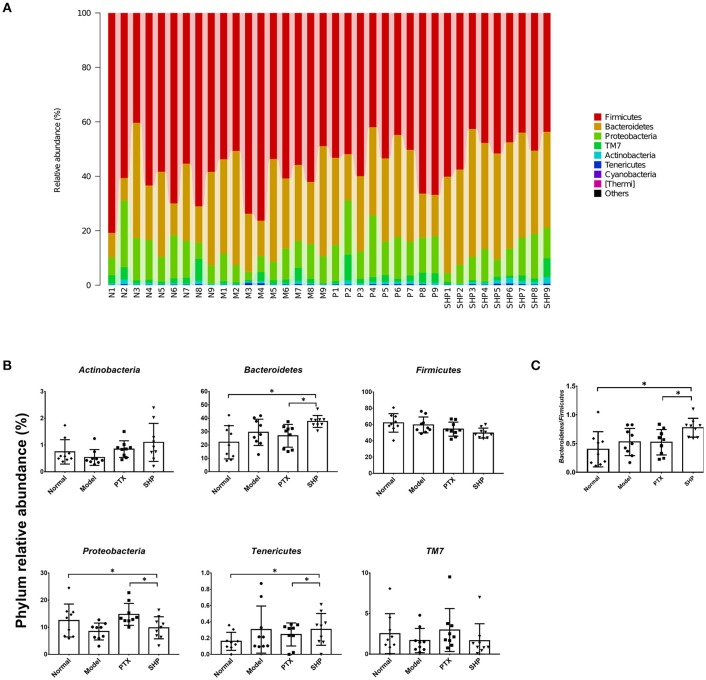
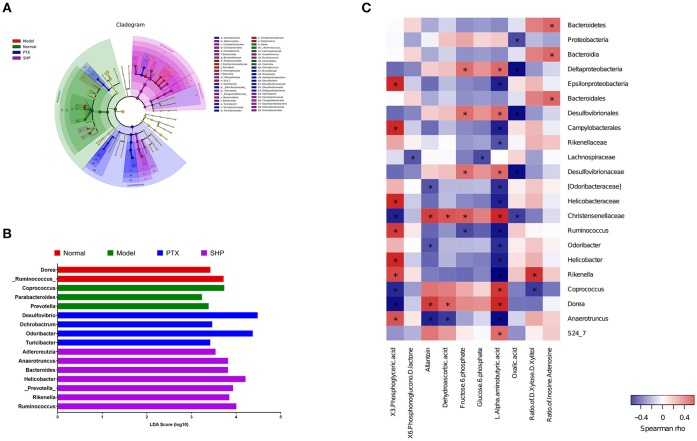
Increasing evidence highlights the cardinal role of gut microbiota in tumorigenesis and chemotherapy outcomes. Paclitaxel (PTX), although as a first-line chemotherapy reagent for breast cancer, still requires for improvement on its efficacy and safety due to drug resistance and adverse effects. The present work explored the enhancement of a polysaccharide derived from spore of (SGP) with PTX in a murine 4T1-breast cancer model. Results showed that the combination of PTX and SGP displayed an improved tumor control, in which mRNA expression of several Warburg effect-related proteins, i.e., glucose transporter 3 (), lactate dehydrogenase A (), and pyruvate dehydrogenase kinase (), and the metabolite profile of tumor was evidently altered. Flowcytometry analysis revealed that the combination treatment recovered the exhausted tumor infiltration lymphocytes (TILs) via inhibiting the expressions of immune checkpoints (PD-1 and Tim-3), while PTX alone evidently increased that of CTLA-4. 16S rRNA sequencing revealed a restoration by the combination treatment on gut microbiota dysbiosis induced by PTX, especially that , and other 5 genera were significantly enriched while the cancer-risk genera, and , were decreased. Moreover, spearman correlation analysis showed that abundance of was significantly negative-associated with the amount of frucotose-6-phosphate within the tumor. Collectively, the present study suggests the clinical implication of SGP as an adjuvant candidate for PTX against breast cancer, which possibly relies on the regulation of tumor metabolism and gut microbiota.
越来越多的证据凸显了肠道微生物群在肿瘤发生和化疗结果中的关键作用。紫杉醇(PTX)虽然是乳腺癌的一线化疗药物,但由于耐药性和不良反应,其疗效和安全性仍有待提高。本研究在小鼠4T1乳腺癌模型中探索了茯苓孢子多糖(SGP)与PTX联合使用的增效作用。结果表明,PTX与SGP联合使用显示出更好的肿瘤控制效果,其中几种与瓦伯格效应相关蛋白,即葡萄糖转运蛋白3(Glut3)、乳酸脱氢酶A(LDHA)和丙酮酸脱氢酶激酶(PDK)的mRNA表达以及肿瘤的代谢谱明显改变。流式细胞术分析显示,联合治疗通过抑制免疫检查点(PD-1和Tim-3)的表达恢复了耗竭的肿瘤浸润淋巴细胞(TILs),而单独使用PTX则明显增加了CTLA-4的表达。16S rRNA测序显示,联合治疗可恢复PTX诱导的肠道微生物群失调,尤其是恢复了拟杆菌属(Bacteroides),其他5个属显著富集,而致癌风险属,即脱硫弧菌属(Desulfovibrio)和嗜胆菌属(Bilophila)减少。此外,Spearman相关性分析表明,拟杆菌属的丰度与肿瘤内6-磷酸果糖的含量呈显著负相关。总的来说,本研究表明SGP作为PTX抗乳腺癌辅助候选药物的临床意义,这可能依赖于对肿瘤代谢和肠道微生物群的调节。