State Key Laboratory of Biobased Material and Green Papermaking, College of Food Science and Engineering, Qilu University of Technology, Shandong Academy of Science, Jinan 250353, China.
Department of Food Science, University of Otago, P.O. Box 56, Dunedin 9054, New Zealand.
Nutrients. 2019 Jan 7;11(1):107. doi: 10.3390/nu11010107.
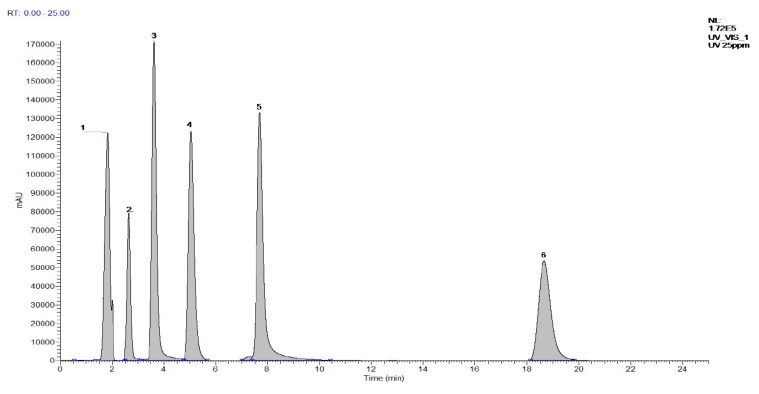
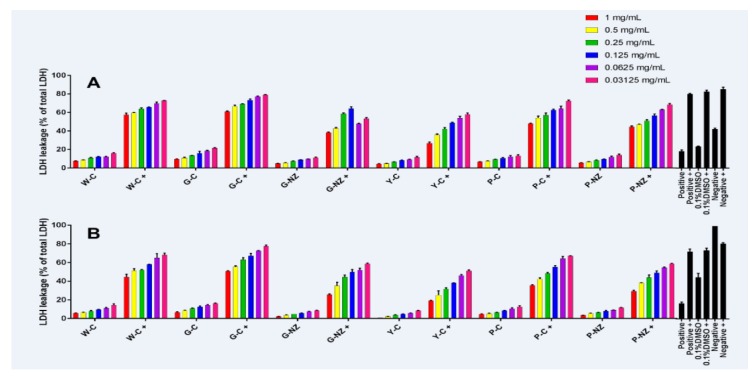
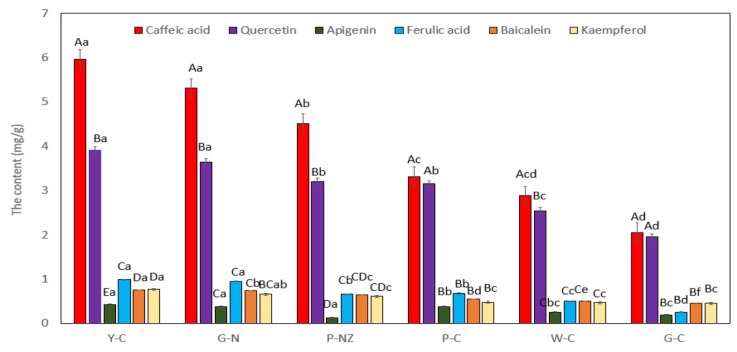
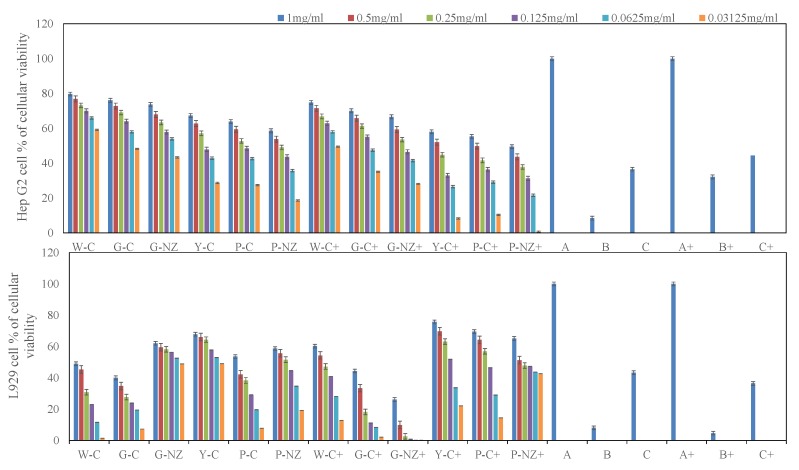
A simple, rapid, specific, and sensitive method was developed for the simultaneous identification and quantification of six major bioactive compounds, namely, caffeic acid, quercetin, apigenin, ferulic acid, baicalein, and kaempferol, from roots (ARs) native to New Zealand (green and purple cultivars) and China (yellow, green, purple, and white cultivars) using ultrasound-assisted, solid-phase extraction (UASE-SPE) coupled with ultra-performance liquid chromatography-tandem mass spectrometry (UPLC-MS/MS). The method was validated in terms of linearity, limit of detection (LOD), limit of quantification (LOQ), accuracy (expressed as recovery %), and precision (expressed as relative standard deviation (%RSD)). The retention times, ultraviolet visible (UV-vis) data, and mass spectral patterns of the detected peaks matched those of commercial standards, allowing characterization of the target compounds. The LODs and LOQs were 23 ng/mL and 70 ng/mL, 50 ng/mL and 150 ng/mL, 10 ng/mL and 30 ng/mL, 18 ng/mL and 54 ng/mL, 14.4 ng/mL and 43.6 ng/mL, and 7.5 ng/mL and 22.5 ng/mL for caffeic acid, quercetin, apigenin, ferulic acid, baicalein, and kaempferol, respectively, and the mean recovery rates were 85.8%, 73.0%, 90.2%, 80.6%, 76.7%, and 74.5% for the six compounds, respectively. The levels of the target compounds were significantly different ( < 0.05) among the six cultivars. The Chinese yellow AR had the highest levels of bioactive compounds: 6.0, 3.9, 0.4, 1.0, 0.86, and 0.8 mg/g for caffeic acid, quercetin, apigenin, ferulic acid, baicalein, and kaempferol, respectively. The AR extracts showed protective effects against oxidative stress in the HepG2 and L929 cell lines. The results indicate that AR extracts contain high flavonoid levels that provide protective functions against oxidative stress and support the potential commercial application of AR extracts.
开发了一种简单、快速、特异、灵敏的方法,用于同时鉴定和定量来自新西兰(绿色和紫色品种)和中国(黄色、绿色、紫色和白色品种)的根(ARs)中的 6 种主要生物活性化合物,即咖啡酸、槲皮素、芹菜素、阿魏酸、黄芩素和山奈酚,采用超声辅助、固相萃取(UASE-SPE)与超高效液相色谱-串联质谱(UPLC-MS/MS)相结合的方法。该方法在线性、检出限(LOD)、定量限(LOQ)、准确度(表示为回收率%)和精密度(表示为相对标准偏差(%RSD))方面进行了验证。检测到的峰的保留时间、紫外可见(UV-vis)数据和质谱图谱与商业标准匹配,从而对目标化合物进行了表征。咖啡酸、槲皮素、芹菜素、阿魏酸、黄芩素和山奈酚的 LOD 和 LOQ 分别为 23 ng/mL 和 70 ng/mL、50 ng/mL 和 150 ng/mL、10 ng/mL 和 30 ng/mL、18 ng/mL 和 54 ng/mL、14.4 ng/mL 和 43.6 ng/mL、7.5 ng/mL 和 22.5 ng/mL,6 种化合物的平均回收率分别为 85.8%、73.0%、90.2%、80.6%、76.7%和 74.5%。6 个品种间目标化合物的水平有显著差异(<0.05)。中国黄 AR 的生物活性化合物含量最高:咖啡酸、槲皮素、芹菜素、阿魏酸、黄芩素和山奈酚的含量分别为 6.0、3.9、0.4、1.0、0.86 和 0.8 mg/g。AR 提取物对 HepG2 和 L929 细胞系的氧化应激具有保护作用。结果表明,AR 提取物含有高水平的类黄酮,提供了抗氧化应激的保护功能,并支持 AR 提取物的潜在商业应用。