Department of Microbiology and Immunology, Albert Einstein College of Medicine, Bronx, New York, USA.
Department of Microbiology and Immunology, Albert Einstein College of Medicine, Bronx, New York, USA
mBio. 2019 Jan 8;10(1):e02372-18. doi: 10.1128/mBio.02372-18.
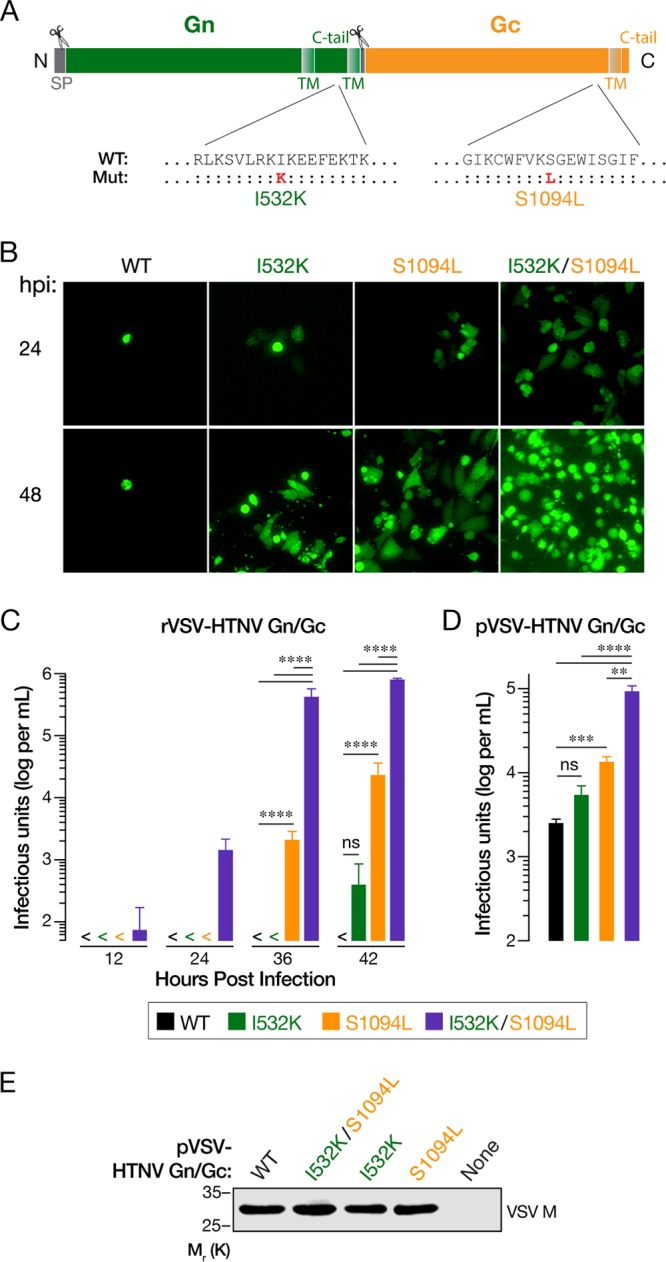
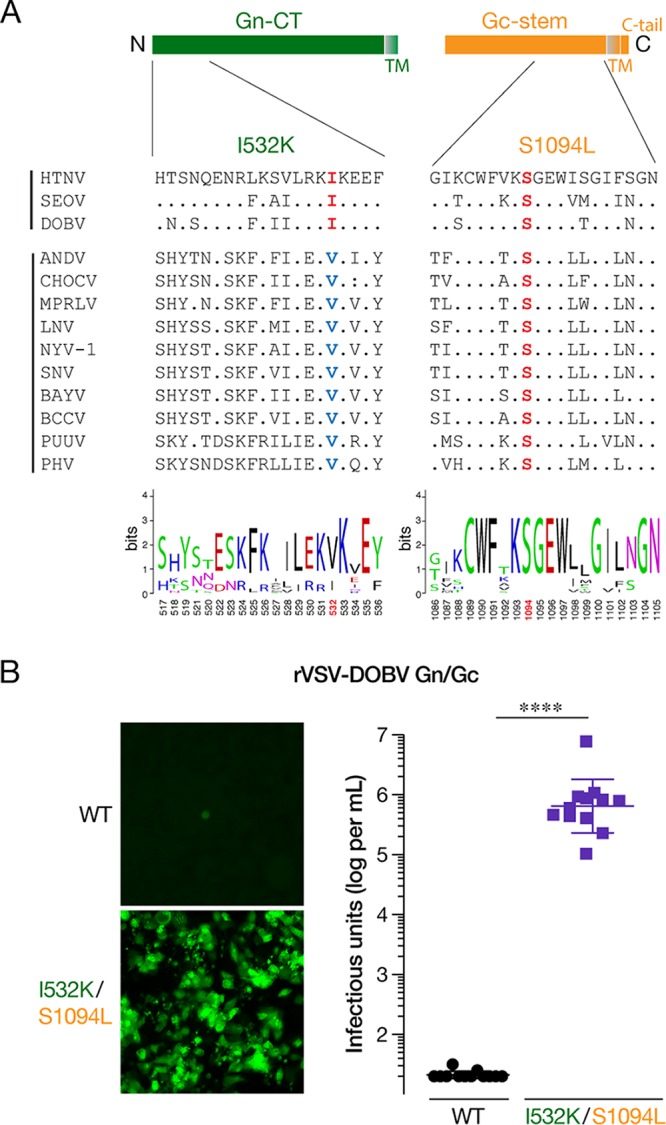
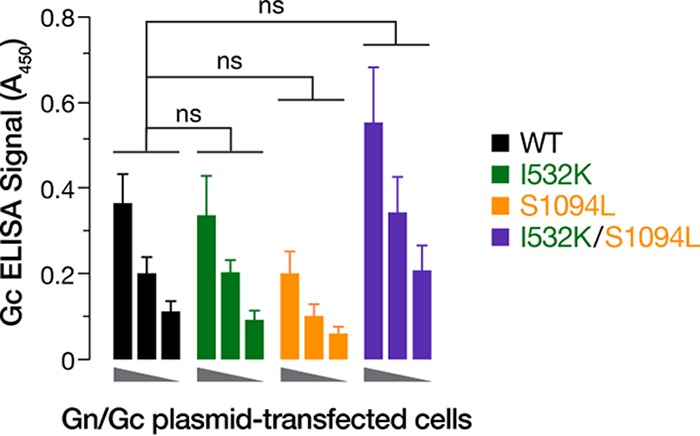
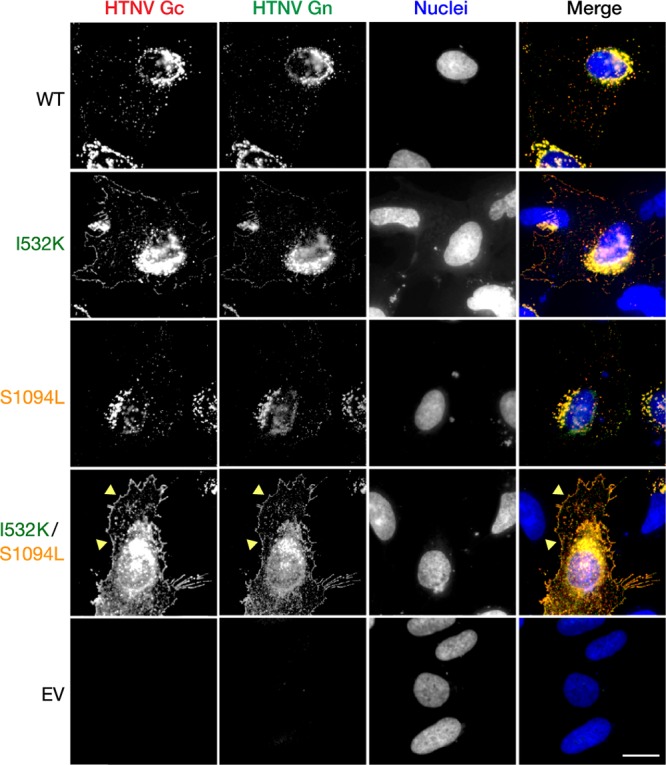
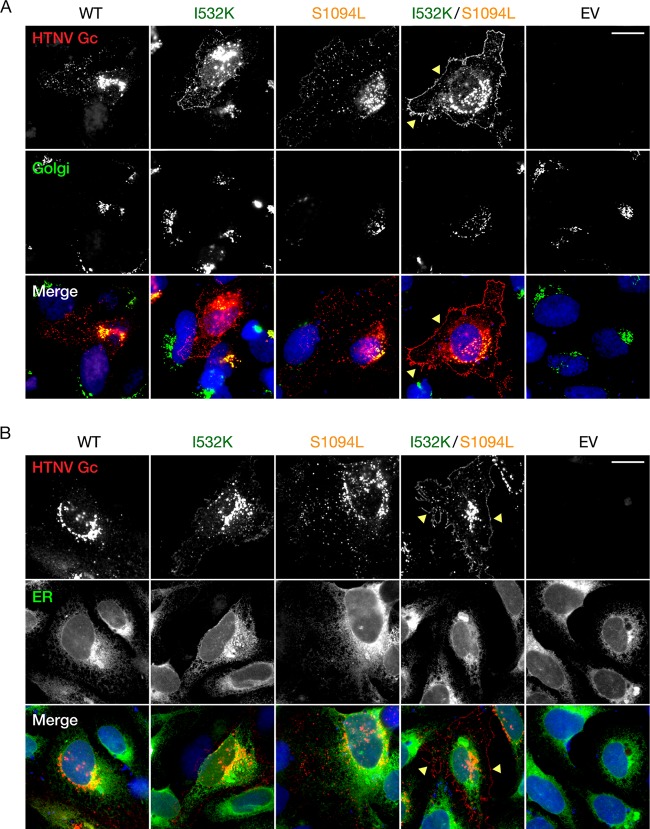
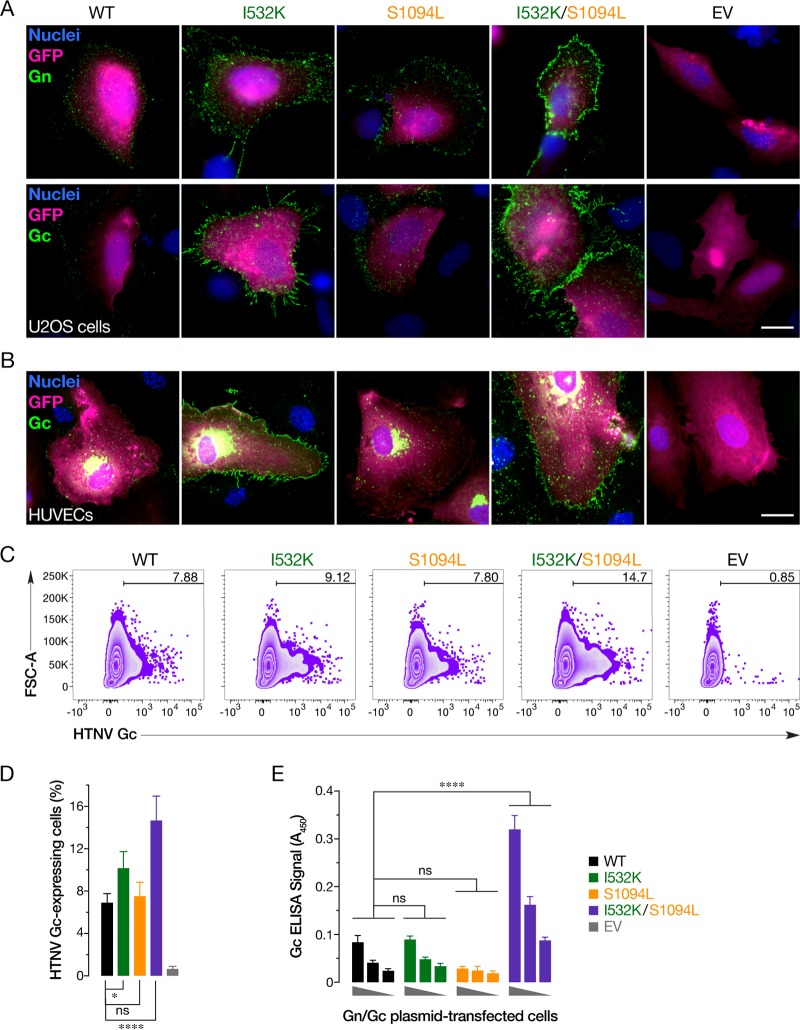
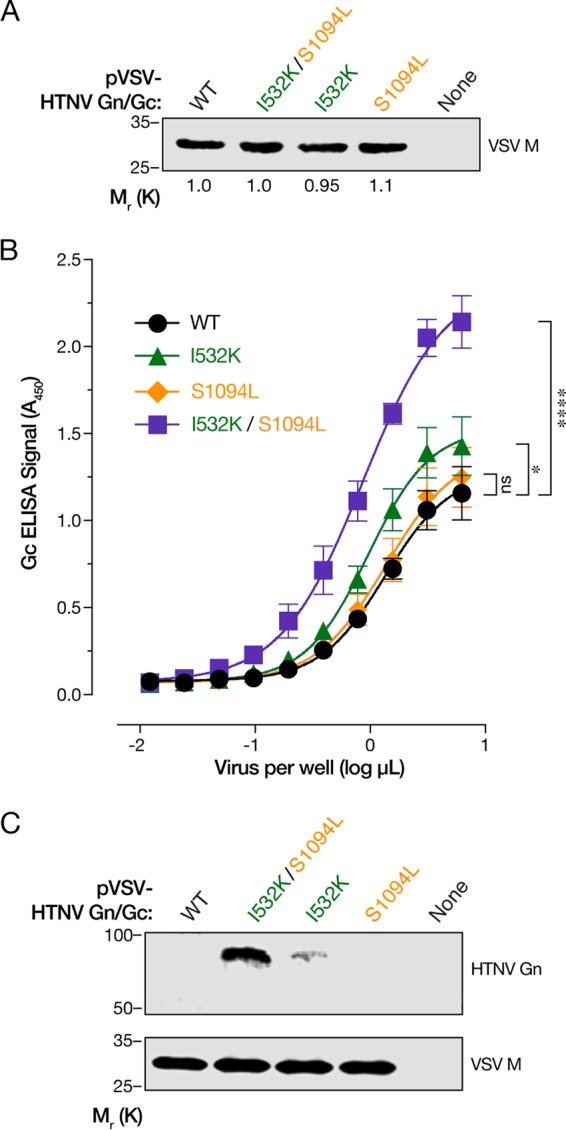
Rodent-to-human transmission of hantaviruses is associated with severe disease. Currently, no FDA-approved, specific antivirals or vaccines are available, and the requirement for high biocontainment (biosafety level 3 [BSL-3]) laboratories limits hantavirus research. To study hantavirus entry in a BSL-2 laboratory, we set out to generate replication-competent, recombinant vesicular stomatitis viruses (rVSVs) bearing the Gn and Gc (Gn/Gc) entry glycoproteins. As previously reported, rVSVs bearing New World hantavirus Gn/Gc were readily rescued from cDNAs, but their counterparts bearing Gn/Gc from the Old World hantaviruses, Hantaan virus (HTNV) or Dobrava-Belgrade virus (DOBV), were refractory to rescue. However, serial passage of the rescued rVSV-HTNV Gn/Gc virus markedly increased its infectivity and capacity for cell-to-cell spread. This gain in viral fitness was associated with the acquisition of two point mutations: I532K in the cytoplasmic tail of Gn and S1094L in the membrane-proximal stem of Gc. Follow-up experiments with rVSVs and single-cycle VSV pseudotypes confirmed these results. Mechanistic studies revealed that both mutations were determinative and contributed to viral infectivity in a synergistic manner. Our findings indicate that the primary mode of action of these mutations is to relocalize HTNV Gn/Gc from the Golgi complex to the cell surface, thereby affording significantly enhanced Gn/Gc incorporation into budding VSV particles. Finally, I532K/S1094L mutations in DOBV Gn/Gc permitted the rescue of rVSV-DOBV Gn/Gc, demonstrating that incorporation of cognate mutations into other hantaviral Gn/Gc proteins could afford the generation of rVSVs that are otherwise challenging to rescue. The robust replication-competent rVSVs, bearing HTNV and DOBV Gn/Gc, reported herein may also have utility as vaccines. Human hantavirus infections cause hantavirus pulmonary syndrome in the Americas and hemorrhagic fever with renal syndrome (HFRS) in Eurasia. No FDA-approved vaccines and therapeutics exist for these deadly viruses, and their development is limited by the requirement for high biocontainment. In this study, we identified and characterized key amino acid changes in the surface glycoproteins of HFRS-causing Hantaan virus that enhance their incorporation into recombinant vesicular stomatitis virus (rVSV) particles. The replication-competent rVSVs encoding Hantaan virus and Dobrava-Belgrade virus glycoproteins described in this work provide a powerful and facile system to study hantavirus entry under lower biocontainment and may have utility as hantavirus vaccines.
啮齿动物向人类传播汉坦病毒与严重疾病有关。目前,尚无获得 FDA 批准的特定抗病毒药物或疫苗,而高生物安全水平(BSL-3)实验室的要求限制了汉坦病毒的研究。为了在 BSL-2 实验室中研究汉坦病毒的进入,我们着手生成携带 Gn 和 Gc(Gn/Gc)进入糖蛋白的复制型重组水疱性口炎病毒(rVSV)。如前所述,来自新世界汉坦病毒的 rVSV 载体 Gn/Gc 很容易从 cDNA 中拯救出来,但来自旧世界汉坦病毒汉坦病毒(HTNV)或多布拉瓦-贝尔格莱德病毒(DOBV)的相应病毒载体 Gn/Gc 则难以拯救。然而,从拯救的 rVSV-HTNV Gn/Gc 病毒中进行连续传代会显著提高其感染性和细胞间传播能力。这种病毒适应性的提高与获得两个点突变有关:Gn 细胞质尾巴中的 I532K 和 Gc 膜近端茎中的 S1094L。使用 rVSV 和单周期 VSV 假型物的后续实验证实了这些结果。机制研究表明,这两个突变都是决定性的,并以协同方式促进病毒的感染力。我们的研究结果表明,这些突变的主要作用方式是将 HTNV Gn/Gc 从高尔基体复合物重新定位到细胞表面,从而显著增强 Gn/Gc 整合到出芽 VSV 颗粒中。最后,DOBV Gn/Gc 中的 I532K/S1094L 突变允许拯救 rVSV-DOBV Gn/Gc,表明将同源突变引入其他汉坦病毒 Gn/Gc 蛋白中可以生成原本难以拯救的 rVSV。本文报道的携带 HTNV 和 DOBV Gn/Gc 的稳健复制型 rVSV 也可用作疫苗。人类汉坦病毒感染会导致美洲的汉坦病毒肺综合征和欧亚大陆的肾综合征出血热(HFRS)。目前尚无获得 FDA 批准的针对这些致命病毒的疫苗和治疗方法,其开发受到高生物安全要求的限制。在这项研究中,我们鉴定并表征了引起 HFRS 的汉坦病毒表面糖蛋白中的关键氨基酸变化,这些变化增强了它们整合到重组水疱性口炎病毒(rVSV)颗粒中的能力。本文所述的编码汉坦病毒和多布拉瓦-贝尔格莱德病毒糖蛋白的复制型 rVSV 提供了一个强大且简便的系统,可在较低的生物安全水平下研究汉坦病毒的进入,并且可用作汉坦病毒疫苗。