"Carol Davila" University of Medicine and Pharmacy, 37 Dionisie Lupu, 020021 Bucharest, Romania.
Department of OroMaxilloFacial Surgery, Clinical Hospital of OroMaxilloFacial Surgery Prof. Dr. Dan Theodorescu, 17 Calea Plevnei, 010221 Bucharest, Romania.
J Immunol Res. 2018 Nov 28;2018:5196023. doi: 10.1155/2018/5196023. eCollection 2018.
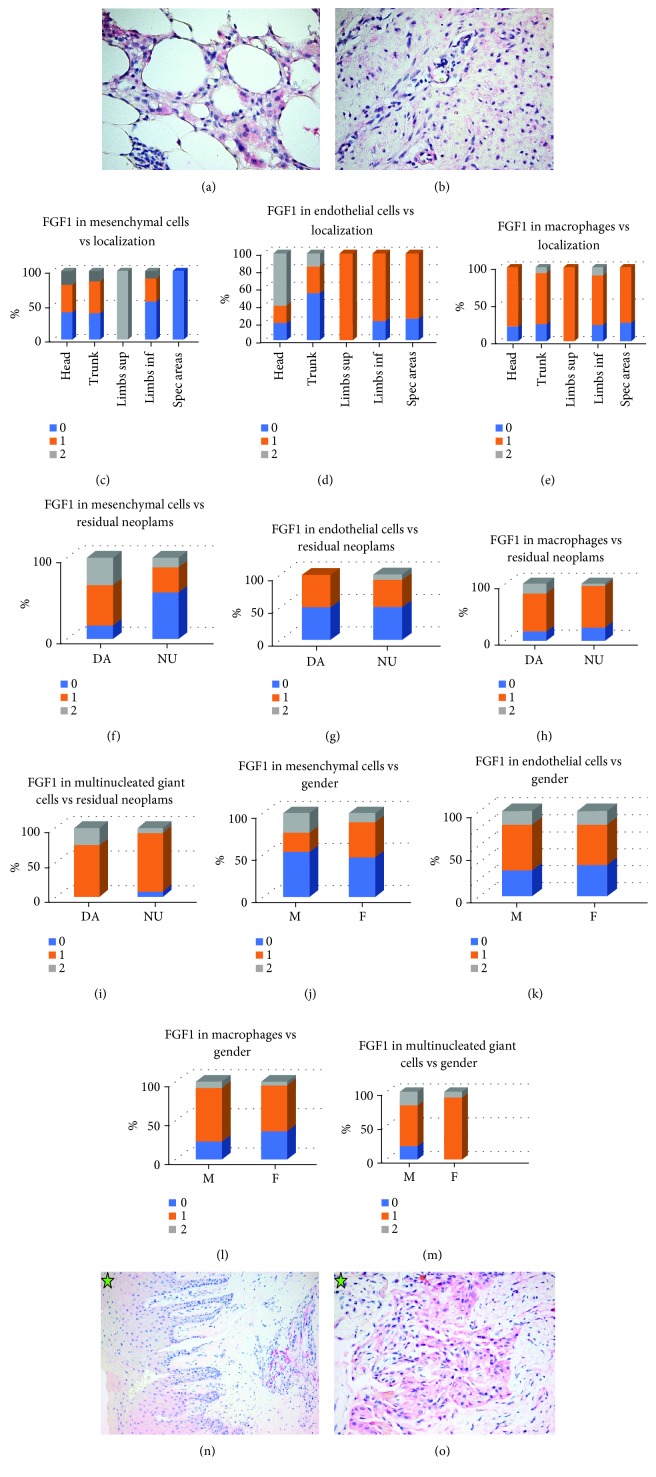
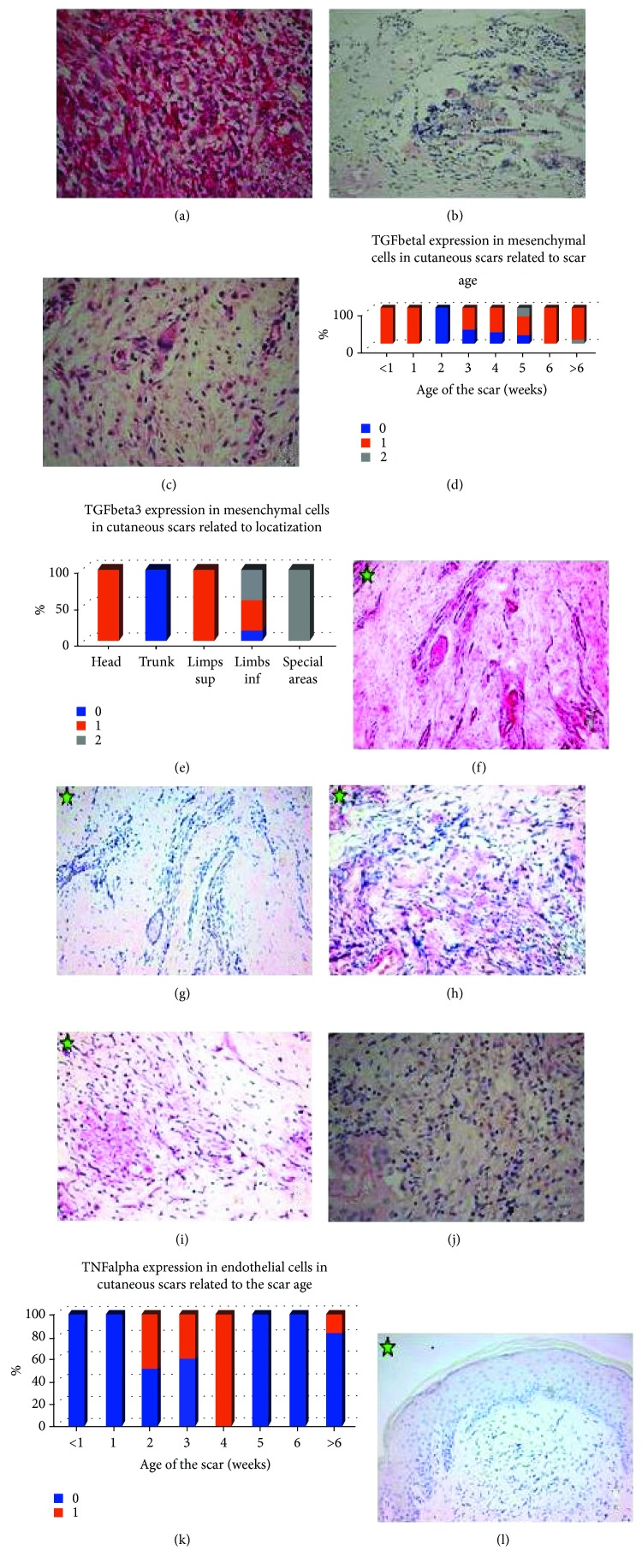
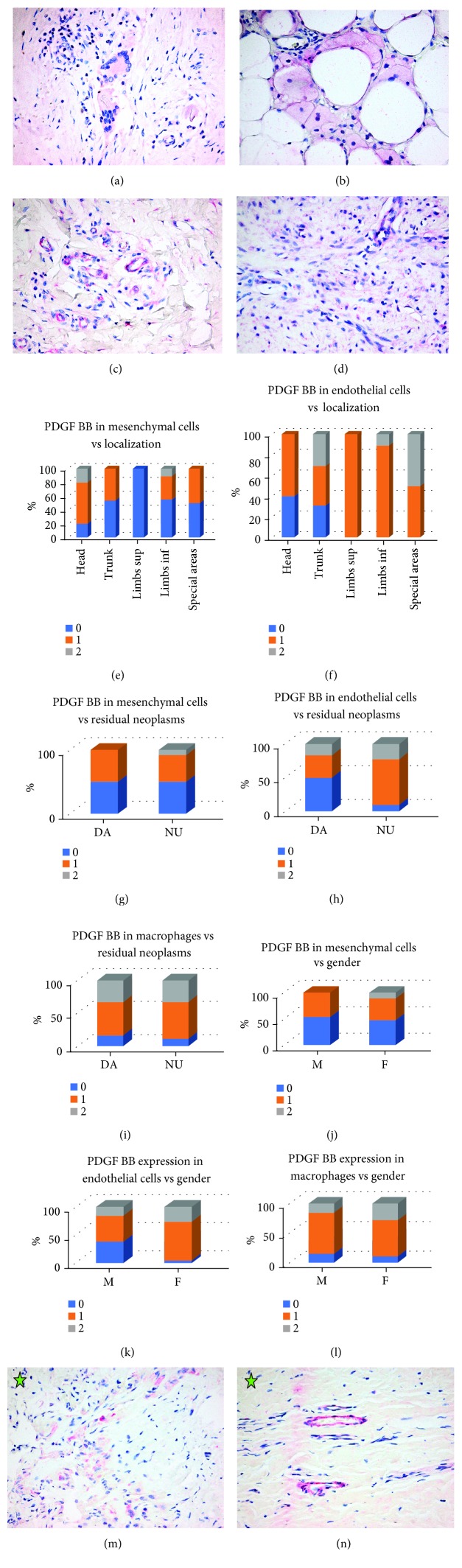
Wound healing is a complex biologic process evolving in three phases: inflammation, proliferation, and tissue remodeling controlled by numerous growth factors and cytokines. Oral mucosa wounds heal with significantly less important scars with less numerous macrophages and mast cells and more numerous myofibroblasts than cutaneous counterparts. We analyzed 32 cutaneous and 32 oral mucosa scars for TGFbeta1, TGFbeta2, TGFbeta3, TNFalpha, PDGF BB and FGF1 expression in mesenchymal cells, endothelial cells, macrophages, and multinucleated giant cells. We identified differences in the expression of profibrotic and antifibrotic factors in oral mucosa and skin scars; TGFbeta2 was positive in cutaneous multinucleated giant cells, TNFalpha was positive in cutaneous macrophages, and both were negative in oral mucosa while TGFbeta3 was positive in oral macrophages and mostly negative in cutaneous ones. PDGF BB and FGF1 were positive in oral endothelial cells and oral macrophages and negative in macrophages with opposite positivity pattern in cutaneous scars. Based on these findings, macrophage seems to be the key player in modulating pro- and antifibrotic processes in wound regeneration.
伤口愈合是一个复杂的生物学过程,分为三个阶段:炎症、增殖和组织重塑,受许多生长因子和细胞因子的控制。口腔黏膜的伤口愈合后留下的疤痕明显较少,巨噬细胞和肥大细胞数量较少,肌成纤维细胞数量较多,与皮肤相比。我们分析了 32 例皮肤和 32 例口腔黏膜瘢痕中的 TGFbeta1、TGFbeta2、TGFbeta3、TNFalpha、PDGF BB 和 FGF1 在间充质细胞、内皮细胞、巨噬细胞和多核巨细胞中的表达。我们发现口腔黏膜和皮肤瘢痕中促纤维化和抗纤维化因子的表达存在差异;TGFbeta2 在皮肤多核巨细胞中阳性,TNFalpha 在皮肤巨噬细胞中阳性,而在口腔黏膜中均为阴性,而 TGFbeta3 在口腔巨噬细胞中阳性,而在皮肤中则主要为阴性。PDGF BB 和 FGF1 在口腔内皮细胞和口腔巨噬细胞中阳性,而在皮肤瘢痕中则为巨噬细胞阳性。基于这些发现,巨噬细胞似乎是调节伤口再生中促纤维化和抗纤维化过程的关键因素。