• 文献检索
  • 文档翻译
  • 深度研究
  • 学术资讯
  • Suppr Zotero 插件Zotero 插件
  • 邀请有礼
  • 套餐&价格
  • 历史记录
应用&插件
Suppr Zotero 插件Zotero 插件浏览器插件Mac 客户端Windows 客户端微信小程序
定价
高级版会员购买积分包购买API积分包
服务
文献检索文档翻译深度研究API 文档MCP 服务
关于我们
关于 Suppr公司介绍联系我们用户协议隐私条款
关注我们

Suppr 超能文献

核心技术专利:CN118964589B侵权必究
粤ICP备2023148730 号-1Suppr @ 2026

文献检索

告别复杂PubMed语法,用中文像聊天一样搜索,搜遍4000万医学文献。AI智能推荐,让科研检索更轻松。

立即免费搜索

文件翻译

保留排版,准确专业,支持PDF/Word/PPT等文件格式,支持 12+语言互译。

免费翻译文档

深度研究

AI帮你快速写综述,25分钟生成高质量综述,智能提取关键信息,辅助科研写作。

立即免费体验

利用动态治疗信息预测急性冠状动脉综合征的主要不良心血管事件。

Utilizing dynamic treatment information for MACE prediction of acute coronary syndrome.

机构信息

College of Biomedical Engineering and Instrument Science, Zhejiang University, Key Lab for Biomedical Engineering of Ministry of Education, Zheda Road, Hangzhou, China.

Department of Cardiology, Chinese PLA General Hospital, Beijing, China.

出版信息

BMC Med Inform Decis Mak. 2019 Jan 9;19(1):5. doi: 10.1186/s12911-018-0730-7.

DOI:10.1186/s12911-018-0730-7
PMID:30626381
原文链接:https://pmc.ncbi.nlm.nih.gov/articles/PMC6325718/
Abstract

BACKGROUND

Main adverse cardiac events (MACE) are essentially composite endpoints for assessing safety and efficacy of treatment processes of acute coronary syndrome (ACS) patients. Timely prediction of MACE is highly valuable for improving the effects of ACS treatments. Most existing tools are specific to predict MACE by mainly using static patient features and neglecting dynamic treatment information during learning.

METHODS

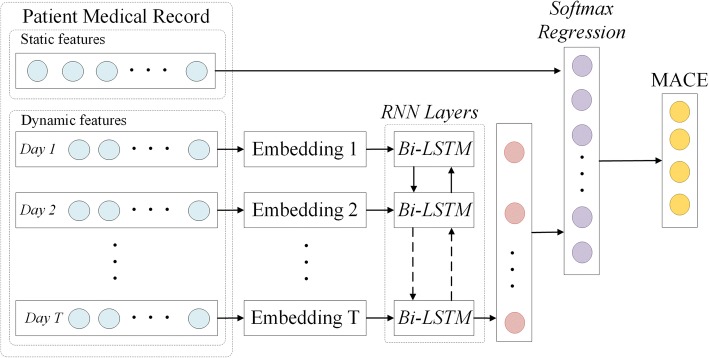
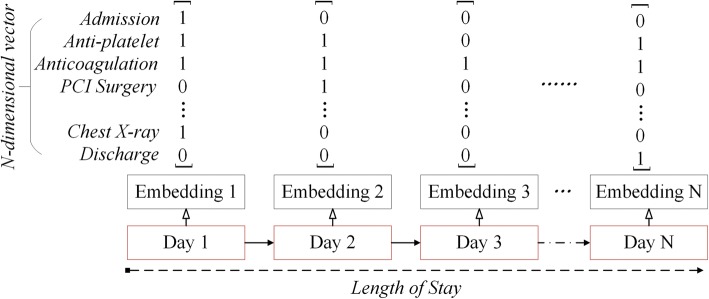
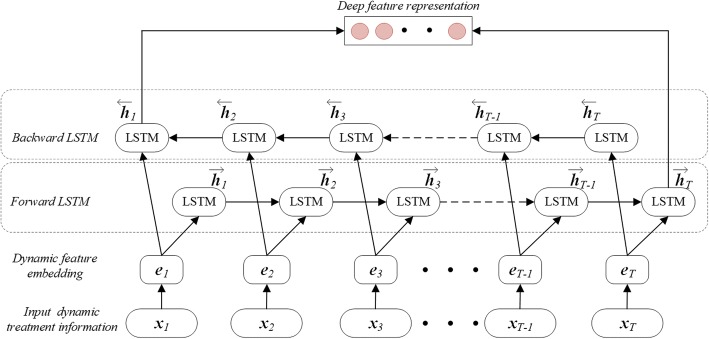
We address this challenge by developing a deep learning-based approach to utilize a large volume of heterogeneous electronic health record (EHR) for predicting MACE after ACS. Specifically, we obtain the deep representation of dynamic treatment features from EHR data, using the bidirectional recurrent neural network. And then, the extracted latent representation of treatment features can be utilized to predict whether a patient occurs MACE in his or her hospitalization.

RESULTS

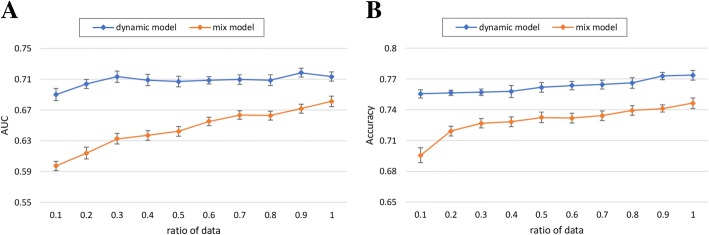
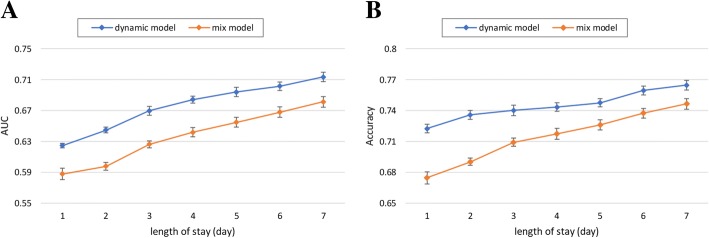
We validate the effectiveness of our approach on a clinical dataset containing 2930 ACS patient samples with 232 static feature types and 2194 dynamic feature types. The performance of our best model for predicting MACE after ACS remains robust and reaches 0.713 and 0.764 in terms of AUC and Accuracy, respectively, and has over 11.9% (1.2%) and 1.9% (7.5%) performance gain of AUC (Accuracy) in comparison with both logistic regression and a boosted resampling model presented in our previous work, respectively. The results are statistically significant.

CONCLUSIONS

We hypothesize that our proposed model adapted to leverage dynamic treatment information in EHR data appears to boost the performance of MACE prediction for ACS, and can readily meet the demand clinical prediction of other diseases, from a large volume of EHR in an open-ended fashion.

摘要

背景

主要心脏不良事件(MACE)是评估急性冠状动脉综合征(ACS)患者治疗过程安全性和疗效的综合终点。及时预测 MACE 对于改善 ACS 治疗效果具有重要价值。大多数现有的工具主要使用静态患者特征来预测 MACE,而在学习过程中忽略了动态治疗信息。

方法

我们通过开发一种基于深度学习的方法来解决这一挑战,该方法利用大量异构电子健康记录(EHR)来预测 ACS 后 MACE。具体来说,我们使用双向递归神经网络从 EHR 数据中获取动态治疗特征的深度表示。然后,可以利用提取的治疗特征的潜在表示来预测患者在住院期间是否发生 MACE。

结果

我们在包含 2930 名 ACS 患者样本的临床数据集上验证了我们方法的有效性,该数据集包含 232 种静态特征类型和 2194 种动态特征类型。我们用于预测 ACS 后 MACE 的最佳模型的性能仍然稳健,在 AUC 和准确性方面分别达到 0.713 和 0.764,与我们之前工作中提出的逻辑回归和增强重采样模型相比,AUC(准确性)分别提高了 11.9%(1.2%)和 1.9%(7.5%)。结果具有统计学意义。

结论

我们假设我们提出的模型能够适应利用 EHR 数据中的动态治疗信息,从而提高 ACS 中 MACE 预测的性能,并且可以从大量的 EHR 中以开放的方式满足其他疾病的临床预测需求。
https://cdn.ncbi.nlm.nih.gov/pmc/blobs/8074/6325718/0bd8de4032c2/12911_2018_730_Fig6_HTML.jpg
https://cdn.ncbi.nlm.nih.gov/pmc/blobs/8074/6325718/65b74ff799a0/12911_2018_730_Fig1_HTML.jpg
https://cdn.ncbi.nlm.nih.gov/pmc/blobs/8074/6325718/b0eb57cdc8c7/12911_2018_730_Fig2_HTML.jpg
https://cdn.ncbi.nlm.nih.gov/pmc/blobs/8074/6325718/94e7b8c3b612/12911_2018_730_Fig3_HTML.jpg
https://cdn.ncbi.nlm.nih.gov/pmc/blobs/8074/6325718/13f671b7a4c3/12911_2018_730_Fig4_HTML.jpg
https://cdn.ncbi.nlm.nih.gov/pmc/blobs/8074/6325718/5cf1f4a1731b/12911_2018_730_Fig5_HTML.jpg
https://cdn.ncbi.nlm.nih.gov/pmc/blobs/8074/6325718/0bd8de4032c2/12911_2018_730_Fig6_HTML.jpg
https://cdn.ncbi.nlm.nih.gov/pmc/blobs/8074/6325718/65b74ff799a0/12911_2018_730_Fig1_HTML.jpg
https://cdn.ncbi.nlm.nih.gov/pmc/blobs/8074/6325718/b0eb57cdc8c7/12911_2018_730_Fig2_HTML.jpg
https://cdn.ncbi.nlm.nih.gov/pmc/blobs/8074/6325718/94e7b8c3b612/12911_2018_730_Fig3_HTML.jpg
https://cdn.ncbi.nlm.nih.gov/pmc/blobs/8074/6325718/13f671b7a4c3/12911_2018_730_Fig4_HTML.jpg
https://cdn.ncbi.nlm.nih.gov/pmc/blobs/8074/6325718/5cf1f4a1731b/12911_2018_730_Fig5_HTML.jpg
https://cdn.ncbi.nlm.nih.gov/pmc/blobs/8074/6325718/0bd8de4032c2/12911_2018_730_Fig6_HTML.jpg

相似文献

1
Utilizing dynamic treatment information for MACE prediction of acute coronary syndrome.利用动态治疗信息预测急性冠状动脉综合征的主要不良心血管事件。
BMC Med Inform Decis Mak. 2019 Jan 9;19(1):5. doi: 10.1186/s12911-018-0730-7.
2
MACE prediction of acute coronary syndrome via boosted resampling classification using electronic medical records.通过使用电子病历的增强重采样分类对急性冠状动脉综合征进行主要不良心血管事件预测
J Biomed Inform. 2017 Feb;66:161-170. doi: 10.1016/j.jbi.2017.01.001. Epub 2017 Jan 5.
3
Adversarial MACE Prediction After Acute Coronary Syndrome Using Electronic Health Records.基于电子健康记录的急性冠状动脉综合征后对抗性 MACE 预测。
IEEE J Biomed Health Inform. 2019 Sep;23(5):2117-2126. doi: 10.1109/JBHI.2018.2882518. Epub 2018 Nov 20.
4
Evidential MACE prediction of acute coronary syndrome using electronic health records.基于电子健康记录的急性冠脉综合征的证据性 MACE 预测。
BMC Med Inform Decis Mak. 2019 Apr 9;19(Suppl 2):61. doi: 10.1186/s12911-019-0754-7.
5
Utilizing Chinese Admission Records for MACE Prediction of Acute Coronary Syndrome.利用中国入院记录预测急性冠状动脉综合征的主要不良心血管事件
Int J Environ Res Public Health. 2016 Sep 13;13(9):912. doi: 10.3390/ijerph13090912.
6
A Regularized Deep Learning Approach for Clinical Risk Prediction of Acute Coronary Syndrome Using Electronic Health Records.基于电子健康记录的急性冠状动脉综合征临床风险预测的正则化深度学习方法。
IEEE Trans Biomed Eng. 2018 May;65(5):956-968. doi: 10.1109/TBME.2017.2731158. Epub 2017 Jul 24.
7
Treatment effect prediction with adversarial deep learning using electronic health records.利用电子健康记录进行对抗性深度学习的治疗效果预测。
BMC Med Inform Decis Mak. 2020 Dec 14;20(Suppl 4):139. doi: 10.1186/s12911-020-01151-9.
8
Predicting post-stroke pneumonia using deep neural network approaches.使用深度神经网络方法预测卒中后肺炎。
Int J Med Inform. 2019 Dec;132:103986. doi: 10.1016/j.ijmedinf.2019.103986. Epub 2019 Oct 1.
9
Serum gamma-glutamyl transferase activity: new high-risk criteria in acute coronary syndrome patients?血清γ-谷氨酰转移酶活性:急性冠状动脉综合征患者的新高危标准?
Coron Artery Dis. 2008 Nov;19(7):489-95. doi: 10.1097/MCA.0b013e32830eab8c.
10
The comparative and added prognostic value of biomarkers to the Revised Cardiac Risk Index for preoperative prediction of major adverse cardiac events and all-cause mortality in patients who undergo noncardiac surgery.生物标志物对改良心脏风险指数在预测非心脏手术患者主要不良心脏事件和全因死亡率方面的比较和附加预后价值。
Cochrane Database Syst Rev. 2021 Dec 21;12(12):CD013139. doi: 10.1002/14651858.CD013139.pub2.

引用本文的文献

1
Machine Learning in Predicting Cardiac Events for ESRD Patients: A Framework for Clinical Decision Support.机器学习在预测终末期肾病患者心脏事件中的应用:临床决策支持框架
Diagnostics (Basel). 2025 Apr 22;15(9):1063. doi: 10.3390/diagnostics15091063.
2
Factors influencing major adverse cardiac events among people with acute coronary syndrome admitted to a tertiary hospital in Northeastern Thailand: A cross-sectional study.泰国东北部一家三级医院收治的急性冠状动脉综合征患者发生主要不良心脏事件的影响因素:一项横断面研究。
Belitung Nurs J. 2025 Apr 19;11(2):232-239. doi: 10.33546/bnj.3672. eCollection 2025.
3
Downregulation of serum miR-30c-5p serves as a biomarker to predict disease onset and short-term prognosis in acute coronary syndrome patients.

本文引用的文献

1
A Regularized Deep Learning Approach for Clinical Risk Prediction of Acute Coronary Syndrome Using Electronic Health Records.基于电子健康记录的急性冠状动脉综合征临床风险预测的正则化深度学习方法。
IEEE Trans Biomed Eng. 2018 May;65(5):956-968. doi: 10.1109/TBME.2017.2731158. Epub 2017 Jul 24.
2
MACE prediction of acute coronary syndrome via boosted resampling classification using electronic medical records.通过使用电子病历的增强重采样分类对急性冠状动脉综合征进行主要不良心血管事件预测
J Biomed Inform. 2017 Feb;66:161-170. doi: 10.1016/j.jbi.2017.01.001. Epub 2017 Jan 5.
3
Utilizing Chinese Admission Records for MACE Prediction of Acute Coronary Syndrome.
血清miR-30c-5p的下调作为预测急性冠状动脉综合征患者疾病发作和短期预后的生物标志物。
J Cardiothorac Surg. 2025 Jan 4;20(1):12. doi: 10.1186/s13019-024-03258-w.
4
Machine Learning Applications in Acute Coronary Syndrome: Diagnosis, Outcomes and Management.机器学习在急性冠状动脉综合征中的应用:诊断、预后与管理
Adv Ther. 2025 Feb;42(2):636-665. doi: 10.1007/s12325-024-03060-z. Epub 2024 Dec 6.
5
Mid- to long-term efficacy and safety of stem cell therapy for acute myocardial infarction: a systematic review and meta-analysis.干细胞治疗急性心肌梗死的中远期疗效及安全性的系统评价和荟萃分析。
Stem Cell Res Ther. 2024 Sep 11;15(1):290. doi: 10.1186/s13287-024-03891-1.
6
Assessment of Prediction Tasks and Time Window Selection in Temporal Modeling of Electronic Health Record Data: a Systematic Review.电子健康记录数据时间建模中预测任务评估与时间窗口选择的系统评价
J Healthc Inform Res. 2023 Aug 14;7(3):313-331. doi: 10.1007/s41666-023-00143-4. eCollection 2023 Sep.
7
A bibliometric analysis of acute myocardial infarction in women from 2000 to 2022.2000年至2022年女性急性心肌梗死的文献计量分析。
Front Cardiovasc Med. 2023 Jul 28;10:1090220. doi: 10.3389/fcvm.2023.1090220. eCollection 2023.
8
Predicting Major Adverse Cardiovascular Events in Acute Coronary Syndrome: A Scoping Review of Machine Learning Approaches.预测急性冠状动脉综合征中的主要不良心血管事件:机器学习方法的范围综述。
Appl Clin Inform. 2022 May;13(3):720-740. doi: 10.1055/a-1863-1589. Epub 2022 May 26.
9
Electronic Medical Record-Based Machine Learning Approach to Predict the Risk of 30-Day Adverse Cardiac Events After Invasive Coronary Treatment: Machine Learning Model Development and Validation.基于电子病历的机器学习方法预测侵入性冠状动脉治疗后30天不良心脏事件风险:机器学习模型的开发与验证
JMIR Med Inform. 2022 May 11;10(5):e26801. doi: 10.2196/26801.
10
Risk Prediction of Major Adverse Cardiovascular Events Occurrence Within 6 Months After Coronary Revascularization: Machine Learning Study.冠状动脉血运重建后6个月内主要不良心血管事件发生的风险预测:机器学习研究
JMIR Med Inform. 2022 Apr 20;10(4):e33395. doi: 10.2196/33395.
利用中国入院记录预测急性冠状动脉综合征的主要不良心血管事件
Int J Environ Res Public Health. 2016 Sep 13;13(9):912. doi: 10.3390/ijerph13090912.
4
Using recurrent neural network models for early detection of heart failure onset.使用循环神经网络模型进行心力衰竭发作的早期检测。
J Am Med Inform Assoc. 2017 Mar 1;24(2):361-370. doi: 10.1093/jamia/ocw112.
5
Deep Visual-Semantic Alignments for Generating Image Descriptions.深度视觉-语义对齐生成图像描述。
IEEE Trans Pattern Anal Mach Intell. 2017 Apr;39(4):664-676. doi: 10.1109/TPAMI.2016.2598339. Epub 2016 Aug 5.
6
2016 ESC Guidelines for the diagnosis and treatment of acute and chronic heart failure: The Task Force for the diagnosis and treatment of acute and chronic heart failure of the European Society of Cardiology (ESC)Developed with the special contribution of the Heart Failure Association (HFA) of the ESC.2016欧洲心脏病学会急性和慢性心力衰竭诊断与治疗指南:欧洲心脏病学会(ESC)急性和慢性心力衰竭诊断与治疗工作组编写,欧洲心脏病学会心力衰竭协会(HFA)提供特别贡献。
Eur Heart J. 2016 Jul 14;37(27):2129-2200. doi: 10.1093/eurheartj/ehw128. Epub 2016 May 20.
7
A calibration hierarchy for risk models was defined: from utopia to empirical data.定义了风险模型的校准层次结构:从理想状态到经验数据。
J Clin Epidemiol. 2016 Jun;74:167-76. doi: 10.1016/j.jclinepi.2015.12.005. Epub 2016 Jan 6.
8
A spline-based tool to assess and visualize the calibration of multiclass risk predictions.一种基于样条的工具,用于评估和可视化多类别风险预测的校准情况。
J Biomed Inform. 2015 Apr;54:283-93. doi: 10.1016/j.jbi.2014.12.016. Epub 2015 Jan 9.
9
Heart disease and stroke statistics--2015 update: a report from the American Heart Association.《2015年心脏病和中风统计数据更新:美国心脏协会报告》
Circulation. 2015 Jan 27;131(4):e29-322. doi: 10.1161/CIR.0000000000000152. Epub 2014 Dec 17.
10
2014 AHA/ACC guideline for the management of patients with non-ST-elevation acute coronary syndromes: a report of the American College of Cardiology/American Heart Association Task Force on Practice Guidelines.2014年美国心脏协会/美国心脏病学会非ST段抬高型急性冠状动脉综合征患者管理指南:美国心脏病学会/美国心脏协会实践指南工作组报告
Circulation. 2014 Dec 23;130(25):e344-426. doi: 10.1161/CIR.0000000000000134. Epub 2014 Sep 23.