Department of Neurology, Johns Hopkins University School of Medicine, 1620 McElderry St., Reed Hall 1-West, Baltimore, MD, 21205, USA.
Curr Neurol Neurosci Rep. 2019 Jan 9;19(1):1. doi: 10.1007/s11910-019-0917-z.
The aim of this review is to summarize current conceptual models of cognitive reserve (CR) and related concepts and to discuss evidence for these concepts within the context of aging and Alzheimer's disease.
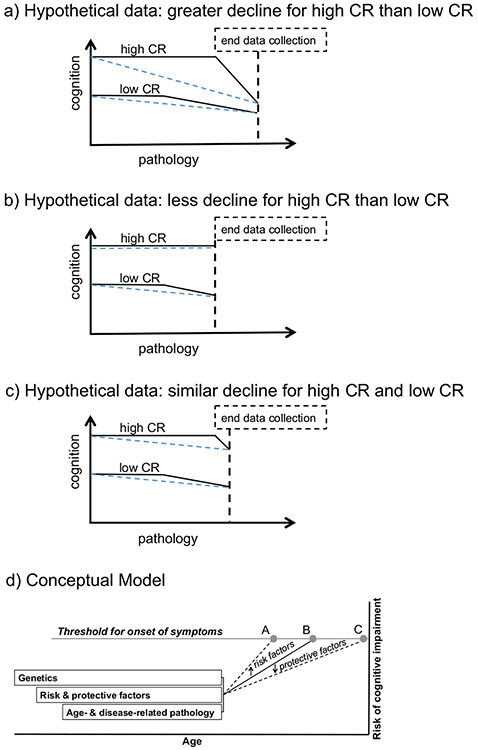
Evidence to date supports the notion that higher levels of CR, as measured by proxy variables reflective of lifetime experiences, are associated with better cognitive performance, and with a reduced risk of incident mild cognitive impairment/dementia. However, the impact of CR on longitudinal cognitive trajectories is unclear and may be influenced by a number of factors. Although there is promising evidence that some proxy measures of CR may influence structural brain measures, more research is needed. The protective effects of CR may provide an important mechanism for preserving cognitive function and cognitive well-being with age, in part because it can be enhanced throughout the lifespan. However, more research on the mechanisms by which CR is protective is needed.
本篇综述的目的在于总结认知储备(CR)和相关概念的现有概念模型,并在老龄化和阿尔茨海默病的背景下讨论这些概念的证据。
迄今为止的证据支持这样一种观点,即通过反映终生经历的替代变量来衡量的更高水平的 CR 与更好的认知表现以及更低的轻度认知障碍/痴呆症发病风险相关。然而,CR 对纵向认知轨迹的影响尚不清楚,可能受到许多因素的影响。尽管有一些有希望的证据表明,一些 CR 的替代测量可能会影响结构脑测量,但还需要更多的研究。CR 的保护作用可能为随着年龄的增长保持认知功能和认知健康提供了一个重要机制,部分原因是它可以在整个生命周期中得到增强。然而,需要更多关于 CR 保护机制的研究。