School of Information Science, Japan Advanced Institute of Science and Technology, 1-1 Asahidai, Nomi, Ishikawa, 923-1211, Japan.
Movement Disorders Project, Tokyo Metropolitan Institute of Medical Science, 2-1-6 Kamikitazawa, Setagaya, Tokyo, 156-8506, Japan.
Cerebellum. 2019 Jun;18(3):349-371. doi: 10.1007/s12311-018-0996-4.
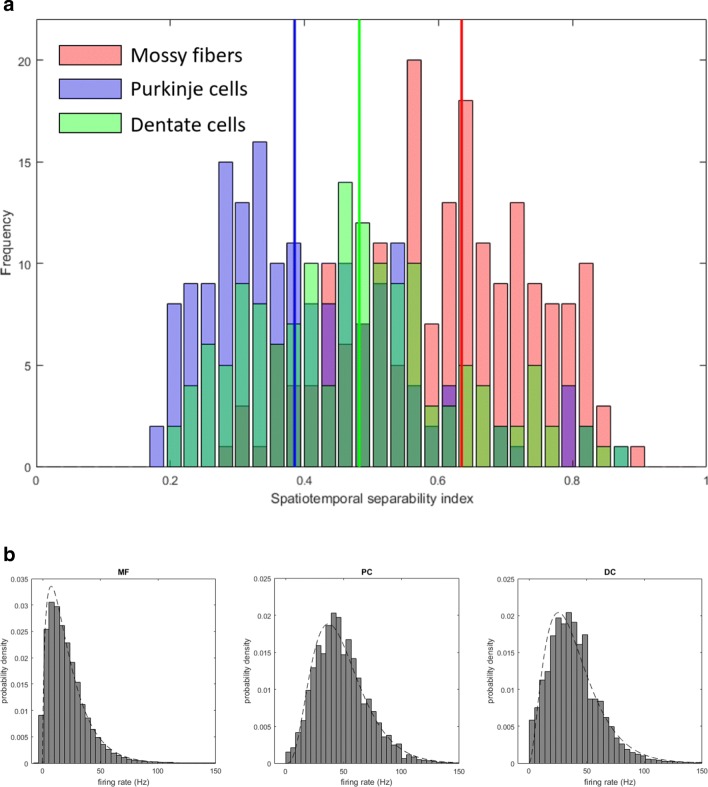
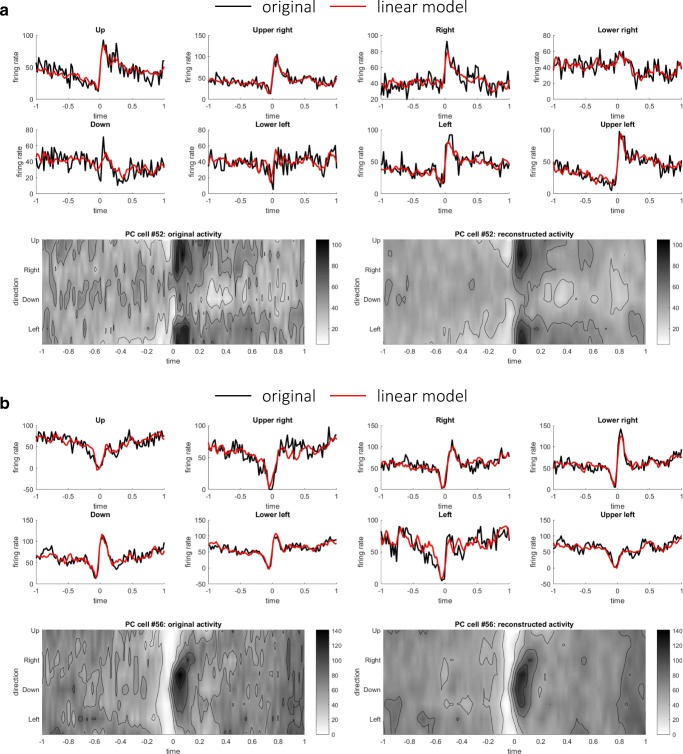
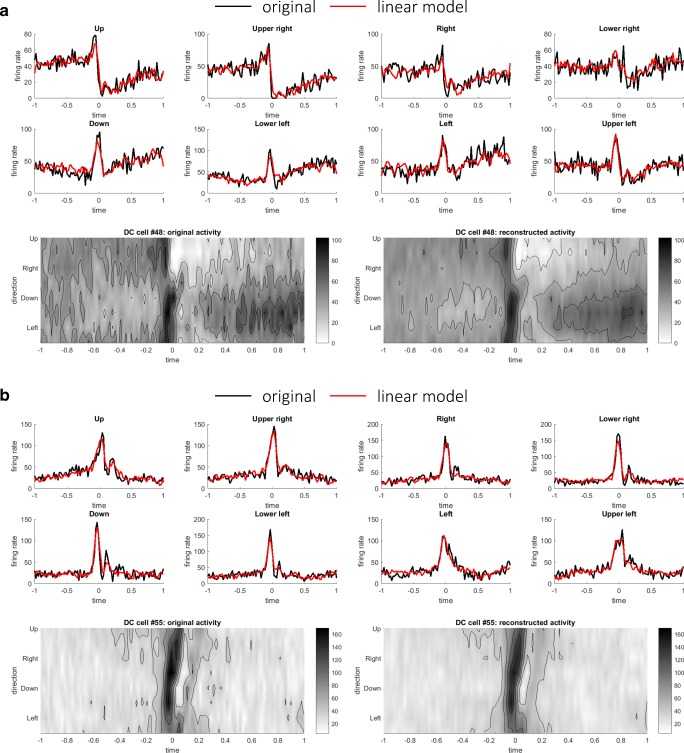
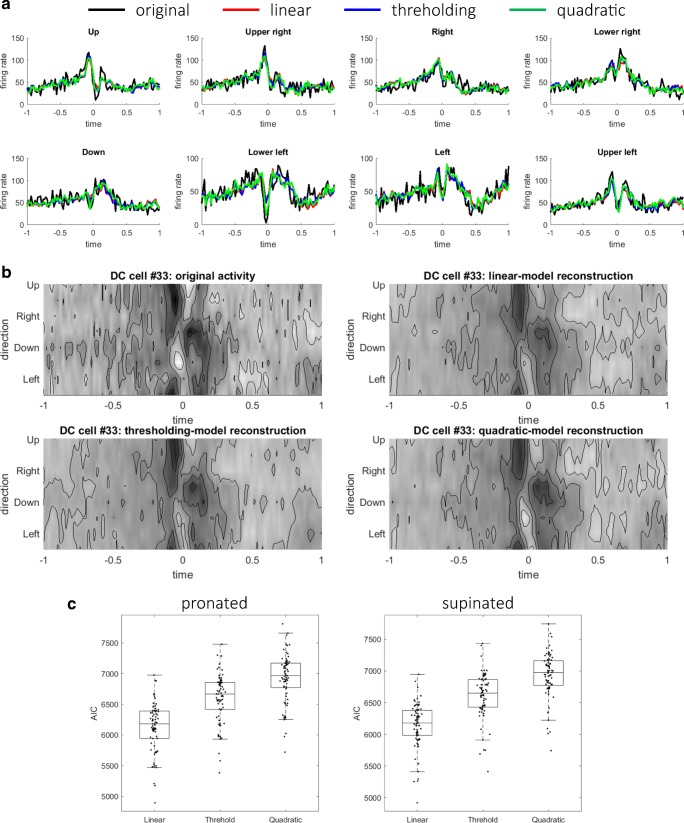
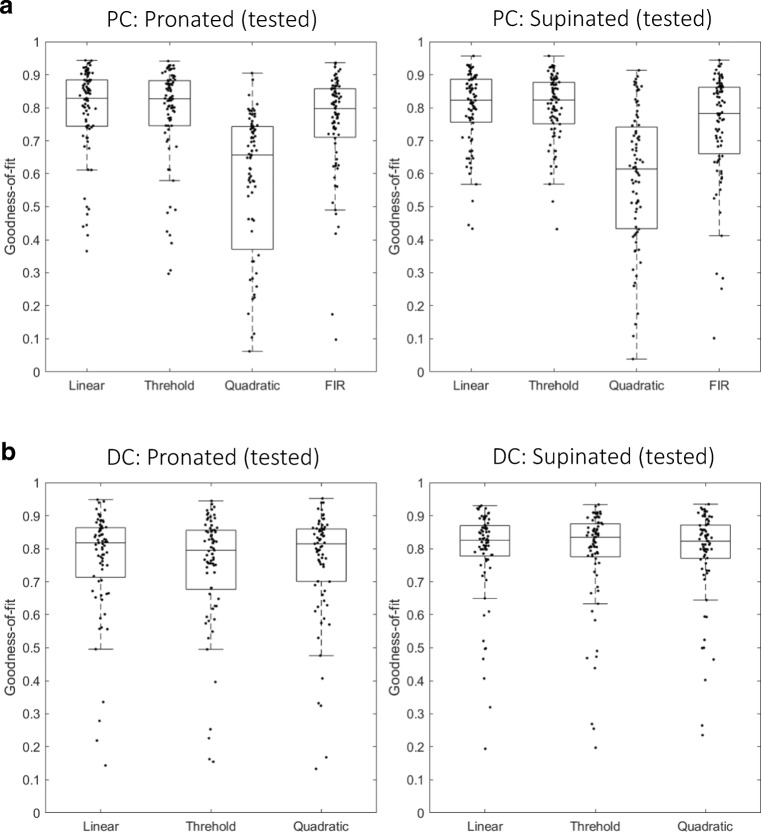
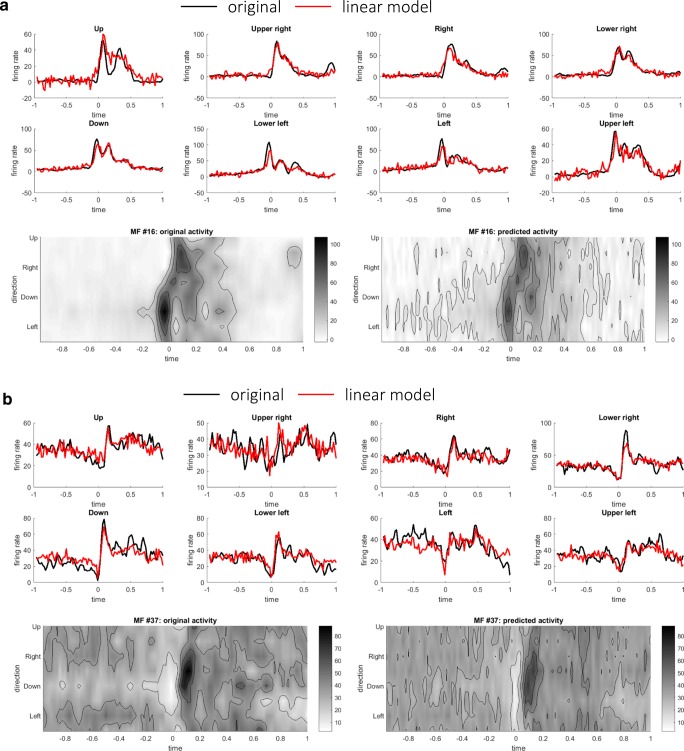
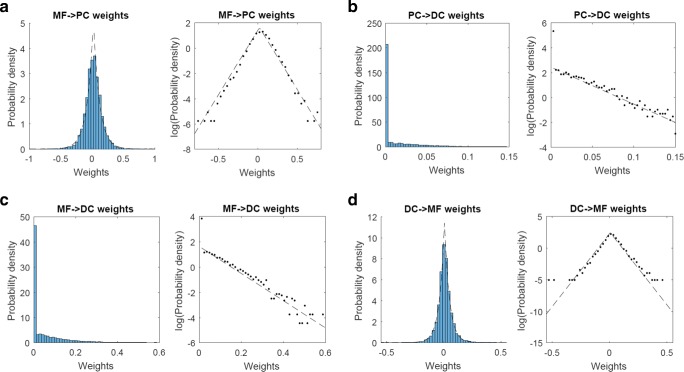
We here provide neural evidence that the cerebellar circuit can predict future inputs from present outputs, a hallmark of an internal forward model. Recent computational studies hypothesize that the cerebellum performs state prediction known as a forward model. To test the forward-model hypothesis, we analyzed activities of 94 mossy fibers (inputs to the cerebellar cortex), 83 Purkinje cells (output from the cerebellar cortex to dentate nucleus), and 73 dentate nucleus cells (cerebellar output) in the cerebro-cerebellum, all recorded from a monkey performing step-tracking movements of the right wrist. We found that the firing rates of one population could be reconstructed as a weighted linear sum of those of preceding populations. We then went on to investigate if the current outputs of the cerebellum (dentate cells) could predict the future inputs of the cerebellum (mossy fibers). The firing rates of mossy fibers at time t + t could be well reconstructed from as a weighted sum of firing rates of dentate cells at time t, thereby proving that the dentate activities contained predictive information about the future inputs. The average goodness-of-fit (R) decreased moderately from 0.89 to 0.86 when t was increased from 20 to 100 ms, hence indicating that the prediction is able to compensate the latency of sensory feedback. The linear equations derived from the firing rates resembled those of a predictor known as Kalman filter composed of prediction and filtering steps. In summary, our analysis of cerebellar activities supports the forward-model hypothesis of the cerebellum.
我们在这里提供了神经学证据,表明小脑回路可以根据当前的输出预测未来的输入,这是内部前向模型的标志。最近的计算研究假设小脑执行称为前向模型的状态预测。为了检验前向模型假说,我们分析了一只猴子进行右手腕跟踪运动时,来自脑桥小脑的 94 条苔藓纤维(小脑皮质的输入)、83 条浦肯野细胞(小脑皮质到齿状核的输出)和 73 条齿状核细胞(小脑输出)的活动。我们发现,一个群体的放电率可以被重建为前一个群体的加权线性和。然后,我们继续研究小脑的当前输出(齿状核细胞)是否可以预测小脑的未来输入(苔藓纤维)。苔藓纤维在 t + t 时刻的放电率可以很好地从 t 时刻的齿状核细胞的放电率的加权和中重建,从而证明齿状核活动包含了关于未来输入的预测信息。当 t 从 20 毫秒增加到 100 毫秒时,平均拟合度(R)从 0.89 适度降低到 0.86,这表明预测能够补偿感觉反馈的延迟。从放电率中得出的线性方程类似于由预测和滤波步骤组成的称为卡尔曼滤波器的预测器的方程。总之,我们对小脑活动的分析支持小脑的前向模型假说。