State Key Laboratory of Medical Molecular Biology, Department of Molecular Biology and Biochemistry, Institute of Basic Medical Sciences, Medical Primate Research Center, Neuroscience Center, Chinese Academy of Medical Sciences, School of Basic Medicine Peking Union Medical College, 100005, Beijing, China.
Department of Molecular Neuropathology, Beijing Neurosurgical Institute, Capital Medical University, Beijing, China.
Cell Death Dis. 2019 Jan 10;10(1):25. doi: 10.1038/s41419-018-1242-1.
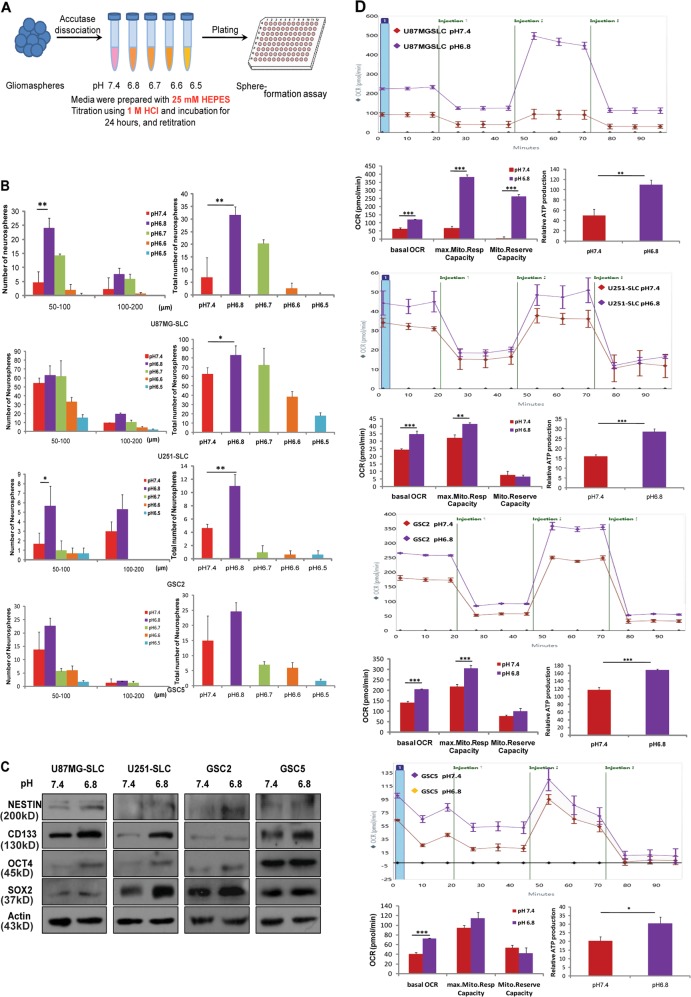
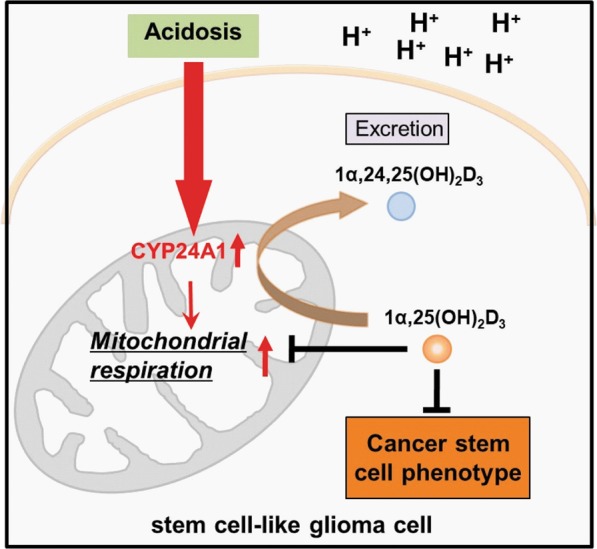
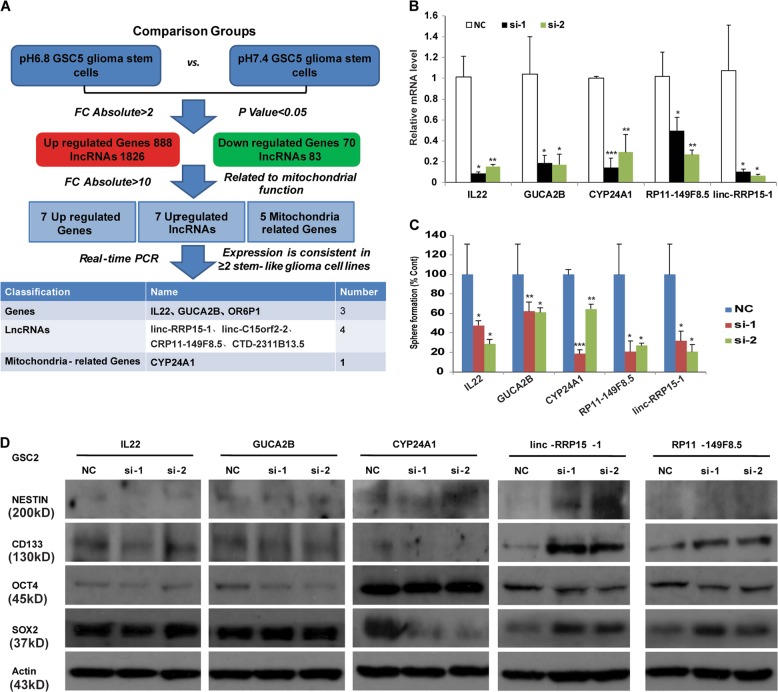
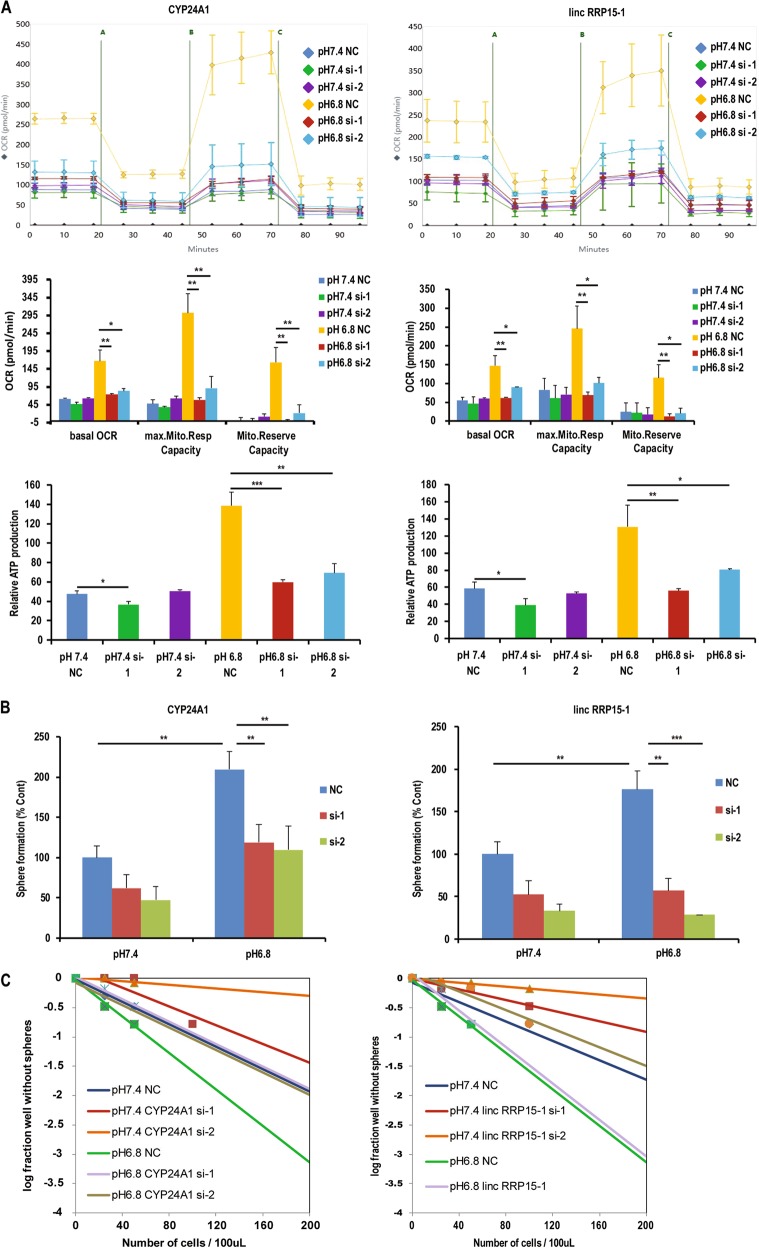
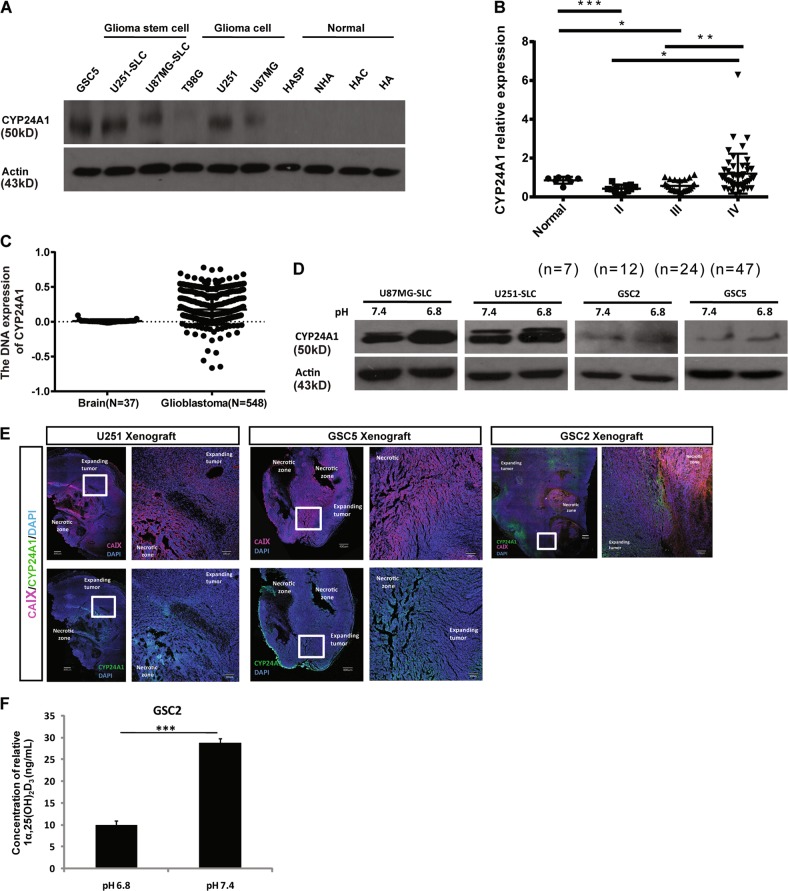
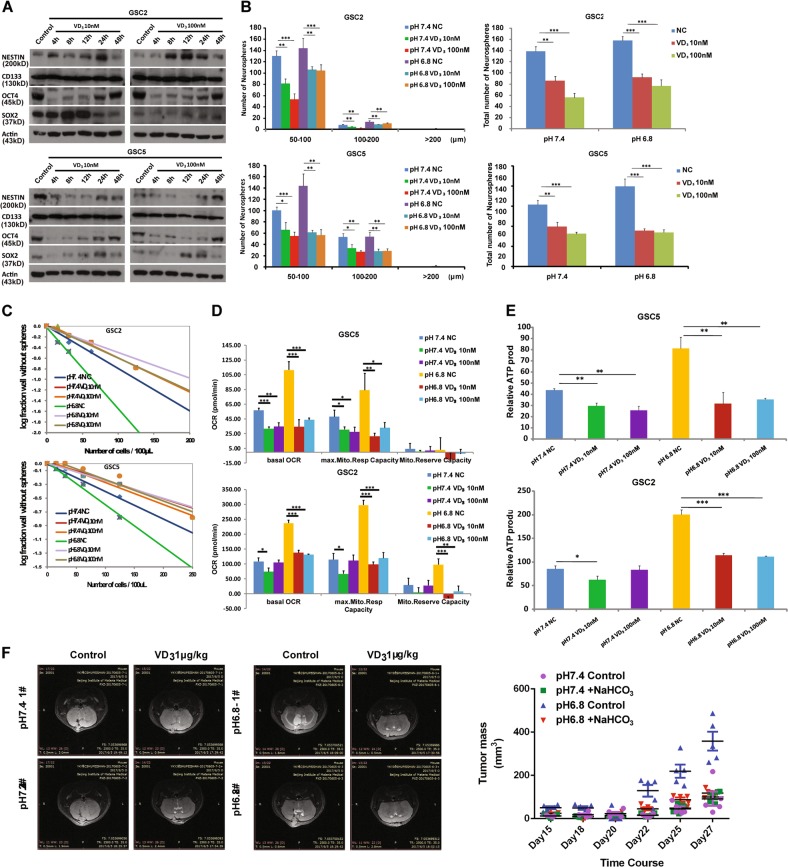
Acidosis is a significant feature of the tumor microenvironment in glioma, and it is closely related to multiple biological functions of cancer stem cells. Here, we found that the self-renewal ability, the mitochondrial activity and ATP production were elevated in stem cell-like glioma cells (SLCs) under acidic microenvironment, which promoted and maintained the stemness of SLCs. Under acidosis, 25-hydroxy vitamin D-24-hydroxylase (CYP24A1) was upregulated and catalyzed the fast degradation of 1α,25(OH)D. We further revealed that the active form of vitamin D (1α,25(OH)D) could inhibit the expression of stemness markers, attenuate acidosis-induced increase of self-renewal ability and mitochondrial respiration in stem cell-like glioma cells. Our study indicates that the acidosis-CYP24A1-vitamin D pathway may be a key regulator of the cancer stem cell phenotype in malignant glioma and point out the potential value for the utilization of vitamin D to target cancer stem cells and to restrain the growth of malignant glioma in the future.
酸中毒是神经胶质瘤肿瘤微环境的一个显著特征,它与肿瘤干细胞的多种生物学功能密切相关。在这里,我们发现,在酸性微环境下,具有干细胞样特征的神经胶质瘤细胞(SLC)的自我更新能力、线粒体活性和 ATP 生成能力提高,从而促进和维持了 SLC 的干性。在酸中毒条件下,25-羟维生素 D-24-羟化酶(CYP24A1)上调,并快速催化 1α,25(OH)D 的降解。我们进一步揭示,活性维生素 D(1α,25(OH)D)可以抑制干性标志物的表达,减弱酸中毒诱导的 SLC 自我更新能力和线粒体呼吸的增加。我们的研究表明,酸中毒-CYP24A1-维生素 D 途径可能是恶性神经胶质瘤中肿瘤干细胞表型的关键调节因子,并指出了利用维生素 D 靶向肿瘤干细胞和抑制恶性神经胶质瘤生长的潜在价值。