Departments of Paediatrics and Physiology, University of Toronto, Toronto, Ontario, Canada.
Cell Biology Program, Research Institute, Hospital for Sick Children, Toronto, Ontario, Canada.
Sci Rep. 2019 Jan 10;9(1):38. doi: 10.1038/s41598-018-37095-4.
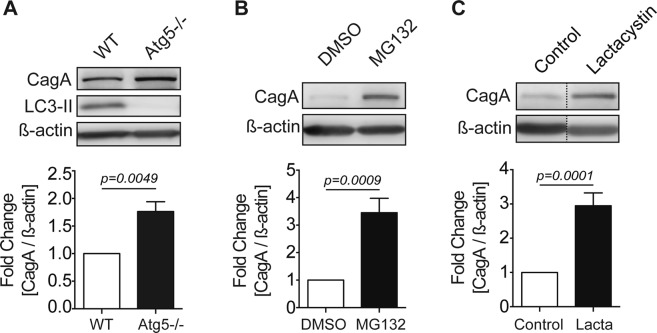
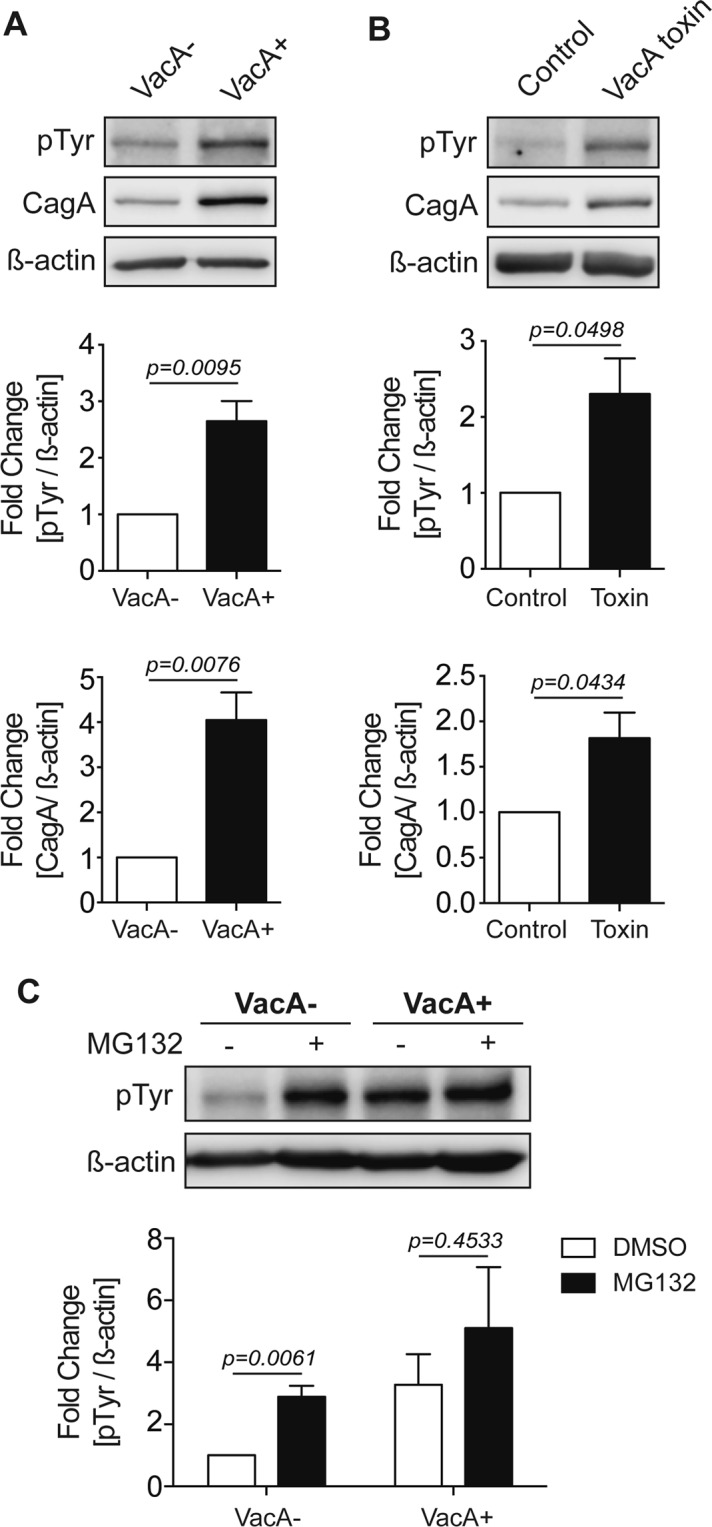
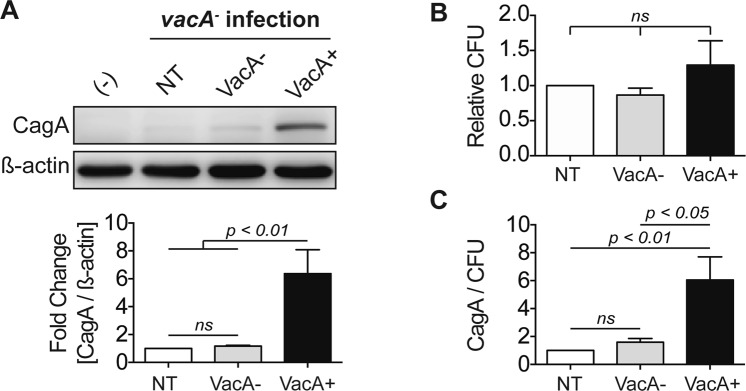
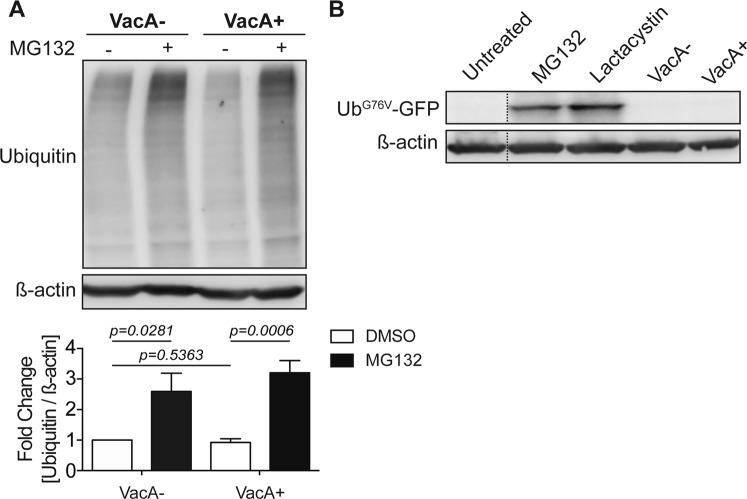
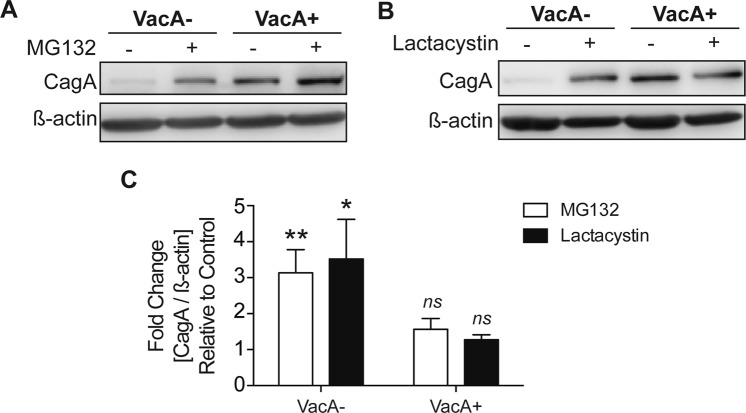
Helicobacter pylori (H. pylori) is the causative agent of gastric cancer, making it the only bacterium to be recognized as a Class I carcinogen by the World Health Organization. The virulence factor cytotoxin associated gene A (CagA) is a known oncoprotein that contributes to the development of gastric cancer. The other major virulence factor vacuolating cytotoxin A (VacA), disrupts endolysosomal vesicular trafficking and impairs the autophagy pathway. Studies indicate that there is a functional interplay between these virulence factors by unknown mechanisms. We show that in the absence of VacA, both host-cell autophagy and the proteasome degrade CagA during infection with H. pylori. In the presence of VacA, CagA accumulates in gastric epithelial cells. However, VacA does not affect proteasome function during infection with H. pylori suggesting that VacA-disrupted autophagy is the predominant means by which CagA accumulates. Our studies support a model where in the presence of VacA, CagA accumulates in dysfunctional autophagosomes providing a possible explanation for the functional interplay of VacA and CagA.
幽门螺杆菌(H. pylori)是胃癌的致病因子,使其成为世界卫生组织唯一被认定为 I 类致癌原的细菌。毒力因子细胞毒素相关基因 A(CagA)是一种已知的癌蛋白,有助于胃癌的发展。另一个主要的毒力因子空泡细胞毒素 A(VacA),破坏内体溶酶体囊泡运输,并损害自噬途径。研究表明,这些毒力因子之间存在未知机制的功能相互作用。我们表明,在缺乏 VacA 的情况下,宿主细胞自噬和蛋白酶体在感染幽门螺杆菌时都会降解 CagA。在存在 VacA 的情况下,CagA 在胃上皮细胞中积累。然而,VacA 并不影响感染幽门螺杆菌时的蛋白酶体功能,这表明 VacA 破坏的自噬是 CagA 积累的主要途径。我们的研究支持这样一种模型,即在 VacA 存在的情况下,CagA 在功能失调的自噬体中积累,为 VacA 和 CagA 的功能相互作用提供了一种可能的解释。