Bandeira Francisco, Yusoff Nur Zahira, Yam Gary Hin-Fai, Mehta Jodhbir Singh
Tissue Engineering and Stem Cell Group, Singapore Eye Research Institute, Singapore; Federal University of São Paulo, Sao Paulo; São Gonçalo Eye Hospital, São Gonçalo, Brazil.
Tissue Engineering and Stem Cell Group, Singapore Eye Research Institute, Singapore.
Neural Regen Res. 2019 Apr;14(4):557-565. doi: 10.4103/1673-5374.247421.
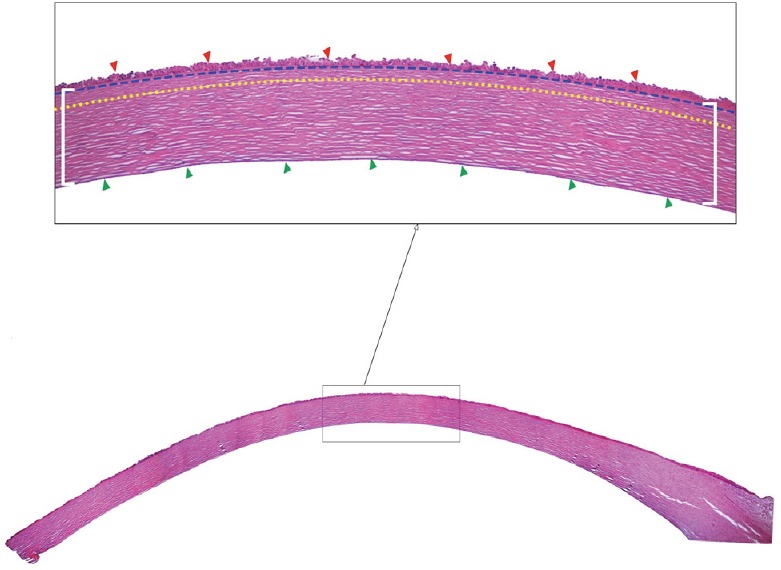
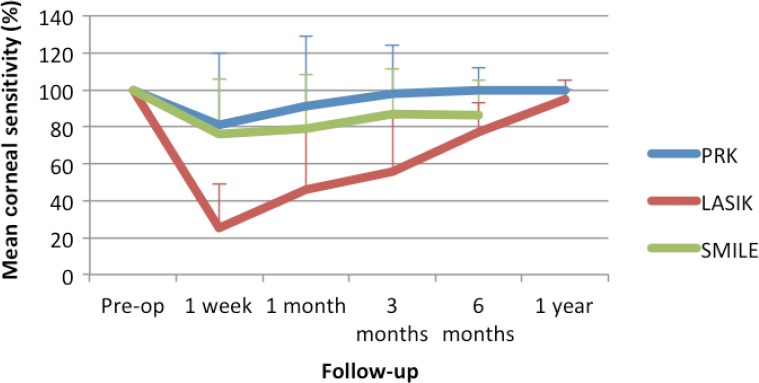
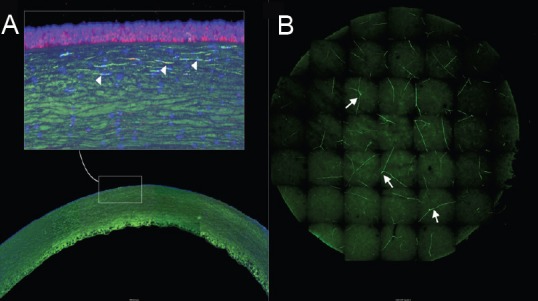
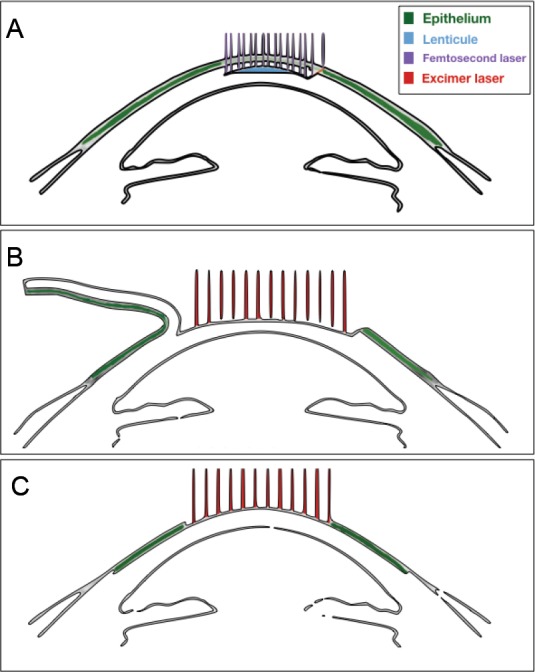
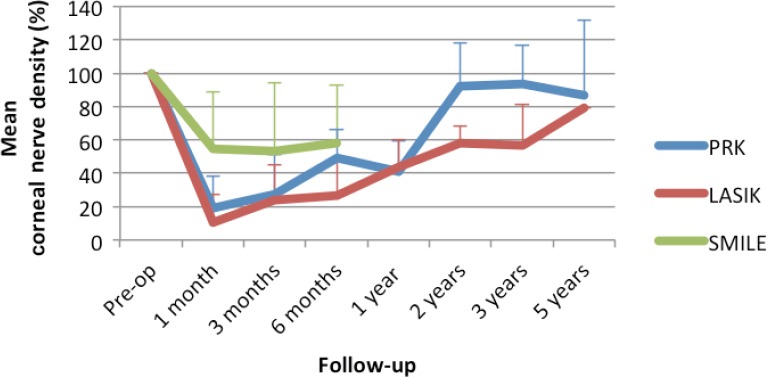
Laser refractive surgery is one of the most performed surgical procedures in the world. Although regarded safe and efficient, it has side effects. All of the laser based refractive surgical procedures invoke corneal nerve injury to some degree. The impact of this denervation can range from mild discomfort to neurotrophic corneas. Currently, three techniques are widely used for laser vision correction: small incision lenticule extraction, laser-assisted keratomileusis in situ and photorefractive keratotomy. Each of these techniques affects corneal innervation differently and has a different pattern of nerve regeneration. The purpose of this review is to summarize the different underlying mechanisms for corneal nerve injury and compare the different patterns of corneal reinnervation.
激光屈光手术是世界上实施最为广泛的外科手术之一。尽管被认为安全有效,但它仍有副作用。所有基于激光的屈光手术都会在一定程度上引起角膜神经损伤。这种去神经支配的影响范围从轻微不适到神经营养性角膜不等。目前,三种技术被广泛用于激光视力矫正:小切口基质透镜切除术、准分子原位角膜磨镶术和准分子激光角膜切削术。这些技术中的每一种对角膜神经支配的影响都不同,并且具有不同的神经再生模式。这篇综述的目的是总结角膜神经损伤的不同潜在机制,并比较角膜再神经支配的不同模式。