Department of Trauma Orthopedics, First People's Hospital of Changzhou Affiliated to Soochow University, Changzhou, Jiangsu, China (mainland).
Med Sci Monit. 2019 Jan 11;25:324-332. doi: 10.12659/MSM.912624.
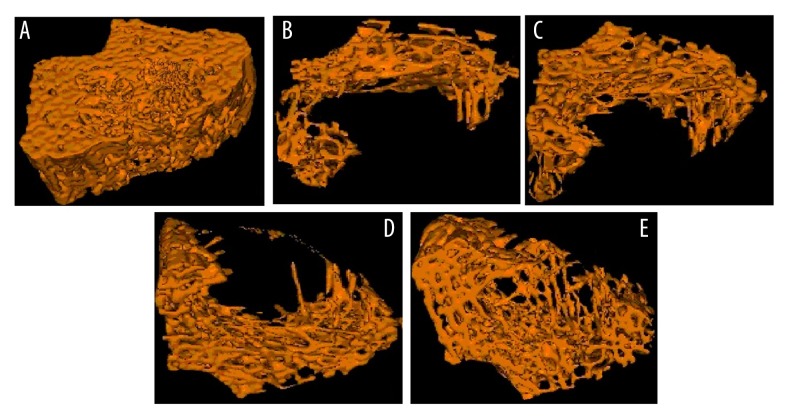
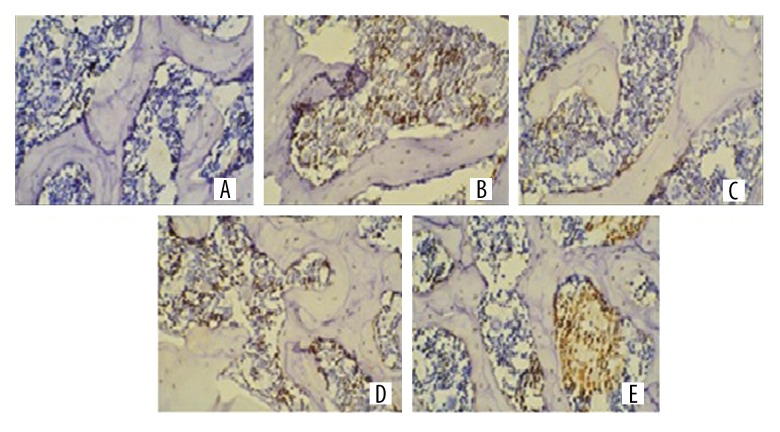
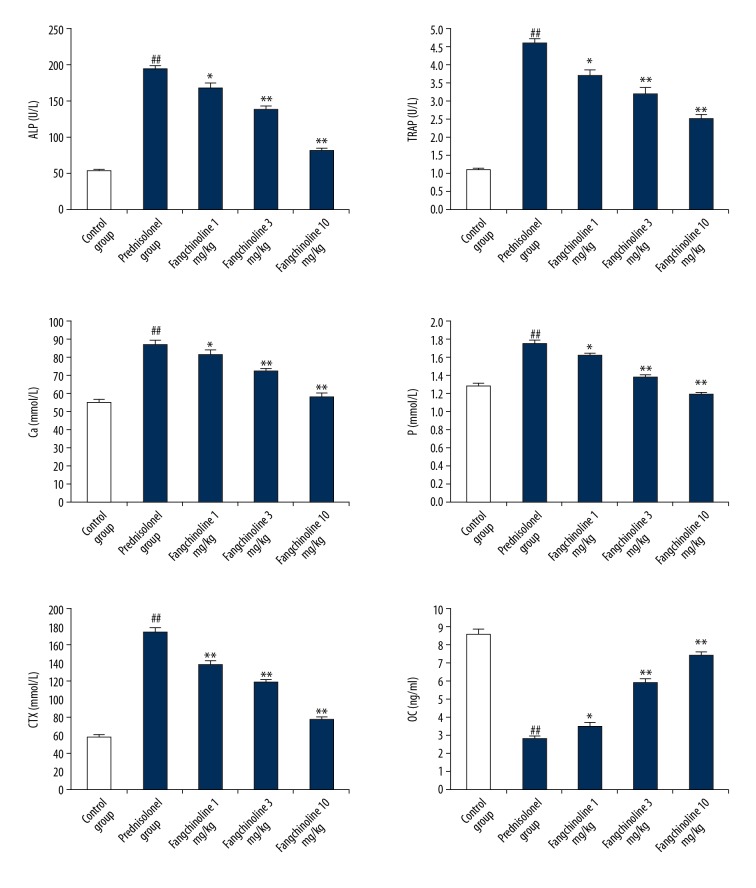
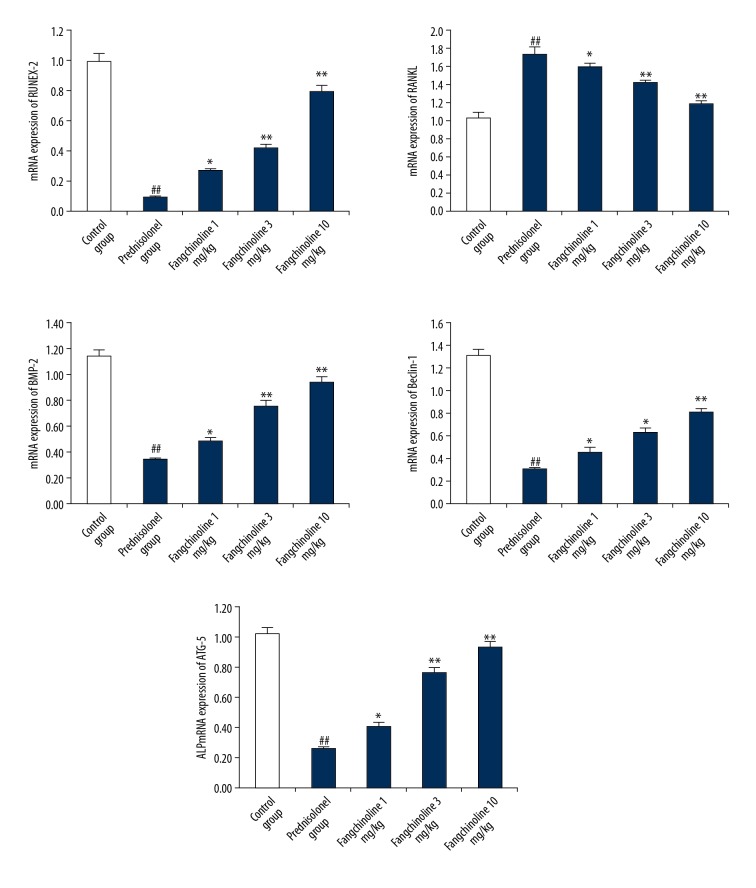
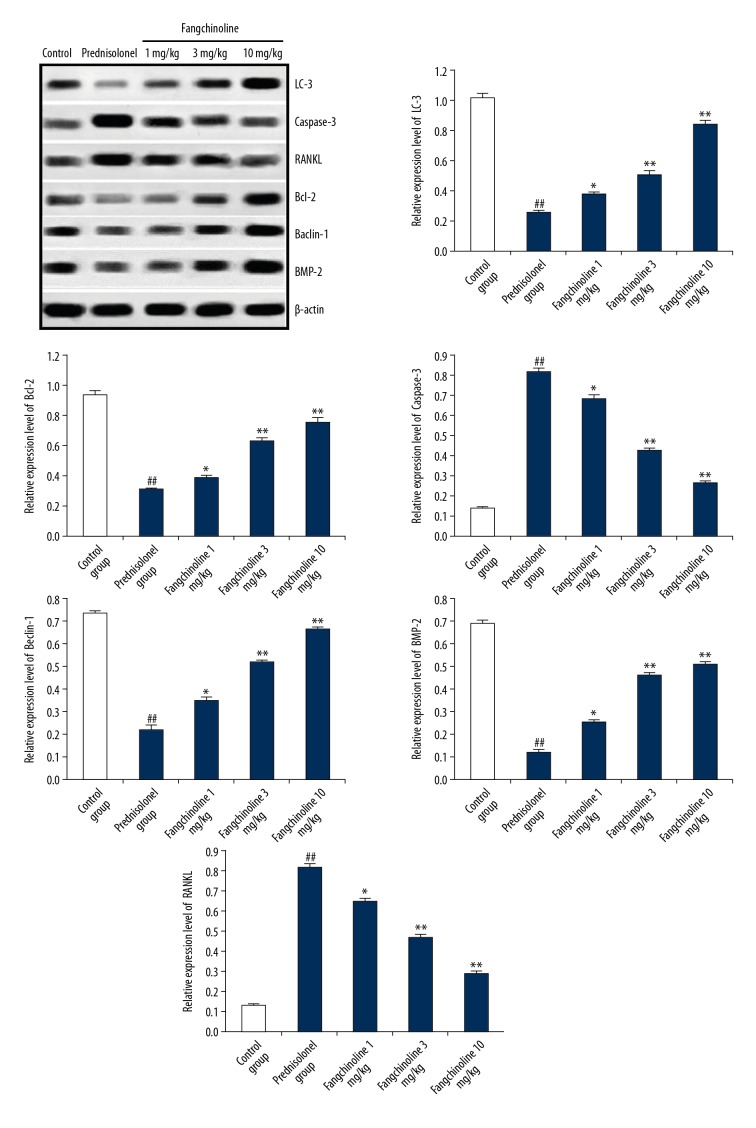
BACKGROUND Osteoporosis is a common disorder leading to bone loss. At present, the treatment options available for the management of osteoporosis are limited. The present investigation evaluated the protective effect of fangchinoline against osteoporosis and also postulates the possible mechanism of action. MATERIAL AND METHODS Osteoporosis was induced by subcutaneously injecting prednisolone (2.5 mg/pellet) for 4 weeks. Fangchinoline 1, 3 and 10 mg/kg was given intraperitoneally for the period. Protective effects of fangchinoline were assessed by estimating microarchitectural parameters and bone mineral density (BMD) in the vertebrae tissues, and biochemical parameters were also determined in the serum of rats with prednisolone-induced osteoporosis. Moreover, gene expression of microtubule-associated protein 1A/1B-light chain 3 (LC3), B cell lymphoma 2 (Bcl-2), caspase-3, bone morphogenetic protein 2 (BMP2), Beclin-1, autophagy-related 5 (ATG-5), Runt-related transcription factor 2 (RUNX-2), and receptor activator of nuclear factor kappa-b ligand (RANKL) protein in the vertebrae tissue were assessed by reverse transcription-polymerase chain reaction (RT-PCR) and Western blot assay. RESULTS There was a significant (p<0.01) decrease in the BMD and microarchitectural parameters in the vertebrae tissue of the fangchinoline-treated group compared to the prednisolone group. We also found that treatment with fangchinoline attenuated the altered expressions of LC3, Bcl-2, caspase-3, BMP2, Beclin-1, ATG-5, RUNX-2, and RANKL protein in the prednisolone-induced osteoporosis rats. Moreover, levels of biochemical parameters were attenuated in the serum of fangchinoline-treated and prednisolone-induced osteoporosis rat. Histopathology revealed that the apoptosis of osteoblasts was decreased in the fangchinoline-treated group compared to the prednisolone group of rats. CONCLUSIONS Fangchinoline inhibits apoptosis of osteoblasts and protects against bone loss in prednisolone-induced osteoporosis rats by inducing autophagy.
骨质疏松症是一种常见的导致骨丢失的疾病。目前,骨质疏松症的治疗选择有限。本研究评估了防己诺林碱对骨质疏松症的保护作用,并提出了可能的作用机制。
通过皮下注射泼尼松龙(2.5mg/粒)4 周诱导骨质疏松症。腹腔内给予防己诺林碱 1、3 和 10mg/kg,持续 4 周。通过评估椎体组织的微观结构参数和骨密度(BMD)以及泼尼松龙诱导的骨质疏松症大鼠血清中的生化参数来评估防己诺林碱的保护作用。此外,通过逆转录-聚合酶链反应(RT-PCR)和 Western blot 分析评估椎体组织中微管相关蛋白 1A/1B-轻链 3(LC3)、B 细胞淋巴瘤 2(Bcl-2)、半胱天冬酶-3、骨形态发生蛋白 2(BMP2)、自噬相关 5(ATG-5)、Runt 相关转录因子 2(RUNX-2)和核因子 kappa-B 配体(RANKL)蛋白的基因表达。
与泼尼松龙组相比,防己诺林碱处理组的椎体组织 BMD 和微观结构参数有显著(p<0.01)降低。我们还发现,防己诺林碱治疗可减轻泼尼松龙诱导的骨质疏松症大鼠中 LC3、Bcl-2、半胱天冬酶-3、BMP2、Beclin-1、ATG-5、RUNX-2 和 RANKL 蛋白的改变表达。此外,防己诺林碱处理和泼尼松龙诱导的骨质疏松症大鼠血清中的生化参数水平也降低。组织病理学显示,与泼尼松龙组相比,防己诺林碱处理组大鼠成骨细胞凋亡减少。
防己诺林碱通过诱导自噬抑制成骨细胞凋亡,防止泼尼松龙诱导的骨质疏松症大鼠骨丢失。