Dos Anjos Denner Santos, Vital Aline Fernandes, Lainetti Patrícia de Faria, Leis-Filho Antonio Fernando, Dalmolin Fabiola, Elias Fabiana, Calazans Sabryna Gouveia, Fonseca-Alves Carlos Eduardo
Veterinary Science Graduate Program, University of Franca (UNIFRAN), Franca 14404-600, Brazil.
Department of Veterinary Surgery and Anesthesiology, School of Veterinary Medicine and Animal Science, São Paulo State University-UNESP, Botucatu 18618-681, Brazil.
Vet Sci. 2019 Jan 9;6(1):3. doi: 10.3390/vetsci6010003.
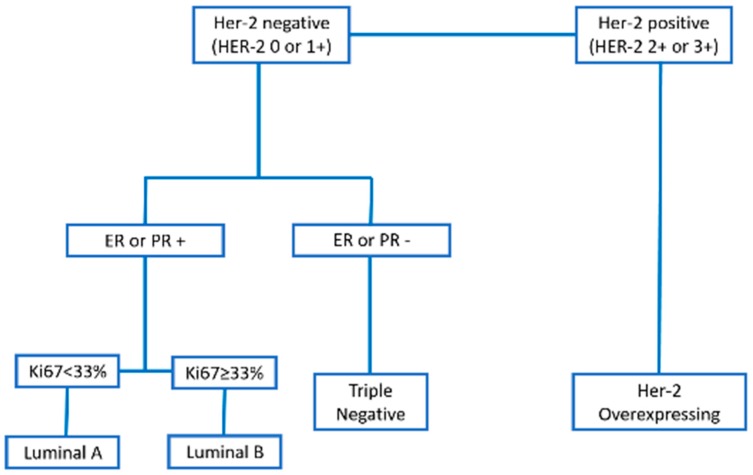
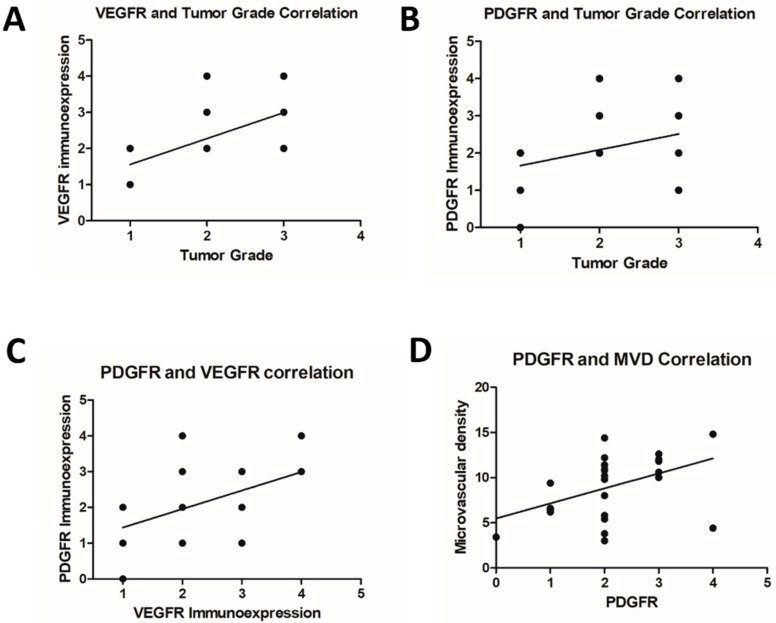
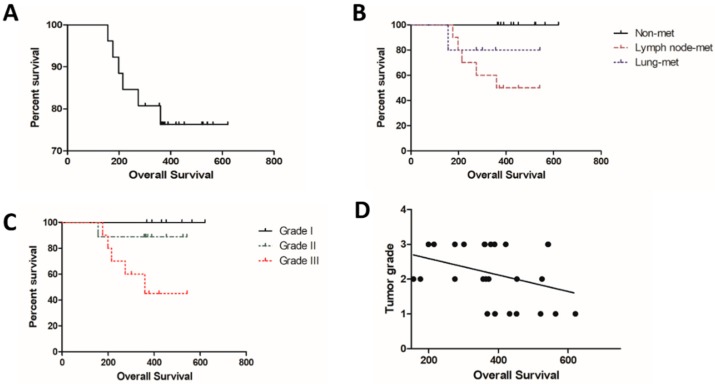
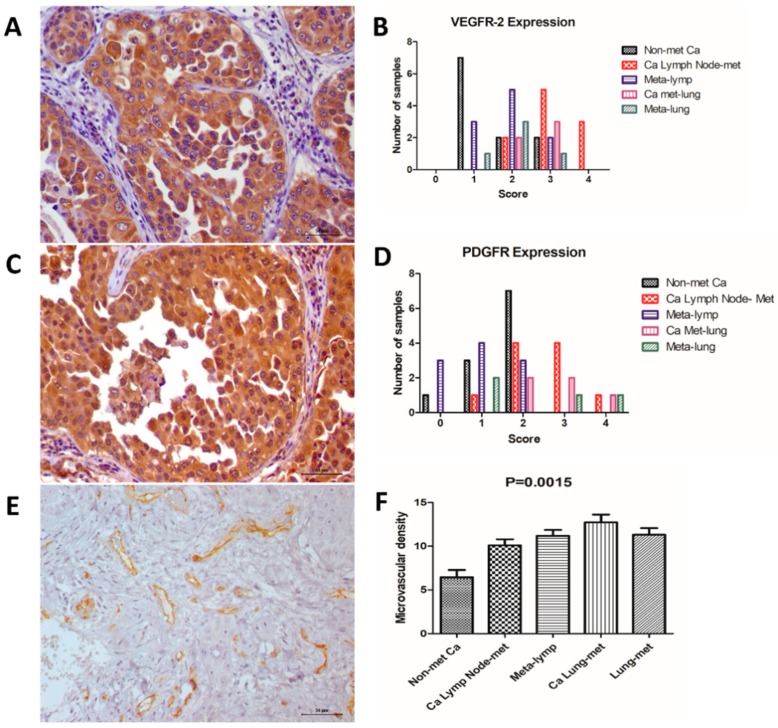
Canine mammary tumors (CMT) represent the most common cancer in noncastrated female dogs. Interestingly, triple-negative tumors are the most common molecular subtype in female dogs. In this study, we proposed to evaluate the expression of vascular endothelial growth factor receptor 2 (VEGFR-2), Platelet-derived growth factor receptor (PDGFR), and microvascular density (MVD) in a group of metastatic and nonmetastatic triple-negative CMT and compare the expression based on clinical parameters. Twenty-six female dogs with triple-negative mammary tumors were divided into three groups: nonmetastatic tumors (NMT) ( = 11), tumors with lymph node metastasis (LNM) ( = 10), and tumors with lung metastasis (LM) ( = 5). We observed increased VEGFR-2 expression in LNM compared with NMT and a positive correlation between tumor grade and VEGFR-2 expression. A positive correlation was noted between VEGFR-2 and PDGFR expression. Regarding microvascular density (MVD), we identified a higher number of vessels in primary tumors with lymph node metastasis and lung metastasis compared with tumors with no metastasis. The primary tumors with lung metastasis exhibited an increased MVD compared with carcinoma with lymph node metastasis. Overall, our results suggest a deregulation of VEGFR-2 and PDGFR and high MVD in metastatic tumors, indicating a role for angiogenesis in tumor progression.
犬乳腺肿瘤(CMT)是未绝育雌性犬中最常见的癌症。有趣的是,三阴性肿瘤是雌性犬中最常见的分子亚型。在本研究中,我们提议评估一组转移性和非转移性三阴性CMT中血管内皮生长因子受体2(VEGFR-2)、血小板衍生生长因子受体(PDGFR)的表达以及微血管密度(MVD),并根据临床参数比较其表达情况。26只患有三阴性乳腺肿瘤的雌性犬被分为三组:非转移性肿瘤(NMT)(n = 11)、有淋巴结转移的肿瘤(LNM)(n = 10)和有肺转移的肿瘤(LM)(n = 5)。我们观察到,与NMT相比,LNM中VEGFR-2表达增加,且肿瘤分级与VEGFR-2表达之间呈正相关。VEGFR-2与PDGFR表达之间也呈正相关。关于微血管密度(MVD),我们发现与无转移的肿瘤相比,有淋巴结转移和肺转移的原发性肿瘤中的血管数量更多。与有淋巴结转移的癌相比,有肺转移的原发性肿瘤的MVD增加。总体而言,我们的结果表明转移性肿瘤中VEGFR-2和PDGFR失调且MVD较高,表明血管生成在肿瘤进展中起作用。