• 文献检索
  • 文档翻译
  • 深度研究
  • 学术资讯
  • Suppr Zotero 插件Zotero 插件
  • 邀请有礼
  • 套餐&价格
  • 历史记录
应用&插件
Suppr Zotero 插件Zotero 插件浏览器插件Mac 客户端Windows 客户端微信小程序
定价
高级版会员购买积分包购买API积分包
服务
文献检索文档翻译深度研究API 文档MCP 服务
关于我们
关于 Suppr公司介绍联系我们用户协议隐私条款
关注我们

Suppr 超能文献

核心技术专利:CN118964589B侵权必究
粤ICP备2023148730 号-1Suppr @ 2026

文献检索

告别复杂PubMed语法,用中文像聊天一样搜索,搜遍4000万医学文献。AI智能推荐,让科研检索更轻松。

立即免费搜索

文件翻译

保留排版,准确专业,支持PDF/Word/PPT等文件格式,支持 12+语言互译。

免费翻译文档

深度研究

AI帮你快速写综述,25分钟生成高质量综述,智能提取关键信息,辅助科研写作。

立即免费体验

量化甜味喜好者表型:是时候对分类标准进行一些一致性了。

Quantifying Sweet Taste Liker Phenotypes: Time for Some Consistency in the Classification Criteria.

机构信息

School of Psychology, University of Sussex, Falmer BN1 9QH, UK.

Department of Food Science, College of Agricultural Sciences, The Pennsylvania State University, University Park, PA 16802, USA.

出版信息

Nutrients. 2019 Jan 10;11(1):129. doi: 10.3390/nu11010129.

DOI:10.3390/nu11010129
PMID:30634558
原文链接:https://pmc.ncbi.nlm.nih.gov/articles/PMC6357166/
Abstract

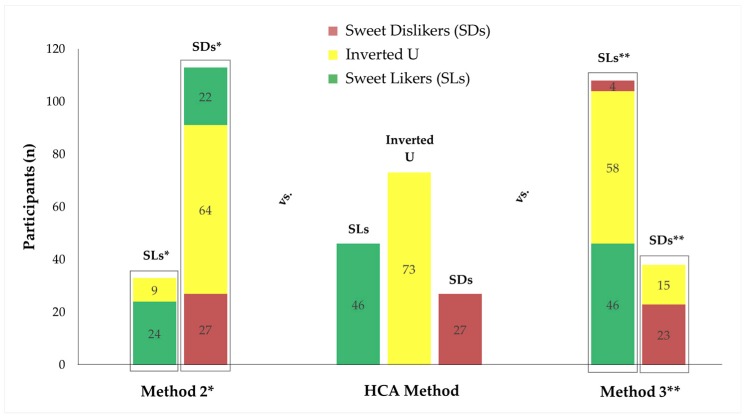
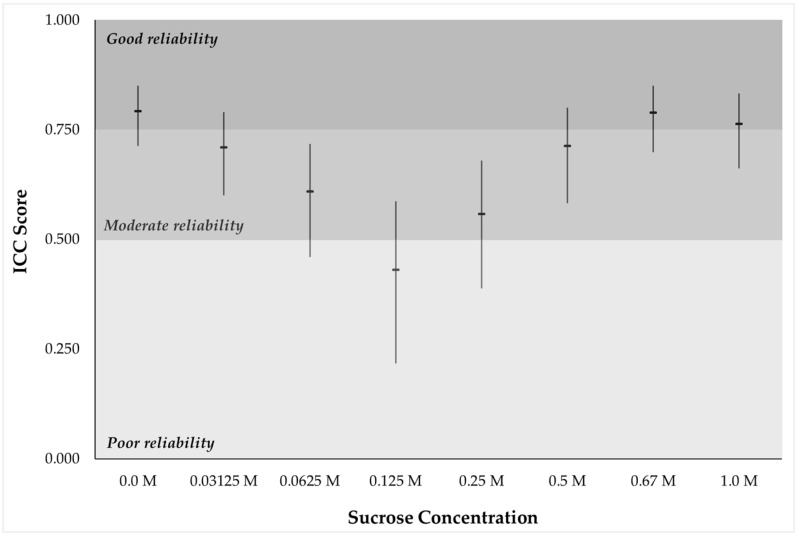
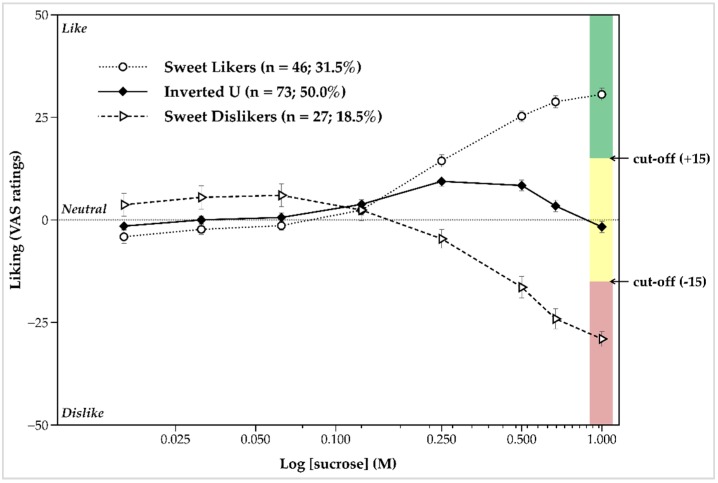
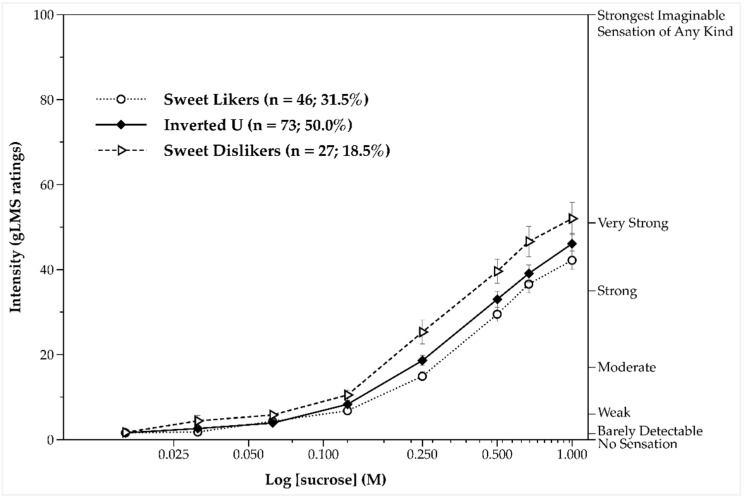
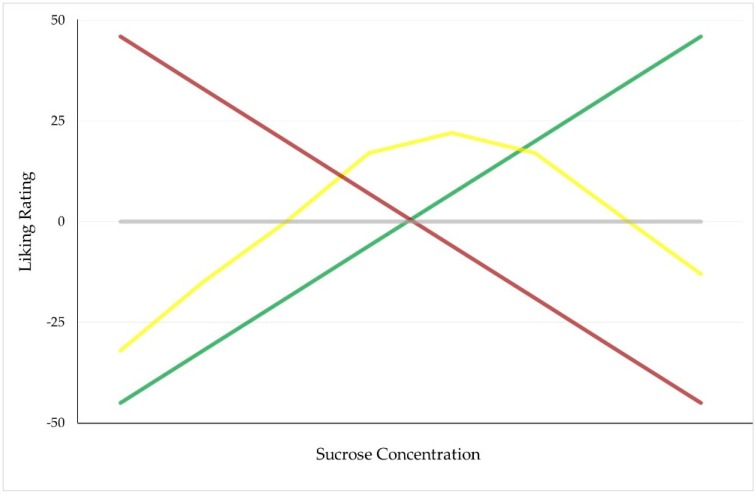
Taste hedonics is a well-documented driver of food consumption. The role of sweetness in directing ingestive behavior is largely rooted in biology. One can then intuit that individual differences in sweet-liking may constitute an indicator of variations in the susceptibility to diet-related health outcomes. Despite half a century of research on sweet-liking, the best method to identify the distinct responses to sweet taste is still debated. To help resolve this issue, liking and intensity ratings for eight sucrose solutions ranging from 0 to 1 M were collected from 148 young adults (29% men). Hierarchical cluster analysis (HCA) revealed three response patterns: a sweet-liker (SL) phenotype characterized by a rise in liking as concentration increased, an inverted U-shaped phenotype with maximum liking at 0.25 M, and a sweet-disliker (SD) phenotype characterized by a decline in liking as a function of concentration. Based on sensitivity and specificity analyses, present data suggest the clearest discrimination between phenotypes is seen with 1.0 M sucrose, where a liking rating between -15 and +15 on a -50/+50 scale reliably distinguished individuals with an inverted U-shaped response from the SLs and the SDs. If the efficacy of this approach is confirmed in other populations, the discrimination criteria identified here can serve as the basis for a standard method for classifying sweet taste liker phenotypes in adults.

摘要

味觉愉悦感是促进食物消费的一个有充分记录的驱动因素。甜味在引导摄食行为方面的作用在很大程度上植根于生物学。那么人们可以直观地认为,对甜味的喜好的个体差异可能构成对与饮食相关的健康结果的易感性变化的指标。尽管对甜味的喜好进行了半个世纪的研究,但识别对甜味的不同反应的最佳方法仍存在争议。为了解决这个问题,从 148 名年轻人(29%为男性)中收集了对 8 种从 0 到 1M 的蔗糖溶液的喜好和强度评分。层次聚类分析(HCA)揭示了三种反应模式:甜味喜好者(SL)表型的特征是随着浓度的增加而增加喜好,呈倒 U 形表型,最大喜好在 0.25M 处,以及甜味厌恶者(SD)表型的特征是随着浓度的增加而降低喜好。基于灵敏度和特异性分析,目前的数据表明,在 1.0M 蔗糖中,表型之间的区分最明显,在-50/+50 标度上的-15 到+15 的喜好评分可靠地区分了具有倒 U 形反应的个体与 SL 和 SD。如果这种方法在其他人群中得到证实,那么这里确定的判别标准可以作为在成年人中对甜味喜好表型进行分类的标准方法的基础。
https://cdn.ncbi.nlm.nih.gov/pmc/blobs/510e/6357166/c83e2bdb1c5c/nutrients-11-00129-g006.jpg
https://cdn.ncbi.nlm.nih.gov/pmc/blobs/510e/6357166/04e1a300ebc8/nutrients-11-00129-g001.jpg
https://cdn.ncbi.nlm.nih.gov/pmc/blobs/510e/6357166/221da42deb01/nutrients-11-00129-g002.jpg
https://cdn.ncbi.nlm.nih.gov/pmc/blobs/510e/6357166/f3092d4cde8a/nutrients-11-00129-g003.jpg
https://cdn.ncbi.nlm.nih.gov/pmc/blobs/510e/6357166/28f04cd1d563/nutrients-11-00129-g004.jpg
https://cdn.ncbi.nlm.nih.gov/pmc/blobs/510e/6357166/d9cef414b9fb/nutrients-11-00129-g005.jpg
https://cdn.ncbi.nlm.nih.gov/pmc/blobs/510e/6357166/c83e2bdb1c5c/nutrients-11-00129-g006.jpg
https://cdn.ncbi.nlm.nih.gov/pmc/blobs/510e/6357166/04e1a300ebc8/nutrients-11-00129-g001.jpg
https://cdn.ncbi.nlm.nih.gov/pmc/blobs/510e/6357166/221da42deb01/nutrients-11-00129-g002.jpg
https://cdn.ncbi.nlm.nih.gov/pmc/blobs/510e/6357166/f3092d4cde8a/nutrients-11-00129-g003.jpg
https://cdn.ncbi.nlm.nih.gov/pmc/blobs/510e/6357166/28f04cd1d563/nutrients-11-00129-g004.jpg
https://cdn.ncbi.nlm.nih.gov/pmc/blobs/510e/6357166/d9cef414b9fb/nutrients-11-00129-g005.jpg
https://cdn.ncbi.nlm.nih.gov/pmc/blobs/510e/6357166/c83e2bdb1c5c/nutrients-11-00129-g006.jpg

相似文献

1
Quantifying Sweet Taste Liker Phenotypes: Time for Some Consistency in the Classification Criteria.量化甜味喜好者表型:是时候对分类标准进行一些一致性了。
Nutrients. 2019 Jan 10;11(1):129. doi: 10.3390/nu11010129.
2
Effects of Sweet-Liking on Body Composition Depend on Age and Lifestyle: A Challenge to the Simple Sweet-Liking-Obesity Hypothesis.甜味偏好对身体成分的影响取决于年龄和生活方式:对简单的甜味偏好-肥胖假说的挑战。
Nutrients. 2020 Sep 4;12(9):2702. doi: 10.3390/nu12092702.
3
Multiple Dimensions of Sweet Taste Perception Altered after Sleep Curtailment.睡眠剥夺后甜味感知的多个维度发生改变。
Nutrients. 2019 Aug 27;11(9):2015. doi: 10.3390/nu11092015.
4
Phenol-Rich Food Acceptability: The Influence of Variations in Sweetness Optima and Sensory-Liking Patterns.富含苯酚食物的可接受性:甜度最优值变化和感官喜好模式的影响
Nutrients. 2021 Mar 6;13(3):866. doi: 10.3390/nu13030866.
5
Understanding sweet-liking phenotypes and their implications for obesity: Narrative review and future directions.了解甜味喜好表型及其对肥胖的影响:叙述性综述及未来方向。
Physiol Behav. 2021 Jun 1;235:113398. doi: 10.1016/j.physbeh.2021.113398. Epub 2021 Mar 23.
6
Patterns of Sweet Taste Liking: A Pilot Study.甜味喜好模式:一项初步研究。
Nutrients. 2015 Aug 31;7(9):7298-311. doi: 10.3390/nu7095336.
7
Acquired hedonic and sensory characteristics of odours: influence of sweet liker and propylthiouracil taster status.气味的后天享乐和感官特征:甜味偏好者和丙基硫氧嘧啶味觉状态的影响。
Q J Exp Psychol (Hove). 2009 Aug;62(8):1648-64. doi: 10.1080/17470210802557793.
8
Individual Differences in Sweetness Ratings and Cross-Modal Aroma-Taste Interactions.甜度评级中的个体差异以及跨模态香气-味道相互作用。
Foods. 2020 Feb 1;9(2):146. doi: 10.3390/foods9020146.
9
Re-evaluating how sweet-liking and PROP-tasting are related.重新评估甜味喜好与丙硫氧嘧啶味觉之间的关系。
Physiol Behav. 2022 Mar 15;246:113702. doi: 10.1016/j.physbeh.2022.113702. Epub 2022 Jan 10.
10
Understanding the determinants of sweet taste liking in the African and East Asian ancestry groups in the U.S.-A study protocol.了解非裔和东亚裔美国家庭群体对甜味的喜好的决定因素:一项研究方案。
PLoS One. 2024 Apr 29;19(4):e0300071. doi: 10.1371/journal.pone.0300071. eCollection 2024.

引用本文的文献

1
Sweet taste preference on snack choice, added sugars intake, and diet quality- a pilot study.零食选择中的甜味偏好、添加糖摄入量与饮食质量——一项初步研究。
BMC Nutr. 2025 May 13;11(1):94. doi: 10.1186/s40795-025-01076-4.
2
Effects of dietary recommendations for reducing free sugar intakes, on free sugar intakes, dietary profiles and anthropometry: a randomised controlled trial.减少游离糖摄入量的饮食建议对游离糖摄入量、饮食结构和人体测量指标的影响:一项随机对照试验
Br J Nutr. 2025 Mar 14;133(5):694-710. doi: 10.1017/S0007114525000339. Epub 2025 Feb 20.
3
Patterns of sensory and hedonic responses for salty and umami tastes and their impact on food familiarity, consumption, and nutritional status: A gender-based analysis from a large population sample.

本文引用的文献

1
Prediction of stevia liking by sucrose liking: Effects of beverage background.通过对蔗糖的喜好预测对甜菊糖的喜好:饮料背景的影响。
Chemosens Percept. 2017 Sep;10(3):49-59. doi: 10.1007/s12078-017-9225-7. Epub 2017 Jul 8.
2
Sweet liker status in children and adults: Consequences for beverage intake in adults.儿童和成人的甜食喜好状况:对成人饮料摄入的影响
Food Qual Prefer. 2018 Apr;65:175-180. doi: 10.1016/j.foodqual.2017.10.005. Epub 2017 Oct 12.
3
Salivary proteome and glucose levels are related with sweet taste sensitivity in young adults.
咸味和鲜味的感官及享乐反应模式及其对食物熟悉度、摄入量和营养状况的影响:来自大量人群样本的基于性别的分析。
Curr Res Food Sci. 2025 Jan 6;10:100970. doi: 10.1016/j.crfs.2025.100970. eCollection 2025.
4
Liking for Sweet Taste, Sweet Food Intakes, and Sugar Intakes.对甜味的喜好、甜食摄入量和糖摄入量。
Nutrients. 2024 Oct 29;16(21):3672. doi: 10.3390/nu16213672.
5
Understanding the determinants of sweet taste liking in the African and East Asian ancestry groups in the U.S.-A study protocol.了解非裔和东亚裔美国家庭群体对甜味的喜好的决定因素:一项研究方案。
PLoS One. 2024 Apr 29;19(4):e0300071. doi: 10.1371/journal.pone.0300071. eCollection 2024.
6
Distinct Sensory Hedonic Functions for Sourness in Adults.成人酸味独特的感官享乐功能。
Food Qual Prefer. 2024 Jul;116. doi: 10.1016/j.foodqual.2024.105152. Epub 2024 Mar 2.
7
Comparing body composition between the sweet-liking phenotypes: experimental data, systematic review and individual participant data meta-analysis.比较不同嗜甜表型人群的身体成分:实验数据、系统综述和个体参与者数据荟萃分析。
Int J Obes (Lond). 2024 Jun;48(6):764-777. doi: 10.1038/s41366-024-01494-7. Epub 2024 Mar 11.
8
Understanding the Determinants of Sweet Liking in the African and East Asian Ancestry Groups in the U.S. - A Study Protocol.了解美国非洲和东亚血统群体中甜味偏好的决定因素——一项研究方案
Res Sq. 2023 Nov 28:rs.3.rs-3644422. doi: 10.21203/rs.3.rs-3644422/v1.
9
The Effects of Acute Sleep Curtailment on Salt Taste Measures and Relationships with Energy-Corrected Sodium Intake: A Randomized Cross-Over Trial with Methodology Validation.急性睡眠限制对盐味觉测量值的影响及其与能量校正钠摄入量的关系:一项具有方法学验证的随机交叉试验。
Int J Environ Res Public Health. 2023 Feb 25;20(5):4140. doi: 10.3390/ijerph20054140.
10
No significant salt or sweet taste preference or sensitivity differences following ad libitum consumption of ultra-processed and unprocessed diets: a randomized controlled pilot study.随意摄入超加工和未加工饮食后,对咸或甜口味没有明显偏好或敏感性差异:一项随机对照初步研究。
Chem Senses. 2023 Jan 1;48. doi: 10.1093/chemse/bjad007.
唾液蛋白质组和葡萄糖水平与年轻人的甜味敏感度相关。
Food Nutr Res. 2017 Oct 30;61(1):1389208. doi: 10.1080/16546628.2017.1389208. eCollection 2017.
4
Individual Variation in PROP Status, Fungiform Papillae Density, and Responsiveness to Taste Stimuli in a Large Population Sample.个体 PROP 状态、味蕾密度和对味觉刺激的反应性在大人群样本中的变化。
Chem Senses. 2018 Nov 1;43(9):697-710. doi: 10.1093/chemse/bjy058.
5
Taste Changes after Bariatric Surgery: a Systematic Review.减重手术后的味觉变化:系统评价。
Obes Surg. 2018 Oct;28(10):3321-3332. doi: 10.1007/s11695-018-3420-8.
6
The Relationship between Single Nucleotide Polymorphisms in Taste Receptor Genes, Taste Function and Dietary Intake in Preschool-Aged Children and Adults in the Guelph Family Health Study.《圭尔夫家庭健康研究中,学龄前儿童和成年人味觉受体基因单核苷酸多态性、味觉功能与饮食摄入之间的关系》
Nutrients. 2018 Jul 29;10(8):990. doi: 10.3390/nu10080990.
7
Sweet taste exposure and the subsequent acceptance and preference for sweet taste in the diet: systematic review of the published literature.甜味剂暴露与随后对饮食中甜味的接受和偏好:已发表文献的系统评价。
Am J Clin Nutr. 2018 Mar 1;107(3):405-419. doi: 10.1093/ajcn/nqx031.
8
Fiscal policy to improve diets and prevent noncommunicable diseases: from recommendations to action.财政政策改善饮食和预防非传染性疾病:从建议到行动。
Bull World Health Organ. 2018 Mar 1;96(3):201-210. doi: 10.2471/BLT.17.195982. Epub 2018 Feb 5.
9
Family history of alcoholism and the human brain response to oral sucrose.酗酒家族史与人类大脑对口服蔗糖的反应。
Neuroimage Clin. 2017 Dec 12;17:1036-1046. doi: 10.1016/j.nicl.2017.12.019. eCollection 2018.
10
Sweet taste preference in binge-eating disorder: A preliminary investigation.暴饮暴食症中的甜味偏好:一项初步调查。
Eat Behav. 2018 Jan;28:8-15. doi: 10.1016/j.eatbeh.2017.11.005. Epub 2017 Nov 17.