Krasheninina Olga A, Apartsin Evgeny K, Fuentes Elena, Szulc Aleksandra, Ionov Maksim, Venyaminova Alya G, Shcharbin Dzmitry, de la Mata F Javier, Bryszewska Maria, Gόmez Rafael
Institute of Chemical Biology and Fundamental Medicine SB RAS, 630090 Novosibirsk, Russia.
Departamento de Química Orgánica y Química Inorgánica, UAH-IQAR, Universidad de Alcalá, 28805 Alcalá de Henares, Spain.
Pharmaceutics. 2019 Jan 10;11(1):25. doi: 10.3390/pharmaceutics11010025.
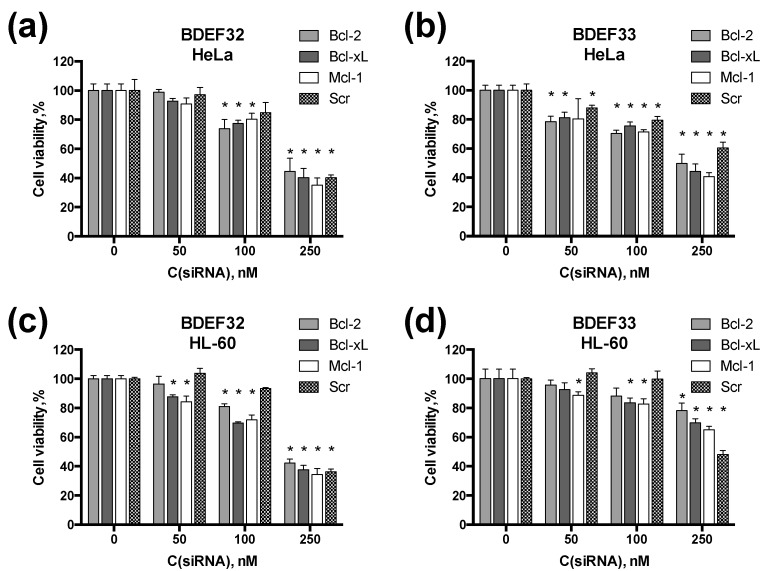
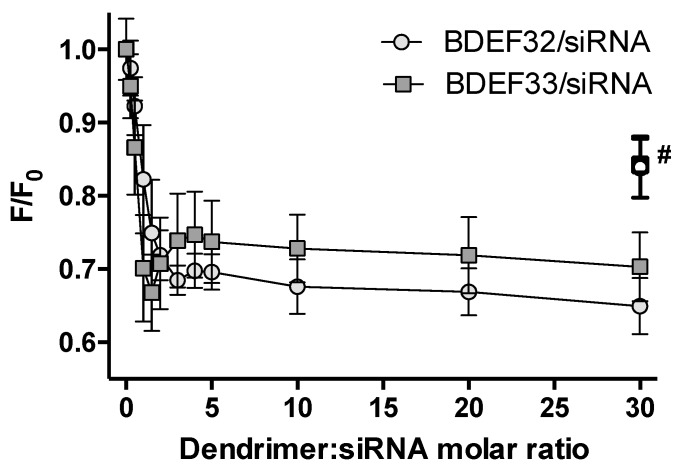
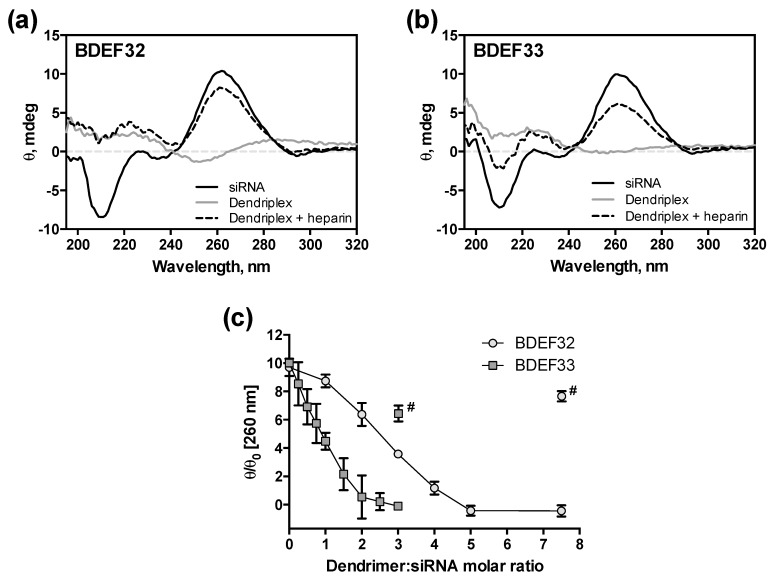
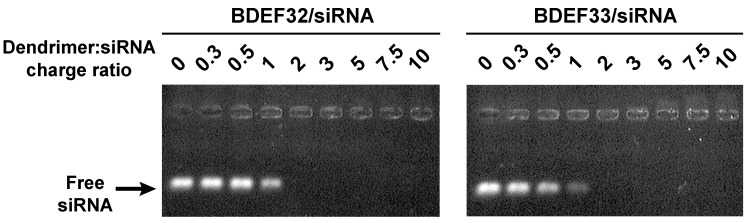
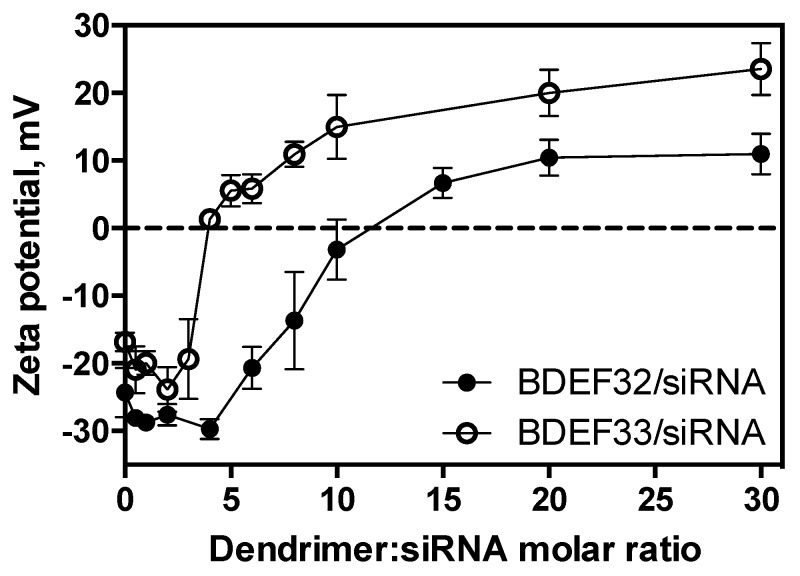
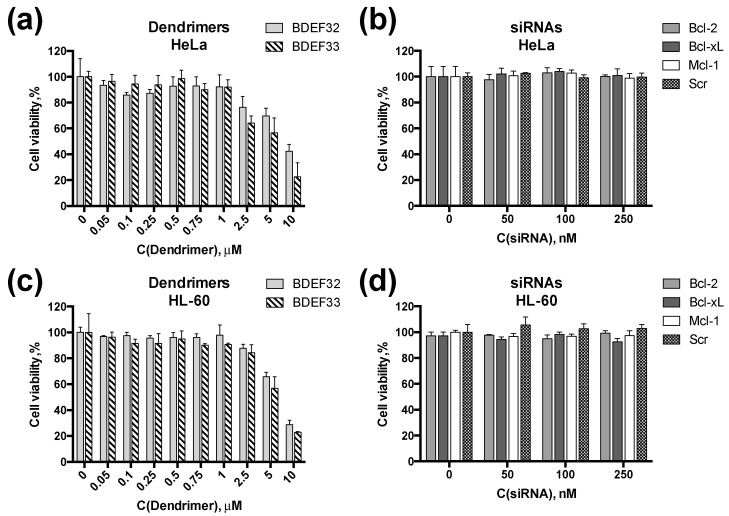
This paper examines the complexation of anti-cancer small interfering RNAs (siRNAs) by cationic carbosilane dendrimers, and the interaction of the formed complexes with HeLa and HL-60 cancer cells. Stepwise formation of the complexes accompanied by the evolution of their properties has been observed through the increase of the charge ratio (dendrimer/siRNA). The complexes decrease the viability of both "easy-to-transfect" cells (HeLa) and "hard-to transfect" ones (HL-60), indicating a high potential of the cationic carbosilane dendrimers for siRNA delivery into tumor cells.
本文研究了阳离子碳硅烷树枝状大分子与抗癌小干扰RNA(siRNAs)的络合作用,以及所形成的络合物与HeLa和HL-60癌细胞的相互作用。通过增加电荷比(树枝状大分子/siRNA),观察到络合物的逐步形成及其性质的演变。这些络合物降低了“易于转染”的细胞(HeLa)和“难以转染”的细胞(HL-60)的活力,表明阳离子碳硅烷树枝状大分子在将siRNA递送至肿瘤细胞方面具有很高的潜力。