Jiangsu Key Laboratory of Immunity and Metabolism, Laboratory of Infection and Immunity, Department of Pathogenic Biology and Immunology/School of Stomatology, Xuzhou Medical University, Xuzhou, 22104, Jiangsu Province, China.
BMC Infect Dis. 2019 Jan 11;19(1):46. doi: 10.1186/s12879-019-3678-z.
Clostridium difficile (C. difficile) is a main cause of antibiotic-associated diarrhoea in humans. Several studies have been performed to reveal the prevalence rate of C. difficile in cats and dogs. However, little is known about the epidemiology of C. difficile in healthy pets in China. This study aimed to assess the burden of C. difficile shedding by healthy dogs and cats in China. Furthermore, the genetic diversity and antimicrobial susceptibility patterns of the recovered isolates were determined.
A total of 175 faecal samples were collected from 146 healthy dogs and 29 cats. C. difficile strains were isolated and identified from the feces of these pets. The characterized C. difficile strains were typed by multilocus sequence typing (MLST), and the MICs of the isolates were determined against ampicillin, clindamycin, tetracycline, moxifloxacin, chloramphenicol, cefoxitin, metronidazole and vancomycin by the agar dilution method.
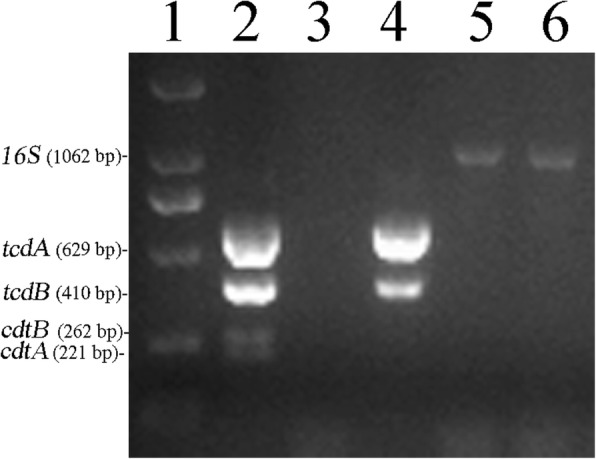
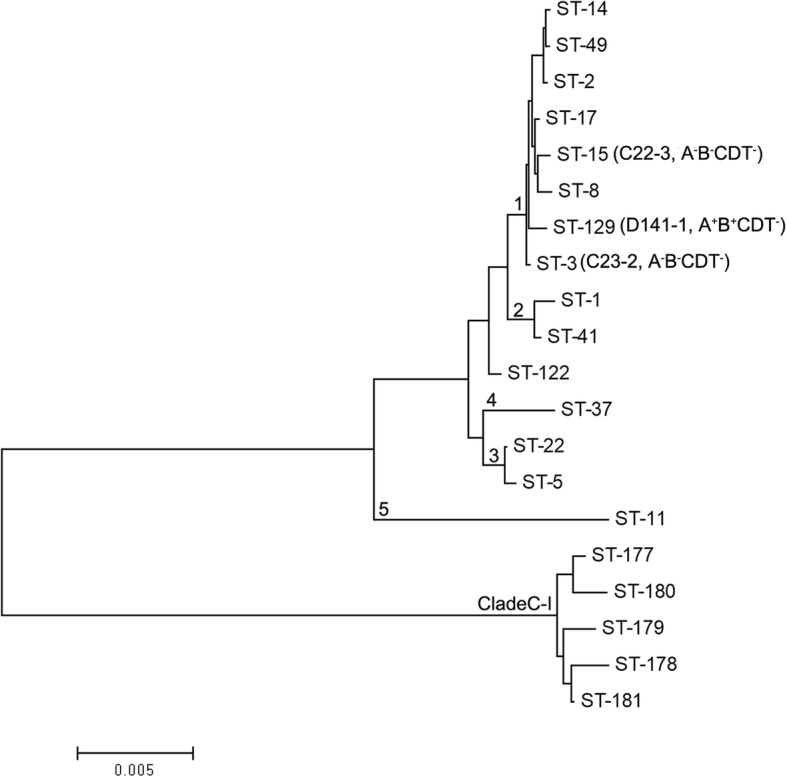
Overall, 3 faecal samples (1.7%) were C. difficile culture positive. One sample (0.7%) from a dog was C. difficile culture positive, while two cats (7.0%) yielded positive cultures. The prevalence rate differed significantly between cats and dogs. These isolates were typed into 3 MLST genotypes and were susceptible to chloramphenicol, tetracycline, metronidazole and moxifloxacin and resistant to ampicillin, clindamycin and cefoxitin. Notably, one strain, D141-1, which was resistant to three kinds of antibiotics and carried toxin genes, was recovered in the faeces of a healthy dog.
Our results suggest that common pets may be a source of pathogenic C. difficile, indicating that household transmission of C. difficile from pets to humans can not be excluded.
艰难梭菌(C. difficile)是人类抗生素相关性腹泻的主要原因。已经有几项研究旨在揭示猫和狗中艰难梭菌的流行率。然而,对于中国健康宠物中艰难梭菌的流行病学知之甚少。本研究旨在评估中国健康犬和猫中艰难梭菌的脱落负担。此外,还确定了回收分离株的遗传多样性和抗菌药物敏感性模式。
从 146 只健康犬和 29 只猫中收集了 175 份粪便样本。从这些宠物的粪便中分离和鉴定艰难梭菌菌株。对特征化的艰难梭菌菌株进行多位点序列分型(MLST)分型,并用琼脂稀释法测定分离株对氨苄西林、克林霉素、四环素、莫西沙星、氯霉素、头孢西丁、甲硝唑和万古霉素的 MIC。
总的来说,3 份粪便样本(1.7%)艰难梭菌培养阳性。1 份犬粪便样本(0.7%)艰难梭菌培养阳性,而 2 份猫粪便样本(7.0%)阳性。猫和犬的患病率差异有统计学意义。这些分离株被分为 3 种 MLST 基因型,对氯霉素、四环素、甲硝唑和莫西沙星敏感,对氨苄西林、克林霉素和头孢西丁耐药。值得注意的是,从一只健康犬的粪便中分离出一株 D141-1 株,该菌株对 3 种抗生素耐药,并携带毒素基因。
我们的研究结果表明,常见宠物可能是致病性艰难梭菌的来源,这表明从宠物到人类的艰难梭菌家庭传播不能排除。