National Key Laboratory of Intelligent Tracking and Forecasting for Infectious Diseases, School of Medicine, Shenzhen Campus of Sun Yat-sen University, Sun Yat-sen University, Shenzhen, China.
Shenzhen Key Laboratory for Systems Medicine in Inflammatory Diseases, Shenzhen Campus of Sun Yat-sen University, Sun Yat-sen University, Shenzhen, China.
mSphere. 2024 Aug 28;9(8):e0043924. doi: 10.1128/msphere.00439-24. Epub 2024 Jul 16.
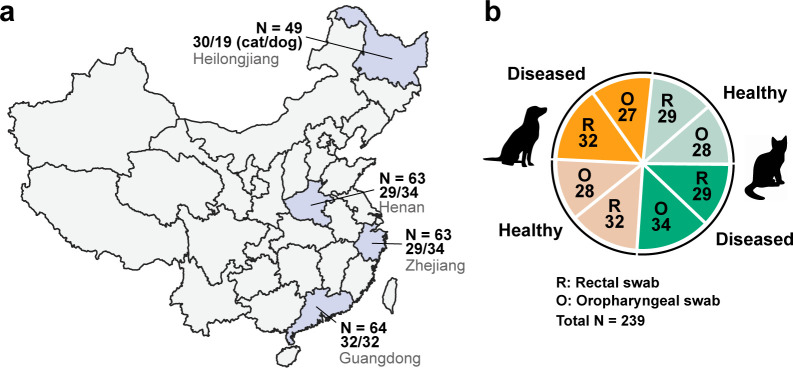
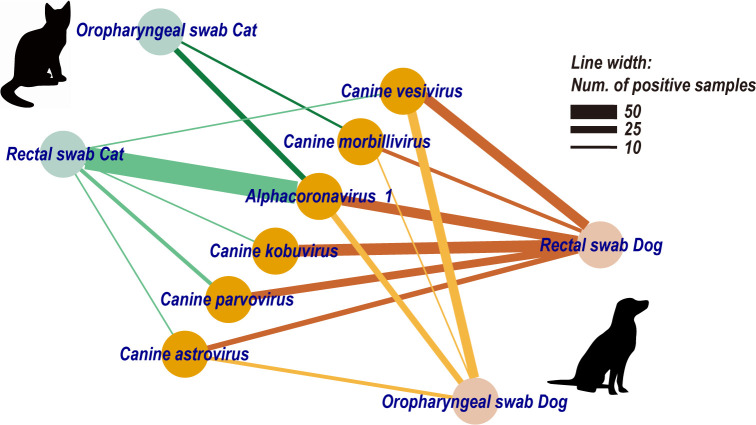
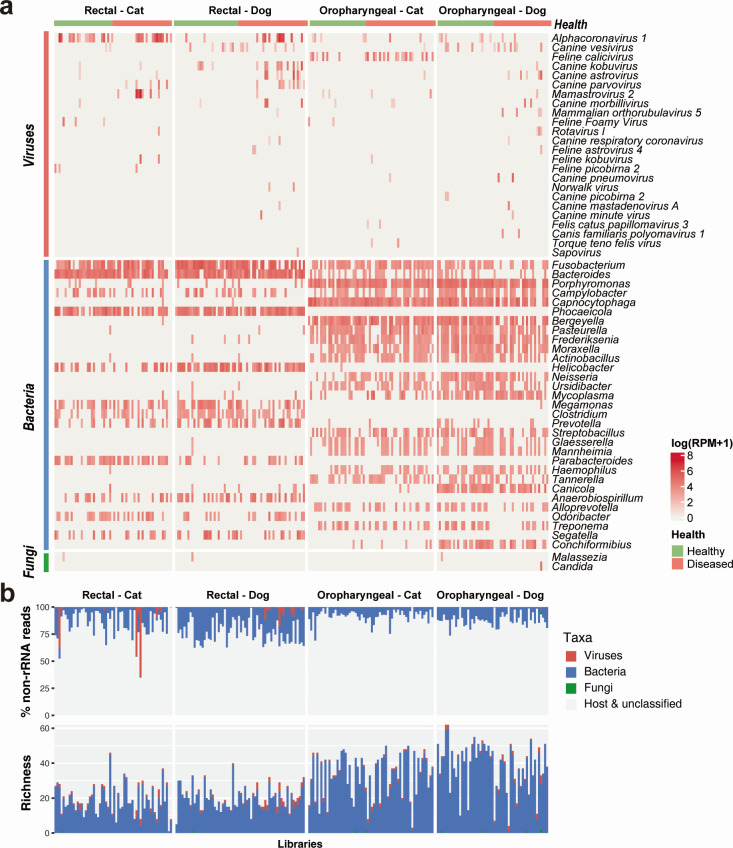
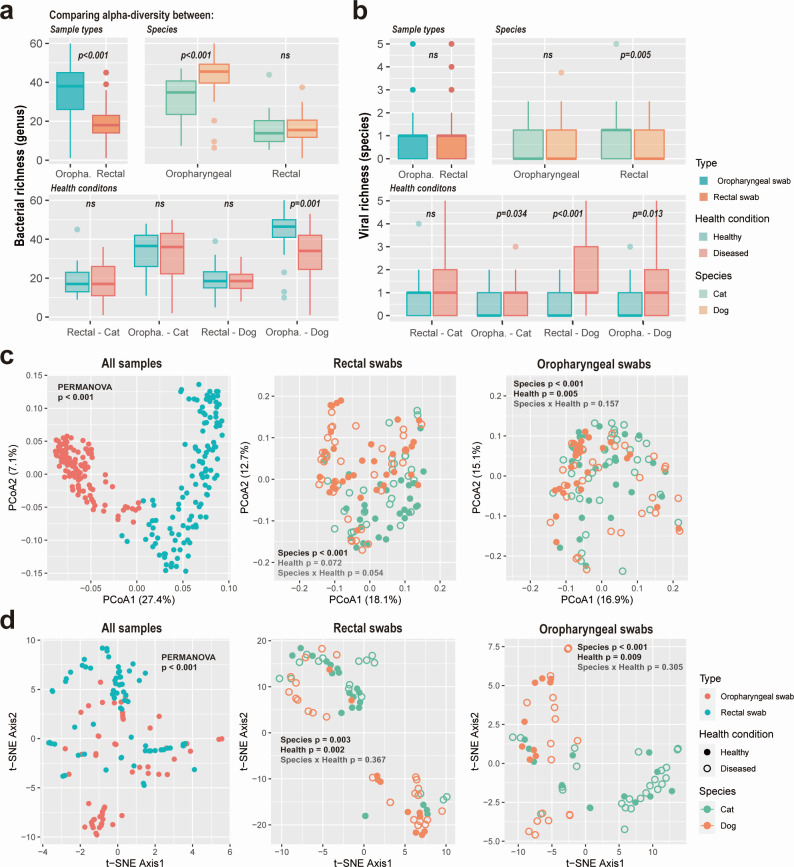
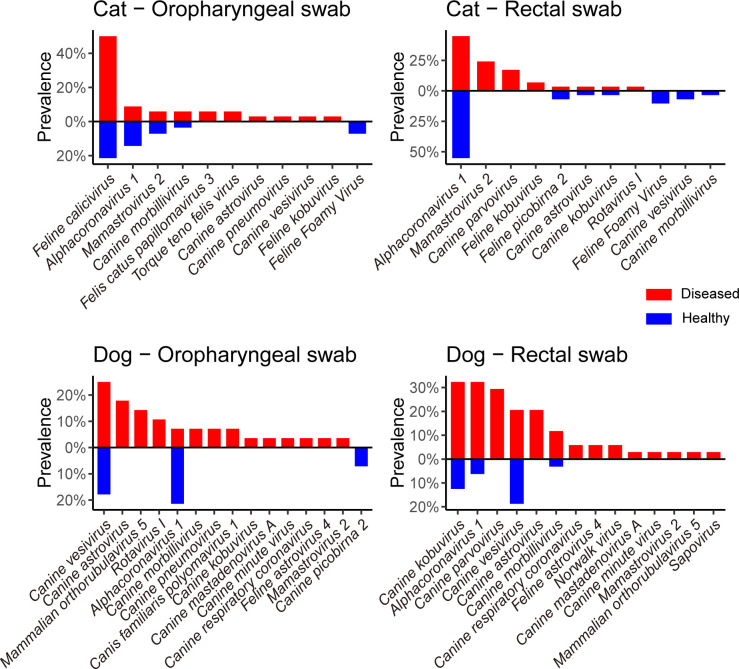
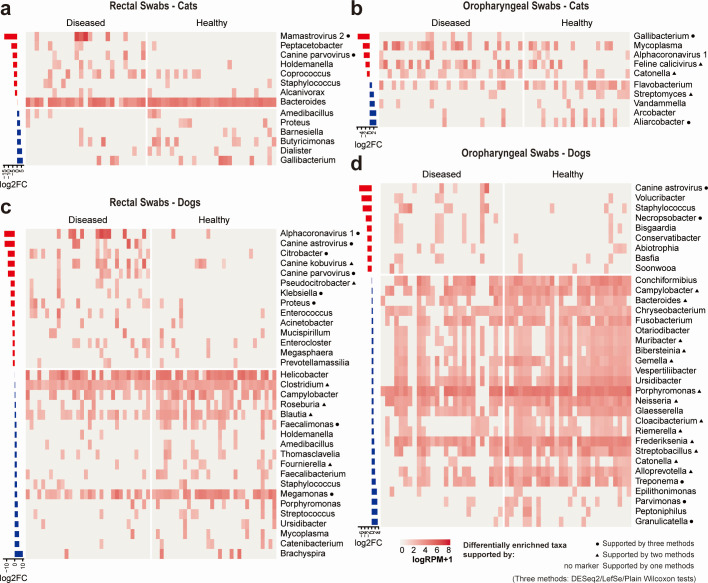
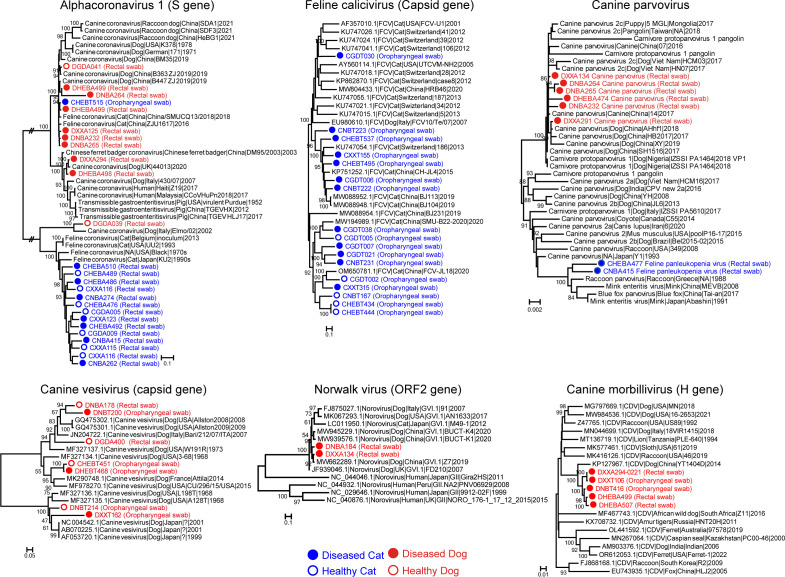
Companion animals such as cats and dogs harbor diverse microbial communities that can potentially impact human health due to close and frequent contact. To better characterize their total infectomes and assess zoonotic risks, we characterized the overall infectomes of companion animals (cats and dogs) and evaluated their potential zoonotic risks. Meta-transcriptomic analyses were performed on 239 samples from cats and dogs collected across China, identifying 24 viral species, 270 bacterial genera, and two fungal genera. Differences in the overall microbiome and infectome composition were compared across different animal species (cats or dogs), sampling sites (rectal or oropharyngeal), and health status (healthy or diseased). Diversity analyses revealed that viral abundance was generally higher in diseased animals compared to healthy ones, while differences in microbial composition were mainly driven by sampling site, followed by animal species and health status. Disease association analyses validated the pathogenicity of known pathogens and suggested potential pathogenic roles of previously undescribed bacteria and newly discovered viruses. Cross-species transmission analyses identified seven pathogens shared between cats and dogs, such as alphacoronavirus 1, which was detected in both oropharyngeal and rectal swabs albeit with differential pathogenicity. Further analyses showed that some viruses, like alphacoronavirus 1, harbored multiple lineages exhibiting distinct pathogenicity, tissue, or host preferences. Ultimately, a systematic evolutionary screening identified 27 potential zoonotic pathogens in this sample set, with far more bacterial than viral species, implying potential health threats to humans. Overall, our meta-transcriptomic analysis reveals a landscape of actively transcribing microorganisms in major companion animals, highlighting key pathogens, those with the potential for cross-species transmission, and possible zoonotic threats.
This study provides a comprehensive characterization of the entire community of infectious microbes (viruses, bacteria, and fungi) in companion animals like cats and dogs, termed the "infectome." By analyzing hundreds of samples from across China, the researchers identified numerous known and novel pathogens, including 27 potential zoonotic agents that could pose health risks to both animals and humans. Notably, some of these zoonotic pathogens were detected even in apparently healthy pets, highlighting the importance of surveillance. The study also revealed key microbial factors associated with respiratory and gastrointestinal diseases in pets, as well as potential cross-species transmission events between cats and dogs. Overall, this work sheds light on the complex microbial landscapes of companion animals and their potential impacts on animal and human health, underscoring the need for monitoring and management of these infectious agents.
伴侣动物(如猫和狗)携带有多种微生物群落,由于与人类密切且频繁接触,这些微生物群落可能会对人类健康产生影响。为了更好地描述它们的总感染组并评估人畜共患病风险,我们对来自中国各地的 239 个猫和狗样本进行了元转录组分析,鉴定出 24 种病毒、270 种细菌属和 2 种真菌属。我们比较了不同动物物种(猫或狗)、采样部位(直肠或口咽)和健康状况(健康或患病)的总微生物组和感染组组成的差异。多样性分析表明,与健康动物相比,患病动物的病毒丰度通常更高,而微生物组成的差异主要由采样部位驱动,其次是动物物种和健康状况。疾病关联分析验证了已知病原体的致病性,并提示了以前未描述的细菌和新发现的病毒的潜在致病性作用。种间传播分析鉴定了在猫和狗之间共享的七种病原体,例如在口咽和直肠拭子中均检测到的甲型冠状病毒 1,但致病性不同。进一步的分析表明,一些病毒,如甲型冠状病毒 1,携带多个具有不同致病性、组织或宿主偏好的谱系。最终,系统进化筛选在该样本集中确定了 27 种潜在的人畜共患病病原体,其中细菌种类远远多于病毒种类,这意味着对人类存在潜在的健康威胁。总的来说,我们的元转录组分析揭示了主要伴侣动物中活跃转录的微生物群落的全景,突出了关键病原体、那些具有种间传播潜力的病原体以及可能的人畜共患病威胁。
本研究全面描述了猫和狗等伴侣动物中传染性微生物(病毒、细菌和真菌)的整个感染组,称为“感染组”。通过分析来自中国各地的数百个样本,研究人员鉴定出许多已知和新的病原体,包括 27 种可能对动物和人类健康构成健康风险的潜在人畜共患病病原体。值得注意的是,即使在看似健康的宠物中,也检测到了一些这些人畜共患病病原体,这突出了监测的重要性。该研究还揭示了与宠物呼吸道和胃肠道疾病相关的关键微生物因素,以及猫和狗之间潜在的种间传播事件。总的来说,这项工作揭示了伴侣动物复杂的微生物景观及其对动物和人类健康的潜在影响,强调了对这些传染性病原体进行监测和管理的必要性。