Werner Melanie, Ishii Patricia Eri, Pilla Rachel, Lidbury Jonathan A, Steiner Joerg M, Busch-Hahn Kathrin, Unterer Stefan, Suchodolski Jan S
Clinic for Small Animal Internal Medicine, Vetsuisse Faculty, 8057 Zurich, Switzerland.
Gastrointestinal Laboratory, Department of Small Animal Clinical Sciences, School of Veterinary Medicine and Biomedical Sciences, Texas A&M University, College Station, TX 4474, USA.
Animals (Basel). 2023 Jul 28;13(15):2441. doi: 10.3390/ani13152441.
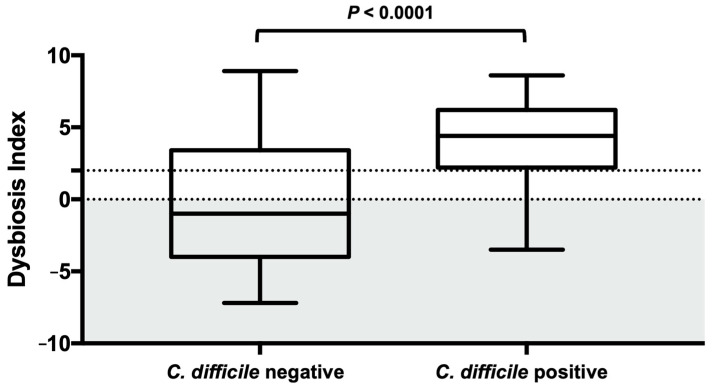
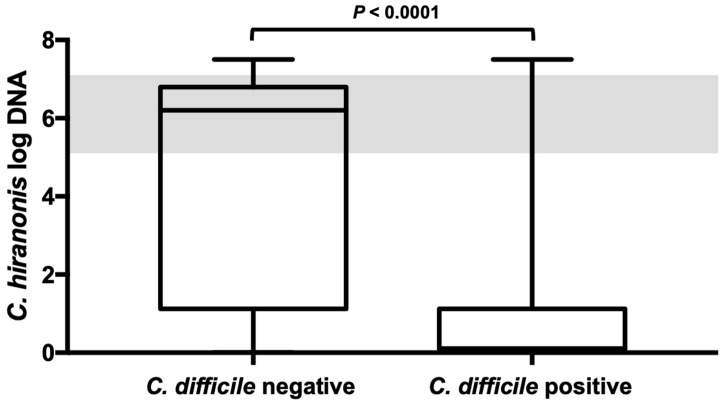
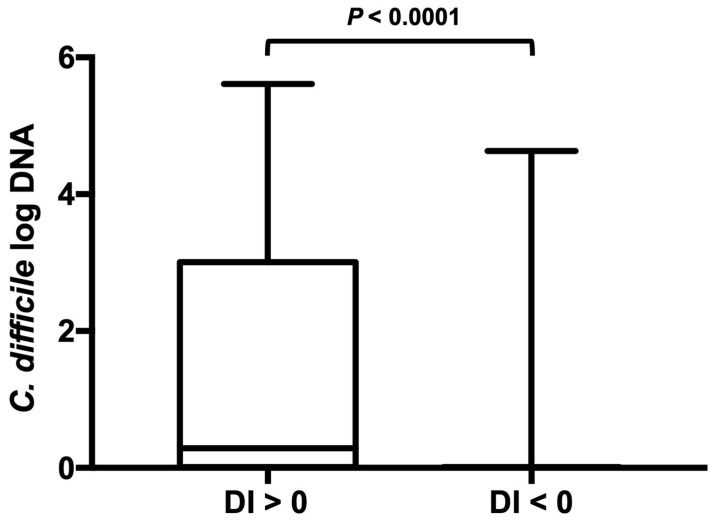
The role of as an enteropathogen in dogs is controversial. In humans, intestinal bile acid-dysmetabolism is associated with prevalence. The relationship between fecal qPCR-based dysbiosis index (DI) and especially the abundance of bile acid-converting with the presence of in dogs was explored across the following 4 cohorts: 358 fecal samples submitted for routine diagnostic work-up, 33 dogs with chronic enteropathy, 14 dogs with acute diarrhea, and 116 healthy dogs. Dogs that tested positive for had significantly higher DI (median, 4.4 (range from 0.4 to 8.6)) and lower (median, 0.1 (range from 0.0 to 7.5) logDNA/g) than dogs that tested negative for (median DI, -1 (range from -7.2 to 8.9); median abundance, 6.2 (range from 0.1 to 7.5) logDNA/g; < 0.0001, respectively). In 33 dogs with CE and 14 dogs with acute diarrhea, the treatment response did not differ between -positive and -negative dogs. In the group of clinically healthy dogs, 9/116 tested positive for , and 6/9 of these had also an abnormal DI. In conclusion, is strongly linked to intestinal dysbiosis and lower levels in dogs, but its presence does not necessitate targeted treatment.
作为犬肠道病原体的作用存在争议。在人类中,肠道胆汁酸代谢异常与[病原体名称]的流行有关。我们在以下4个队列中探讨了基于粪便定量聚合酶链反应(qPCR)的菌群失调指数(DI),尤其是胆汁酸转化菌的丰度与犬体内[病原体名称]存在之间的关系:358份提交用于常规诊断检查的粪便样本、33只患有慢性肠病的犬、14只患有急性腹泻的犬以及116只健康犬。检测[病原体名称]呈阳性的犬的DI显著更高(中位数为4.4(范围为0.4至8.6)),且[某种菌]水平更低(中位数为0.1(范围为0.0至7.5)logDNA/g),而检测呈阴性的犬的DI中位数为 -1(范围为 -7.2至8.9);[某种菌]丰度中位数为6.2(范围为0.1至7.5)logDNA/g;P值均<0.0001)。在33只患有慢性肠病的犬和14只患有急性腹泻的犬中,[病原体名称]阳性和阴性犬的治疗反应没有差异。在临床健康犬组中,116只中有9只检测[病原体名称]呈阳性,其中6/9的犬DI也异常。总之,[病原体名称]与犬肠道菌群失调和较低的[某种菌]水平密切相关,但其存在并不一定需要针对性治疗。