Kaushal Parul, Kumar Pavan, Dhar Pushpa
Department of Anatomy, All Institute of Medical Sciences, New Delhi 110029, India.
Department of Anatomy, All Institute of Medical Sciences, New Delhi 110029, India.
J Ayurveda Integr Med. 2020 Oct-Dec;11(4):455-463. doi: 10.1016/j.jaim.2018.02.138. Epub 2019 Jan 8.
Arsenic is an environmental contaminant of global concern. Consumption of ground water contaminated with inorganic arsenic (iAs) continues to be the major source of its exposure. The developing nervous system is especially vulnerable to environmental insults due to its higher rate of oxygen consumption and provision of weaker antioxidant (AOX) machinery.
Since oxidative stress has been reported as one of the major factors underlying iAs induced toxicity, the aim of the present study is to study the effect of two AOXs i.e., Alpha Lipoic Acid (ALA) and Curcumin (Cur) in developing cerebellum of rats exposed to arsenic during postnatal period.
The study was carried out on mother reared neonatal rat pups grouped as normal (Ia) and sham (vehicle) controls (Ib,c,d), while the experimental groups IIa/ IIb received sodium arsenite (NaAsO2) [(1.5/2.5 mg/kg body weight (bw)] alone or along with ALA (70 mg/kg bw)- IIIa/ IIIb or along with Cur (150 mg/kg bw)- IVa/ IVb. Behavioural, biochemical and immunohistochemical procedures were carried out to understand the underlying mechanisms.
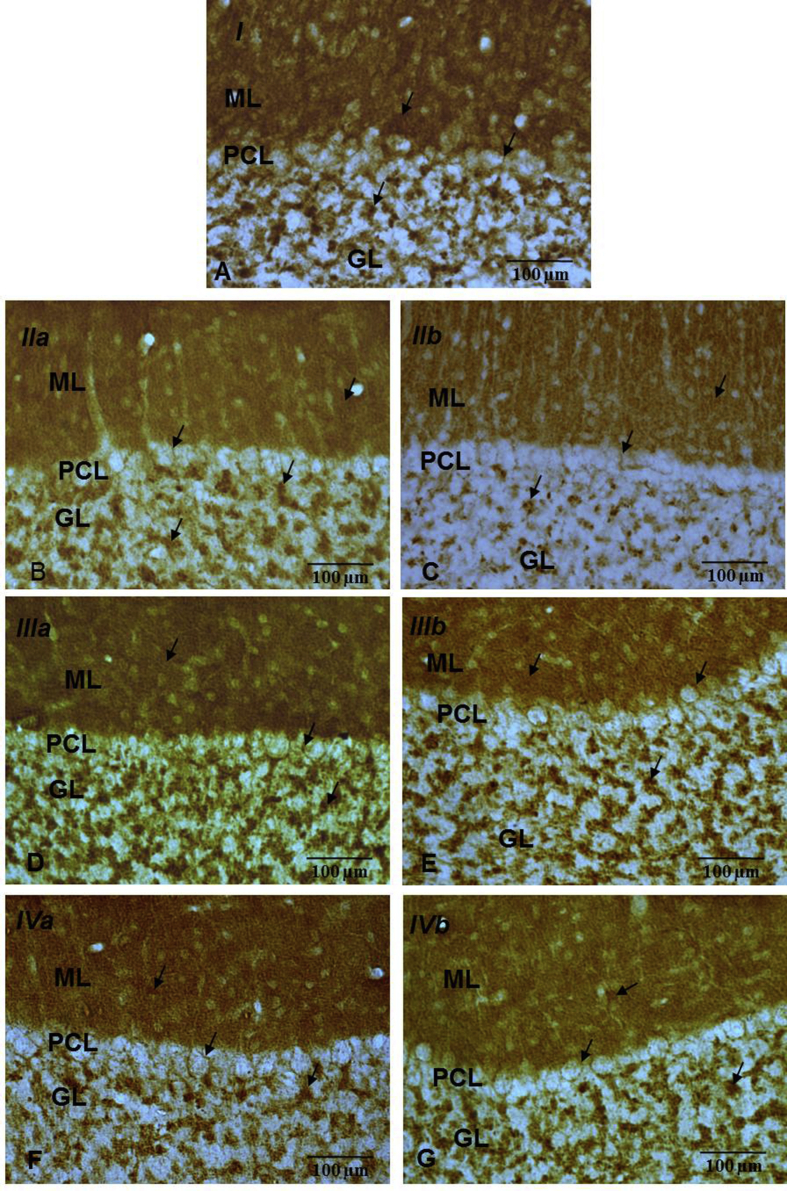
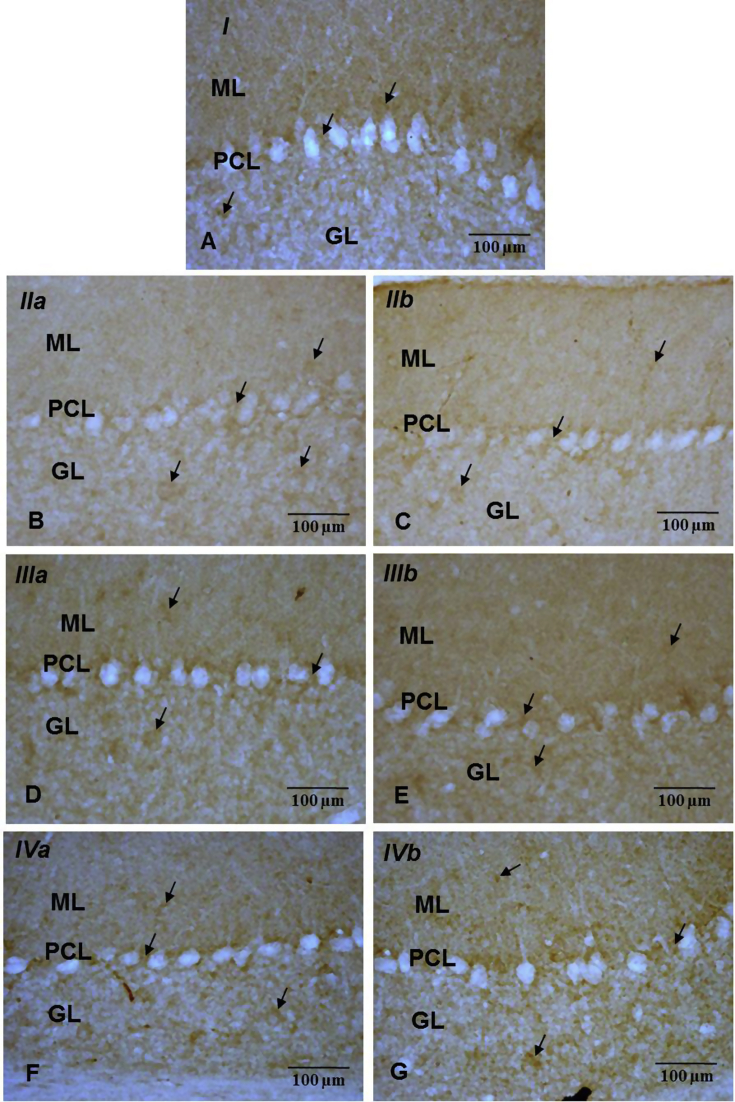
The observations indicated deficits in locomotor function, accumulation of iAs, increased levels of oxidative stress markers along with downregulation of the expression of proteins closely associated with synaptic functioning (Synaptophysin and Postsynaptic density protein95) in the cerebellum of iAs treated animals. Substantial recovery in all these parameters was observed in AOX co-treated groups.
Our results support the potential of ALA and Cur in amelioration of iAs induced developmental neurotoxicity. ALA and Cur can be proposed as dietary adjuvants amongst populations inhabiting areas with high iAs contamination as a safe and cost effective antidotes.
砷是一种全球关注的环境污染物。饮用受无机砷(iAs)污染的地下水仍然是砷暴露的主要来源。发育中的神经系统因其较高的耗氧率和较弱的抗氧化(AOX)机制而特别容易受到环境损伤。
由于氧化应激已被报道为iAs诱导毒性的主要因素之一,本研究的目的是研究两种抗氧化剂,即α-硫辛酸(ALA)和姜黄素(Cur)对出生后暴露于砷的大鼠发育中小脑的影响。
对母养新生大鼠幼崽进行研究,分为正常组(Ia)和假手术(溶剂)对照组(Ib、c、d),而实验组IIa/IIb单独接受亚砷酸钠(NaAsO₂)[(1.5/2.5mg/kg体重(bw)]或与ALA(70mg/kg bw)一起 - IIIa/IIIb或与Cur(150mg/kg bw)一起 - IVa/IVb。进行行为、生化和免疫组织化学程序以了解潜在机制。
观察结果表明,iAs处理动物的小脑运动功能存在缺陷、iAs积累、氧化应激标志物水平升高以及与突触功能密切相关的蛋白质(突触素和突触后致密蛋白95)表达下调。在AOX联合处理组中观察到所有这些参数都有显著恢复。
我们的结果支持ALA和Cur在改善iAs诱导的发育性神经毒性方面的潜力。可以建议将ALA和Cur作为居住在高iAs污染地区人群的饮食佐剂,作为安全且经济有效的解毒剂。