Linus Pauling Institute, Oregon State University, Corvallis, OR 97331, USA.
Free Radical & Radiation Biology Program, The University of Iowa, Iowa City, IA 52242, USA.
Redox Biol. 2019 Feb;21:101091. doi: 10.1016/j.redox.2018.101091. Epub 2018 Dec 26.
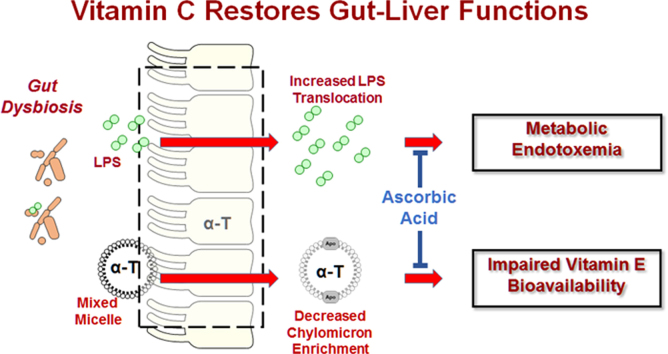
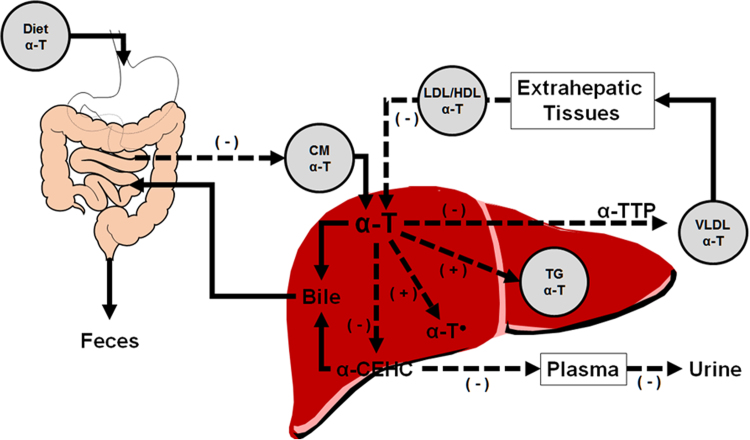
Metabolic syndrome (MetS) is a constellation of cardiometabolic risk factors, which together predict increased risk of more serious chronic diseases. We propose that one consequence of dietary overnutrition is increased abundance of Gram-negative bacteria in the gut that cause increased inflammation, impaired gut function, and endotoxemia that further dysregulate the already compromised antioxidant vitamin status in MetS. This discussion is timely because "healthy" individuals are no longer the societal norm and specialized dietary requirements are needed for the growing prevalence of MetS. Further, these lines of evidence provide the foundational basis for investigation that poor vitamin C status promotes endotoxemia, leading to metabolic dysfunction that impairs vitamin E trafficking through a mechanism involving the gut-liver axis. This report will establish a critical need for translational research aimed at validating therapeutic approaches to manage endotoxemia-an early, but inflammation-inducing phenomenon, which not only occurs in MetS, but is also prognostic of more advanced metabolic disorders including type 2 diabetes mellitus, as well as the increasing severity of nonalcoholic fatty liver diseases.
代谢综合征(MetS)是一组心血管代谢危险因素,共同预测更严重慢性疾病风险增加。我们提出,饮食过盛的一个后果是肠道中革兰氏阴性菌的丰度增加,导致炎症增加、肠道功能受损和内毒素血症,从而进一步使 MetS 中已经受损的抗氧化维生素状态失调。由于“健康”个体不再是社会常态,而且代谢综合征的患病率不断上升,需要专门的饮食要求,因此这一讨论具有及时性。此外,这些证据为进一步研究提供了基础,即维生素 C 状态不佳会促进内毒素血症,导致代谢功能障碍,通过涉及肠道-肝脏轴的机制影响维生素 E 的运输。本报告将确立转化研究的重要需求,旨在验证治疗内毒素血症的方法,内毒素血症是一种早期但可引发炎症的现象,不仅发生在 MetS 中,而且也是包括 2 型糖尿病在内的更严重代谢紊乱以及非酒精性脂肪性肝病严重程度不断增加的预后因素。