Department of Nephrology, Chang Gung Memorial Hospital, Chiayi 61363, Taiwan.
Kidney and Diabetic Complications Research Team (KDCRT), Chang Gung Memorial Hospital, Chiayi 61363, Taiwan.
Molecules. 2019 Jan 11;24(2):264. doi: 10.3390/molecules24020264.
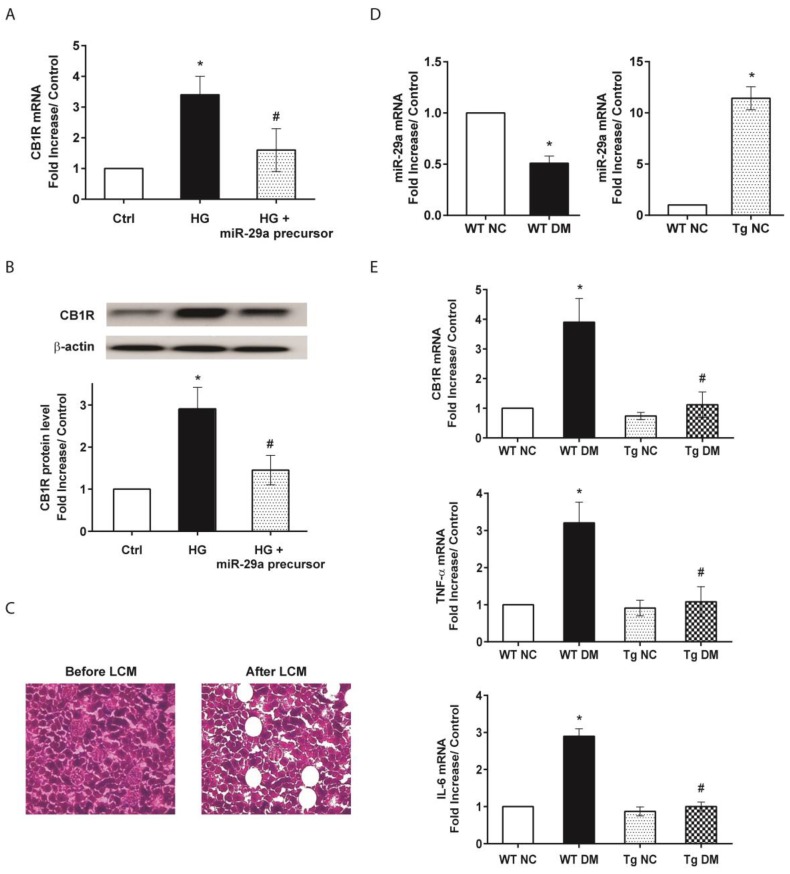
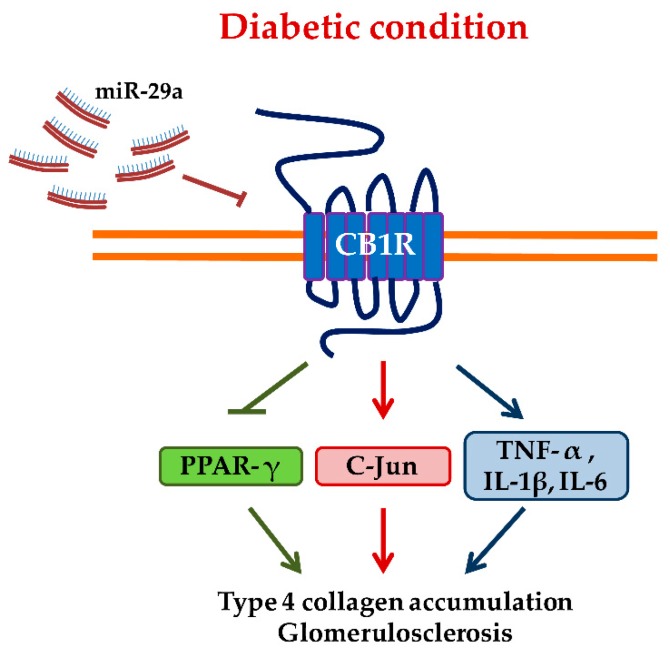
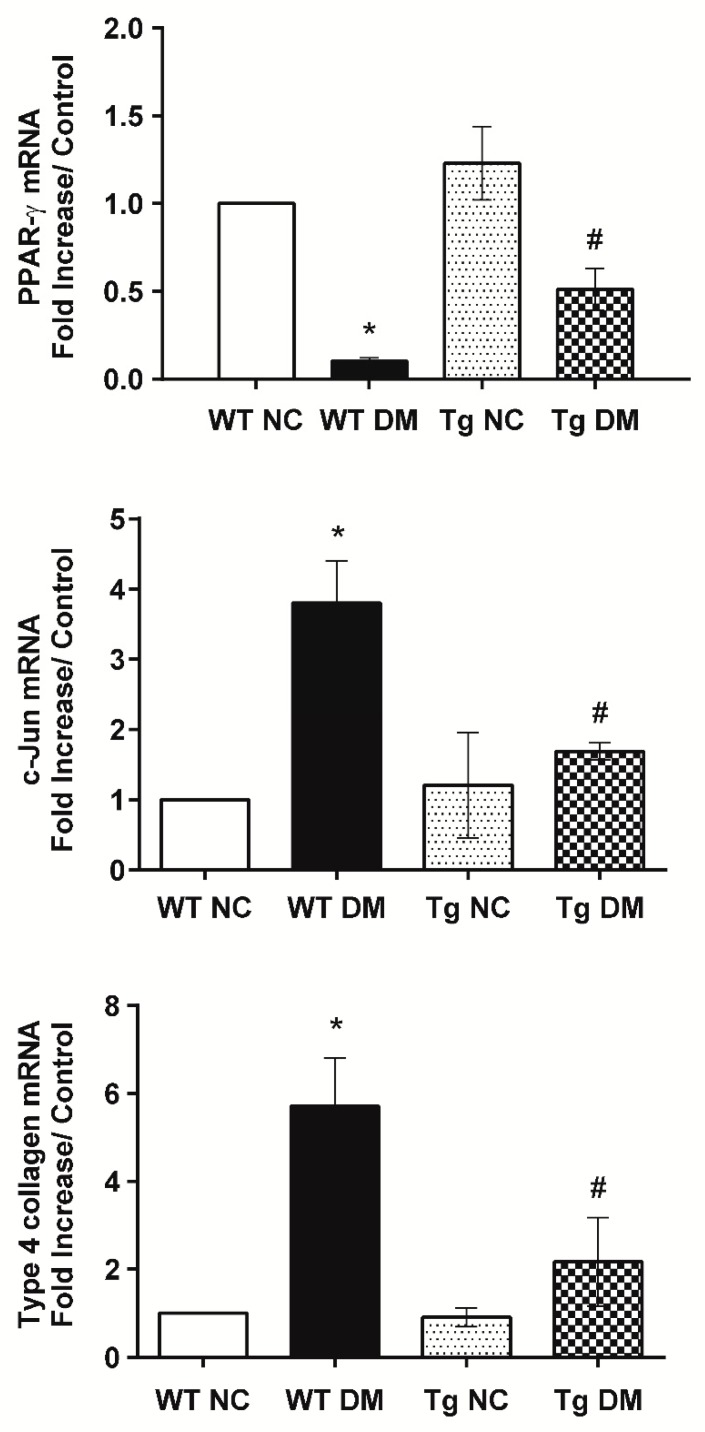
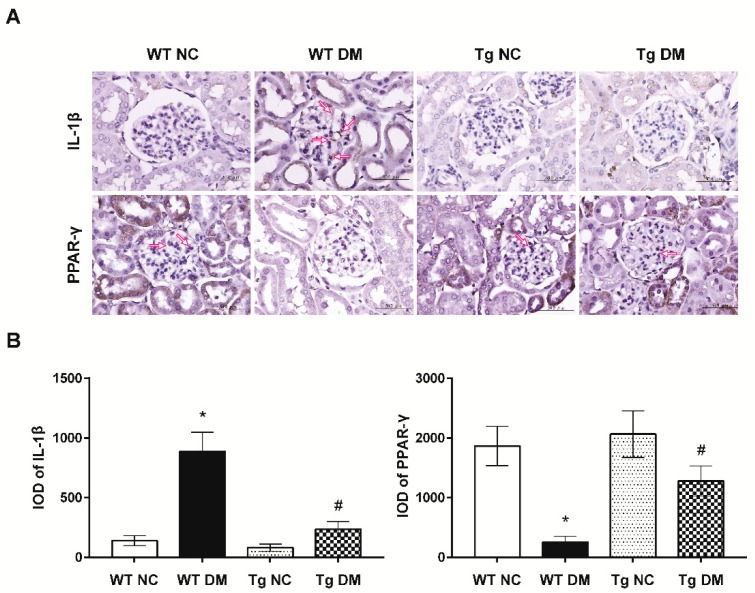
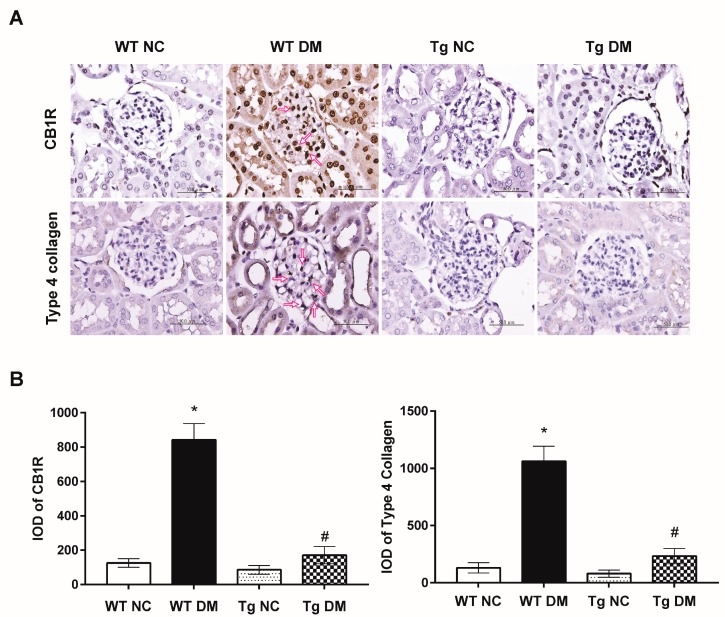
Diabetic nephropathy often leads to end-stage renal disease and life-threatening morbidities. Simple control of risk factors is insufficient to prevent the progression of diabetic nephropathy, hence the need for discovering new treatments is of paramount importance. Recently, the dysregulation of microRNAs or the cannabinoid signaling pathway has been implicated in the pathogenesis of various renal tubulointerstitial fibrotic damages and thus novel therapeutic targets for chronic kidney diseases have emerged; however, the role of microRNAs or cannabinoid receptors on diabetes-induced glomerular injuries remains to be elucidated. In high-glucose-stressed renal mesangial cells, transfection of a miR-29a precursor sufficiently suppressed the mRNA and protein expressions of cannabinoid type 1 receptor (CB1R). Our data also revealed upregulated CB1R, interleukin-1β, interleukin-6, tumor necrosis factor-α, c-Jun, and type 4 collagen in the glomeruli of streptozotocin (STZ)-induced diabetic mice, whereas the expression of peroxisome proliferator-activated receptor-γ (PPAR-γ) was decreased. Importantly, using gain-of-function transgenic mice, we demonstrated that miR-29a acts as a negative regulator of CB1R, blocks the expressions of these proinflammatory and profibrogenic mediators, and attenuates renal hypertrophy. We also showed that overexpression of miR-29a restored PPAR-γ signaling in the renal glomeruli of diabetic animals. Collectively, our findings indicate that the interaction between miR-29a, CB1R, and PPAR-γ may play an important role in protecting diabetic renal glomeruli from fibrotic injuries.
糖尿病肾病常导致终末期肾病和危及生命的并发症。简单地控制风险因素不足以防止糖尿病肾病的进展,因此发现新的治疗方法至关重要。最近,microRNAs 或大麻素信号通路的失调与各种肾小管间质纤维化损伤的发病机制有关,因此为慢性肾脏病出现了新的治疗靶点;然而,microRNAs 或大麻素受体在糖尿病诱导的肾小球损伤中的作用仍有待阐明。在高葡萄糖应激的肾系膜细胞中,miR-29a 前体的转染足以抑制大麻素 1 型受体 (CB1R) 的 mRNA 和蛋白表达。我们的数据还揭示了在链脲佐菌素 (STZ) 诱导的糖尿病小鼠肾小球中 CB1R、白细胞介素-1β、白细胞介素-6、肿瘤坏死因子-α、c-Jun 和 4 型胶原的上调,而过氧化物酶体增殖物激活受体-γ (PPAR-γ) 的表达减少。重要的是,使用功能获得性转基因小鼠,我们证明了 miR-29a 作为 CB1R 的负调节剂,阻断这些促炎和促纤维化介质的表达,并减轻肾脏肥大。我们还表明,miR-29a 的过表达恢复了糖尿病动物肾脏肾小球中的 PPAR-γ 信号。总之,我们的研究结果表明,miR-29a、CB1R 和 PPAR-γ 之间的相互作用可能在保护糖尿病肾小球免受纤维化损伤方面发挥重要作用。