Wehmann Henja-Niniane, Heepe Lars, Gorb Stanislav N, Engels Thomas, Lehmann Fritz-Olaf
Department of Animal Physiology, Institute of Biological Sciences, University of Rostock, Albert-Einstein-Str. 3, Rostock 18059, Germany.
Department of Functional Morphology and Biomechanics, Zoological Institute, University of Kiel, Christian-Albrechts-Platz, 24118 Kiel, Germany.
Biol Open. 2019 Jan 14;8(1):bio038299. doi: 10.1242/bio.038299.
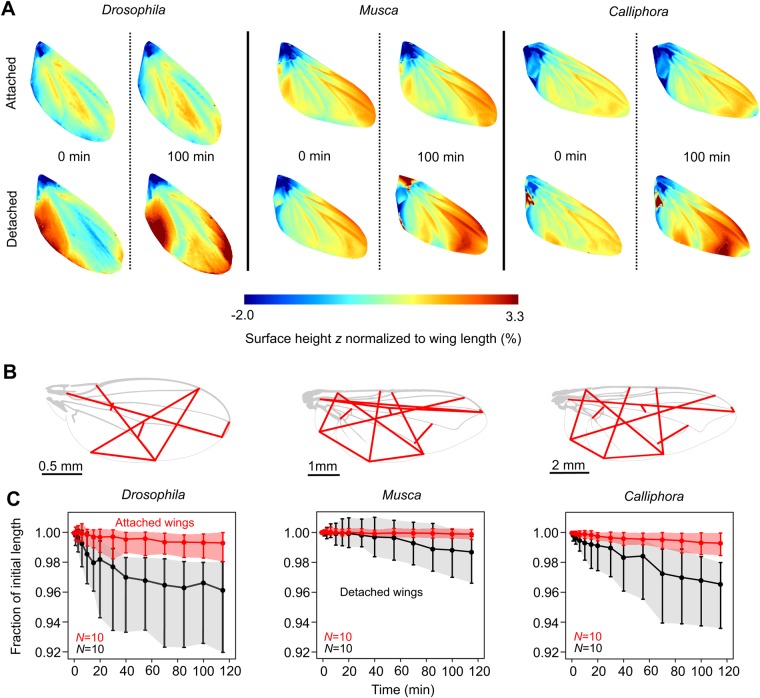
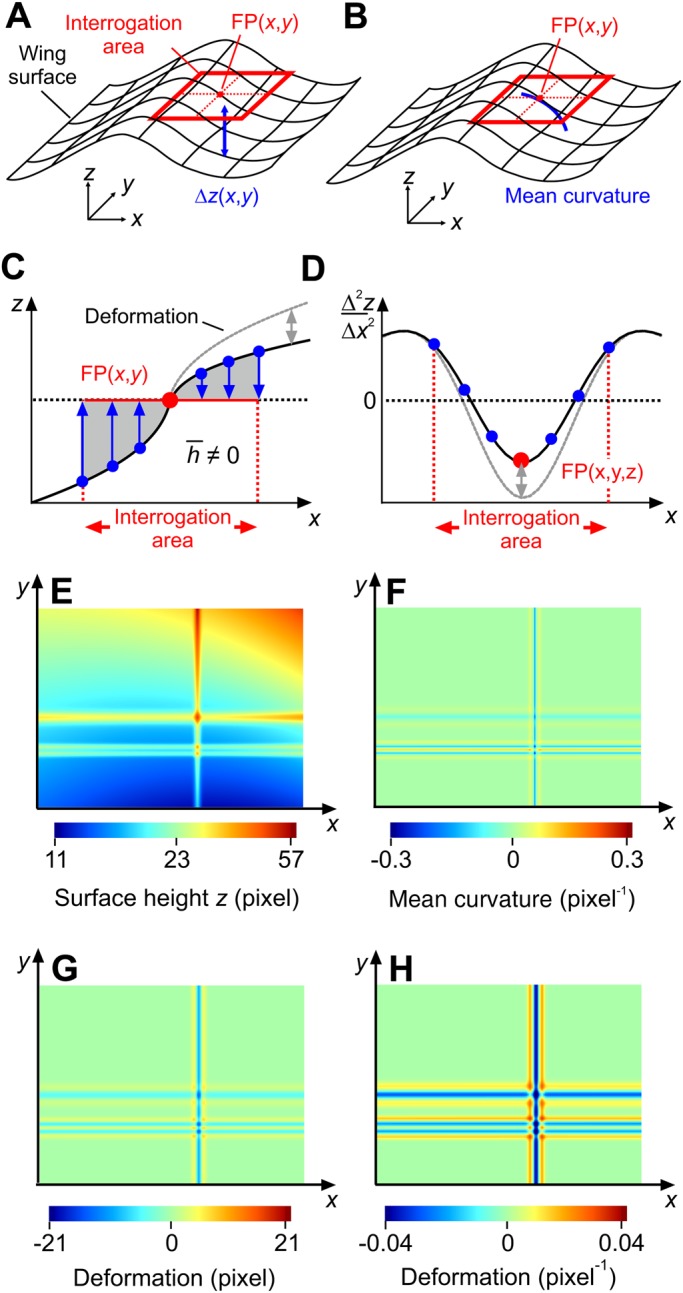
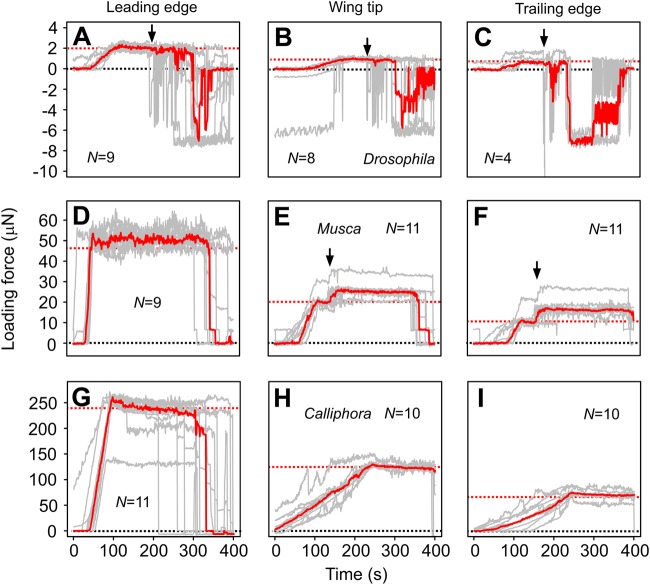
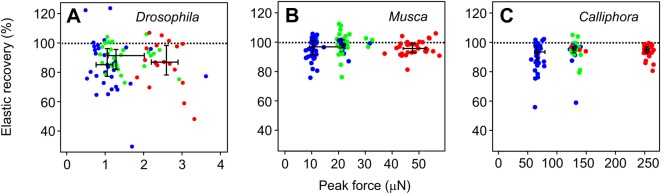
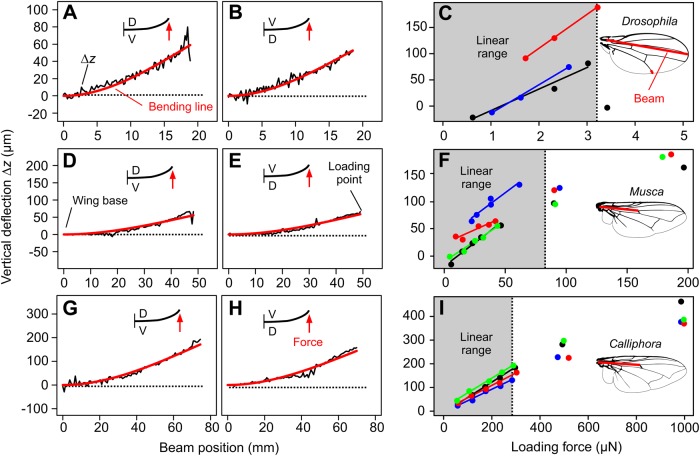
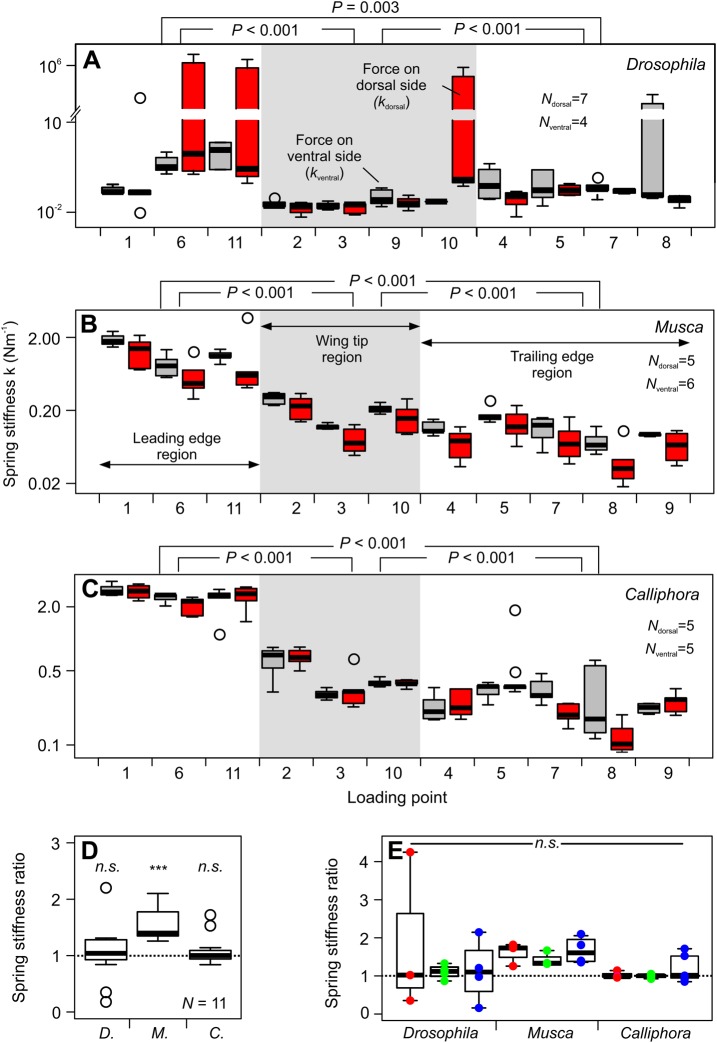
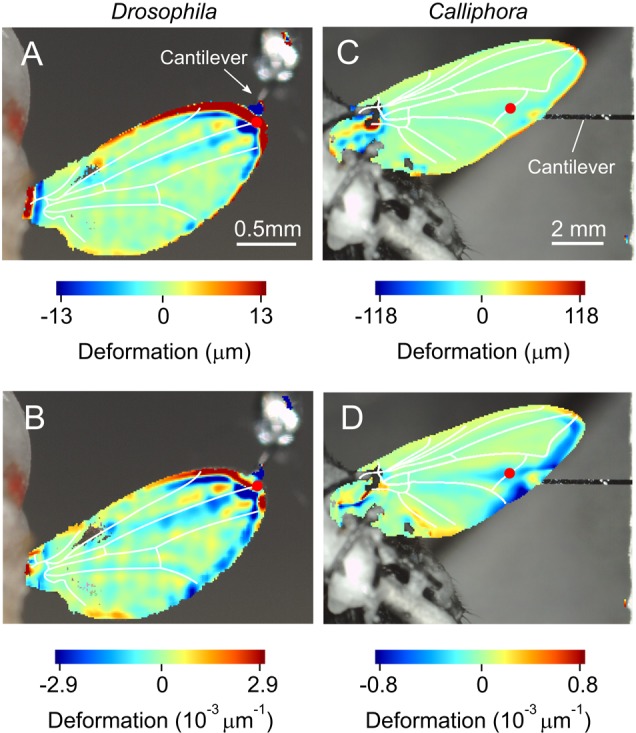
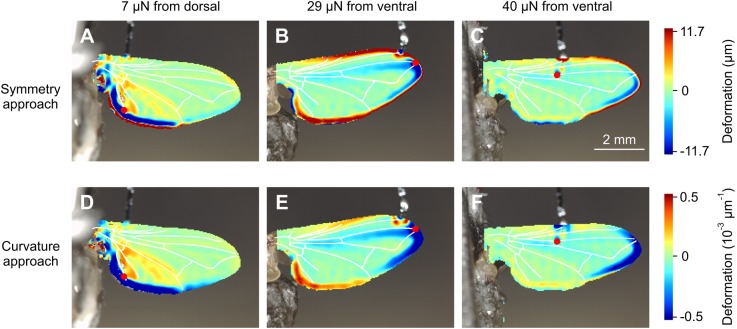
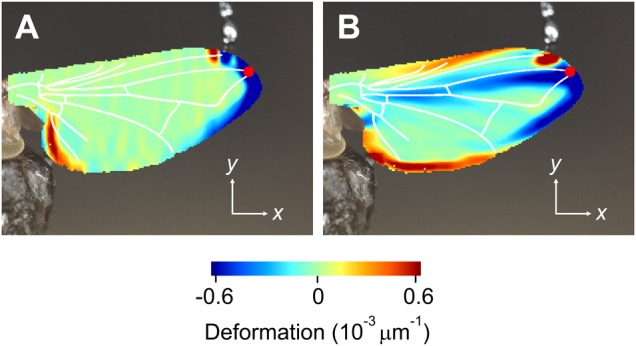
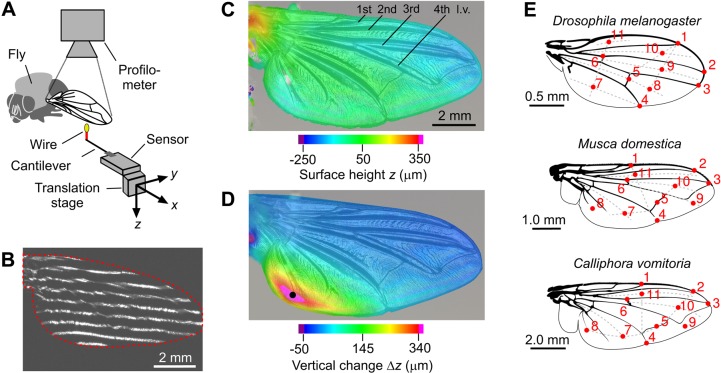
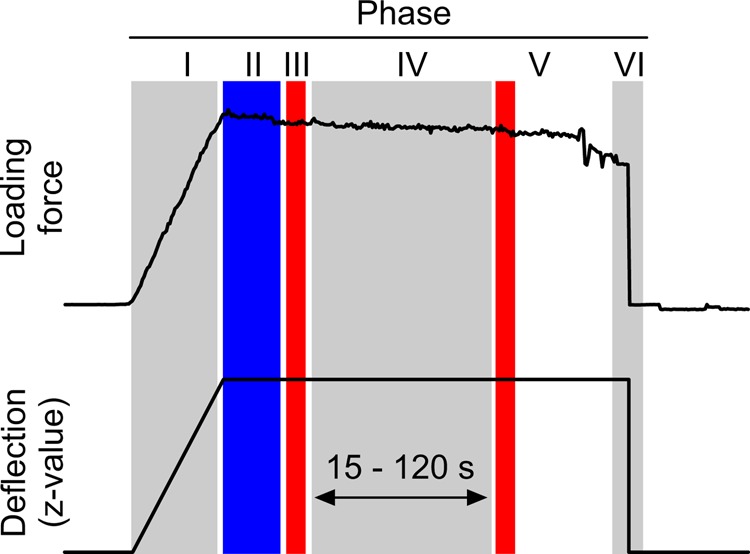
Mechanical properties of insect wings are essential for insect flight aerodynamics. During wing flapping, wings may undergo tremendous deformations, depending on the wings' spatial stiffness distribution. We here show an experimental evaluation of wing stiffness in three species of flies using a micro-force probe and an imaging method for wing surface reconstruction. Vertical deflection in response to point loads at 11 characteristic points on the wing surface reveals that average spring stiffness of bending lines between wing hinge and point loads varies ∼77-fold in small fruit flies and up to ∼28-fold in large blowflies. The latter result suggests that local wing deformation depends to a considerable degree on how inertial and aerodynamic forces are distributed on the wing surface during wing flapping. Stiffness increases with an increasing body mass, amounting to ∼0.6 Nm in fruit flies, ∼0.7 Nm in house flies and ∼2.6 Nm in blowflies for bending lines, running from the wing base to areas near the center of aerodynamic pressure. Wings of house flies have a ∼1.4-fold anisotropy in mean stiffness for ventral versus dorsal loading, while anisotropy is absent in fruit flies and blowflies. We present two numerical methods for calculation of local surface deformation based on surface symmetry and wing curvature. These data demonstrate spatial deformation patterns under load and highlight how veins subdivide wings into functional areas. Our results on wings of living animals differ from previous experiments on detached, desiccated wings and help to construct more realistic mechanical models for testing the aerodynamic consequences of specific wing deformations.
昆虫翅膀的力学特性对于昆虫飞行空气动力学至关重要。在翅膀扇动过程中,翅膀可能会发生巨大变形,这取决于翅膀的空间刚度分布。我们在此展示了使用微力探针和用于翅膀表面重建的成像方法对三种苍蝇翅膀刚度进行的实验评估。对翅膀表面11个特征点处的点载荷做出响应的垂直挠度表明,在小型果蝇中,翅膀铰链与点载荷之间弯曲线的平均弹簧刚度变化约77倍,在大型丽蝇中变化高达约28倍。后一结果表明,局部翅膀变形在很大程度上取决于翅膀扇动过程中惯性力和空气动力在翅膀表面的分布方式。刚度随着体重增加而增大,对于从翅膀基部延伸至空气动力压力中心附近区域的弯曲线而言,果蝇中的刚度约为0.6 Nm,家蝇中约为0.7 Nm,丽蝇中约为2.6 Nm。家蝇翅膀在腹侧与背侧加载时的平均刚度具有约1.4倍的各向异性,而果蝇和丽蝇中不存在各向异性。我们提出了两种基于表面对称性和翅膀曲率计算局部表面变形的数值方法。这些数据展示了负载下的空间变形模式,并突出了翅脉如何将翅膀细分为功能区域。我们对活体动物翅膀的研究结果与之前对分离、干燥翅膀的实验不同,有助于构建更现实的力学模型,以测试特定翅膀变形的空气动力学后果。