Department of Medical Biochemistry and Biophysics, Karolinska Institutet, Stockholm, Sweden.
Centre for Immune Regulation (CIR), Department of Immunology, Oslo University Hospital, Rikshospitalet, Oslo, Norway.
Nat Nanotechnol. 2019 Feb;14(2):184-190. doi: 10.1038/s41565-018-0336-3. Epub 2019 Jan 14.
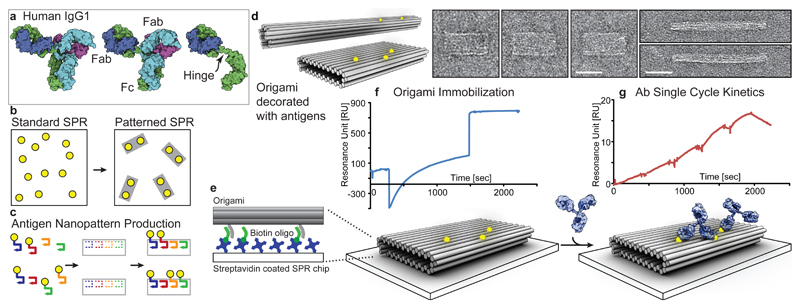
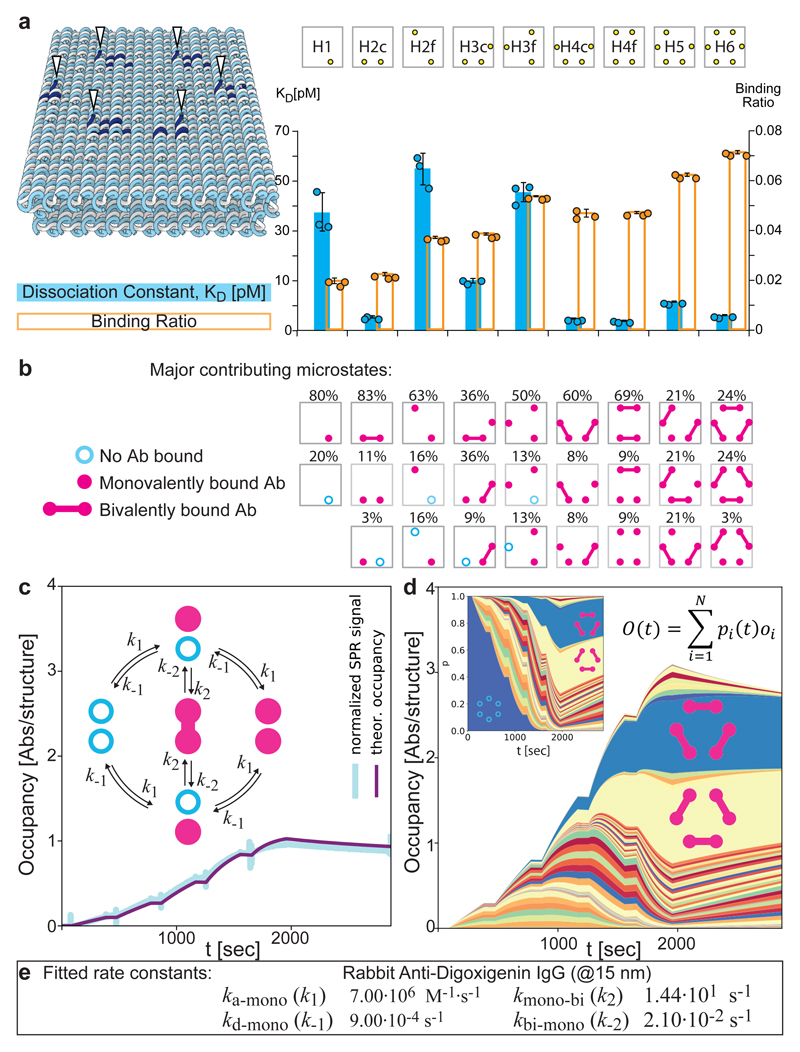
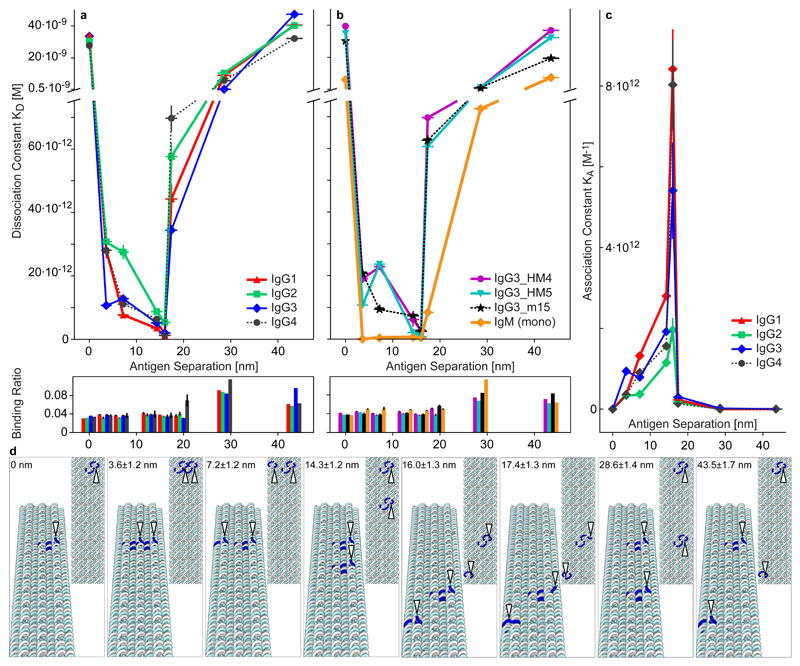
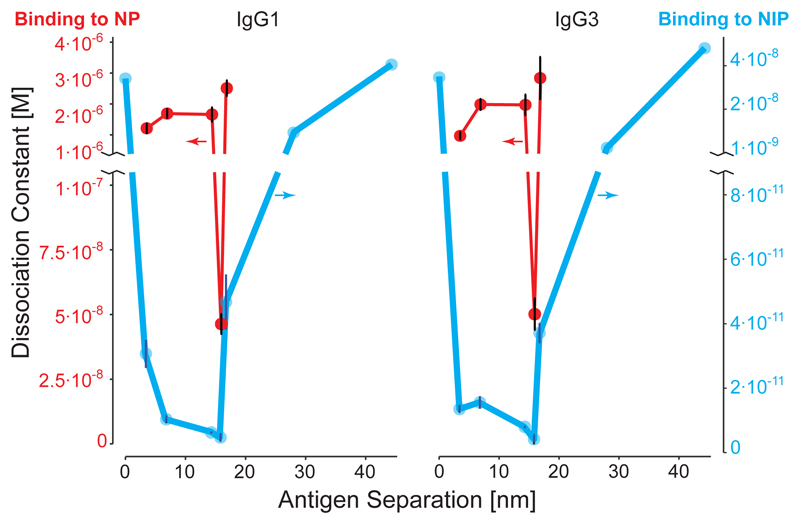
Although repetitive patterns of antigens are crucial for certain immune responses, an understanding of how antibodies bind and dynamically interact with various spatial arrangements of molecules is lacking. Hence, we introduced a new method in which molecularly precise nanoscale patterns of antigens are displayed using DNA origami and immobilized in a surface plasmon resonance set-up. Using antibodies with identical antigen-binding domains, we found that all the subclasses and isotypes studied bind bivalently to two antigens separated at distances that range from 3 to 17 nm. The binding affinities of these antibodies change with the antigen distances, with a distinct preference for antigens separated by approximately 16 nm, and considerable differences in spatial tolerance exist between IgM and IgG and between low- and high-affinity antibodies.
尽管抗原的重复模式对于某些免疫反应至关重要,但我们对于抗体如何结合以及如何与分子的各种空间排列动态相互作用还缺乏了解。因此,我们引入了一种新方法,使用 DNA 折纸术展示分子精确的抗原纳米级图案,并将其固定在表面等离子体共振装置中。使用具有相同抗原结合结构域的抗体,我们发现所有研究的亚类和同种型都以二价的方式结合到两个距离在 3 至 17nm 之间的抗原上。这些抗体的结合亲和力随抗原距离而变化,对于距离约为 16nm 的抗原有明显的偏好,并且 IgM 和 IgG 之间以及低亲和力和高亲和力抗体之间在空间容忍度上存在相当大的差异。