Díaz-García Diana, Ardiles Perla R, Prashar Sanjiv, Rodríguez-Diéguez Antonio, Páez Paulina L, Gómez-Ruiz Santiago
Departamento de Biología y Geología, Física y Química Inorgánica, ESCET, Universidad Rey Juan Carlos, Calle Tulipán s/n, E-28933 Móstoles (Madrid), Spain.
Departamento de Ciencias Farmacéuticas. Facultad de Ciencias Químicas, Universidad Nacional de Córdoba. Ciudad Universitaria, Haya de la Torre y Medina Allende, X5000HUA Córdoba, Argentina.
Pharmaceutics. 2019 Jan 14;11(1):30. doi: 10.3390/pharmaceutics11010030.
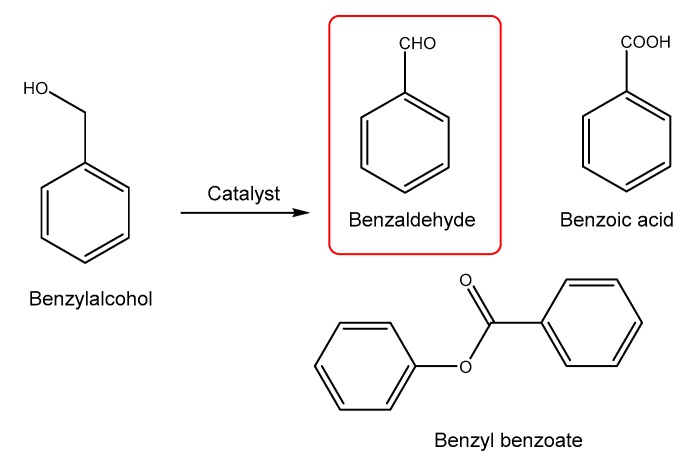
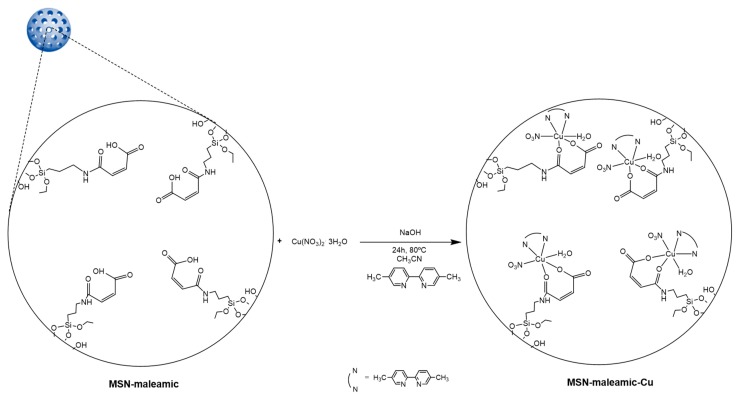
Mesoporous silica nanoparticles (MSNs) are an interesting class of nanomaterials with potential applications in different therapeutic areas and that have been extensively used as drug carriers in different fields of medicine. The present work is focused on the synthesis of MSNs containing a maleamato ligand (MSN-maleamic) and the subsequent coordination of copper(II) ions (MSN-maleamic-Cu) for the exploration of their potential application as antibacterial agents. The Cu-containing nanomaterials have been characterized by different techniques and the preliminary antibacterial effect of the supported maleamato-copper(II) complexes has been tested against two types of bacteria (Gram positive and Gram negative) in different assays to determine the minimum inhibitory concentration (MIC) and minimum bactericidal concentration (MBC). The biological results showed a moderate antibacterial activity against which motivated a more detailed study of the antibacterial mechanism of action of the synthesized maleamate-containing nanosystems and whose findings showed oxidative stress generation in bacterial cells. All the prepared nanomaterials were also tested as catalysts in the "solvent free" selective oxidation of benzyl alcohol, to observe if there is a potential correlation between the catalytic oxidation capacity of the materials and the observed oxidative stress in bacteria. This may help in the future, for a more accurate rational design of antibacterial nanosystems, based on their observed catalytic oxidation activity.
介孔二氧化硅纳米颗粒(MSNs)是一类有趣的纳米材料,在不同治疗领域具有潜在应用,并且已在医学的不同领域广泛用作药物载体。目前的工作重点是合成含有马来酰胺配体的MSNs(MSN-马来酰胺)以及随后铜(II)离子的配位(MSN-马来酰胺-Cu),以探索它们作为抗菌剂的潜在应用。含铜纳米材料已通过不同技术进行了表征,并且在不同试验中测试了负载的马来酰胺-铜(II)配合物对两种类型细菌(革兰氏阳性和革兰氏阴性)的初步抗菌效果,以确定最低抑菌浓度(MIC)和最低杀菌浓度(MBC)。生物学结果显示出对其具有适度的抗菌活性,这促使对合成的含马来酸盐纳米系统的抗菌作用机制进行更详细的研究,其结果表明细菌细胞中产生了氧化应激。所有制备的纳米材料还作为苄醇“无溶剂”选择性氧化的催化剂进行了测试,以观察材料的催化氧化能力与在细菌中观察到的氧化应激之间是否存在潜在相关性。这在未来可能有助于基于观察到的催化氧化活性,更准确合理地设计抗菌纳米系统。