El-Kassas Hala Yassin, Okbah Mohamed Abd El-Aziz
Hydrobiology Laboratory, Marine Environment Division, National Institute of Oceanography and Fisheries, Alexandria, Egypt.
Marine Chemistry Laboratory, Marine Environment Division, National Institute of Oceanography and Fisheries, Alexandria, Egypt.
J Genet Eng Biotechnol. 2017 Jun;15(1):41-48. doi: 10.1016/j.jgeb.2017.01.002. Epub 2017 Jan 22.
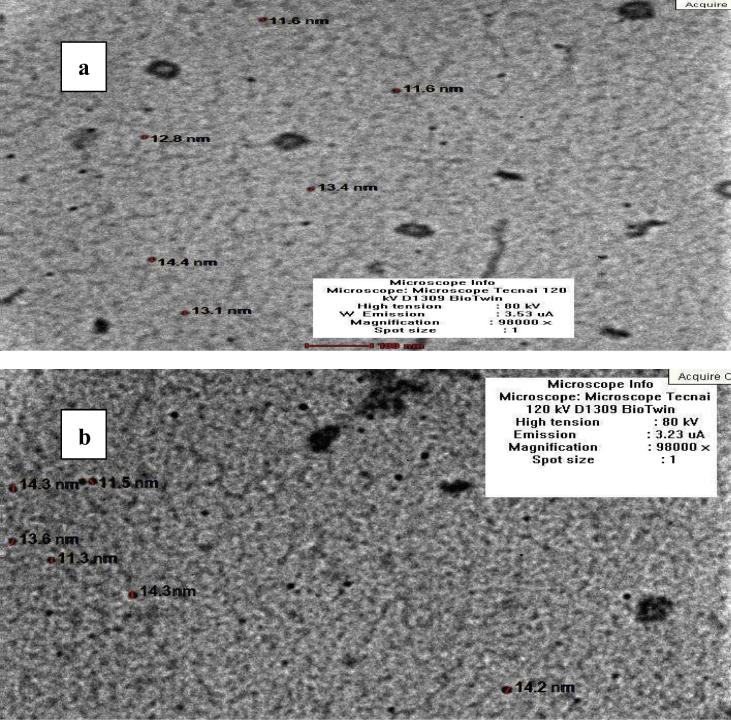
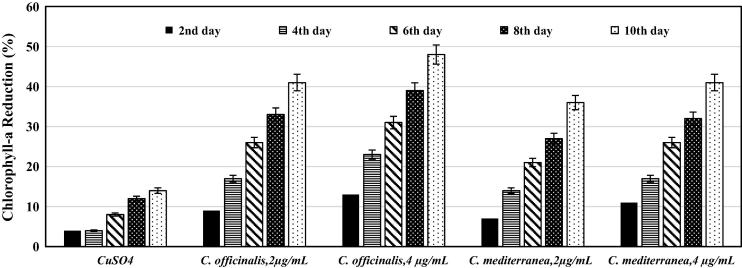
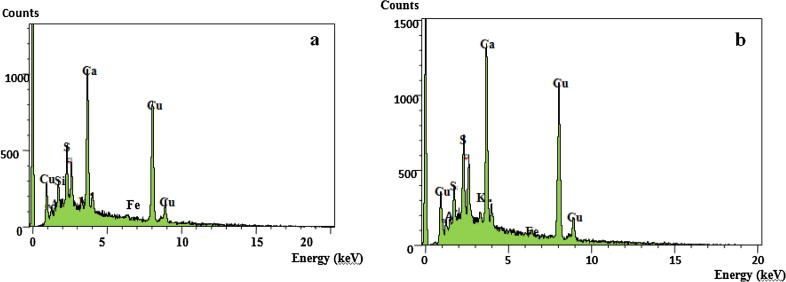
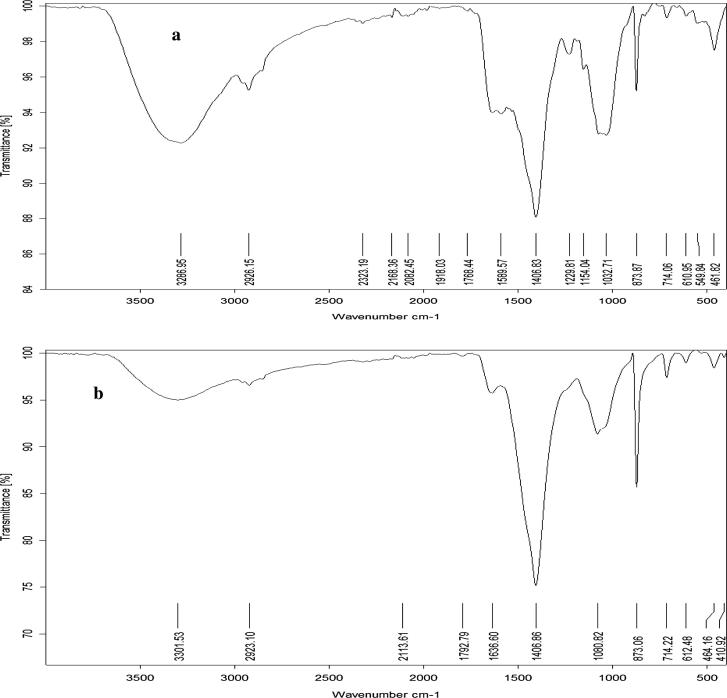
In this study, copper nanoparticles (Cu-NPs) were synthesized using Linnaeus and Areschoug aqueous extracts. Transmission Electron microscope indicated that the biosynthesized Cu-NPs averaged 12.7 nm and 13.6 nm for and , respectively. As reported by the FT-IR analyses, the algal extracts contain phyto-chemicals such as proteins, carboxylic acids, complex carbohydrates; these compounds will act as encapsulating agents and be reduced from copper sulphate to Cu-NPs. Energy-dispersive analyses X-ray (EDX) confirmed the copper composition in the synthesized Cu-NPs. The biosynthesized Cu-NPs arrested the growth of and presented in time and concentration dependent trends. At a concentration of 2 μg/mL, Cu-NPs, synthesized by exerted 85 ± 4% reduction of the algae dry weight. Increasing Cu-NPs concentration led to excellent reduction, which is a very promising result. Cupper-NPs synthesized by produced moderate effects on . The results also indicated that there were sharp decreases in chlorophyll a content in with the increase in Cu-NPs concentrations. Using 4 μg/mL of Cu-NPs derived from , chlorophyll a decreased by 48 ± 5%. On the other hand, lower reductions in chlorophyll a were recorded upon using Cu-NPs synthesized using (36 ± 3% and 41 ± 5% reductions at concentrations of 2 μg/mL and 4 μg/mL, respectively). The results of this study suggested that the bioactive and allelopathic compounds derived from the two algal extracts coating the (Cu) together with (Cu) are responsible for the inhibitive impacts of Cu-NPs on .
在本研究中,使用林奈属和阿雷舒格属植物的水提取物合成了铜纳米颗粒(Cu-NPs)。透射电子显微镜显示,生物合成的Cu-NPs对于林奈属和阿雷舒格属植物而言,平均粒径分别为12.7纳米和13.6纳米。傅里叶变换红外光谱(FT-IR)分析表明,藻类提取物含有蛋白质、羧酸、复合碳水化合物等植物化学物质;这些化合物将充当包封剂,并将硫酸铜还原为Cu-NPs。能量色散X射线分析(EDX)证实了合成的Cu-NPs中铜的成分。生物合成的Cu-NPs抑制了(某种藻类)的生长,并呈现出时间和浓度依赖性趋势。在浓度为2μg/mL时,由林奈属植物合成的Cu-NPs使藻类干重减少了85±4%。Cu-NPs浓度的增加导致了显著的减少,这是一个非常有前景的结果。由阿雷舒格属植物合成的铜纳米颗粒对(某种藻类)产生了中等程度的影响。结果还表明,随着Cu-NPs浓度的增加,(某种藻类)中叶绿素a的含量急剧下降。使用源自林奈属植物的4μg/mL的Cu-NPs,叶绿素a减少了48±5%。另一方面,使用由阿雷舒格属植物合成的Cu-NPs时,叶绿素a的减少幅度较低(在浓度为2μg/mL和4μg/mL时分别减少36±3%和41±5%)。本研究结果表明,来自两种藻类提取物的生物活性和化感化合物与(铜)一起包裹在(Cu)上,是Cu-NPs对(某种藻类)产生抑制作用的原因。