MRC Social, Genetic and Developmental Psychiatry Centre, Institute of Psychiatry, Psychology and Neuroscience, King's College London, London, SE5 8AF, UK.
Department of Experimental Psychology, University of Oxford, Oxford, OX1 4AL, UK.
Psychon Bull Rev. 2019 Jun;26(3):798-812. doi: 10.3758/s13423-018-1559-x.
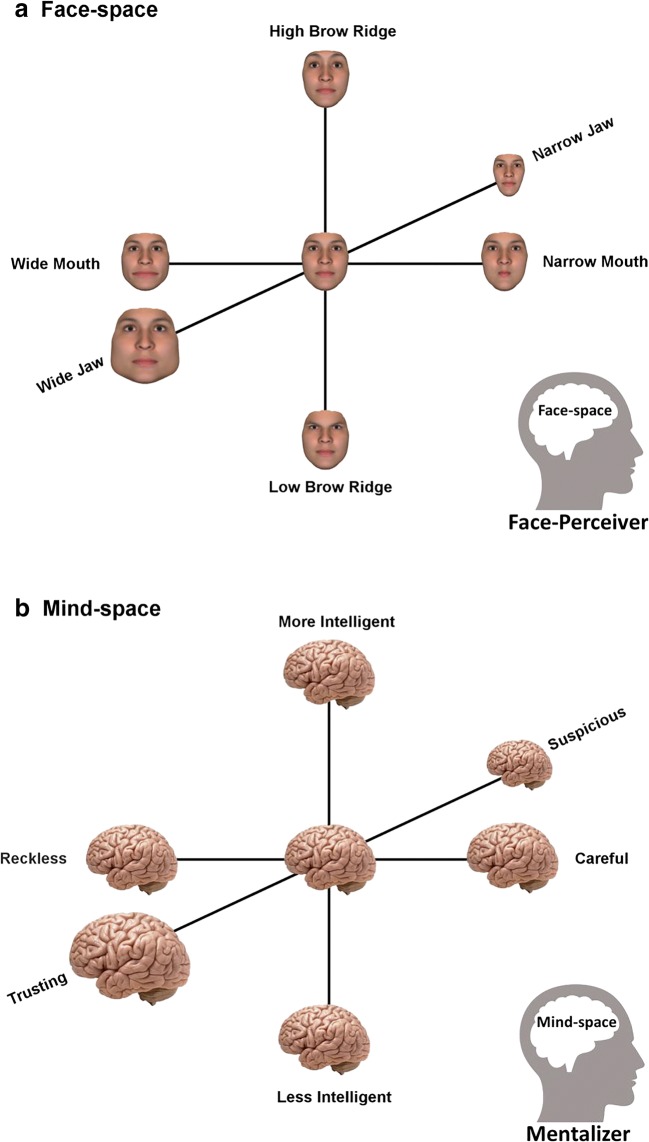
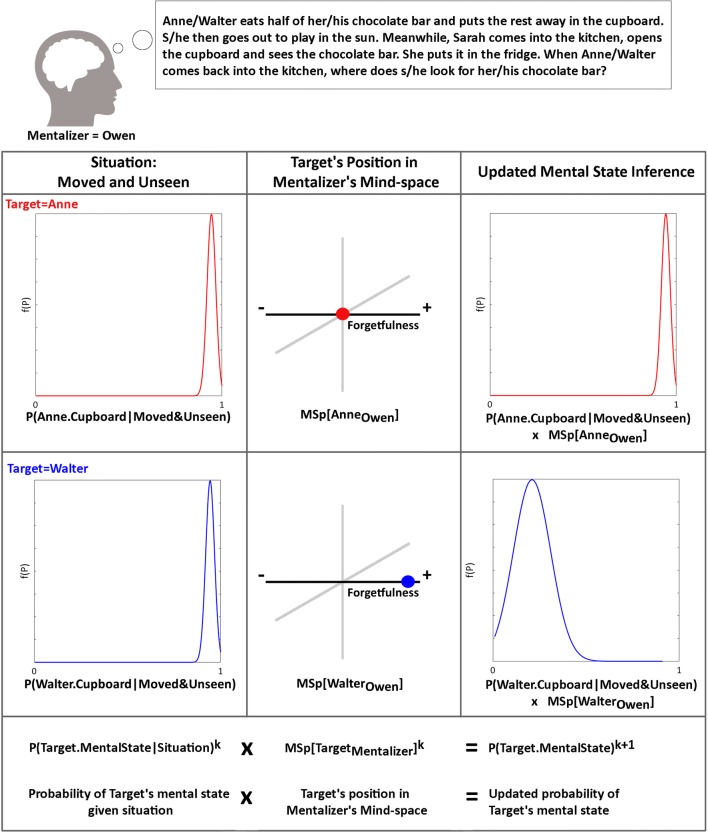
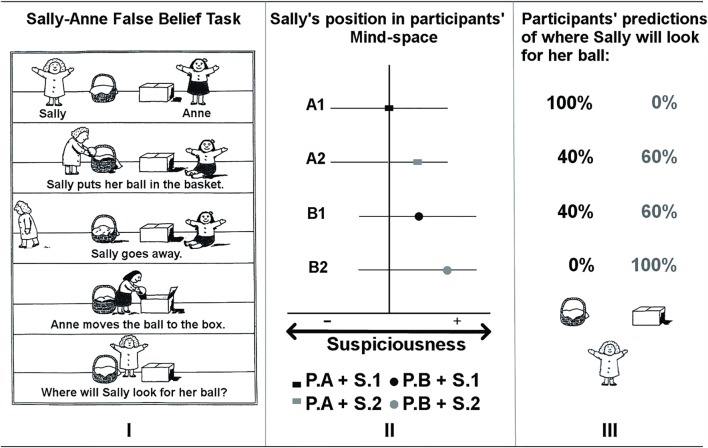
The human ability to make inferences about the minds of conspecifics is remarkable. The majority of work in this area focuses on mental state representation ('theory of mind'), but has had limited success in explaining individual differences in this ability, and is characterized by the lack of a theoretical framework that can account for the effect of variability in the population of minds to which individuals are exposed. We draw analogies between faces and minds as complex social stimuli, and suggest that theoretical and empirical progress on understanding the mechanisms underlying mind representation can be achieved by adopting a 'Mind-space' framework; that minds, like faces, are represented within a multidimensional psychological space. This Mind-space framework can accommodate the representation of whole cognitive systems, and may help to explain individual differences in the consistency and accuracy with which the mental states of others are inferred. Mind-space may also have relevance for understanding human development, intergroup relations, and the atypical social cognition seen in several clinical conditions.
人类推断同类心理状态的能力令人瞩目。该领域的大多数研究都集中在心理状态表征(“心理理论”)上,但在解释这种能力的个体差异方面收效甚微,并且缺乏一个理论框架来解释个体所接触的心理群体的可变性的影响。我们将面孔和心理状态作为复杂的社会刺激进行类比,并提出通过采用“心理空间”框架来理解心理状态表征的机制,可以取得理论和实证上的进展;即心理状态像面孔一样,在多维心理空间中得到呈现。这个心理空间框架可以容纳整个认知系统的呈现,并且可能有助于解释他人心理状态推断的一致性和准确性的个体差异。心理空间也可能与理解人类发展、群体间关系以及几种临床病症中出现的非典型社会认知有关。