School of Public Health, University of Michigan.
Graduate School of Education, University of Pennsylvania.
Am Psychol. 2019 Jan;74(1):63-75. doi: 10.1037/amp0000392.
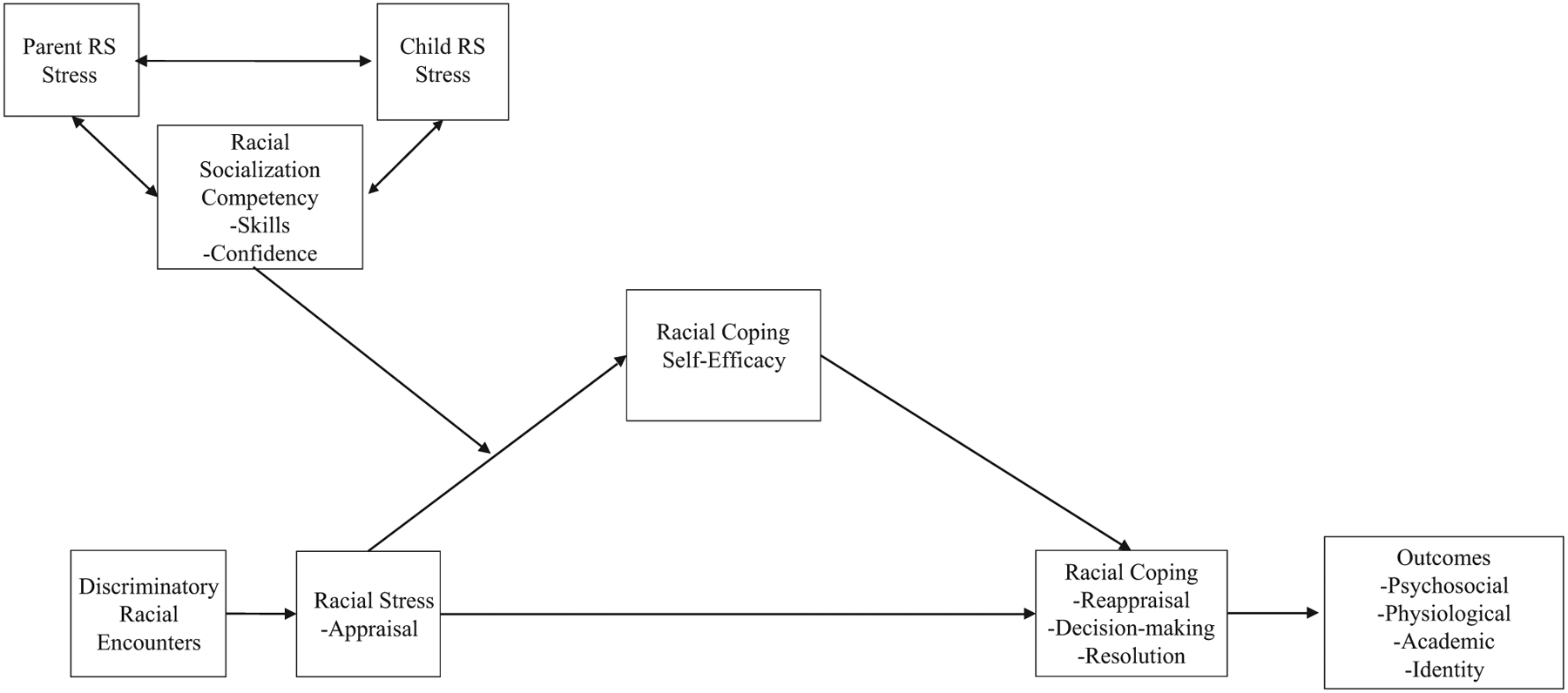
For youth and adults of color, prolonged exposure to racial discrimination may result in debilitating psychological, behavioral, and health outcomes. Research has suggested that race-based traumatic stress can manifest from direct and vicarious discriminatory racial encounters (DREs) that impact individuals during and after an event. To help their children prepare for and prevent the deleterious consequences of DREs, many parents of color utilize racial socialization (RS), or communication about racialized experiences. Although RS research has illuminated associations between RS and youth well-being indicators (i.e., psychosocial, physiological, academic, and identity-related), findings have mainly focused on RS frequency and endorsement in retrospective accounts and not on how RS is transmitted and received, used during in-the-moment encounters, or applied to reduce racial stress and trauma through clinical processes. This article explores how systemic and interpersonal DREs require literate, active, and bidirectional RS to repair from race-based traumatic stress often overlooked by traditional stress and coping models and clinical services. A novel theory (Racial Encounter Coping Appraisal and Socialization Theory [RECAST]), wherein RS moderates the relationship between racial stress and self-efficacy in a path to coping and well-being, is advanced. Greater RS competency is proposed as achievable through intentional and mindful practice. Given heightened awareness to DREs plaguing youth, better understanding of how RS processes and skills development can help youth and parents heal from the effects of past, current, and future racial trauma is important. A description of proposed measures and RECAST's use within trauma-focused clinical practices and interventions for family led healing is also provided. (PsycINFO Database Record (c) 2019 APA, all rights reserved).
对于有色人种的年轻人和成年人来说,长期遭受种族歧视可能会导致身心疲惫,出现行为和健康问题。研究表明,基于种族的创伤性压力可能源于直接和间接的歧视性种族遭遇(DRE),这些遭遇会在事件发生期间和之后对个人产生影响。为了帮助他们的孩子为 DRE 做好准备并预防其有害后果,许多有色人种的父母会利用种族社会化(RS),即关于种族经历的沟通。尽管 RS 研究已经阐明了 RS 与青年福祉指标(即心理社会、生理、学业和身份相关)之间的关联,但研究结果主要集中在 RS 的频率和认可度上,这些都是基于回顾性的报告,而不是关于 RS 是如何传递和接收的,在当下的遭遇中如何使用,或者如何通过临床过程来减少种族压力和创伤。本文探讨了系统性和人际性 DRE 如何需要有文化、积极和双向的 RS 来修复基于种族的创伤性压力,而传统的压力和应对模型以及临床服务往往忽略了这一点。提出了一种新的理论(种族遭遇应对评估和社会化理论[RECAST]),其中 RS 调节了种族压力和自我效能感之间的关系,从而形成了应对和健康的途径。提出了更高的 RS 能力是通过有目的和深思熟虑的实践来实现的。鉴于对困扰年轻人的 DRE 的高度认识,更好地理解 RS 过程和技能发展如何帮助年轻人和父母从过去、现在和未来的种族创伤中恢复过来,这一点很重要。本文还描述了拟议的措施和 RECAST 在以家庭为中心的创伤聚焦型临床实践和干预措施中的应用,以促进家庭的康复。